Best Robot Lawn Mowers for Hills & Steep Slopes (2026)
Spec-verified picks for hills and steep slopes in 2026: AWD and 4WD robot mowers rated to 80% grade, ranked by MowScout Score, with wet-grass reality checks.
Affiliate disclosure: MowScout earns a commission when you buy through our links, including as an Amazon Associate. Recommendations are based on yard fit, verified specs, and score methodology; commission can only break close ties among genuine fits.
Quick answer: the Dreame A3 AWD Pro 3500 is our top pick for serious slopes, with a MowScout Score of 89. It drives all four wheels to an 80% grade (about 39°), navigates by LiDAR plus vision without needing a view of the sky — a real advantage on wooded slopes — and covers 0.87 acre with a wide 15.8-inch deck. On a steep three-quarter acre, the AWD MOVA LiDAX Ultra 3000 AWD (Score 87) matches that 80% climb with far more zones and a 3-year warranty, and the tri-fusion LUBA 3 AWD 3000H (Score 87) does the same with Mammotion's more mature app. The Navimow X450 scores higher and claims 84%, but a third-party hill test of its X4 platform measured about 38%, so on a page about slopes we rank it below the 80%-rated machines. This page is spec-verified and data-driven, not hands-on — we have not put a unit on your hill, so every number here comes from manufacturer specs and our MowScout Score, and we say so plainly wherever a claim is a rating rather than a measurement.
Slope is the single spec that separates a robot mower that works on your yard from one that beaches itself halfway up. Below we explain why hills are hard, what we weighted, the six picks we'd actually put on a slope, and the honest limits — especially once the grass is wet. Verify the current price before you buy, because this category discounts weekly.
The short answer: our top pick, and who should size down
For a steep property, the Dreame A3 AWD Pro is the machine we would put on the hill first. But "best" on a hill is really about matching the drivetrain to the grade, then buying enough area capacity — no more. Five in-stock machines carry an 80% rating on AWD or 4WD: the Dreame (0.87 acre), the MOVA LiDAX Ultra 3000 AWD and the LUBA 3 AWD 3000H (0.75 acre each), the MOVA LiDAX Ultra 2000 AWD (half an acre) and the compact LUBA mini 2 AWD (0.37 acre). The LiDAR-led Dreame, MOVAs and mini 2 map by sensing the yard, so they hold position on wooded slopes without a sky view; the LUBA 3 fuses LiDAR, NetRTK and AI vision. The LUBA 3 AWD 5000H (out of stock) carries the same 80% rating to 1.25 acres, but it is out of stock at every US retailer we track. For a big, steep lot today, the Navimow X450 covers 1.5 acres on AWD, with the slope caveat below.
If you want the whole picture of how these systems work, start with the pillar, Robot lawn mowers: RTK vs LiDAR vs vision, then come back here for the slope-specific ranking.
Why steep slopes are the hardest test for a robot mower
A hill attacks a robot mower on four fronts at once, and only the last one is about the battery.
1. Drivetrain is the ceiling. Climbing grade is a traction problem, and traction comes from how many wheels drive and how much torque reaches them. As a rule of thumb across our data: rear-wheel drive (RWD) tops out around 30% grade, standard all-wheel drive (AWD) reaches roughly 45%, and the top high-torque AWD and 4WD systems are rated to about 80%. That is why every pick on this page is AWD or 4WD, and why RWD models — the Eufy E15/E18, the WORX Landroid, the ECOVACS GOAT line, and the Navimow i105N/i110N — are not slope picks no matter how good they are on flat ground.
2. Traction fails before the motor does. A mower can have plenty of power and still spin out. Weight distribution, tire tread, ground moisture, and turf type all decide whether the rated grade is achievable. This is why two AWD mowers can carry very different slope ratings: Mammotion's AWD is tuned to 80%, while the 2WD Segway Navimow X330 and X350 are rated to 50%. The label tells you the floor; the rating tells you the truth.
3. Turns cause scalping. The riskiest moment on a hill is not the straight climb — it is the pivot. When a deck turns across a steep pitch or tips over a crown, one side can dig in and scalp the turf. Mowers with better slope tuning and mapping steer their turns onto flatter ground; cheaper ones don't.
4. Wet grass lowers the real ceiling. Every slope number in this category is a dry-condition rating. Dew, rain, and slick clippings can drop the achievable grade well below the spec sheet. A model rated to 80% may lose grip far lower when the hill is wet. Plan for it: leave headroom and schedule around rain rather than trusting a weather-resistance badge. Our companion guide, can robot mowers cut wet grass?, goes deeper on this.
What we prioritized for hills (and how the Score reflects it)
The MowScout Score is a weighted composite, and for a slope-focused list its Terrain sub-score does the heavy lifting. We ranked these picks on three things, in order:
Slope rating with headroom. We treat 45% as the entry bar for a true "hill" mower and reward the 80%
flagships. A model already at its rated limit on your steepest section is a bad buy; we want margin for wet grass.
Drivetrain. AWD or 4WD is mandatory above ~30% grade. RWD models are excluded from this ranking even
when their score is high overall, because their traction ceiling caps them on real slopes.
Traction and turf control. Weight, cutting width, and navigation quality decide whether the rated grade
survives a wet morning and a mid-slope turn — the difference between a spec and a result.
Everything below is grounded in `data/mowers.json` and the MowScout Score. We have not measured a climb ourselves; where we say "rated," we mean the manufacturer's number, verified against a retail listing.
The best robot mowers for hills, ranked
Ranked for steep-yard fit: in-stock AWD and 4WD mowers rated to 80% grade in MowScout Score order, with the Navimow X450, whose higher 84% claim a third-party test contradicts, placed below the larger of them. Two out-of-stock slope machines are covered after the picks.
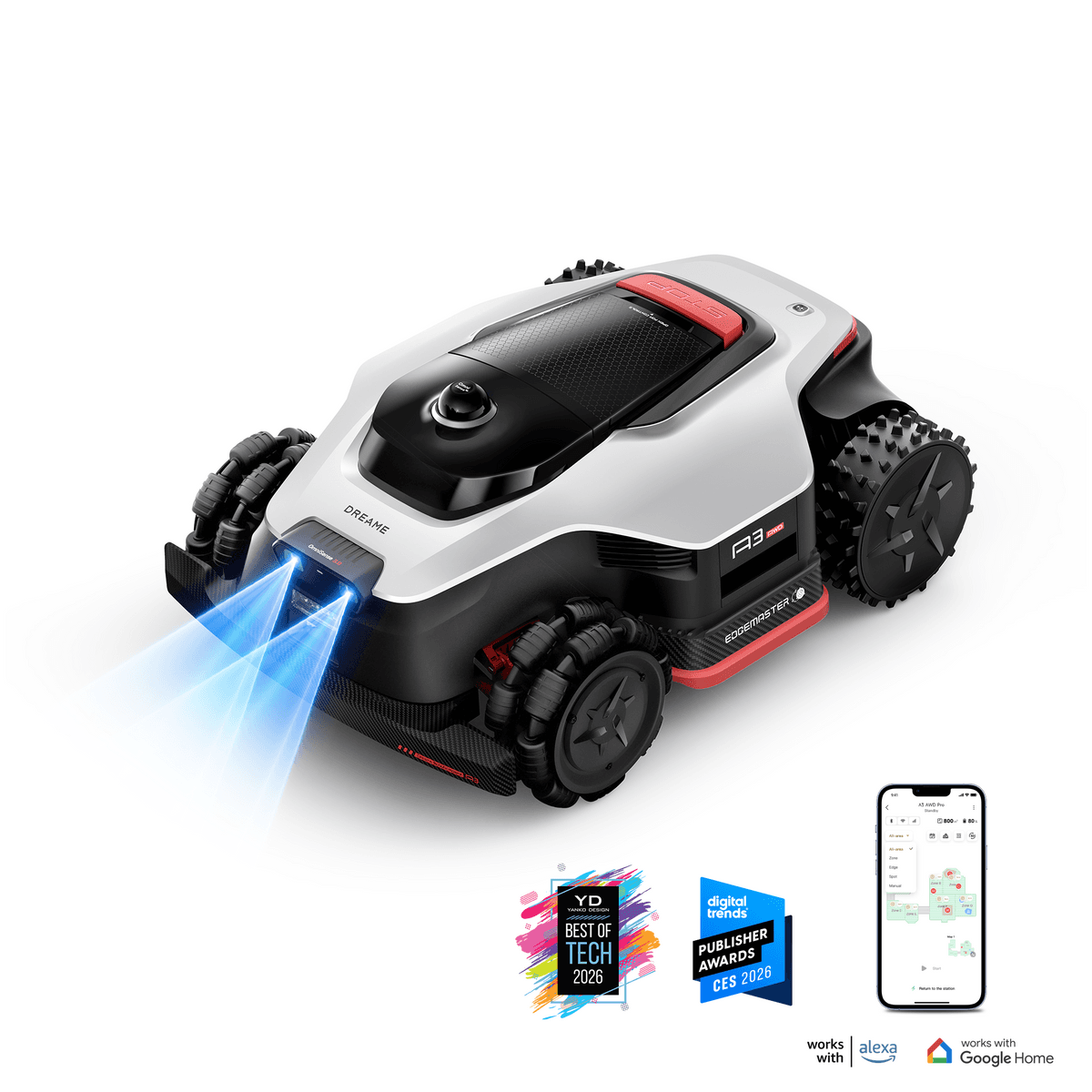
1. Dreame A3 AWD Pro 3500 — MowScout Score 89
Dreame A3 AWD Pro 3500 robot lawn mower
The 4WD pick for steep yards, and the one we would put on the hill first. The A3 AWD Pro pairs four-wheel drive rated to 80% grade with LiDAR-plus-vision navigation (no RTK antenna, no dependence on the sky) and a wide 15.8-inch dual-disc deck that mows fast and trims close, across up to 0.87 acre. Why it climbs: 4WD drives every wheel, and the wide deck plus strong edge behavior make it the premium precision option on a slope. Caveats: it sits at the premium end of the list, its warranty is 2 years to the MOVA's and LUBA's 3, and its app is younger than Mammotion's. If edges matter as much as the climb, it earns the top spot. Read the full review.
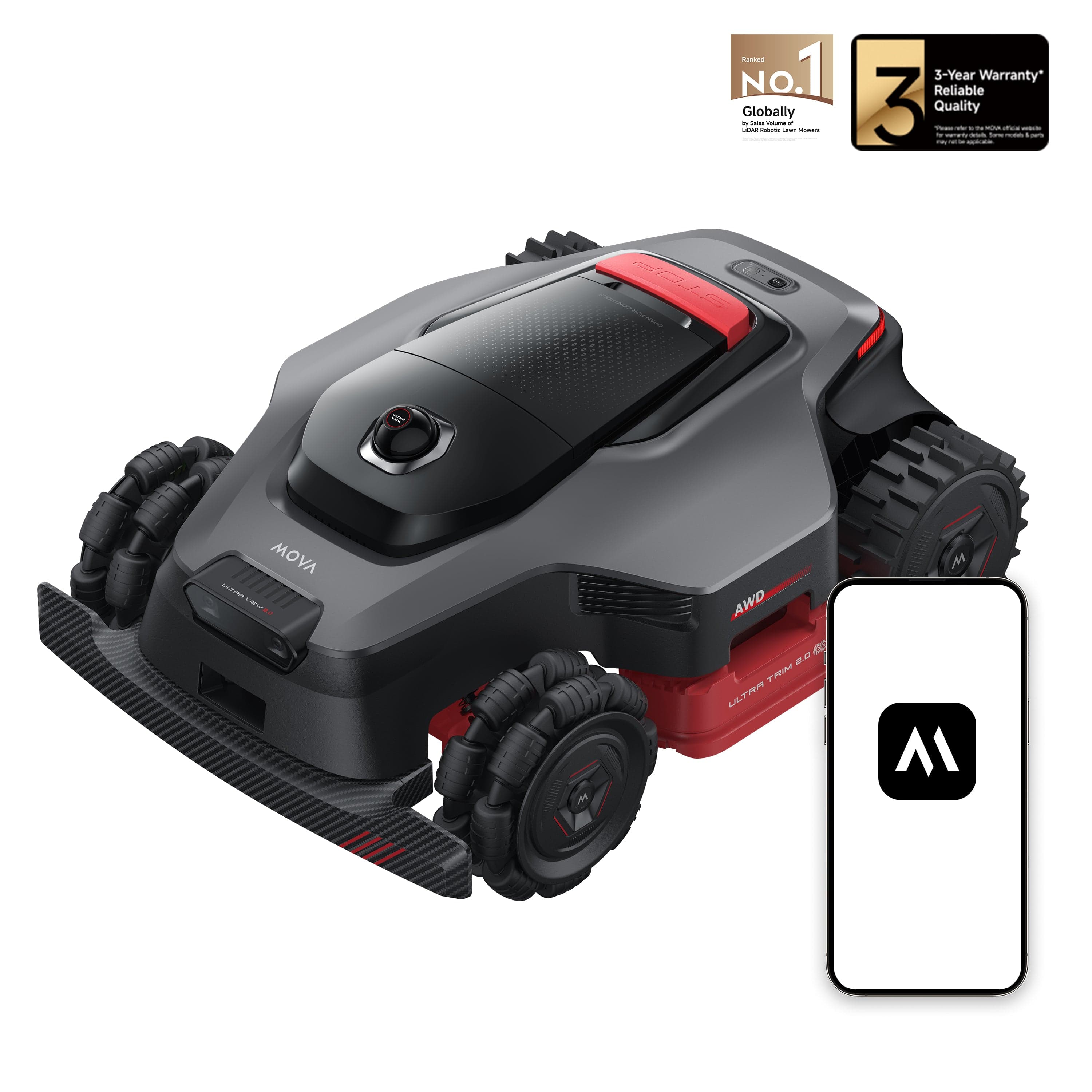
2. MOVA LiDAX Ultra 3000 AWD — MowScout Score 87
MOVA LiDAX Ultra 3000 AWD robot lawn mower
The zone-rich steep-yard pick. It drives all four wheels to an 80% slope rating and navigates by LiDAR plus dual-camera vision with no RTK antenna, so a wooded hillside doesn't blind it, across up to 0.75 acre and as many as 150 mapped zones. Its 15.8-inch deck cuts from 1.2 to 3.9 inches, we rate its edges good, and it carries a 3-year warranty. Why it ranks here: it matches the Dreame's climb and deck width with far more zones and a longer warranty, at a lower list price. Caveats: at about 52 lb it is a heavy machine, the 0.75-acre rating wants headroom on a complex steep lawn, and MOVA's channel prices move around, so compare stores. Read the full review.
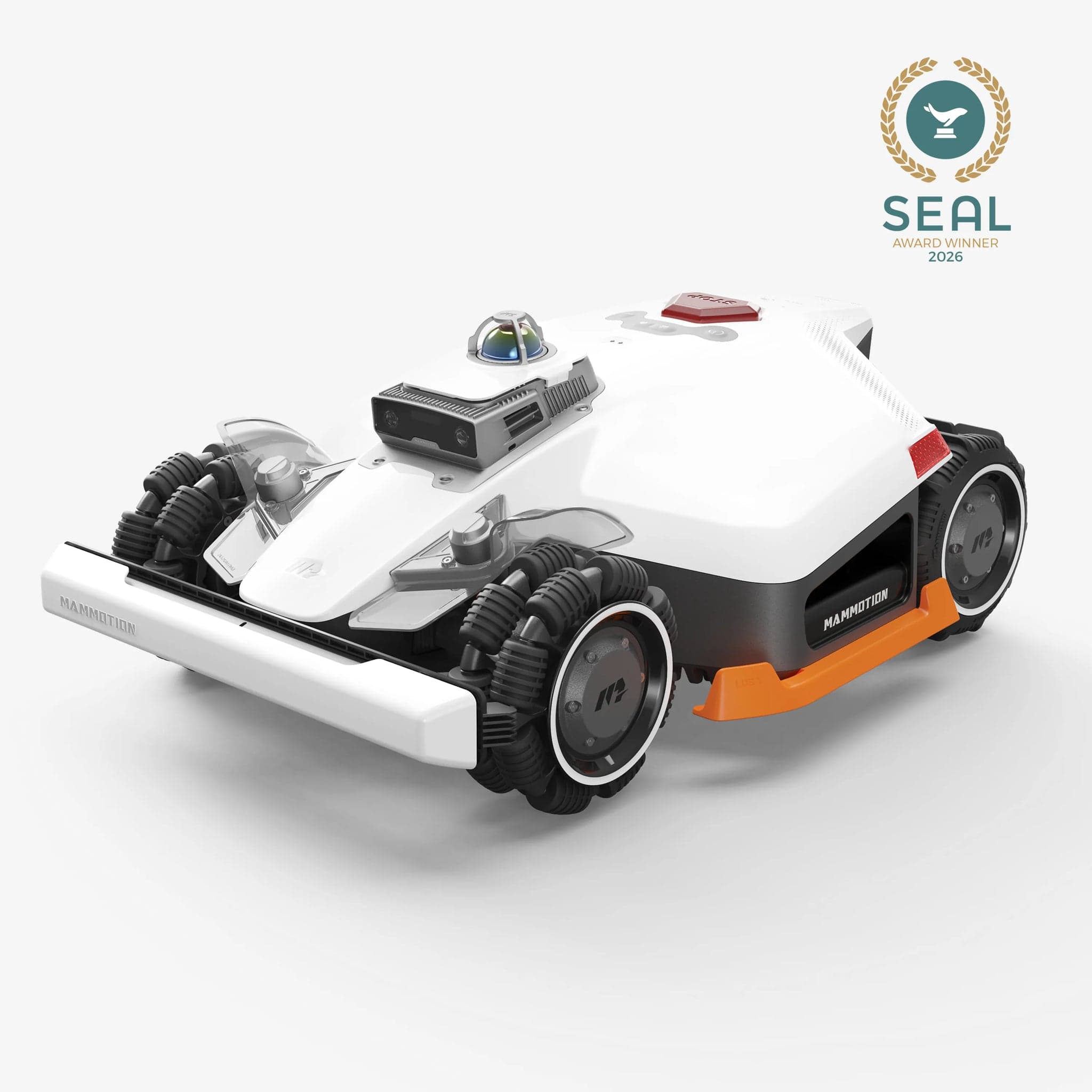
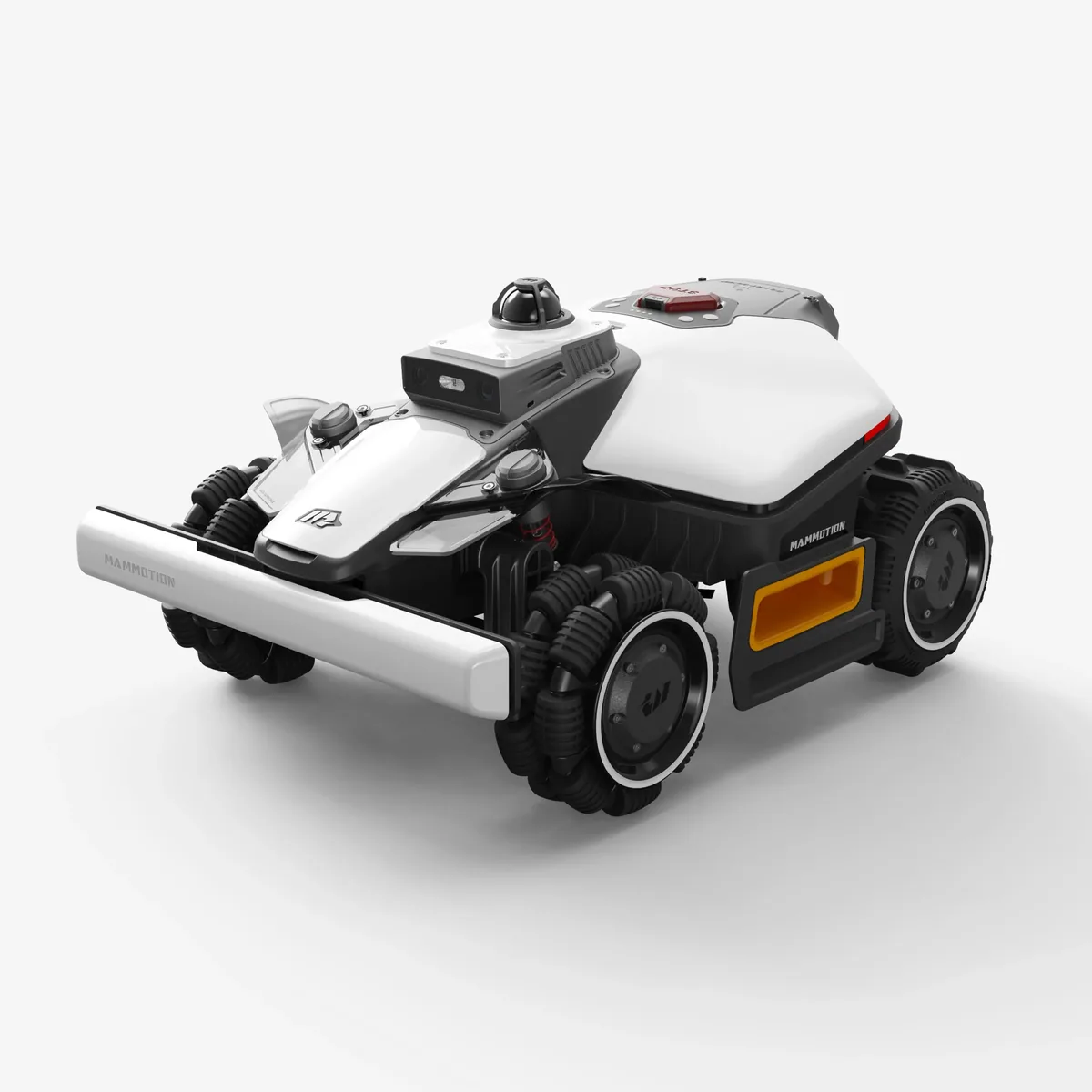
3. Mammotion LUBA 3 AWD 3000H — MowScout Score 87
Mammotion LUBA 3 AWD 3000H robot lawn mower
The tri-fusion steep-yard pick. It is the same 80% AWD platform and tri-fusion navigation (LiDAR + NetRTK + AI vision) as the out-of-stock 5000H. The 3000H is scaled to 0.75 acres and 30 zones. Why it climbs: genuine AWD tuned to 80%, with three positioning references cross-checking each other near trees and structures. Caveats: its network-RTK layer still wants open-sky reception at the mower (there's no antenna to install), its 2.2-inch cut floor is high for scalped Bermuda, and edges want an occasional trim. It costs more than the MOVA above, and that buys Mammotion's more mature app and support. Read the full review.
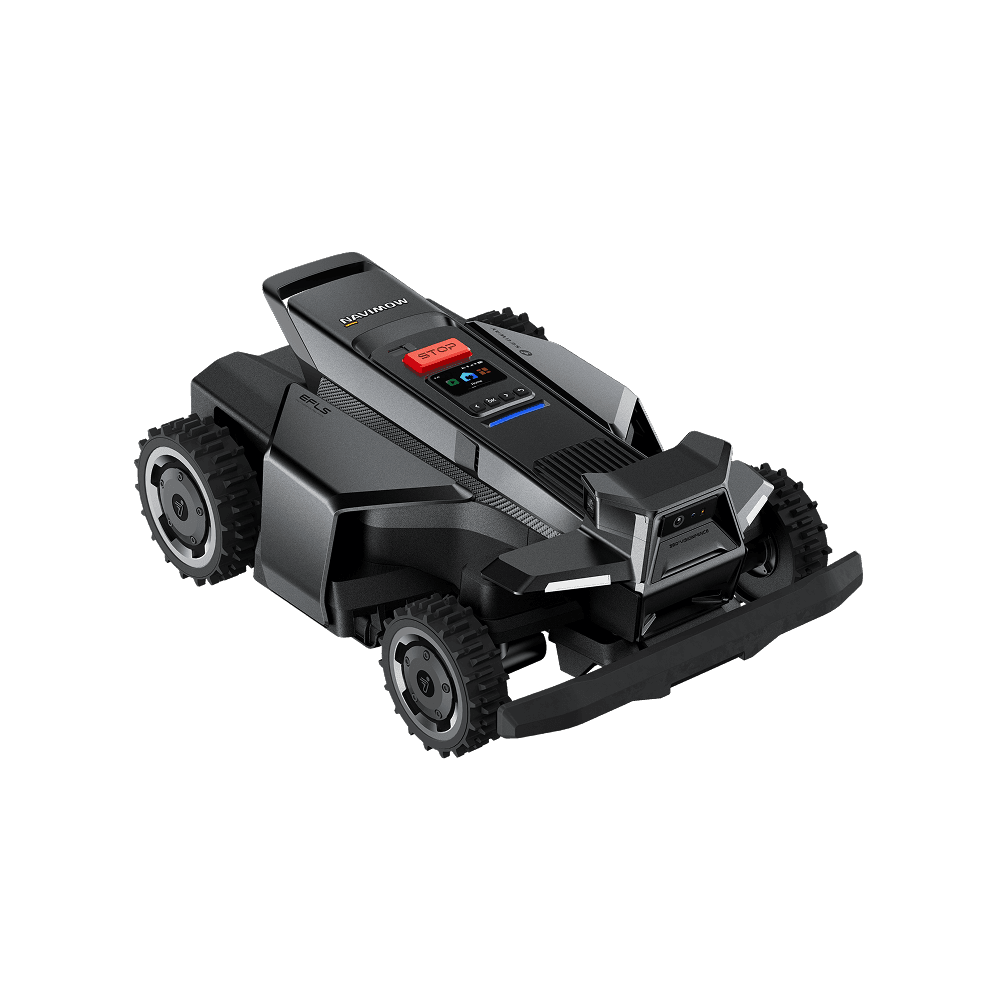
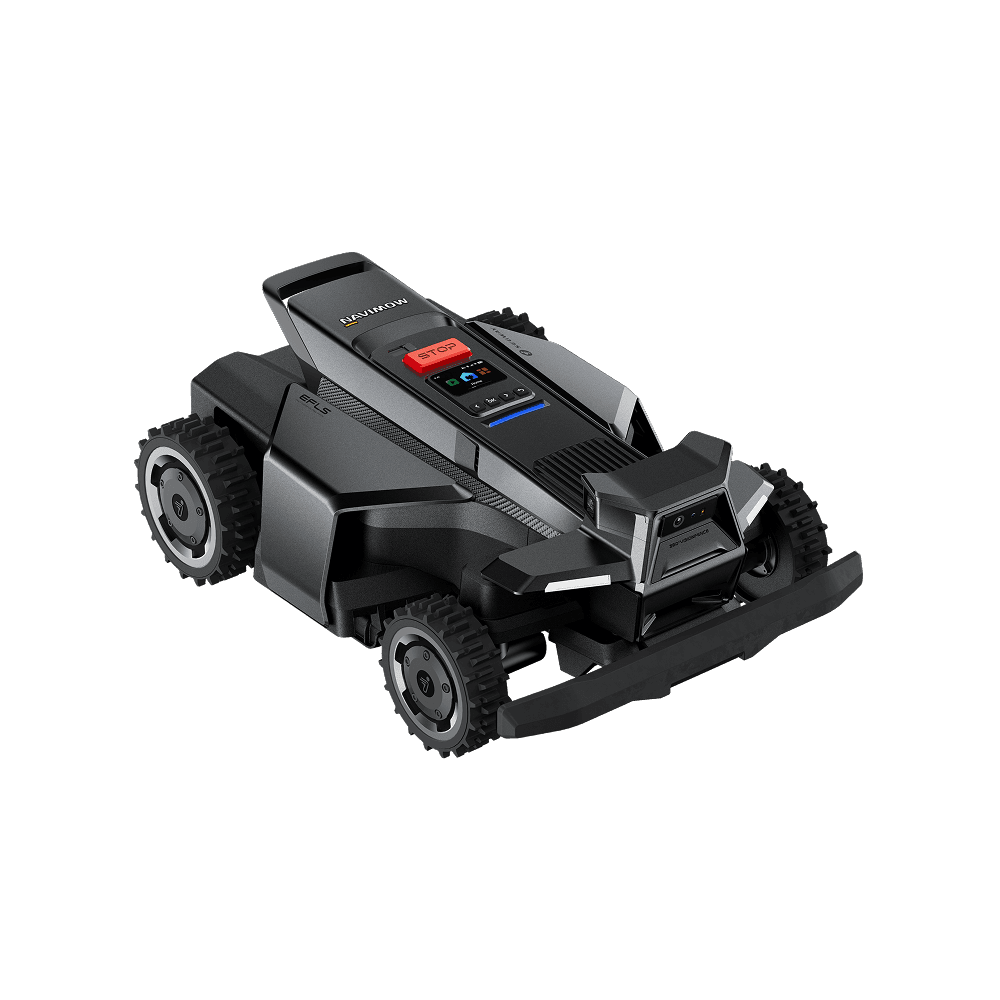
4. Segway Navimow X450 — MowScout Score 93
Segway Navimow X450 robot lawn mower
The big-lot option, with a caveat that matters on a slope page. The X450 drives all four wheels, covers 1.5 acres across up to 120 zones on antenna-free X4 navigation, and ties the out-of-stock 5000H for the highest Score we track. Its manufacturer rating is 84% grade, but a third-party hill test of the X4 platform measured about 38%, so we rank it below the 80%-rated machines above. Why it's here: if your steep lot runs past an acre, it is the in-stock AWD machine with the capacity. Caveats: treat the slope claim as unproven and leave generous headroom, it is heavy (about 64 lb) and loud (about 68 dB), and its satellite layer wants open sky. Read the full review.
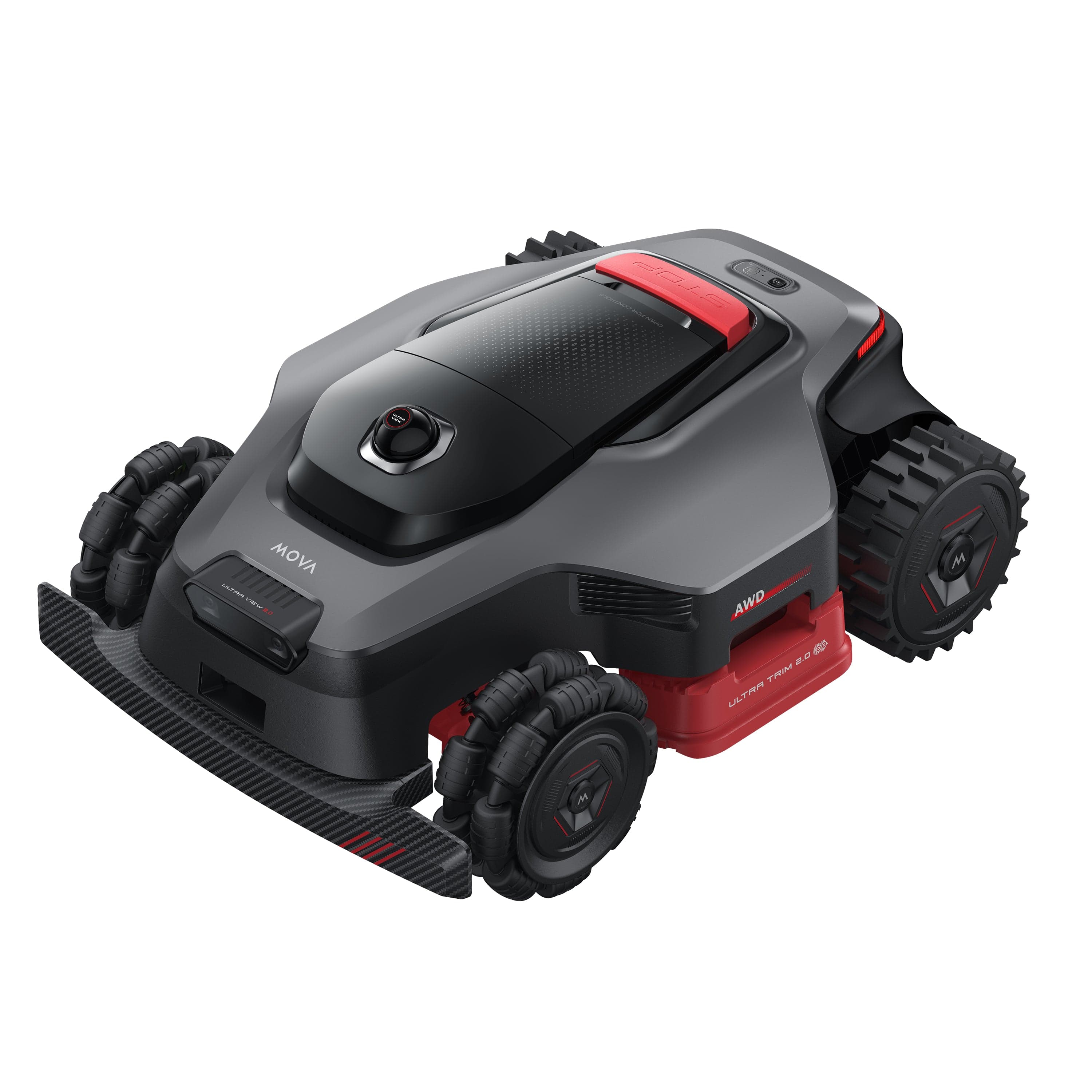
5. MOVA LiDAX Ultra 2000 AWD — MowScout Score 85
MOVA LiDAX Ultra 2000 AWD robot lawn mower
The lowest-priced 80% model we track. It is the half-acre sibling of the 3000 AWD: the same AWD to 80%, LiDAR-plus-dual-vision navigation, 150 zones and 15.8-inch deck, sized to 0.5 acre. Why it ranks here: for a steep lot of up to half an acre, it delivers the flagship climb for noticeably less money than the 3000 AWD. Caveats: at about 52 lb it is heavy for a half-acre machine, and a lawn near its rating wants headroom. Read the full review.
6. Mammotion LUBA mini 2 AWD — MowScout Score 79
Mammotion LUBA mini 2 AWD robot lawn mower
The compact 80% climber, and the in-stock successor to the LUBA mini AWD. It keeps the mini's 80% AWD rating and 0.37-acre, 20-zone sizing, swaps satellite positioning for 360° LiDAR plus dual-camera vision so it does not depend on the sky, and adds a dedicated edge-cutting disc (we rate its edges good). Why it's here: a small-but-steep yard gets the flagship climb without a full-size chassis. Caveats: its 7.8-inch deck is narrow, its 2.2-inch cut floor is high for scalped Bermuda, and if your lawn is closer to half an acre, the MOVA 2000 AWD above is the better-sized choice. Read the full review.
Out of stock right now. The LUBA 3 AWD 5000H (out of stock) (Score 93) pairs the same 80% AWD rating and tri-fusion navigation as the 3000H with 1.25 acres and 50 zones, and it is the big-and-steep pick when it is available again. The original LUBA mini AWD (out of stock) (Score 79) is the network-RTK predecessor of the mini 2. Both are out of stock at every US retailer we track.
Slope and drivetrain at a glance
Every figure below is a manufacturer rating verified against a retail listing, paired with the MowScout Score. Slope numbers are dry-condition ceilings — subtract headroom for wet grass.
How steep can a robot mower really go? Degrees vs percent grade
The biggest source of confusion on slopes is that manufacturers quote percent grade, but people think in degrees — and the two are not the same. A 100% grade is 45°, not "vertical." Here's the conversion for the ratings that matter, so you can compare like with like:
Percent grade
Degrees
Feel
Typical mower class
30%
~16.7°
Noticeable slope
RWD ceiling (Eufy, WORX, i110N)
45%
~24.2°
Steep to walk-mow
Standard AWD / RWD max (i210, GOAT)
50%
~26.6°
Steep
2WD (Navimow X330/X350)
80%
~38.7°
Very steep bank
Top AWD / 4WD (LUBA, Dreame, MOVA AWD)
To measure your own yard, divide the vertical rise by the horizontal run and multiply by 100: a 12-inch rise over 24 inches of run is 50%. Buy a mower rated above your steepest section, then subtract headroom for wet grass. Remember that a published slope rating is a dry-grass, straight-line ceiling — wet turf, soil that shears, and the sideways loads of traversing a bank all cut the usable figure below it.
Common mistakes people make buying a mower for hills
Buying RWD for a real hill. The most common and most expensive mistake. A rear-wheel-drive mower rated
to 30-45% will read fine on a spec sheet and then spin out or slide on your slope, especially when damp. Above ~30% grade, treat AWD or 4WD as non-negotiable.
Ignoring wet grass. Slope ratings are dry numbers. If you skip the headroom, your mower will work in
July and get stuck every dewy morning in spring. Leave 10-20% of margin and schedule around rain.
Trusting "AWD" as a single spec. A drivetrain label is not a guarantee of 80%. The 2WD Navimow X330/X350 stop
at 50%; the AWD LUBA line reaches 80%. Read the slope percentage, not just the drivetrain label.
Undersizing on capacity — or oversizing on price. A hill mower still has to cover your whole lawn in a
day. But don't overpay for a 1.25-acre flagship if you have a steep quarter acre; the LUBA mini 2 AWD or Navimow i210 AWD may fit better. Size the area to the yard, then require the slope rating.
Setting the deck too low. Low cut heights invite scalping on crowns and turns. On slopes, run toward the
taller end of the range.
Budget vs premium: what you give up on a slope
There is no true budget path to an 80% slope rating — the lowest-priced 80% model we track is the MOVA LiDAX Ultra 2000 AWD, a half-acre machine that still sits in the premium tier. Below that, the honest budget option is the Segway Navimow i210 AWD (Score 74): real AWD, but a 45% ceiling, a quarter-acre limit, and NetRTK positioning that wants clear sky. It's a good fit for a small yard with moderate slopes and a poor fit for anything steeper or wooded. See more sub-$1,500 options on our best robot mowers under $1,500 page.
At the premium end, the money buys three things: a higher rated grade (80% vs 45-50%), more redundant navigation that holds position on slopes near trees, and — on the Dreame A3 AWD Pro — a wide 4WD deck that trims cleaner. For a large, steep, partially-wooded property, that redundancy is the difference between a mower that finishes and one that phones for help. The middle ground, the Navimow X330 and X350, wins on capacity (1.0-1.5 acres) but caps out at 50% grade — great for rolling open lots, wrong for a bank.
Find your match
Slope is only one of the constraints that decide the right robot mower — tree cover, yard size, zones, and budget all interact with it. This page ranks by slope capability alone; your yard is more specific than that.
The configurator screens your exact grade, area, tree cover, and budget against every model we track, so you don't overbuy a 4WD flagship for a gentle slope — or under-buy an RWD mower for a hill it can't climb.
Quick answer
Segway Navimow X450 is the current top pick.
This guide ranks only mowers that clear the specific filter for best robot mowers for hills in 2026. The list is built from verified street prices, rated area, slope rating, navigation type, drive system, zone support, edge behavior, app quality, and the current MowScout Score. The ranking is a starting point, not a universal answer: a mower that looks strong here can still be wrong if your lawn has heavier tree cover, more separated zones, a tighter budget, or terrain that falls outside the assumptions of this use case.
Start with the ranked list, then use the yard-fit configurator to check your actual lawn size, slope, sky view, terrain, obstacles, and spending limit. For the broader buying framework, read the robot lawn mower guide.
These rankings start with models that match the page filter, then sort by current MowScout Score and visible specs. Treat the criteria below as hard filters before price or brand preference.
45%+ slope rating
AWD, 4WD, or exceptional traction
Obstacle handling for uneven ground
Ranked picks for this use case
These picks are ranked for best robot mowers for hills in 2026, not for every possible yard. Read the notes under each mower before clicking through, because the trade-offs are often more important than the rank number.
Rank #1
Segway Navimow X450
The largest X4 Navimow adds 1.5-acre capacity to the same antenna-free hybrid navigation, 17-inch deck, 120 zones, and AI vision stack.
Score93/100
Segway Navimow X450 belongs in Best Robot Mowers for Hills in 2026 because it combines hybrid navigation, 1.5 acres of rated coverage, a 84% slope rating, and 120 mapped zones. AWD/4WD gives it extra traction margin. No separate antenna requirement reduces one setup variable.
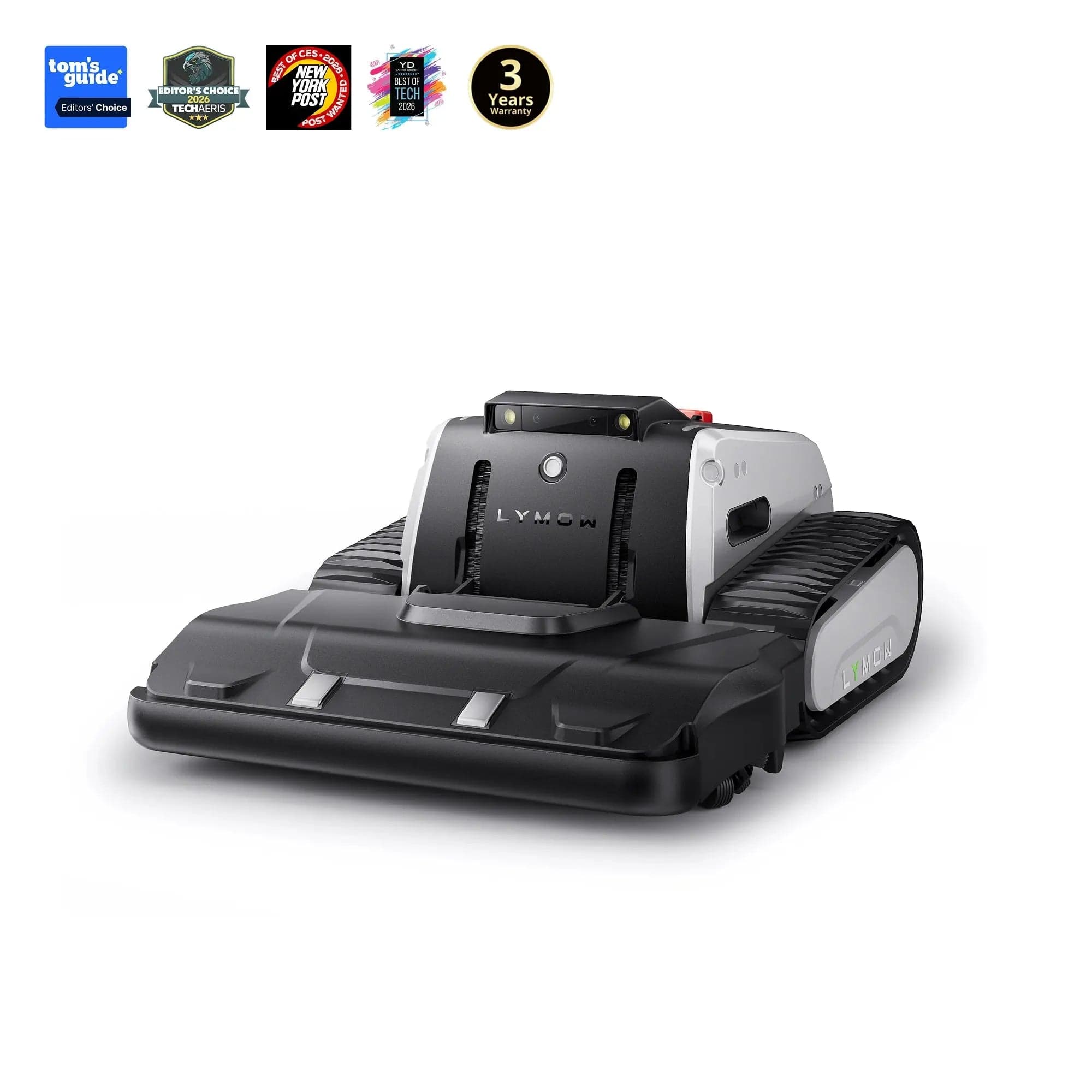
Tracked drive, RTK/VSLAM navigation, 100% claimed slope handling, and 1.73 acres/day coverage make it a unique all-terrain entrant.
Score90/100
Lymow One Plus belongs in Best Robot Mowers for Hills in 2026 because it combines hybrid navigation, 1.73 acres of rated coverage, a 100% slope rating, and 80 mapped zones. RWD makes it a better fit for simpler turf. Plan the antenna or base placement carefully.
A wide 15.8-inch cutting deck, no-RTK LiDAR approach, and 80% slope claim target premium complex yards.
Score89/100
Dreame A3 AWD Pro 3500 belongs in Best Robot Mowers for Hills in 2026 because it combines LiDAR navigation, 0.87 acres of rated coverage, a 80% slope rating, and 20 mapped zones. AWD/4WD gives it extra traction margin. No separate antenna requirement reduces one setup variable.
The X4 platform brings antenna-free hybrid NetRTK plus vision, a 17-inch dual deck, 120 zones, and a one-acre rating for less than the X450.
Score89/100
Segway Navimow X430 belongs in Best Robot Mowers for Hills in 2026 because it combines hybrid navigation, 1 acre of rated coverage, a 84% slope rating, and 120 mapped zones. AWD/4WD gives it extra traction margin. No separate antenna requirement reduces one setup variable.
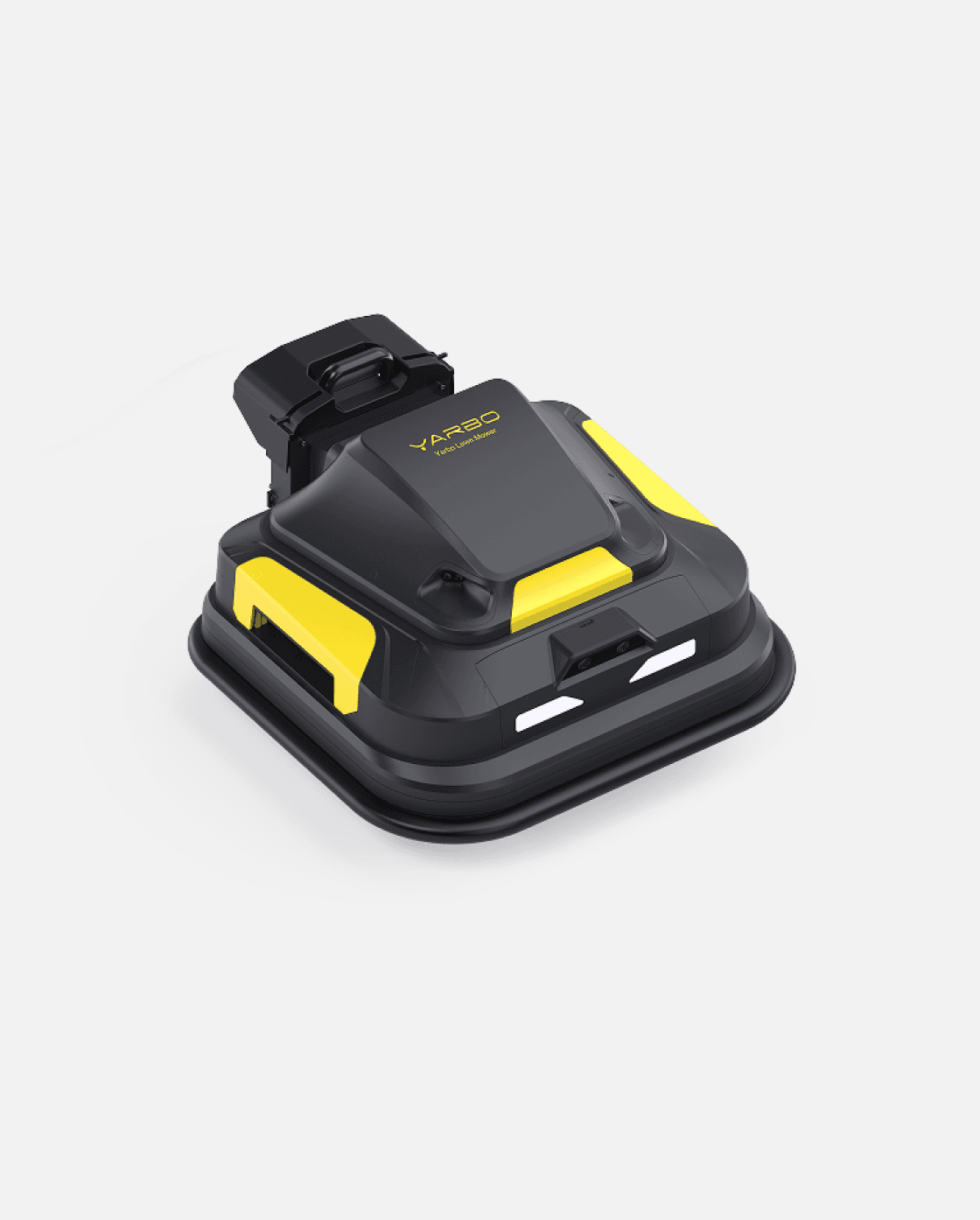
The tracked modular platform fills the missing estate-yard lane with up to 6 acres of coverage, 20-inch cutting width, and 70% slope capability.
Score89/100
Yarbo Lawn Mower Pro belongs in Best Robot Mowers for Hills in 2026 because it combines hybrid navigation, 6 acres of rated coverage, a 70% slope rating, and 99 mapped zones. RWD makes it a better fit for simpler turf. No separate antenna requirement reduces one setup variable.
Use this table to compare the constraints that usually decide whether a robot mower feels effortless or becomes another yard-maintenance chore.
Model
Score
Price
Area
Slope
Navigation
Zones
Segway Navimow X450
93
$2,999
1.5 acres
84%
hybrid
120
Lymow One Plus
90
$3,199
1.73 acres
100%
hybrid
80
Dreame A3 AWD Pro 3500
89
$2,400
0.87 acres
80%
lidar
20
Segway Navimow X430
89
$2,499
1 acre
84%
hybrid
120
Yarbo Lawn Mower Pro
89
$5,999
6 acres
70%
hybrid
99
Fast alternatives
Best price check: Dreame A3 AWD Pro 3500 is the lowest-priced mower currently in this filter at $2,400.
Capacity check: Yarbo Lawn Mower Pro gives the most area headroom here at 6 acres.
Traction check: Lymow One Plus has the highest listed slope rating in this set at 100%.
Where to go next
This page narrows the catalog to one use case. Run the configurator before using a deal box, especially if your lawn is close to the limits shown in the spec table.
What is the steepest slope a robot mower can handle in 2026?
The steepest-rated wheeled models reach 80 to 84% grade (roughly 39 to 40°): the Navimow X430 and X450 are rated to 84%, and the Mammotion LUBA 3 AWD line, the LUBA mini AWD and LUBA mini 2 AWD, the MOVA LiDAX Ultra 2000 and 3000 AWD, and the 4WD Dreame A3 AWD Pro to 80%. The tracked Lymow One Plus claims 100%, a figure we have not verified. These are dry-condition ceilings, not comfort zones. Rear-wheel-drive mowers top out at 50%, and the lighter AWD models, such as the Navimow i206 and i210, are rated to 45%.
Is AWD always better than RWD on a hill?
For traction, yes — but the drivetrain label alone does not set the ceiling. Mammotion's AWD and Dreame's 4WD are engineered to reach 80% grade, while Segway's 2WD Navimow X330 and X350 are rated to 50%. AWD or 4WD is the safer requirement above roughly 30% slope; a 2WD traction-control mower can still be rated to 50%, so the specific slope rating tells you how far that particular system will actually go.
Do robot mowers slip on wet, sloped grass?
Yes. Every slope rating is measured on dry turf. Wet grass, morning dew, loose soil, and leaf litter all lower the real ceiling, so a mower rated to 80% may struggle well below that when the hill is slick. Leave 10-20% of headroom over your measured grade and schedule runs to avoid heavy rain — traction, not water resistance, is the limiting factor.
How do I know what slope rating my yard needs?
Measure the grade: divide the vertical rise by the horizontal run and multiply by 100 for percent grade. A 12-inch rise over 24 inches is 50%. Then buy a mower rated above your steepest section, with headroom for wet conditions. As a rule of thumb, under 30% opens up RWD options, 30-45% wants AWD, and anything steeper needs a top-tier AWD or 4WD model.
Why isn't the cheapest AWD mower your top slope pick?
The Segway Navimow i210 AWD (MowScout Score 74) is a genuine AWD bargain, but it is rated to 45% grade, covers only a quarter acre, and leans on NetRTK positioning that wants clear sky. It is a smart buy for a small yard with moderate slopes — just not the mower for a large, steep, or tree-shaded property, which is why it ranks below the 80%-rated flagships.
Will a robot mower scalp my lawn on the hillcrests and turns?
It can if the deck is set too low or the mower turns on the steepest pitch. Scalping happens where the deck tips over a crown or pivots on a slope. Keep cut height toward the taller end of the range on hills, and use no-go zones or zone boundaries to steer turns onto flatter ground rather than mid-slope.
What is the best robot mower on this best robot mowers for hills in 2026 list?
Segway Navimow X450 is the current top pick by MowScout Score among models that pass this page's filter.
Should I choose only by this ranking?
No. This page ranks by one use case. The configurator checks your exact size, slope, tree cover, zones, terrain, obstacles, budget, and priority.
Are prices current?
Each mower record includes a last_verified date. Prices and availability should still be checked before purchase.
Why are some popular models missing?
A model can be absent if it does not pass this page's hard filter, lacks verified pricing, or is a better fit for a different yard constraint.