Best robot mowers for pets and dogs: AI-vision picks that detect and steer around animals, plus blade-safety, scheduling, and no-go-zone rules for safer mowing.
Affiliate disclosure: MowScout earns a commission when you buy through our links, including as an Amazon Associate. Recommendations are based on yard fit, verified specs, and score methodology; commission can only break close ties among genuine fits.
Quick answer: the ECOVACS GOAT O1000 LiDAR PRO is the first mower to evaluate for homes with pets, because it combines LiDAR depth mapping with AI-vision obstacle avoidance that steers around an animal instead of only stopping on contact — with the MOVA LiDAX Ultra 1000, Mammotion LUBA 3 AWD 3000H, and eufy E15 close behind for different yards and budgets. This page is spec-verified and data-driven, not hands-on. It uses the MowScout product records, MowScout Scores, manufacturer safety documentation, and the `obstacle_avoidance` field that separates AI-vision detection from basic bump-only sensors. MowScout may earn a commission from the links below; that never changes which mower we recommend.
This is a safety question first and a shopping question second, so we are going to be blunt about it: no robot mower is 100% pet-proof. A robot mower is dramatically safer around dogs and cats than a gas or riding mower, but "safer" is not "zero risk." The right model, the right schedule, and the right no-go zones together remove most of the danger — the mower alone does not. Start with the shortlist below, then run the yard-fit configurator and read the robot lawn mower buyer guide before you use a deal link.
Ranked shortlist for pet-safe mowing
Every model here carries AI-vision obstacle avoidance, so each one tries to detect and steer around an animal rather than only reacting after a bump. The columns are the specs that matter for pets, not raw acreage.
The ECOVACS GOAT O1000 LiDAR PRO is the first pick for pet households because it layers two detection systems that cover each other's weaknesses. Its AI vision recognizes what an object is — a dog, a shoe, a hose — and steers around it without contact, while LiDAR builds a 3D depth map that measures shape and distance and keeps working when the light is poor. That combination is exactly what you want when a pet may wander into the path. It has a MowScout Score of 72, a compact rear-wheel-drive body, small recessed pivoting blades, and lift plus tilt sensors that cut the blades almost instantly if the unit is picked up or tipped. The honest caution is capacity: it is rated for a quarter acre, so it is a small-yard machine, not a large-lot one. Read the full ECOVACS GOAT O1000 LiDAR PRO review before clicking through.
Value and alternate pet-safe picks
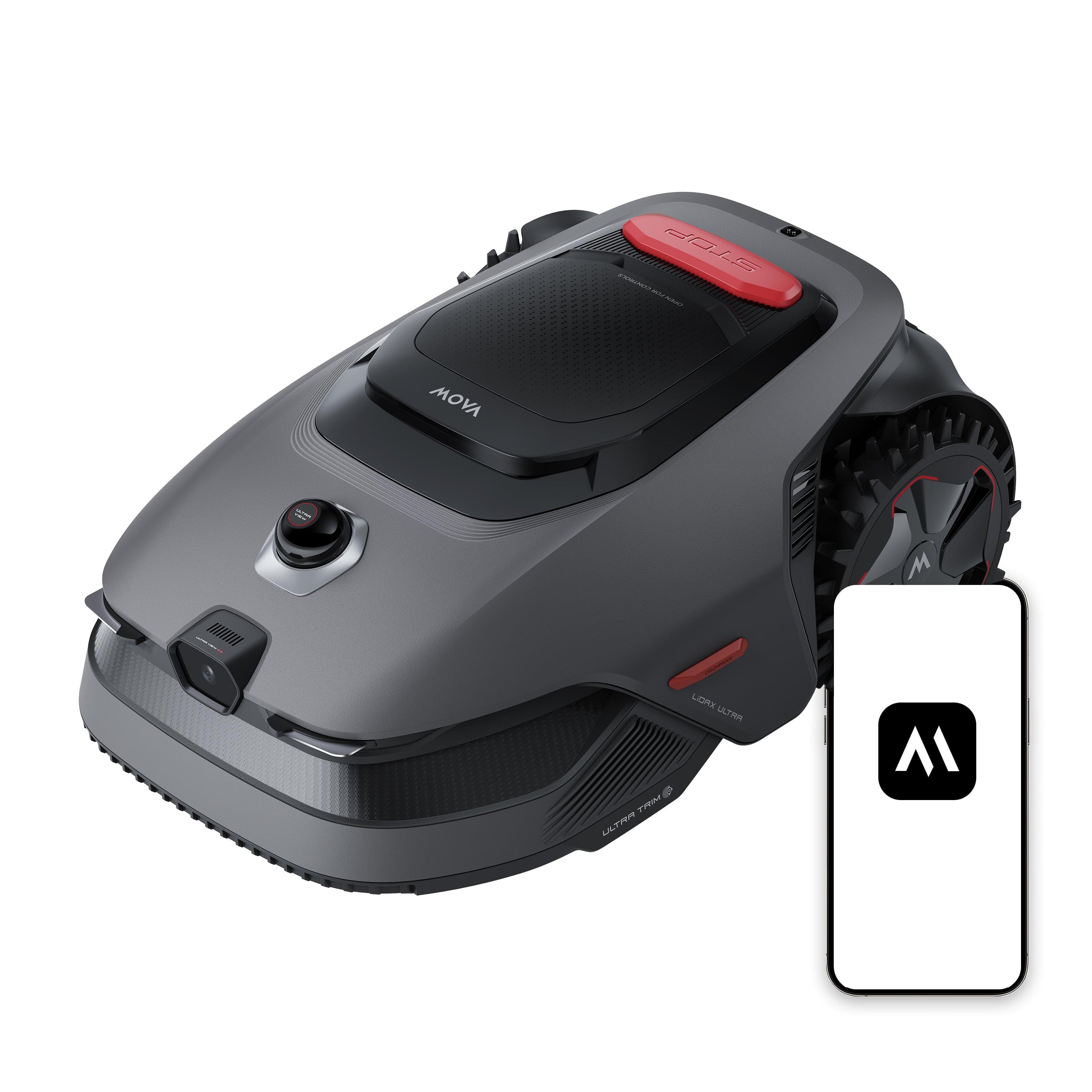
MOVA LiDAX Ultra 1000 robot lawn mower
The MOVA LiDAX Ultra 1000 is the compact LiDAR pick for a small pet yard. It pairs LiDAR mapping with AI-vision obstacle avoidance, the same two-layer detection as the GOAT O1000, in a body of about 30 pounds, and scores 71. It adds good edges, up to 150 mapped zones for fencing off dog runs and bowls, and a cut that reaches 3.93 inches. Like the GOAT O1000 it is a quarter-acre, rear-wheel-drive machine, so keep it on small, relatively flat lawns.
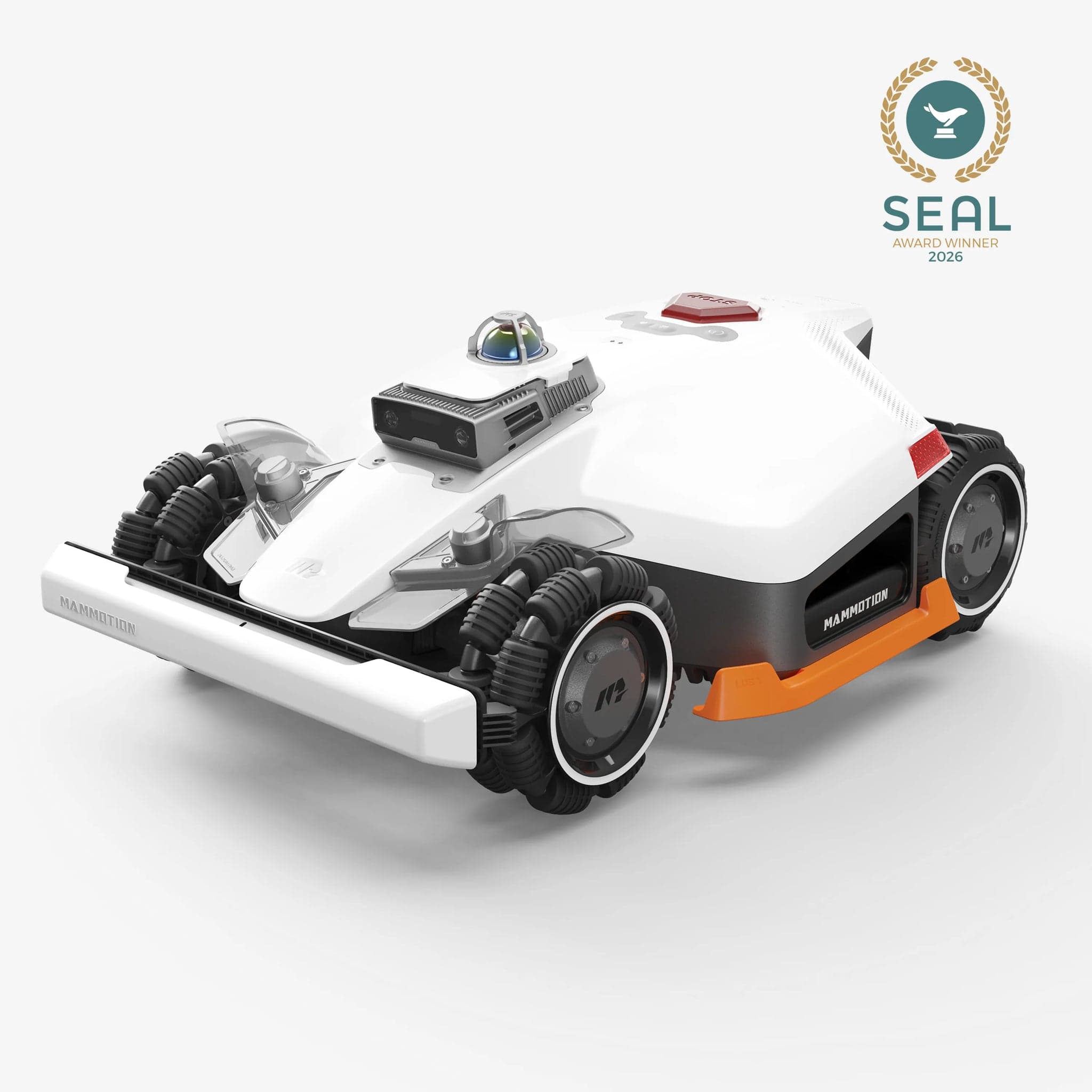
Mammotion LUBA 3 AWD 3000H robot lawn mower
The Mammotion LUBA 3 AWD 3000H is the choice when detection sophistication matters most and the yard is large or steep. Its tri-fusion navigation fuses LiDAR, RTK, and vision, giving it the most complete sensor stack in this group, and it scores 87 — the highest here. The trade-offs are real: it is a heavier all-wheel-drive machine (about 42 pounds) at a premium price, so more mass is in motion and it is overkill for a small flat lawn. If your pets share a genuinely big or hilly yard, it is the one with the most eyes on the grass.
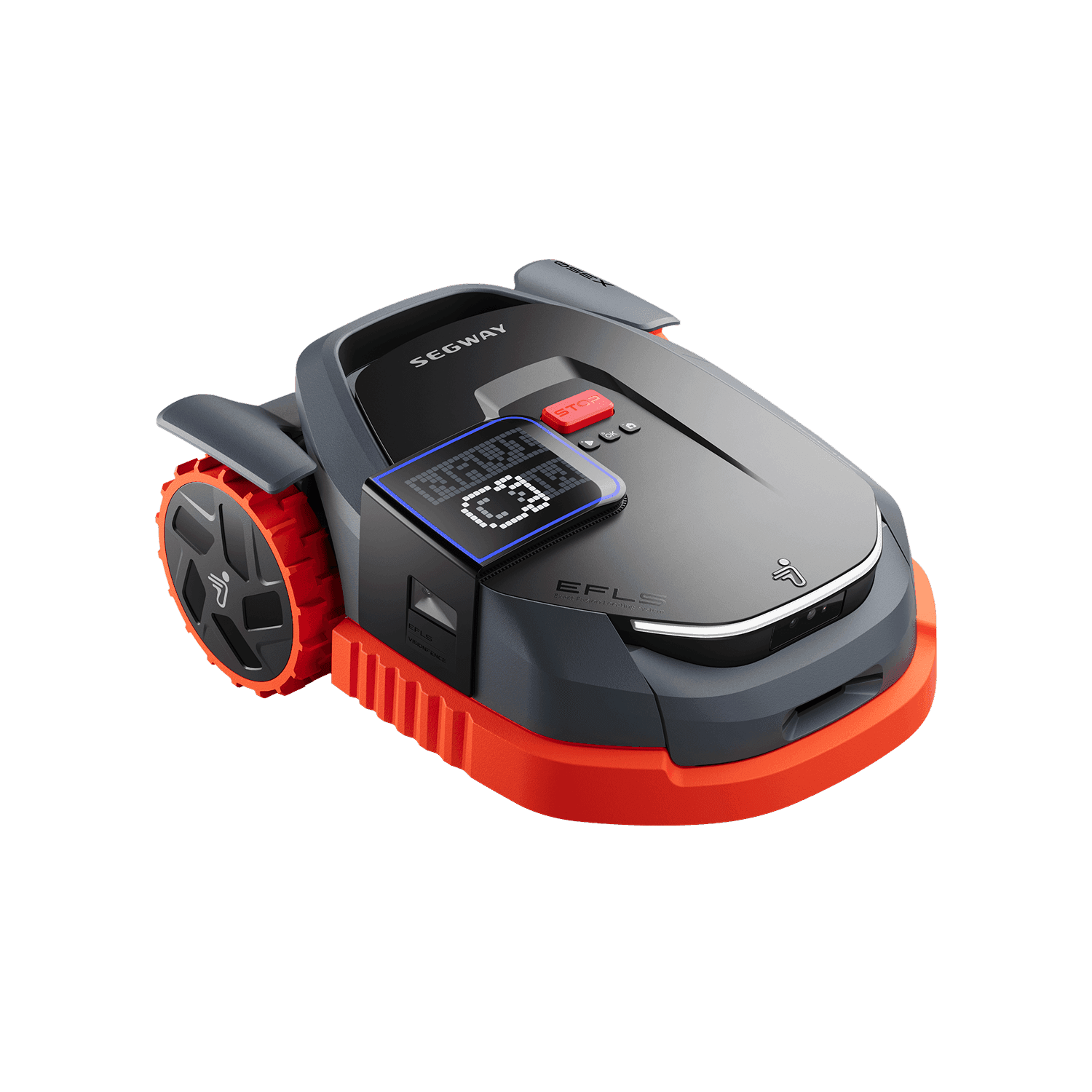
Segway Navimow X350 robot lawn mower
The Segway Navimow X350 is the premium open-sky alternative. The Navimow X-family — the X330, X350, X430, and X450 — markets AI-vision obstacle avoidance with animal detection and night-capable vision. The X350 scores 85 and covers up to 1.5 acres, but it leans on satellite-style positioning that wants a clear sky, so dense tree cover needs a closer look. Treat the X4 platform's 84% slope claim as a manufacturer ceiling, not a verified number.
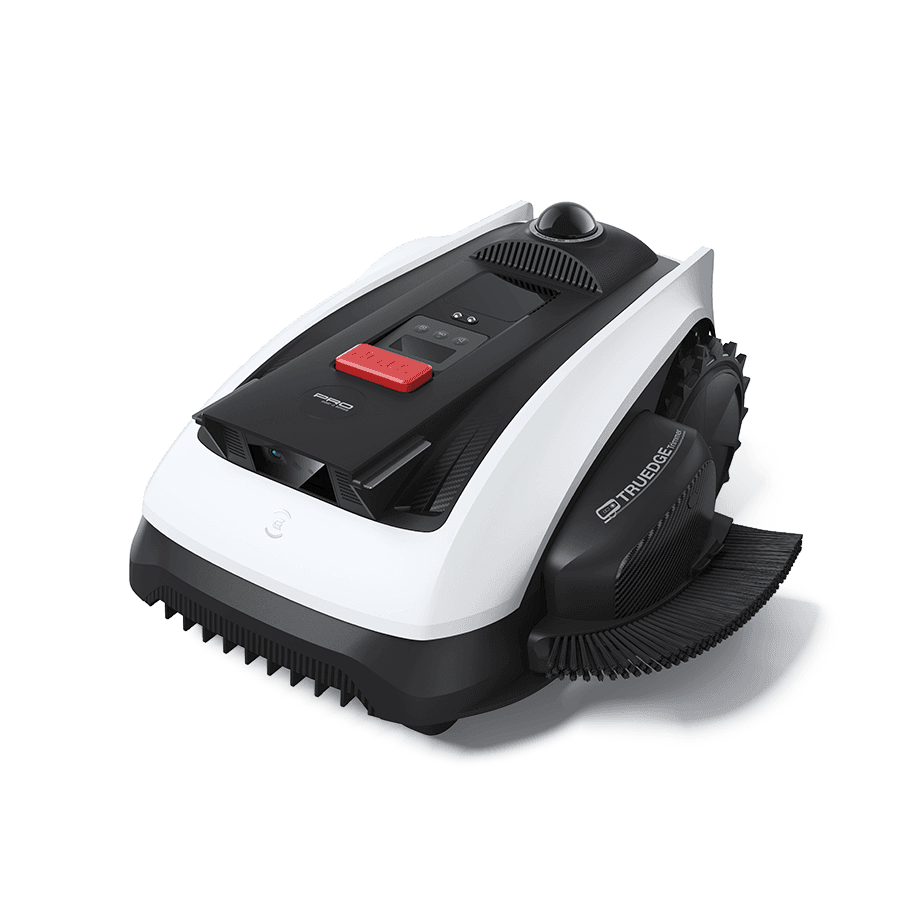
eufy E15 robot lawn mower
The eufy E15 is the light, simple option: pure AI-vision navigation, no antenna, a 27-pound body (the lightest of these five picks, and less mass means less force in the rare event of contact), and a score of 60. Its bigger sibling, the E18, is out of stock at every US retailer we track. The honest limits are that vision-only detection has no depth sensor to fall back on in poor light, and eufy states these are flat-lawn mowers. On a small, level, sunny yard they are an easy, gentle choice; on shade or slopes they are not.
What actually makes a robot mower safer around pets
Pet safety comes down to four things working together, and only the first is a purchase decision.
Obstacle avoidance that detects animals. This is the headline spec. AI-vision models recognize an object and steer around it before contact; bump-only models only stop and turn after a light collision. Every mower on this page uses AI-vision detection for that reason.
Blade safety. Modern robot mowers use small, recessed, pivoting razor blades that fold away on impact instead of a single heavy rotary blade. Paired with lift and tilt sensors, they stop within roughly a second if the mower is picked up or tipped — engineering out the classic danger of a nose or paw reaching underneath.
Scheduling. Software controls when the mower runs. The safest setting is pets indoors, daylight only — never overnight.
No-go zones. You can wall off dog runs, water bowls, and favorite napping or digging spots in the app so the mower never enters them.
Buy for the first two; configure the last two. For a deeper breakdown of the sensor types, read the sensor-by-sensor comparison in RTK vs LiDAR vs vision and the setup guidance in the robot mower installation guide.
The honest truth: no robot mower is pet-proof
Here is the part the marketing pages skip. Detection is very good with big, moving objects and much weaker with small, low, or still ones. A sleeping cat, a rabbit frozen in place, or a small dog lying in tall grass is exactly the case sensors struggle to classify in time. And night is the danger window — nocturnal animals are active and hardest to detect after dark. Peer-reviewed research on European hedgehogs found some robot mowers had to physically touch the animal to register it; the same physics applies to US backyard wildlife and to small pets. We cover the practical safety baseline in are robot mowers safe for kids and pets.
The takeaways are simple and non-negotiable: mow in daylight, keep pets indoors during runs, supervise young or small animals, and never treat any sensor as a substitute for a closed gate. If noise is the reason you are tempted to schedule overnight runs, start with quiet robot mowers for small yards instead — for a pet household, the answer is no.
Obstacle avoidance: AI vision vs basic bump-only
In the MowScout data, the single field that predicts pet-appropriateness is `obstacleavoidance`, and it has two meaningful values: `aivision` and `basic`. AI-vision models — every pick on this page — see the animal and route around it. Basic models rely on a physical bumper: the mower makes light contact, then reverses and turns. For a hose or a planter that is fine; for a pet it means the mower touches the animal before it reacts. Several otherwise-capable machines in our database, including the wire-guided WORX Landroid and the classic Husqvarna Automower 430X, are bump-only, which is why they are not on this list despite being solid mowers in other respects. When you shop, the question is not "does it avoid obstacles" — nearly all claim to — but "does it detect and steer, or only bump and turn."
Blade design and the lift-and-tilt safety chain
The reason a machine with spinning blades can share a lawn with a dog is the blade-and-sensor chain. Instead of one heavy fixed blade, these mowers spin a small disc carrying short pivoting razors. The razors are set back under the deck and swing out of the way on impact, so striking a solid object tends to fold the blade rather than transmit full force. Above that sits the safety logic: a lift sensor cuts blade power the instant the mower leaves the ground, and a tilt sensor does the same if it is tipped past a threshold. In practice the blades stop within about a second of a pickup. This is genuinely reassuring — it is why the danger of a curious pet nosing the machine is far lower than instinct suggests — but it protects against contact and lifting, not against a small animal the sensors never classified. Keep the cut height on the taller side, too: a higher deck means more clearance over a low animal and is gentler on warm-season turf.
Scheduling and no-go zones: the setup that does the real work
The hardware sets the ceiling on safety; your setup determines how close you get to it. Build the schedule around the animals, not the grass. Run during daylight hours when you are home and the yard is visible, and set the mower to stay docked overnight. Before each run becomes routine, do a quick sweep for chews, balls, bones, and waste — a robot mower will happily mulch a rawhide or fling debris.
Then use the app to draw no-go zones around anything pet-related: the dog run, water and food bowls, the shaded corner where the cat naps, and any spot your dog reliably digs. Move those boundaries a few inches at a time over the first week rather than trusting a single tap. The robot mower setup and installation guide covers the mechanics, and if your yard is enclosed, the best robot mowers for fenced yards guide pairs well with this one — a good fence plus daytime scheduling plus AI vision is the layered approach that actually keeps pets safe.
Dogs specifically: digging, chasing, chewing, and the dock
Dogs add wrinkles cats do not. Some dogs chase the mower, which is usually harmless curiosity but worth interrupting so it does not become a game near the blades. Some dogs guard or chew the dock or its cable — site the charging base where your dog cannot reach it, ideally behind a barrier, and check the cable for teeth marks. Diggers can undermine boundaries and dislodge any perimeter markers, so re-check the map after a heavy digging session. And the unavoidable one: pick up waste before every run. A robot mower driving through dog waste spreads it across the whole lawn and into the deck, which is a cleaning problem and a hygiene one. None of this is a reason to avoid a robot mower with a dog — it is a reason to keep the schedule to daylight, supervised, waste-cleared runs.
Common mistakes pet owners make
Do not assume "obstacle avoidance" in a product bullet means animal detection — confirm it is AI vision or LiDAR, not a bumper. Do not schedule overnight runs to keep things quiet; that trades a minor convenience for the single riskiest window for animals. Do not skip the no-go zones because the yard "looks clear"; the point is the boundary that holds when a pet wanders where you did not expect. Do not over-buy a heavy all-wheel-drive machine for a small flat lawn just because it scores higher — more mass in motion is not what a compact pet yard needs. And do not treat any of this as a replacement for supervision of young or very small animals.
How MowScout treats affiliate revenue
This page is built to earn through affiliate links only after the recommendation is defensible, and safety pages get the strictest version of that rule. A high commission does not move a mower onto this list, and it never overrides the `obstacle_avoidance` requirement — a bump-only model does not belong on a pet page regardless of what it pays. The product data shown here includes the MowScout Score, street price, obstacle-avoidance type, navigation, drive, weight, warranty, affiliate program, sources, and last-verified dates so the reasoning can be checked. When two AI-vision models look close, use fit first, price second, and commission last.
For a pet household, start with the ECOVACS GOAT O1000 LiDAR PRO for its depth-plus-vision detection at a fair price, step to the Mammotion YUKA mini 2 if you want the lightest compact body, and move up to the Mammotion LUBA 3 AWD 3000H or a Navimow X-series only if the yard is large, steep, or open-sky. Whichever you choose, the mower is one layer. The safety comes from stacking it with daytime-only scheduling, pets kept indoors during runs, no-go zones around the spots your animals use, and your own supervision. Do that, and a robot mower is one of the safest ways to cut a lawn shared with dogs and cats. Skip it, and even the best sensors are working alone — which is exactly what no robot mower should be asked to do around a pet.
Related mower reviews
Related pick #1
ECOVACS GOAT O1000 LiDAR PRO
Score72/100
ECOVACS GOAT O1000 LiDAR PRO belongs in Best Robot Mower for Pets & Dogs (2026) because it combines LiDAR navigation, 0.25 acres of rated coverage, a 45% slope rating, and 16 mapped zones. RWD makes it a better fit for simpler turf. No separate antenna requirement reduces one setup variable.
MOVA LiDAX Ultra 1000 belongs in Best Robot Mower for Pets & Dogs (2026) because it combines LiDAR navigation, 0.25 acres of rated coverage, a 45% slope rating, and 150 mapped zones. RWD makes it a better fit for simpler turf. No separate antenna requirement reduces one setup variable.
Mammotion LUBA 3 AWD 3000H belongs in Best Robot Mower for Pets & Dogs (2026) because it combines hybrid navigation, 0.75 acres of rated coverage, a 80% slope rating, and 30 mapped zones. AWD/4WD gives it extra traction margin. No separate antenna requirement reduces one setup variable.
eufy Robot Lawn Mower E15 belongs in Best Robot Mower for Pets & Dogs (2026) because it combines vision navigation, 0.2 acres of rated coverage, a 32% slope rating, and 8 mapped zones. RWD makes it a better fit for simpler turf. No separate antenna requirement reduces one setup variable.
Robot mowers fail when a generic recommendation misses the hard constraint: slope, tree cover, separated zones, dock placement, or budget. Run the configurator before using any deal box.
The ECOVACS GOAT O1000 LiDAR PRO is the first model to evaluate because it pairs LiDAR depth mapping with AI-vision obstacle avoidance that steers around an animal instead of only stopping on contact. But the honest answer depends on your yard, your pets, and your budget, and no robot mower is 100% pet-proof.
Are robot mowers safe for dogs and cats
They are far safer than gas or riding mowers. Models with AI-vision obstacle avoidance slow or steer around an animal in the path, small recessed pivoting blades sit under the deck, and lift and tilt sensors cut the blades within about a second if the mower is picked up or tipped. Safer is not zero risk, so keep pets indoors during runs, mow in daylight, and supervise.
Can a robot mower hurt a dog or small animal
It is far less likely than a gas mower but not impossible. The residual danger is a small, low, or still animal the sensors cannot classify in time, and mowing after dark when nocturnal wildlife is active. Small pivoting blades, a raised cut height, AI-vision detection, daytime-only schedules, and no-go zones remove most of the risk, not all of it.
Should I let my dog in the yard while the robot mower runs
No. The safest rule is to schedule mowing when pets are indoors and to run in daylight, not at night. Add no-go zones around dog runs, water bowls, and favorite digging or napping spots so the mower never enters them, and pick up chews, toys, and waste before each run.
Do AI-vision robot mowers actually detect pets
Vision and LiDAR models recognize an object in the path and steer around it before contact, which is the behavior you want in a yard with animals. Bump-only models only react after a light collision. In the MowScout database, AI-vision obstacle avoidance is the spec that separates the pet-appropriate models from basic bumper-only ones.
Are prices current
Prices are current to the stored MowScout verification date, but retailer prices change often. Always verify before buying.
Do these recommendations include affiliate links
Yes. MowScout may earn from qualifying purchases, but commission does not move a mower into a guide unless it is a real fit.