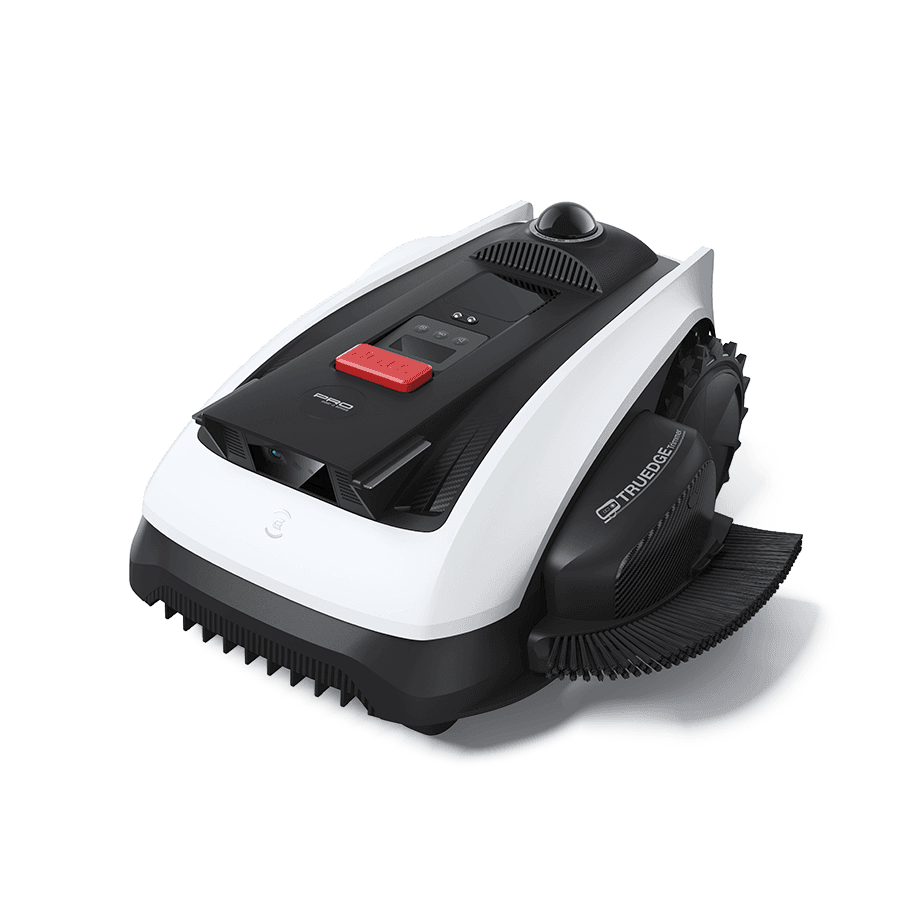
Quietest robot mowers for small yards in 2026: spec-verified picks rated 56-58 dB, sized to a quarter acre, ranked by rated noise and MowScout Score for close-neighbor lawns.
Affiliate disclosure: MowScout earns a commission when you buy through our links, including as an Amazon Associate. Recommendations are based on yard fit, verified specs, and score methodology; commission can only break close ties among genuine fits.
Quick answer: the quietest robot mower that fits a small yard is the eufy E15 — MowScout Score 60, rated 56 dB, sized to 0.2 acre. It shares the lowest rating in our database, 56 dB, with its bigger sibling, the eufy E18, which is out of stock at every US retailer we track. At a rated 56 dB — about the level of a normal conversation — it can run early in the morning or in the evening without its hum carrying over the fence to a neighbor a few feet away. If you'd rather have a markedly higher Score and can accept two more decibels, the ANTHBOT M9 (Score 75, rated 58 dB) is the alternative we call out below. This page is spec-verified and data-driven, not hands-on — we haven't run a decibel meter on your lawn, so every figure comes from published manufacturer noise ratings and our MowScout Score, cross-checked against retailer listings. Verify the current price before you buy.
This is a noise-and-size buying guide for the hardest audience to please: people with close neighbors, a shared property line, or an HOA with posted quiet hours. Robot mowers are already dramatically quieter than the gas machine you're replacing, but within the category there's still a real spread — and when your lawn is small and the fence is close, those last few decibels decide whether you can mow at 6 a.m. or have to wait for the weekend. Below we explain why noise matters more on a tight lot, what we weighed, six picks grounded in our data, an at-a-glance table, the decibel context that puts these numbers in perspective, and how to schedule a mower to keep the peace. For the full navigation explainer, start with the pillar, Robot lawn mowers — how they navigate.
The quiet short list: our top pick and who it fits
For a small, close-neighbor yard, the eufy E15 is the mower to beat on noise. Its rated 56 dB is the lowest published figure of any small-yard-sized model we track, tied only with the eufy E18, which is out of stock at every US retailer we track, and it pairs that silence with the simplest setup in the category: pure camera vision, no boundary wire, no RTK antenna. You map the lawn once and it mows. It's rear-wheel drive, rated to 0.2 acre and a gentle 32% slope, so it fits a genuinely small, flat-to-gentle lawn — which is exactly the profile most close-neighbor buyers have.
The honest caveat that shapes the rest of this guide: because the eufy relies on cameras, it wants usable light and isn't the pick for pitch-dark, after-midnight runs. If your goal is literally overnight mowing, the LiDAR-based ECOVACS GOAT O1000 or the NetRTK-based Navimow i105N/i110N navigate in darkness and are the better after-dark tools even though they read a couple of decibels higher. And if you want a markedly higher Score while staying inside the quiet bar, the ANTHBOT M9 at Score 75 is the standout, rated 58 dB rather than 56. The ranking below sorts all of this out by rated noise first, then score and fit.
Why noise matters more on a small, close-neighbor lot
On a big rural property, a mower's decibel rating barely registers — there's no one within earshot. On a small suburban or urban lot, it's often the single most important spec, and for three concrete reasons.
1. The fence is close. Sound falls off with distance, so a mower that's inaudible across an acre can be plainly present ten feet from a neighbor's open window. Small yards put the machine — and its charging base — near shared property lines by definition. A rated 56-58 dB unit gives you the margin to run it there without generating a complaint.
2. You'll want to mow when people are home. The whole appeal of a robot mower is that it works on its own schedule, not yours. But "its own schedule" usually means early morning, evening, or while you're at work — precisely the hours a loud machine would be antisocial. Quiet operation is what makes daily, set-and-forget mowing compatible with a neighborhood where people sleep, work from home, and sit on their patios.
3. HOAs and noise ordinances. Many associations and municipalities set quiet hours (often something like 8 or 9 p.m. to 7 or 8 a.m.) that restrict powered lawn equipment. A quiet robot mower doesn't exempt you from those rules, but it makes compliance painless: you schedule around the window, and at 56-58 dB the machine is unlikely to draw attention even at the edges of it. Because none of our picks needs a buried boundary wire, there's also no trenching or visible perimeter hardware for an HOA to object to. If HOA approval is your main concern, cross-reference the picks below with our best mowers for small yards.
What we prioritized: rated decibels and right-sized capacity
This is a two-filter list, and both filters are hard requirements before the MowScout Score ever enters the picture.
Published, rated noise at or near 58 dB. We only cite a manufacturer's stated decibel figure — we
never estimate or guess one. Several otherwise-excellent compact models (the Mammotion YUKA mini 2 and LUBA mini AWD among them) publish no noise spec in our data, so despite being small-yard-friendly they can't appear on a noise-first list. Our five core picks are all rated 56-58 dB; we include one LiDAR model at 61 dB and flag it plainly.
Right-sized for a small yard (about 0.3 acre or less). A quiet mower that's oversized for your lawn is
wasted money and a bigger machine near the fence. Every core pick here is rated for 0.13 to 0.25 acre — matched to compact lots, not stretched to cover them.
Then, MowScout Score and setup fit. With noise and size satisfied, we rank by our weighted Score and
by how well each model suits a close-neighbor lawn: wire-free setup, obstacle avoidance, and — a detail that matters for early/late runs — whether the navigation works in low light.
Everything below is grounded in `data/mowers.json` and the MowScout Score. Where we write "rated," we mean the manufacturer's published figure; where we write "street," we mean the verified retail estimate. We have not measured a mower ourselves.
The quietest robot mowers for small yards, ranked
Ordered by rated noise first (quietest to loudest), then by Score and small-yard fit.
New in the catalog (September 2026): four more small-yard mowers list a rating quieter than the GOAT O1000 LiDAR PRO. The GOAT O1000 RTK and the ANTHBOT M9 now rank #2 and #3 below. The Navimow i206 AWD (Score 71) and i215 LiDAR (Score 70) list 59 dB(A) sound power and appear in the table. Makers don't all measure noise the same way, so treat a one- or two-decibel gap loosely.
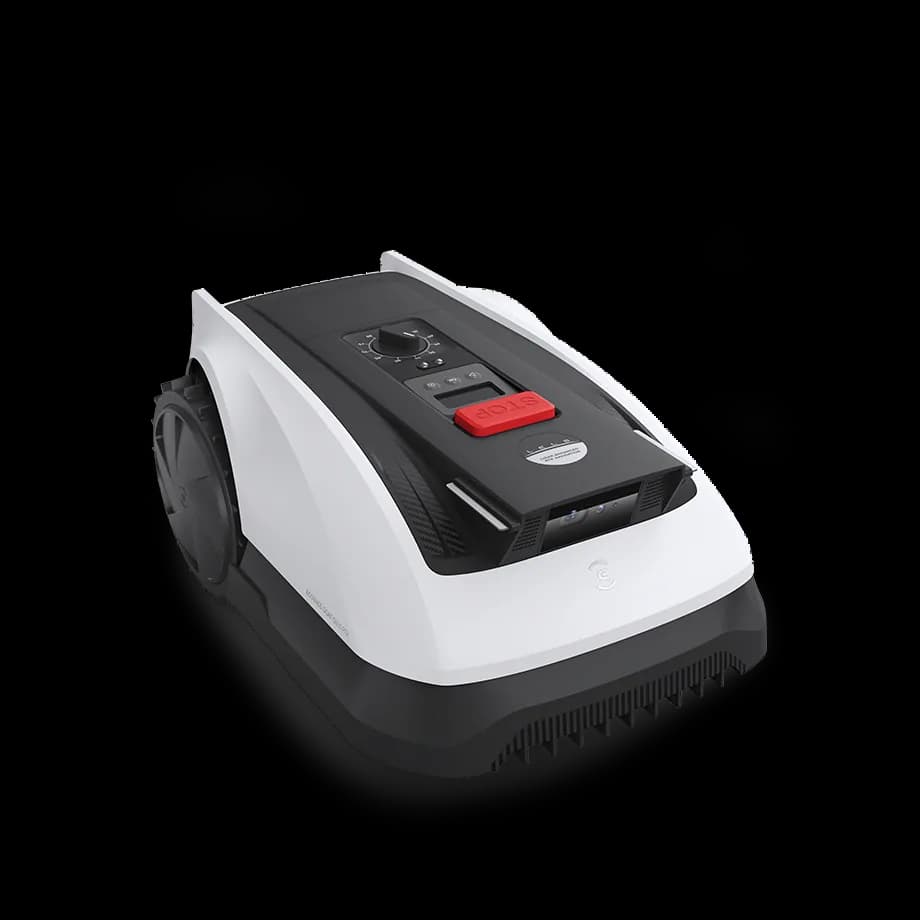
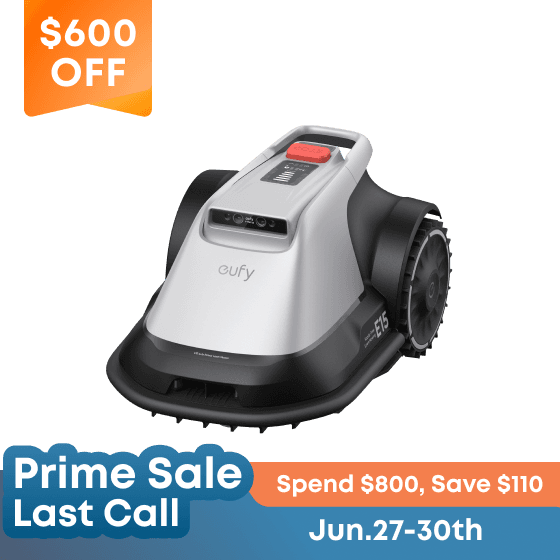
1. Quietest that fits — eufy E15 — Score 60
eufy E15 robot lawn mower
MowScout Score: 60/100 · Rated noise: 56 dB · Area: 0.2 ac · Slope: 32% · Nav: vision (no wire, no antenna) · Drive: RWD
The quietest small-yard mower we track, and the one most close-neighbor buyers should start with. At a rated 56 dB it's about as loud as two people talking, which is what makes it comfortable to schedule for early morning or evening near a shared fence. Setup is the other selling point: pure camera vision means no boundary wire to bury and no RTK antenna to mount, so onboarding is a quick mapping drive. Edges are rated "good," and the app is polished enough for a first-time buyer. The honest limits keep it in small-yard territory: it's rear-wheel drive, capped at 0.2 acre and a 32% slope, and because it navigates by camera it dislikes low light and heavy wet grass (eufy rates it `wetgrassok: false`), so it's best run in daylight or dusk rather than pitch dark. For a small, flat, open lawn where quiet and simplicity matter most, it's the pick. Read the full review.
One decibel above the eufy, and a different kind of machine. It pairs RTK positioning with LiDAR and a 3D-ToF camera, cuts good edges, and climbs a 45% slope on a quarter acre. The trade-off is setup: it needs an RTK antenna station sited under open sky, which is extra visible hardware to clear with an HOA, and it lists Wi-Fi only, with no 4G tracking. For a small, open lawn where you want more capability than a vision mower at nearly the same noise, it's the pick. Read the full review.
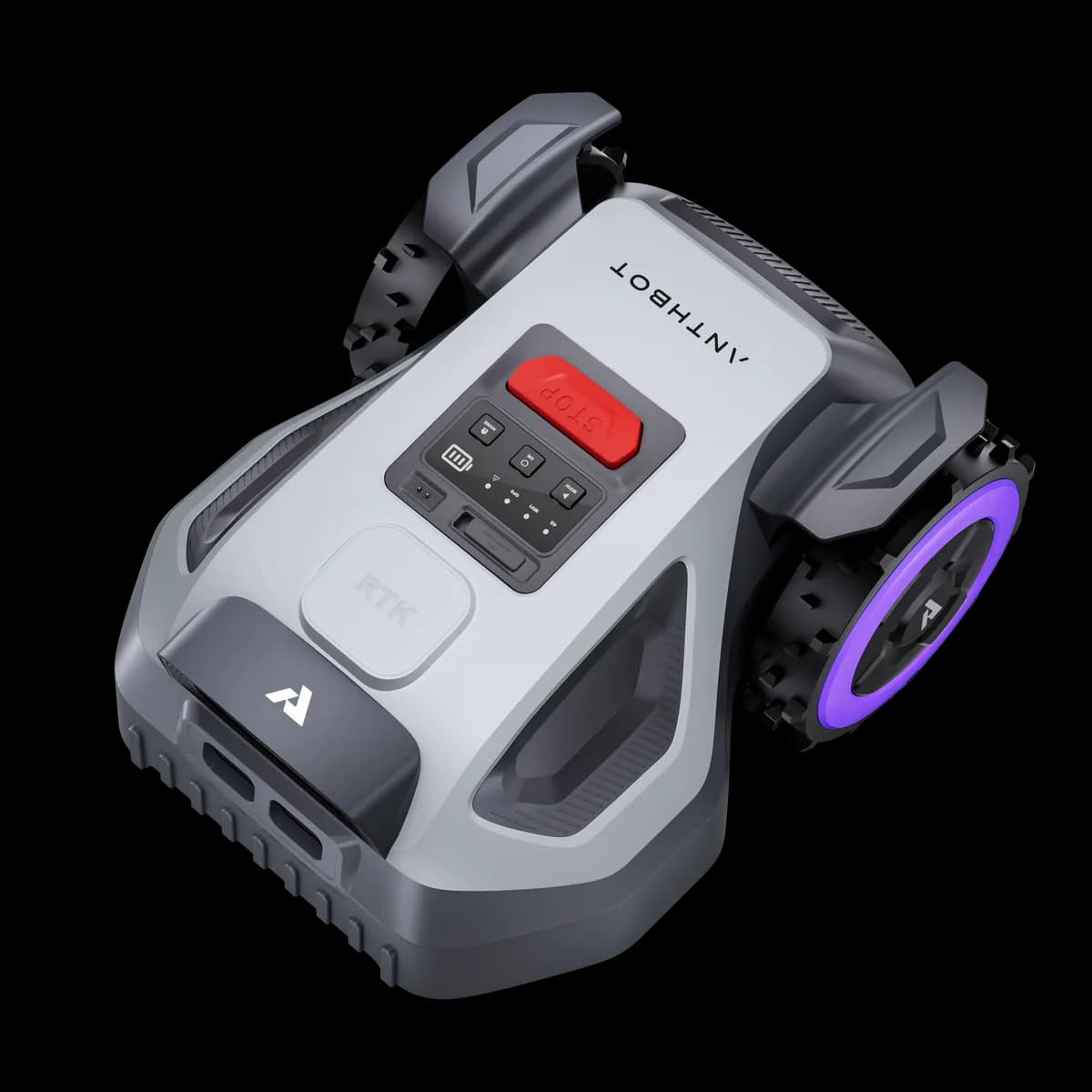
3. Higher Score at 58 dB — ANTHBOT M9 — Score 75
ANTHBOT M9 robot lawn mower
MowScout Score: 75/100 · Rated noise: 58 dB · Area: 0.25 ac · Slope: 45% · Nav: RTK + AI vision · Drive: RWD
The pick if you want a markedly higher Score while staying inside the quiet bar. At a rated 58 dB (the maker lists "58 dB or less") it sits two decibels above the eufy, and it brings RTK-plus-vision navigation, AI obstacle avoidance, 4G theft tracking, a 3-year warranty, and a 45% slope rating to a quarter acre, at the lowest price on this list. Where ANTHBOT's network RTK coverage reaches, it needs no station; elsewhere, you site the RTK reference station that comes in the box. Its limits: satellite positioning wants open sky, so it's not a tree-cover pick, and its edges are rated ok. Read the full review.
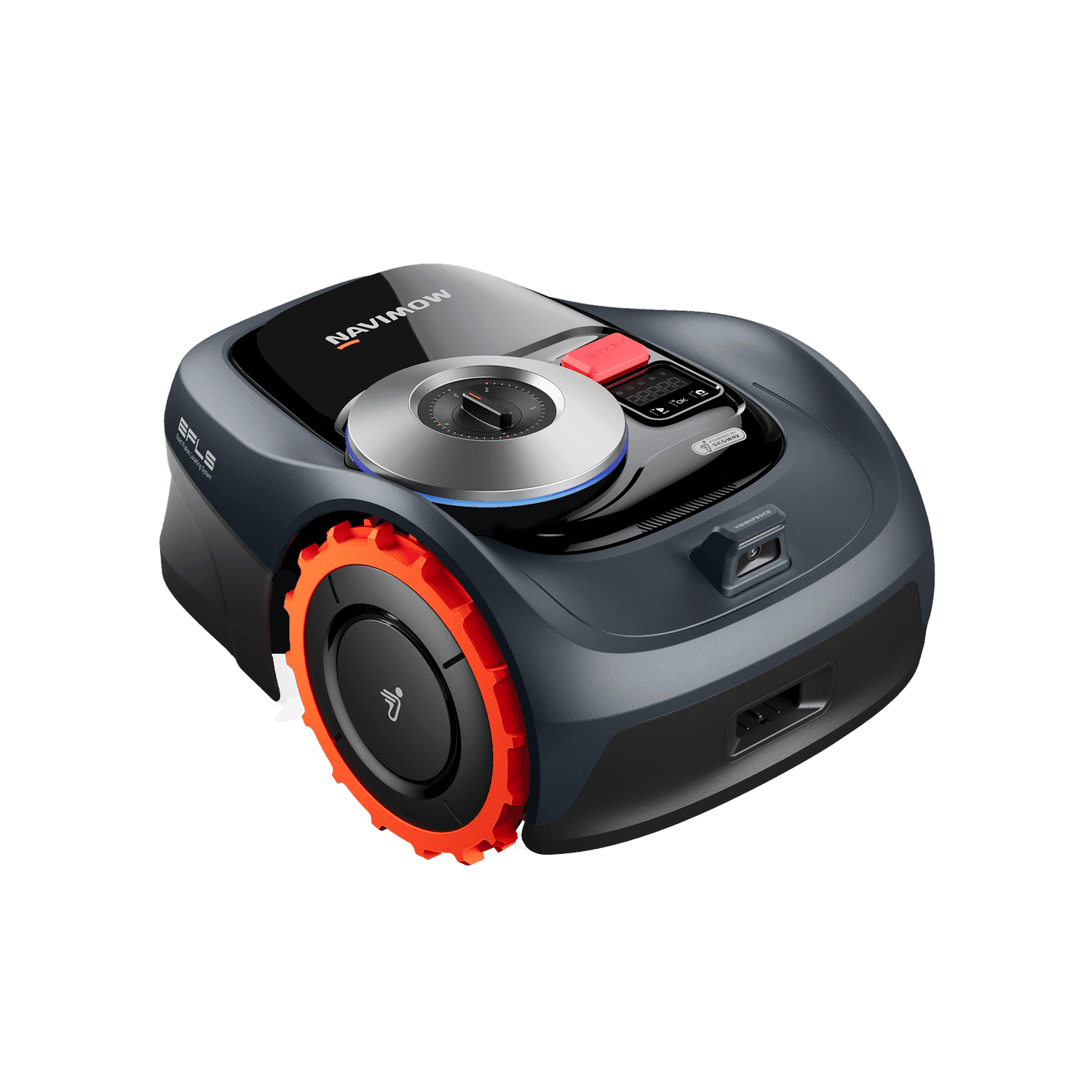
The quiet pick for a flat, open quarter acre — and a better literal night-mower than the eufys. At a rated 58 dB it's still comfortably conversation-level, and its NetRTK-plus-vision navigation works in darkness, so it's genuinely comfortable running before dawn or after dusk when you want the yard to yourself. It skips both the boundary wire and a local antenna, adds AI VisionFence obstacle avoidance, and includes 4G for theft tracking. Why it sits mid-pack: NetRTK needs a cellular/network signal and a reasonable view of the sky, so it drifts under heavy tree cover, and it's RWD with a 30% slope limit and "okay" (not great) edges. For an open, level lawn near close neighbors where you might mow after dark, it's a strong, quiet, low-fuss choice. Read the full review.
5. For the tiniest lawns — Segway Navimow i105N — Score 64
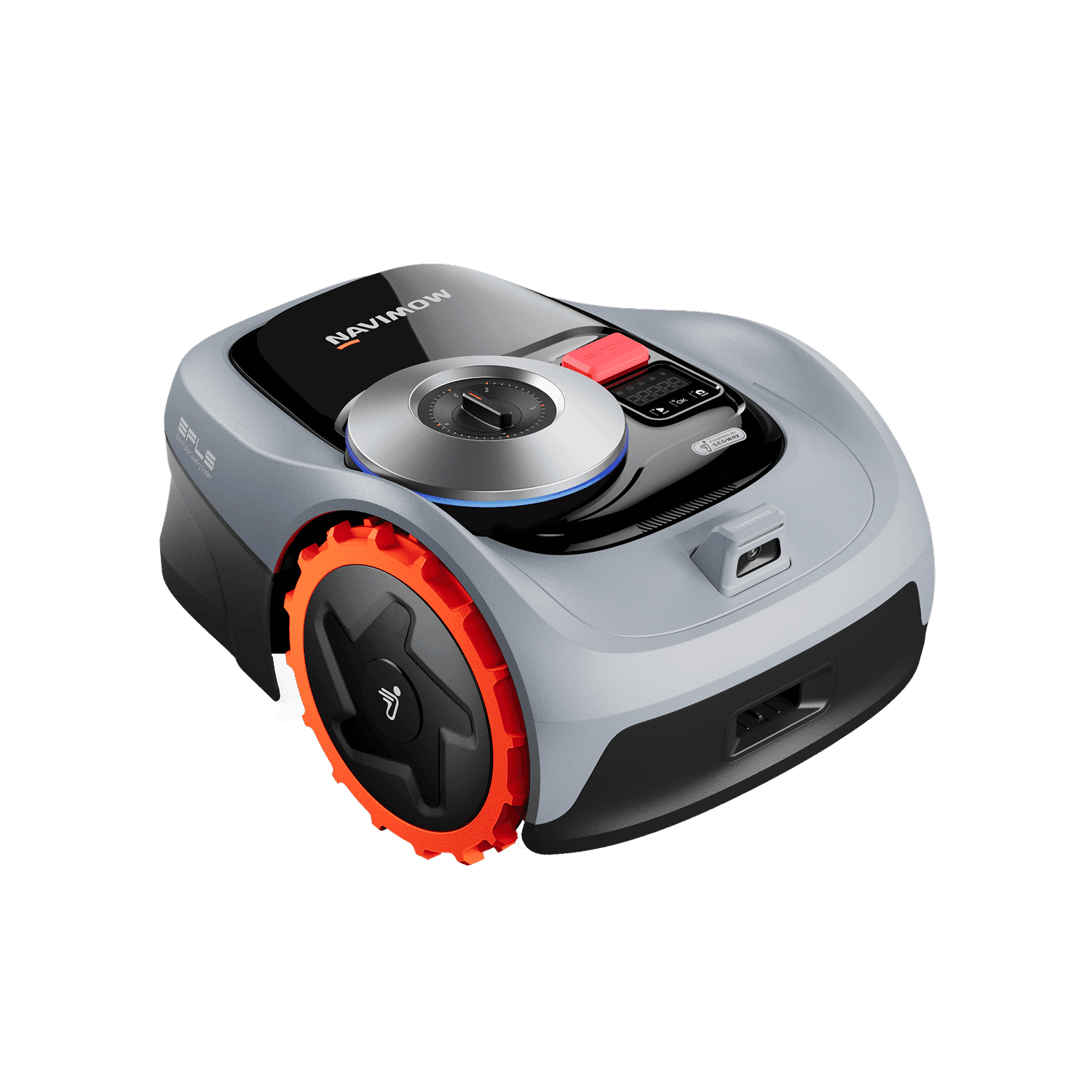
The right tool for a genuinely tiny yard. The i105N brings the same 58 dB, dark-capable NetRTK-plus-vision navigation as the i110N to a 0.13-acre (roughly 1/8 acre), flat, open lawn. If your "lawn" is a compact urban plot or a small courtyard hemmed in by neighbors, it's a low-cost way to get quiet, wire-free, scheduled mowing. Be clear-eyed about the ceilings, though: that 1/8-acre capacity is the smallest here, it's rated to just 30% grade, it's RWD, and like the i110N its NetRTK positioning wants sky and signal, so it's not a tree-cover pick. For a very small, flat, open yard, it's a quiet, low-cost answer. Read the full review.
6. LiDAR for shade, a few more decibels — ECOVACS GOAT O1000 LiDAR PRO — Score 72
ECOVACS GOAT O1000 LiDAR PRO robot lawn mower
MowScout Score: 72/100 · Rated noise: 61 dB · Area: 0.25 ac · Slope: 45% · Nav: LiDAR + AI vision (no antenna) · Drive: RWD
The pick if your small yard has tree cover, or you want a mower that maps without the sky at all. We rank it last on the noise axis honestly: at a rated 61 dB it's the loudest of our picks and sits just above our ~58 dB quiet bar. But 61 dB is still around 30 dB below a gas mower, and the gap between it and the 58 dB picks is marginal — both land in conversation territory. In exchange for those few decibels you get LiDAR navigation that maps in 3D, works under tree cover with no antenna, and runs perfectly in the dark; genuinely good "TruEdge-class" edge cutting; and a 45% slope rating. It's RWD and capped at 0.25 acre, so it's still a small-to-moderate-yard machine. If your neighbors aren't right on top of you and your lawn sits under trees, this is the quiet-enough LiDAR choice. Read the full review.
Quiet small-yard picks at a glance
Every figure is a published manufacturer rating or verified street price, paired with the MowScout Score. The list is ordered quietest-first.
Note: several compact models we like (the Mammotion YUKA mini 2 and LUBA mini AWD, and the Sunseeker X3 Plus) are omitted because they publish no noise rating in our data, and we don't estimate decibels. Only rated figures appear above.
How quiet is quiet? Gas vs robot decibels in context
The headline is simple: every robot mower is dramatically quieter than the gas mower you're replacing. A typical gas push mower runs around 90 dB — loud enough that extended use warrants hearing protection, and loud enough to be the thing your neighbors notice most about yard work. Our picks run 56-61 dB. That sounds like a modest difference on paper, but decibels are logarithmic, not linear, so it isn't.
A useful rule of thumb: every 10 dB is perceived as roughly a doubling (or halving) of loudness. By that measure, dropping from ~90 dB to ~56 dB isn't "a bit quieter" — the robot sounds only a small fraction as loud as the gas mower to the human ear. Put in everyday terms, 56 dB is about the level of normal conversation or a quiet office; 58 dB is the same neighborhood; 61 dB is close to it. None of these is a noise your neighbor is likely to hear through a closed window, and all of them are a world away from the gas-engine drone.
What about the spread within our picks — is 56 dB meaningfully quieter than 61 dB? Barely. A 3 dB change (58 vs 61) is technically a doubling of sound energy but only a slight, often barely-perceptible, change in perceived loudness; you'd need closer to a 10 dB gap before most people would call one "clearly quieter." That's why we're comfortable recommending the 61 dB GOAT O1000 to anyone who isn't at the extreme end of noise sensitivity: the practical difference from the 56 dB eufy is small, and the O1000's higher Score and lower price often outweigh it. If you want the deeper comparison to gas ownership overall — cost and effort included — see robot mower vs gas mower.
Scheduling a quiet mower to keep the peace
A quiet mower and a smart schedule together are what make close-neighbor mowing genuinely frictionless. A few practical rules:
Mow little and often. Robot mowers are designed to cut a small amount daily, which keeps the grass at
a steady height and means each session is short. Short, quiet, frequent runs are far less noticeable than one long weekly blitz — and they never let the lawn get shaggy enough to draw an HOA notice.
Match the schedule to the navigation. For the vision-based eufy E15, aim for **daylight or
dusk — the cameras want light. For the LiDAR GOAT O1000 and NetRTK Navimow i105N/i110N, you can schedule after dark** if that's when you most want the yard quiet and empty, because those systems don't depend on visible light.
Respect posted quiet hours. Check your municipality's noise ordinance and any HOA rule, and set the
mowing window to sit comfortably inside the allowed times. At 56-58 dB you have margin, but the rule is the rule regardless of decibels.
Place the base thoughtfully. The charging station is where the mower docks and starts, so put it as
far from a bedroom window or shared patio as your yard allows, and tuck it out of sight to sidestep any cosmetic HOA concern.
Use no-go zones near the line. Every pick here supports app-defined boundaries. Keeping the mower a
foot or two off a shared fence reduces both noise at the property line and any chance of it nudging a neighbor's border planting.
Common mistakes buying a quiet small-yard mower
Chasing the last decibel you'll never hear. If your neighbors aren't close, paying a premium to go
from 61 dB to 56 dB is optimizing a difference you won't perceive. Spend the money on Score, navigation, or edges instead.
Assuming "quiet" means "runs in the dark." Noise and night-capability are different specs. The
quietest picks here (the vision eufys) are actually the least suited to pitch-dark mowing. If overnight running matters, choose LiDAR or NetRTK.
Buying a null-noise model on a noise-critical lawn. Some compact mowers don't publish a decibel figure
at all. That doesn't make them loud — but if noise is your hard constraint, buy a model with a rated number you can hold the manufacturer to, not an unknown.
Oversizing near the fence. A 0.5-acre-rated machine on a 0.15-acre lot is a bigger, pricier mower
sitting closer to your neighbor than it needs to. Right-size to your actual area.
Ignoring the RWD slope ceiling. Every pick here is rear-wheel drive, rated to 30-45% grade in dry
conditions. Wet grass lowers that. If your small yard is also steep, quiet won't help a mower that can't climb it — size up to AWD and check best mowers for hills.
Frequently asked questions
What's the quietest robot mower for a small yard in 2026? The eufy E15 (MowScout Score 60), rated 56 dB and sized to 0.2 acre. It shares the lowest rating in our database with the eufy E18, which is out of stock at every US retailer we track. 56 dB is roughly the level of normal conversation, so it can run early in the morning or in the evening without carrying over the fence. If you'd trade two decibels for a markedly higher Score, the ANTHBOT M9 (Score 75) is the alternative — it's rated 58 dB, inside our quiet bar.
How quiet is 56 dB, really? About the level of a normal conversation or a quiet office. For comparison, a gas push mower runs roughly 90 dB — loud enough that many people wear hearing protection. Decibels are logarithmic, so that ~34 dB gap is not "a little quieter"; as a rule of thumb every 10 dB is perceived as roughly a doubling or halving of loudness, which makes a 56 dB robot sound only a fraction as loud as a gas mower. In practice, a small-yard robot mower is quiet enough that a neighbor a few feet over the property line usually won't notice it running.
Can I run a robot mower at night without bothering neighbors? On noise alone, yes — all of our picks are quiet enough (56-61 dB) that they won't wake a neighbor through a closed window. The catch is navigation, not sound. The vision-based eufy E15 uses cameras and wants usable light, so it's best scheduled for early morning, dusk, or daylight rather than pitch dark. The LiDAR-based ECOVACS GOAT O1000 and the NetRTK-based Segway Navimow i105N and i110N navigate fine in darkness, making them the better literal after-dark choices. Always check your local noise ordinance and any HOA quiet-hours rule first — some restrict powered equipment overnight regardless of how quiet it is.
Are robot mowers HOA-friendly? Generally yes, and their quietness is a big reason. At 56-58 dB they're far below the threshold that triggers most noise complaints, and because they mow a little every day the grass never reaches the shaggy state that draws HOA notices. The two things to confirm before you buy are cosmetic and logistical: whether your HOA has rules about a visible charging base or boundary hardware, and whether there are posted quiet hours you'll need to schedule around. None of our picks needs a buried perimeter wire, so there's no trenching to clear with the association.
Why isn't a Mammotion or Dreame model on this quiet list? Two reasons. First, several capable compact models — including the Mammotion YUKA mini 2 and LUBA mini AWD — don't publish a manufacturer noise rating in our data (the value is null), and we don't guess or estimate decibels, so they can't qualify for a noise-first list. Second, some models that do publish a figure are either louder or larger than this page's limits: the Dreame A3 AWD Pro is rated 65 dB and sized to nearly an acre, for example. This list only includes models with a published rating at or near 58 dB that also fit a small (roughly 0.3-acre-or-under) yard.
Is a quieter mower worth paying more for on a small lawn? Only if you're genuinely noise-constrained. If you share a close property line, have an HOA with quiet hours, or want to mow while people are home or asleep, then a rated 56 dB machine buys real peace and flexibility, and it's worth prioritizing. If your nearest neighbor is a good distance away, the difference between 56 and 61 dB is marginal — both are conversation-level — and you're better off optimizing for MowScout Score, navigation type, and edge quality instead. That's exactly the trade-off the ANTHBOT M9 represents: two more decibels than the eufy for a markedly higher Score.
Find your match
Noise is only one of the constraints that decide the right robot mower — area, slope, tree cover, and how much you want to spend all interact with it. This page ranks the quietest small-yard field; your yard is more specific than a decibel cap.
The configurator screens your exact area, grade, tree cover, and budget against every model we track, so you don't overpay for capacity a small lawn will never use — or buy a whisper-quiet mower that can't climb your one steep corner. Keep reading: the pillar on how robot mower navigation works, the deep dive on RTK vs LiDAR vs vision, our best robot mowers for small yards — and if noise is your single most important spec, the decibel figures in the table above.
MowScout is reader-supported and may earn a commission from links on this page. Our picks are spec-verified and data-driven — based on published manufacturer specifications and verified US pricing, not hands-on lab testing. Noise figures are manufacturer-rated decibel values; we do not estimate ratings for models that don't publish one. Always confirm the current price before buying. See our full disclosure.
Related mower reviews
Related pick #1
eufy Robot Lawn Mower E15
Score60/100
eufy Robot Lawn Mower E15 belongs in Quietest Robot Mowers for Small Yards (2026) because it combines vision navigation, 0.2 acres of rated coverage, a 32% slope rating, and 8 mapped zones. RWD makes it a better fit for simpler turf. No separate antenna requirement reduces one setup variable.
ECOVACS GOAT O1000 RTK belongs in Quietest Robot Mowers for Small Yards (2026) because it combines hybrid navigation, 0.25 acres of rated coverage, a 45% slope rating, and 1 mapped zones. RWD makes it a better fit for simpler turf. Plan the antenna or base placement carefully.
ANTHBOT M9 belongs in Quietest Robot Mowers for Small Yards (2026) because it combines hybrid navigation, 0.25 acres of rated coverage, a 45% slope rating, and 20 mapped zones. RWD makes it a better fit for simpler turf. No separate antenna requirement reduces one setup variable.
Segway Navimow i110N belongs in Quietest Robot Mowers for Small Yards (2026) because it combines hybrid navigation, 0.25 acres of rated coverage, a 30% slope rating, and 5 mapped zones. RWD makes it a better fit for simpler turf. No separate antenna requirement reduces one setup variable.
ECOVACS GOAT O1000 LiDAR PRO belongs in Quietest Robot Mowers for Small Yards (2026) because it combines LiDAR navigation, 0.25 acres of rated coverage, a 45% slope rating, and 16 mapped zones. RWD makes it a better fit for simpler turf. No separate antenna requirement reduces one setup variable.
Robot mowers fail when a generic recommendation misses the hard constraint: slope, tree cover, separated zones, dock placement, or budget. Run the configurator before using any deal box.
What's the quietest robot mower for a small yard in 2026?
The eufy E15 (MowScout Score 60), rated 56 dB and sized to 0.2 acre. It shares the lowest rating in our database with the eufy E18, which is out of stock at every US retailer we track. 56 dB is roughly the level of normal conversation, so it can run early in the morning or in the evening without carrying over the fence. If you'd trade two decibels for a markedly higher Score, the ANTHBOT M9 (Score 75) is the alternative — it's rated 58 dB, inside our quiet bar.
How quiet is 56 dB, really?
About the level of a normal conversation or a quiet office. For comparison, a gas push mower runs roughly 90 dB — loud enough that many people wear hearing protection. Decibels are logarithmic, so that ~34 dB gap is not 'a little quieter'; as a rule of thumb every 10 dB is perceived as roughly a doubling or halving of loudness, which makes a 56 dB robot sound only a fraction as loud as a gas mower rather than one-third. In practice, a small-yard robot mower is quiet enough that a neighbor a few feet over the property line usually won't notice it running.
Can I run a robot mower at night without bothering neighbors?
On noise alone, yes — all of our picks are quiet enough (56-61 dB) that they won't wake a neighbor through a closed window. The catch is navigation, not sound. The vision-based eufy E15 uses cameras and wants usable light, so it's best scheduled for early morning, dusk, or daylight rather than pitch dark. The LiDAR-based ECOVACS GOAT O1000 and the NetRTK-based Segway Navimow i105N and i110N navigate fine in darkness, making them the better literal after-dark choices. Always check your local noise ordinance and any HOA quiet-hours rule first — some restrict powered equipment overnight regardless of how quiet it is.
Are robot mowers HOA-friendly?
Generally yes, and their quietness is a big reason. At 56-58 dB they're far below the threshold that triggers most noise complaints, and because they mow a little every day the grass never reaches the shaggy state that draws HOA notices. The two things to confirm before you buy are cosmetic and logistical: whether your HOA has rules about a visible charging base or boundary hardware, and whether there are posted quiet hours you'll need to schedule around. None of our picks needs a buried perimeter wire, so there's no trenching to clear with the association.
Why isn't a Mammotion or Dreame model on this quiet list?
Two reasons. First, several capable compact models — including the Mammotion YUKA mini 2 and LUBA mini AWD — don't publish a manufacturer noise rating in our data (the value is null), and we don't guess or estimate decibels, so they can't qualify for a noise-first list. Second, some models that do publish a figure are either louder or larger than this page's limits: the Dreame A3 AWD Pro is rated 65 dB and sized to nearly an acre, for example. This list only includes models with a published rating at or near 58 dB that also fit a small (roughly 0.3-acre-or-under) yard.
Is a quieter mower worth paying more for on a small lawn?
Only if you're genuinely noise-constrained. If you share a close property line, have an HOA with quiet hours, or want to mow while people are home or asleep, then a rated 56 dB machine buys real peace and flexibility, and it's worth prioritizing. If your nearest neighbor is a good distance away, the difference between 56 and 61 dB is marginal — both are conversation-level — and you're better off optimizing for MowScout Score, navigation type, and edge quality instead. That's exactly the trade-off the ANTHBOT M9 represents: two more decibels than the eufy for a markedly higher Score.