Guide
Husqvarna Automower Problems & Reliability (2026)
Husqvarna Automower problems in 2026: 'No loop signal' wire breaks, 'Outside working area,' getting stuck, charging faults and theft — plus owner fixes.
Find Matching ModelsBy Brian Williams — Founder, MowScoutUpdated 2026-07-01How we scoreHow we test
Husqvarna Automower problems and reliability: what owners report (2026)
The most-reported Husqvarna Automower problems are boundary-wire faults — the classic "No loop signal" error when the buried wire breaks — plus "Outside working area" boundary confusion, getting stuck or "Trapped" on obstacles, charging/dock faults, and theft (mitigated on X-series models by GPS and a PIN). Almost every one of them traces back to the boundary wire, which is both the root of most Automower headaches and the reason the platform is so reliable in the first place. The honest reliability verdict: the Automower line is the mature benchmark of robot mowing with the longest track record and the best dealer support, but in 2026 the wire is the maintenance burden that newer wire-free brands are built to avoid.
A quick note on where this comes from: MowScout is spec-verified and data-driven, not a hands-on test lab. The problems below are drawn from Husqvarna's own support and Help Center documentation, from published owner reviews, and from community reports on the r/automower forum — all cited at the end. We attribute reported failures to those owners, reviewers, and manufacturer docs; we have not bench-tested these units ourselves. For the wider category, start at the pillar: robot lawn mowers.
<em>Disclosure: MowScout may earn a commission from links on this page. It never changes our verdicts — we cite our sources and name the trade-offs.</em>
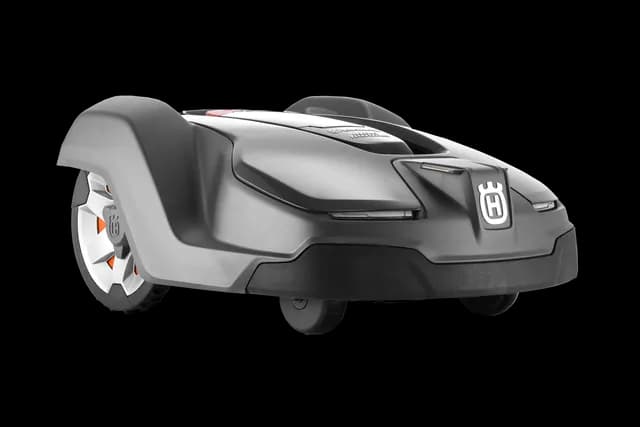
Image: Husqvarna official product photography. MowScout does not shoot original hardware photos; this is the manufacturer's image, used to illustrate the product.
Quick answer: how reliable is the Automower, really?
Husqvarna has been building robotic mowers since 1995 — the longest run in the industry — and that shows up as a real reliability reputation. Long-term reviewers routinely call the Automower the most dependable and best-supported robot mower you can buy, and owners describe running the same unit for years with little more than blade swaps. In our data the flagship wired Husqvarna Automower 430X earns a MowScout Score of 61 — a proven, well-supported machine, marked down chiefly for one reason: it still uses a buried boundary wire in an era when RTK and LiDAR rivals have gone wire-free.
That single design choice is the key to the whole reliability story. The buried perimeter wire gives the Automower a rock-solid, satellite-independent sense of "in bounds vs. out" — it works fine under trees, near buildings, and in narrow yards where GPS mowers stall. But the wire is also the part most likely to fail: a shovel, an aerator, a frost heave, or a rodent can nick it, and then the whole system stops with "No loop signal." So the honest one-line verdict is: the wire is the source of the Automower's reliability and the source of most of its problems. Everything below is the owner- and manufacturer-sourced detail behind that.
The most-reported Automower problems at a glance
Here's the pattern across Husqvarna's support docs and owner reports, with the first thing to try for each. The deep sections that follow explain each in detail.
| Problem | What owners report | First fix |
|---|---|---|
| "No loop signal" | Mower won't leave dock; station LED not steady green | Check station power/connections, then find the wire break |
| "Outside working area" | Mower stops thinking it crossed the boundary | Check wire routing around islands; update firmware |
| Getting stuck / "Trapped" | Bogs down on roots, tight spots, tall grass | Move wire from the snag point; clean blade disc/wheels |
| "Charging system problem" | Won't charge; station light off | Clean contacts; check low-voltage cable and outlet |
| Theft risk | Fear of a visible robot being taken | PIN + alarm + GPS geofence (X-series) |
| Basic obstacle handling | Bumps objects instead of seeing them | Fence off delicate items; it's collision-based, not vision |
None of these is a "lemon" signature — they're the predictable maintenance profile of a wired, contact-sensing robot. For the exact on-screen wording and codes, cross-reference our robot mower error codes guide.
The headline problem: boundary-wire breaks and "No loop signal"
If you read only one section, read this one. "No loop signal" (or "No loop current") is the number-one failure mode of every wire-guided robot mower, and the Automower is no exception. It means the mower can no longer detect the signal traveling through the buried boundary loop. Per Husqvarna's Help Center, the usual causes are a broken boundary wire, a loose or corroded connector at the charging station, or no power reaching the station — the station diode shows something other than steady green and the mower sits with the error.
Owners describe this as the most aggravating Automower failure precisely because the wire is invisible. The loop sits only a few centimeters deep, so a lawn aerator, an edging spade, a mole, or winter frost heave can nick it, and the break can be anywhere in a loop that may run hundreds of feet. Worse, the damage is sometimes partial — a cut that still passes a weak signal — which is why owners report a cable tester showing "signal present" around the whole loop while the mower still won't run.
How Husqvarna says to find and fix it:
- Rule out the easy causes first. Confirm the outlet has power, the low-voltage cable is seated, and the boundary/guide wire connectors are fully inserted and clean at the station. A surprising share of "No loop signal" calls are just a popped connector, not a real break.
- Isolate which wire is broken. Husqvarna's method is to swap the connections in the charging station — start by switching the AL and G1 terminals. If the station shows a solid green after the swap, the break lies in the boundary wire between AL and the point where the guide wire joins the loop. This halves your search area quickly.
- Measure the loop. With the wire disconnected from the station, a multimeter reading across the two ends should show roughly 0.8 ohm per 100 m of wire (about 1.6 ohm for a 200 m loop). A wildly high or open reading confirms a break.
- Walk the wire. Dealers and thorough owners use a loop-signal receiver (the kind used at install) to follow the wire until the audible/visual signal drops — that's the break point.
- Repair with the right coupler. Husqvarna specifies a waterproof Automower coupler designed for splicing and extending boundary/guide wire; a twist of household wire nuts is what leads to repeat failures.
This is exactly the maintenance chore that wire-free mowers eliminate — there is no loop to break on an RTK or LiDAR machine. If chasing a buried wire sounds like a dealbreaker, that's a legitimate reason to look at the no-boundary-wire picks.
"Outside working area" and staying-in problems
The second boundary-related theme is "Outside working area" — the mower stops because it believes it crossed the perimeter. Per Husqvarna's support docs, the most common root cause is a boundary wire wound the wrong direction around an island (a flower bed, tree well, or pond you fenced off). That reverses the signal polarity "outside-in," so the mower reads the safe lawn as forbidden and the island as safe. Other causes are the loop accidentally crossing itself, wire laid too tight against a slope, or simply outdated firmware causing odd behavior.
What owners report: the error tends to recur in the same spot near a specific island, which is the tell that it's a wiring-routing issue rather than a mower fault. Husqvarna's fix is to dig up the wire where it enters and exits the problem island and confirm it isn't crossed, keep the loop laid in a consistent direction, and update to current firmware. On the newer wire-free EPOS Automowers the analog is a virtual boundary placed too close to a slope, corrected in the app — but the wired 430X's version is almost always a physical routing mistake. There's also a related "Alarm! Outside geofence" message tied to the anti-theft geofence, which is a security alert, not a navigation fault. Because these are boundary-logic errors, they overlap with our broader getting-stuck guide.
Getting stuck and "Trapped" on obstacles
Like every robot mower, the Automower can physically bog down and message you to come rescue it. Husqvarna's "Trapped" documentation lists the usual culprits: the work area between the boundary wire and an island (or object) is too small, so the mower can't maneuver out; grass taller than the model's rated maximum; or a blade disc and wheels clogged with grass chunks.
Owners confirm all of these, and add the obstacle-handling caveat that's specific to this generation: the 430X uses basic collision and lift sensors, not cameras — it "bumps into obstacles instead of seeing them," as reviewers put it. Our data flags its obstacle avoidance as "basic" for exactly this reason. That reactive approach is safe (it stops instantly on contact or when lifted) and it's part of why the platform is so mechanically simple and durable, but it means the mower relies on the boundary wire and physical bumping rather than AI vision to route around things. Delicate garden features, hoses, and pet toys should be fenced off with wire or a no-go loop rather than trusted to detection.
Fixes owners and Husqvarna recommend:
- Move the wire away from the snag. If it gets trapped in the same corner every time, re-route the boundary loop to give more turning room.
- Keep it clean. Clear grass buildup from the blade disc and check the drive wheels/motors and underside sensors for debris — a clogged disc or a caked wheel is a frequent stall cause.
- Mow more often, not less. Letting the lawn get tall (above the model's max cut-in height) is a documented trap trigger; frequent short cuts avoid it.
- Fence delicate obstacles. Since detection is contact-based, protect anything you don't want bumped.
For a step-by-step on chronic stalls across brands, see the getting-stuck guide.
Charging and dock faults: "Charging system problem"
The next cluster is charging: the mower won't dock-charge, shows an empty-battery error, throws "Charging system problem," or the station light is simply off. Per Husqvarna's Help Center, the common causes are no power at the outlet, a low-voltage cable that's loose or damaged (or the wrong type/too long), storm damage to the station, or oxidized/dirty contact plates where the mower meets the dock.
What owners report: intermittent charging that turns out to be a contact issue, and stations that go dark after a thunderstorm (a documented failure — the boards are vulnerable to nearby lightning). Reported fixes, in order of effort: confirm the outlet and low-voltage cable (Husqvarna specs a maximum 20 m low-voltage run and the correct power supply), clean the mower and station contact plates of grass, leaves, and oxidation with a fine abrasive pad or contact cleaner, and make sure the mower seats squarely so the charging strips make full contact. Level any dip under the station so the machine docks flush. If the station is dead after a storm, the circuit board may need dealer replacement — which is exactly where Husqvarna's service network earns its keep.
Theft and anti-theft: where the X-series pulls ahead
A visible robot crawling around an open lawn is an obvious theft worry, and it's a fair one. Husqvarna's answer on the 430X is a three-layer system: a PIN lock, a loud alarm, and GPS tracking with geofencing. Per Husqvarna, the alarm sounds if the PIN isn't entered within 30 seconds of pressing STOP, or instantly if the mower is lifted, and you get a phone alert if the mower leaves its geofenced area. Reviewers who tested the tracking found it accurate enough to locate a moved unit.
The practical deterrent is resale value: a PIN-locked, GPS-tracked, account-bound mower is nearly worthless to a thief, so most reported "theft" outcomes are recovery or a scared-off attempt rather than a clean loss. One honest caveat worth flagging — this GPS anti-theft is an X-series feature. The 430X has it; several cheaper Automower models historically shipped with PIN and alarm but no GPS tracking. If theft is a real concern for your neighborhood, that's a reason to stay on an X-model or a rival with GPS, like the Segway Navimow X350.
The counterpoint: dealer support and the longest track record
Now the honest other side of the ledger, because it's the Automower's biggest advantage. Husqvarna has made robotic mowers for three decades and supports them through a large global dealer and reseller network, with long parts availability (owners and dealers cite roughly ten years of spares). That is something no direct-to-consumer startup can match yet.
In practice this changes the ownership experience. When a wire breaks, a board dies, or a mower needs winter service, there is usually a local dealer who installs, repairs, and stores Automowers — rather than boxing a dead robot to ship overseas and negotiating with a chatbot. Reviewers who ding the 430X for a fiddly wired setup ("setup is a chore, but mowing won't be" is a common refrain) still land on the same conclusion: once installed, it just runs, and if something goes wrong there's a human nearby who knows the product. That maturity is a real, buyable advantage over newer wire-free brands whose software and support are still stabilizing. If you want the buying-decision framing, the robot lawn mower buyer's guide weighs support against features.
Who should buy an Automower — and who should go wire-free
Buy a Husqvarna Automower if:
- You value a proven track record and local dealer service above cutting-edge navigation, and you want a machine likely to run for years.
- Your yard has trees, buildings, or narrow passages that trip up GPS mowers — the wire doesn't care about sky view, which is a genuine reliability edge under canopy.
- You're comfortable with a buried wire you may occasionally repair, and you'd rather have a dealer fix a fault than DIY a startup's beta firmware.
- Anti-theft matters and you choose an X-series model with GPS, PIN, and alarm.
Look wire-free instead if:
- You don't want to trench and maintain a boundary loop at all — the entire "No loop signal" failure mode disappears with RTK or LiDAR. Start at best robot mower with no boundary wire.
- You want AI-vision obstacle avoidance rather than contact bumping, or app-based zone editing without digging up wire to change a boundary.
- You have a large, open, sunny lot where a wire-free mower's satellite navigation shines — see best robot mower for large yards.
- You'd rather compare a wire-free flagship head-to-head, such as the Segway Navimow X350.
Honest bottom line: the Automower isn't fragile and it isn't outdated where it counts — it's the most reliable, best-supported platform in robot mowing. Its problems are overwhelmingly wire problems, and the wire is a deliberate trade: bulletproof, sky-independent boundaries in exchange for a buried cable you occasionally have to maintain. If that trade sounds right, buy it with confidence. If the wire is the dealbreaker, that's precisely the itch the wire-free generation was built to scratch.
FAQ
Are Husqvarna Automowers reliable? As a platform, yes — the Automower line has the longest reliability record in robot mowing. Husqvarna has shipped robotic mowers since 1995, and long-term owners and reviewers repeatedly call it the most dependable, best-supported name in the category. The catch is that most of the problems owners do report trace to one component: the buried boundary wire. The wire is what makes the navigation so consistent, and it's also the single most common thing that fails. Our data scores the wired 430X a 62 — reliable and proven, but marked down for still needing a wire in 2026 when newer brands go wire-free.
What does "No loop signal" mean on a Husqvarna Automower and how do I fix it? "No loop signal" (sometimes "No loop current") means the mower can't detect the boundary-wire signal — almost always a wire break, a loose connector at the charging station, or no power to the station. Husqvarna's support guidance is to first check the station's LED and the wire connections, then isolate the break by swapping the AL and G1 connections in the station to tell whether the fault is in the boundary loop or the guide wire, and repair it with a waterproof Automower coupler. A multimeter helps: a healthy loop reads roughly 0.8 ohm per 100 m of wire. Partial damage (a nicked, not fully cut, wire) is the frustrating case; dealers use a loop-signal receiver to walk the wire and pinpoint it.
Why does my Automower say "Outside working area"? This means the mower crossed what it read as the boundary. Per Husqvarna's support docs, the most common cause is boundary wire wound the wrong direction around an island, which flips the signal "outside-in" so the mower thinks the safe zone is unsafe. Other causes are the loop crossing itself, wire laid too close to a slope, or outdated firmware. The fix is to check the wire routing around islands (dig it up and confirm it isn't crossed) and update firmware. It is a wire-installation problem far more often than a mower fault.
Can a Husqvarna Automower 430X be stolen? It's possible but deterred. The 430X layers three anti-theft features: a PIN lock, a loud alarm, and GPS tracking with geofencing. Per Husqvarna, the alarm sounds if the PIN isn't entered within 30 seconds of pressing STOP, or instantly if the mower is lifted, and you get a phone alert if it leaves your geofenced area. A PIN-locked, GPS-tracked mower has little resale value, which is the real deterrent. Note this GPS anti-theft is a feature of the X-series (like the 430X); cheaper Automower models historically shipped with PIN and alarm but no GPS.
Should I buy a wired Automower in 2026 or go wire-free? Buy the wire if you value a proven track record and local dealer service above all, and you don't mind a buried wire that you may occasionally have to repair. Go wire-free if you want to skip trenching a loop entirely and avoid the "No loop signal" failure mode — that's the whole reason RTK and LiDAR mowers exist. See our no-boundary-wire guide and the configurator to match your yard. Honest framing: the wire is both the source of the Automower's famous reliability and the maintenance burden newer brands designed around.
How long do Husqvarna Automowers last, and is support easy? Longevity is a genuine strength. Husqvarna commits to long parts availability (owners and dealers cite roughly a decade of spares) and runs a large global reseller and service network — an advantage newer direct-to-consumer brands can't match. That means a dead unit goes to a local dealer for service rather than shipping overseas to argue with a chatbot. Many owners run Automowers for years across seasons with only blade changes and the occasional wire repair.
Bottom line
The Husqvarna Automower is the reliability benchmark of robot mowing — three decades of iteration, a deep dealer network, and a design so proven that most "problems" are really wire problems: "No loop signal" breaks, "Outside working area" routing mistakes, the odd trap or charging-contact fault. The buried wire is a deliberate trade that buys sky-independent, canopy-proof boundaries at the cost of a cable you occasionally maintain. Get comfortable with that trade and the 430X is a dependable, well-supported machine. Decide the wire isn't for you and the entire wire-free generation is waiting.
Not sure whether a proven wired Automower or a wire-free rival fits your yard? The configurator asks about size, slope, trees, and setup preference and returns the three models that actually fit:
Find your robot mower → answer a few questions, get your top 3
---
Sources
- Husqvarna Help Center US — How to find and repair a wire break in your Automower installation (KA-01339)
- Husqvarna Support — No loop signal: Automower error message, causes and solutions (KA-01417)
- Husqvarna Support — Outside work area: Automower error message (KA-01416)
- Husqvarna Support — Alarm! Outside geofence: Automower error message (KA-01447)
- Husqvarna Support — Trapped: Automower error message (KA-01418)
- Husqvarna Help Center US — Message: Charging system problem
- Husqvarna Help Center US — Automower won't charge or shows empty battery error (KA-70405)
- Husqvarna Help Center US — Why is the light on the Automower charging station off? (KA-70191)
- Husqvarna Support — Charging station blocked: Automower error message (KA-01449)
- Husqvarna Support — How does the Automower theft protection system work? (KA-01567)
- Husqvarna — FAQ for Automower robotic lawn mowers
- Robotic Mower Services — Troubleshooting a "No Loop Signal" error on a Husqvarna Automower
- Byers Equipment — How to find a break in your Automower wiring
- Android Central — Husqvarna Automower 430XH review (setup is a chore, but mowing won't be)
- Smart Garden and Home — Husqvarna Automower 430X and 430XH review (PIN, alarm, GPS anti-theft)
- Automated Home — Husqvarna Automower review: Stolen? (anti-theft in practice)
- Robot Mower Lab — Husqvarna Automower "Rolex of robot mowers" review (track record, support)
- r/automower — community reports of wire breaks, "No loop signal," and stuck/charging issues
Recommended next step
Use this guide to understand the buying issue, then run the configurator with your exact acreage, slope, tree cover, zones, terrain, obstacles, and budget. The best recommendation should survive both the guide logic and the yard-fit filters. If a brand claim or retailer listing conflicts with the guidance here, trust the measured yard constraints first and recheck the exact model page before buying. Document the final assumptions.
Buyer questions
FAQ
Are Husqvarna Automowers reliable?
As a platform, yes — the Automower line has the longest reliability record in robot mowing. Husqvarna has shipped robotic mowers since 1995, and long-term owners and reviewers repeatedly call it the most dependable, best-supported name in the category. The catch is that most of the problems owners do report trace to one component: the buried boundary wire. The wire is what makes the navigation so consistent, and it's also the single most common thing that fails. Our data scores the wired 430X a 62 — reliable and proven, but marked down for still needing a wire in 2026 when newer brands go wire-free.
What does 'No loop signal' mean on a Husqvarna Automower and how do I fix it?
'No loop signal' (sometimes 'No loop current') means the mower can't detect the boundary-wire signal — almost always a wire break, a loose connector at the charging station, or no power to the station. Husqvarna's support guidance is to first check the station's LED and the wire connections, then isolate the break by swapping the AL and G1 connections in the station to tell whether the fault is in the boundary loop or the guide wire, and repair it with a waterproof Automower coupler. A multimeter helps: a healthy loop reads roughly 0.8 ohm per 100 m of wire. Partial damage (a nicked, not fully cut, wire) is the frustrating case; dealers use a loop-signal receiver to walk the wire and pinpoint it.
Why does my Automower say 'Outside working area'?
This means the mower crossed what it read as the boundary. Per Husqvarna's support docs, the most common cause is boundary wire wound the wrong direction around an island, which flips the signal 'outside-in' so the mower thinks the safe zone is unsafe. Other causes are the loop crossing itself, wire laid too close to a slope, or outdated firmware. The fix is to check the wire routing around islands (dig it up and confirm it isn't crossed) and update firmware. It is a wire-installation problem far more often than a mower fault.
Can a Husqvarna Automower 430X be stolen?
It's possible but deterred. The 430X layers three anti-theft features: a PIN lock, a loud alarm, and GPS tracking with geofencing. Per Husqvarna, the alarm sounds if the PIN isn't entered within 30 seconds of pressing STOP, or instantly if the mower is lifted, and you get a phone alert if it leaves your geofenced area. A PIN-locked, GPS-tracked mower has little resale value, which is the real deterrent. Note this GPS anti-theft is a feature of the X-series (like the 430X); cheaper Automower models historically shipped with PIN and alarm but no GPS.
Should I buy a wired Automower in 2026 or go wire-free?
Buy the wire if you value a proven track record and local dealer service above all, and you don't mind a buried wire that you may occasionally have to repair. Go wire-free if you want to skip trenching a loop entirely and avoid the 'No loop signal' failure mode — that's the whole reason RTK and LiDAR mowers exist. See our no-boundary-wire guide and the configurator to match your yard. Honest framing: the wire is both the source of the Automower's famous reliability and the maintenance burden newer brands designed around.
How long do Husqvarna Automowers last, and is support easy?
Longevity is a genuine strength. Husqvarna commits to long parts availability (owners and dealers cite roughly a decade of spares) and runs a large global reseller and service network — an advantage newer direct-to-consumer brands can't match. That means a dead unit goes to a local dealer for service rather than shipping overseas to argue with a chatbot. Many owners run Automowers for years across seasons with only blade changes and the occasional wire repair.