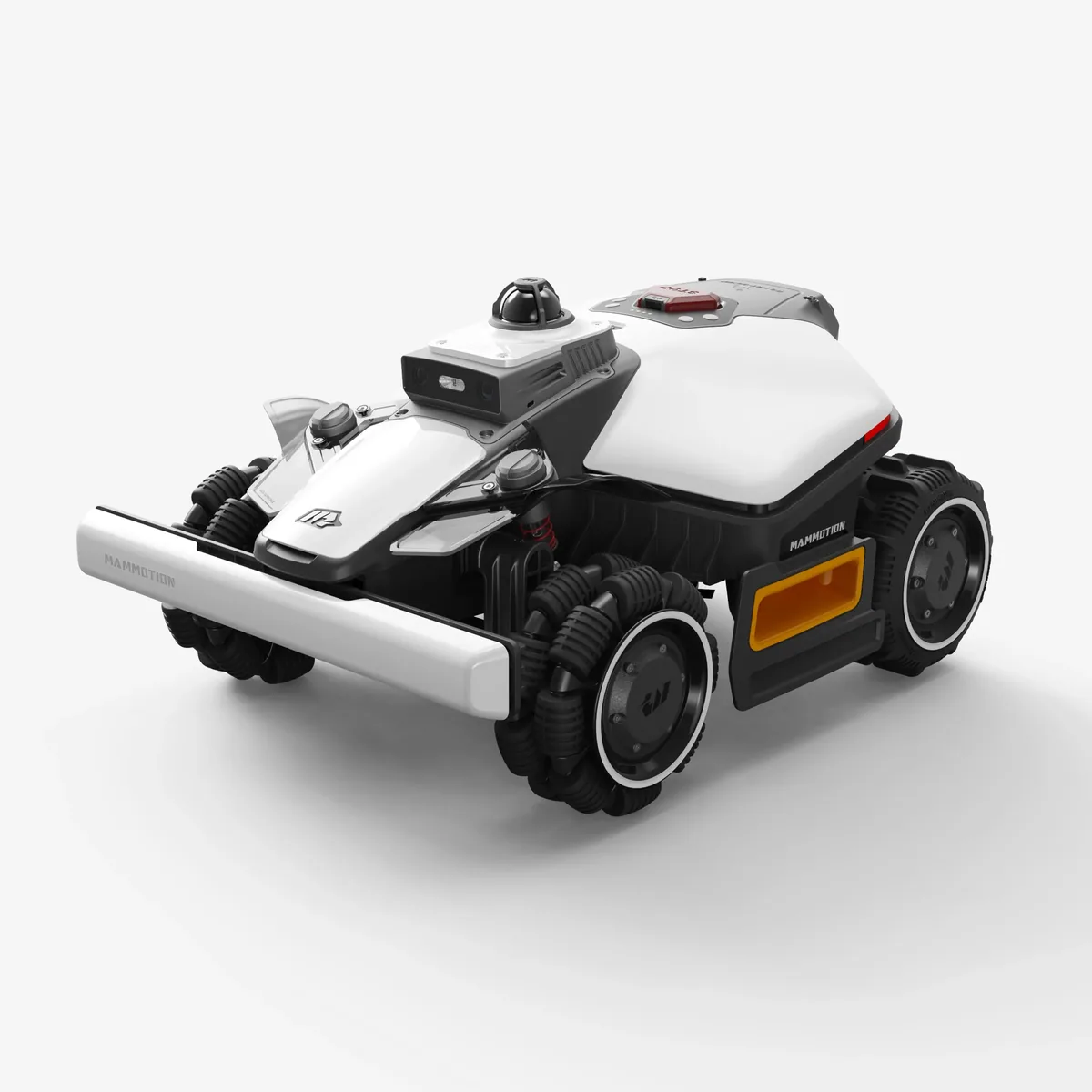
Every robot mower leaves a strip of uncut grass along fences, walls, and beds. That is a design constraint, not a defect: the spinning blade disc is mounted well inside the wheels and the outer housing so the machine can drive right up to an obstacle without the blade reaching it.
So this page is not a list of mowers that eliminate edge trimming. It is a ranking of the ones that leave the least to trim, plus an honest account of what none of them do — and one widely believed spec that turns out not to predict edge quality at all.
For the mechanics of why the strip exists, our uncut edge strip guide covers it in detail. This page is about which machines to buy.
What our edge rating means
We rate edge behaviour on a three-point scale: poor, ok, good. Across the 37 models we track:
| Rating | Models |
|---|
| good | 16 |
| ok | 21 |
| poor | 0 |
Two things follow, and both matter for how you read this page.
"Good" is the top of our scale, and it is deliberately not called "excellent". It means the remaining strip is narrow enough that most owners trim monthly rather than after every cut. No consumer robot mower cuts a finished vertical edge against a wall the way a string trimmer does, and we are not going to imply one does.
Nothing in the current catalog rates poor. The floor has risen. Even the machines rated ok leave a manageable border on a normally-shaped lawn — this is a question of how much trimming you inherit, not whether the mower is competent.
Deck width does not predict edge quality
This is the assumption worth dismantling first, because it is intuitive and wrong.
A wider deck cuts more grass per pass, so it feels like it should reach closer to a boundary. It does not work that way. In our catalog:
- Models rated good average an 11.9-inch deck.
- Models rated ok average an 11.2-inch deck.
That is effectively no difference. And the widest machines we track — 16 to 20 inches — are all rated ok, not good. The blade disc's inset from the housing is what determines how close the cut gets, and a wider deck does not shrink that inset; it just sweeps more area in the middle.
What actually produces a good rating is how the mower plans its boundary pass: whether it runs a deliberate perimeter routine that hugs the mapped edge, and how tightly it can follow that line. ECOVACS markets this as TruEdge; other brands implement it with less fanfare or not at all. It is a software and navigation behaviour, not a hardware dimension.
The brand split is unusually clean
Edge quality tracks brand more strongly than almost any other spec we record:
| Brand | Rated good |
|---|
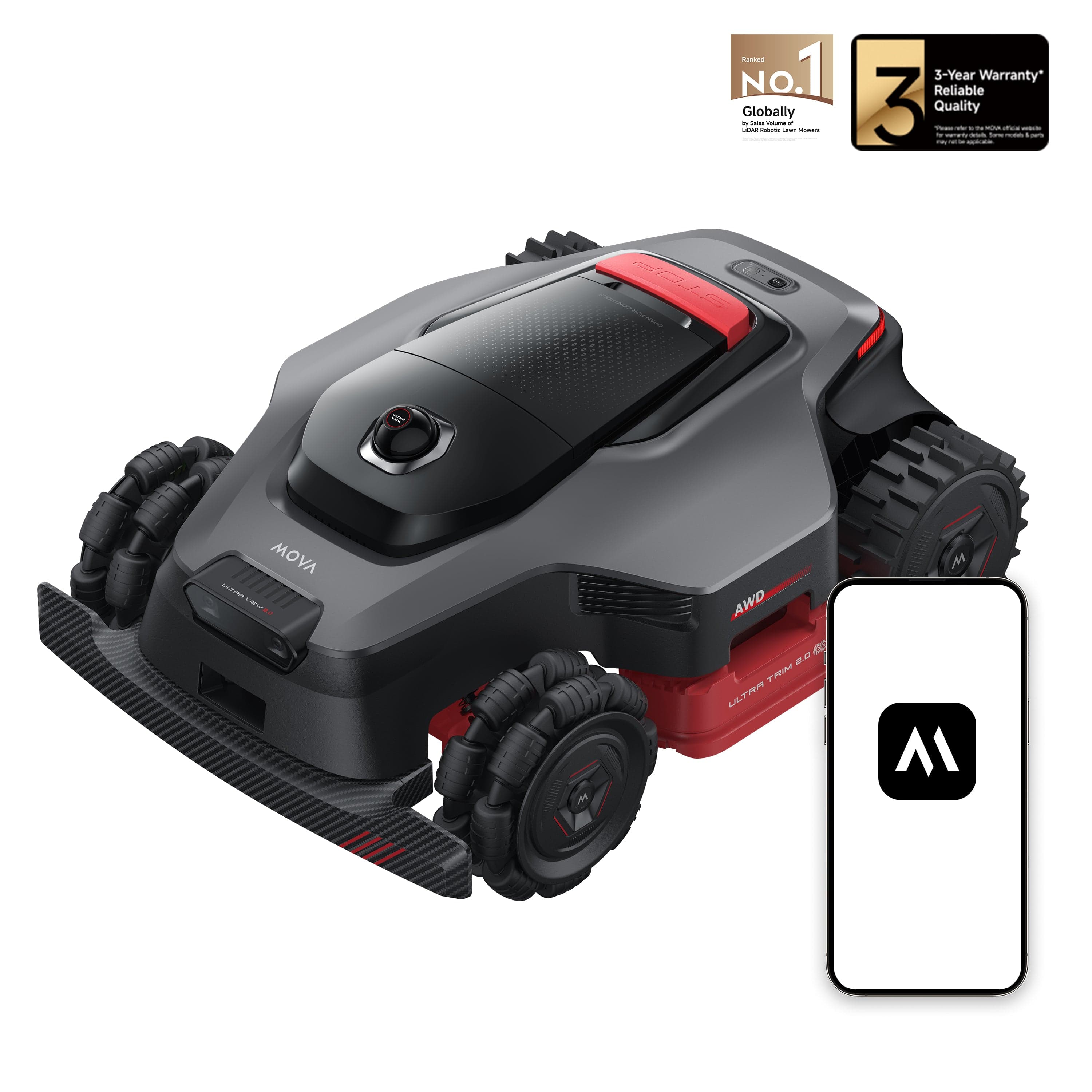
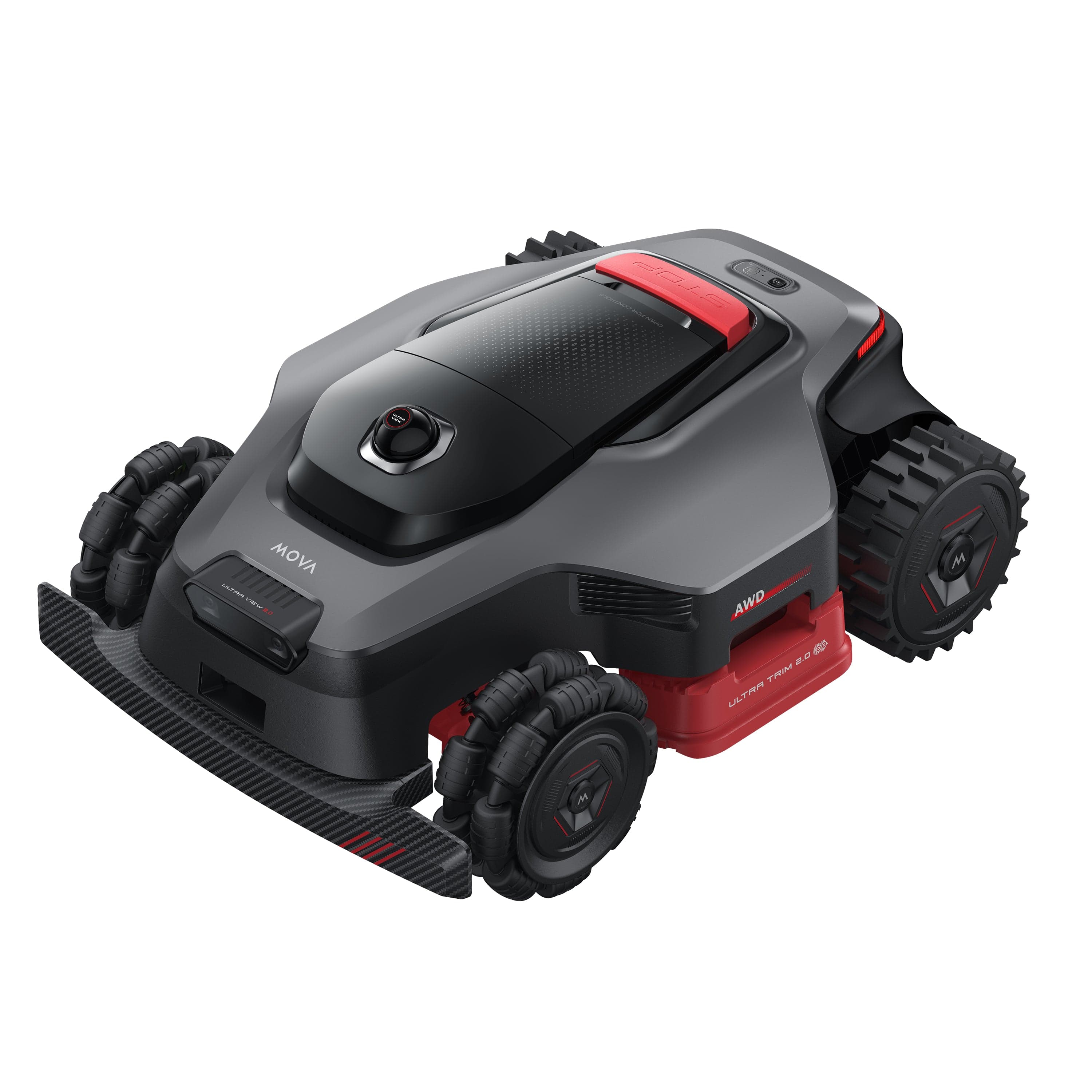
| MOVA | 4 of 4 |
| eufy | 2 of 2 |
| Dreame | 1 of 1 |
| ECOVACS | 4 of 5 |
| Mammotion | 3 of 5 |
| Sunseeker | 2 of 3 |
| WORX | 1 of 2 |
| Segway Navimow | 0 of 9 |
| Husqvarna | 0 of 3 |
| Yarbo, Lymow, ANTHBOT | 0 of 1 each |
Segway Navimow is the striking one. It is the largest lineup we track at nine models, spanning budget to premium, and not one earns the top edge rating. That is not a claim that Navimow mowers are bad — several score very well overall and lead on coverage and slope — but if edges are your deciding factor, an entire well-regarded lineup drops out before you compare anything else.
The reverse is just as useful: if you are already shopping MOVA, eufy or Dreame, edge quality is not something you need to weigh model by model. It is consistent across those ranges.
The size trade-off nobody mentions
Here is the finding that should change how you shop, and it is invisible unless you cross two specs.
Models rated good for edges average 0.52 acres of coverage. Models rated ok average 0.91 acres — about three-quarters more.
Edge-focused machines skew small. The engineering pressure that produces a tight boundary pass — a compact chassis, a modest deck, precise low-speed manoeuvring — is not the same pressure that produces an acre-and-a-half of daily coverage. So on a large property you will feel a real pull between the two.
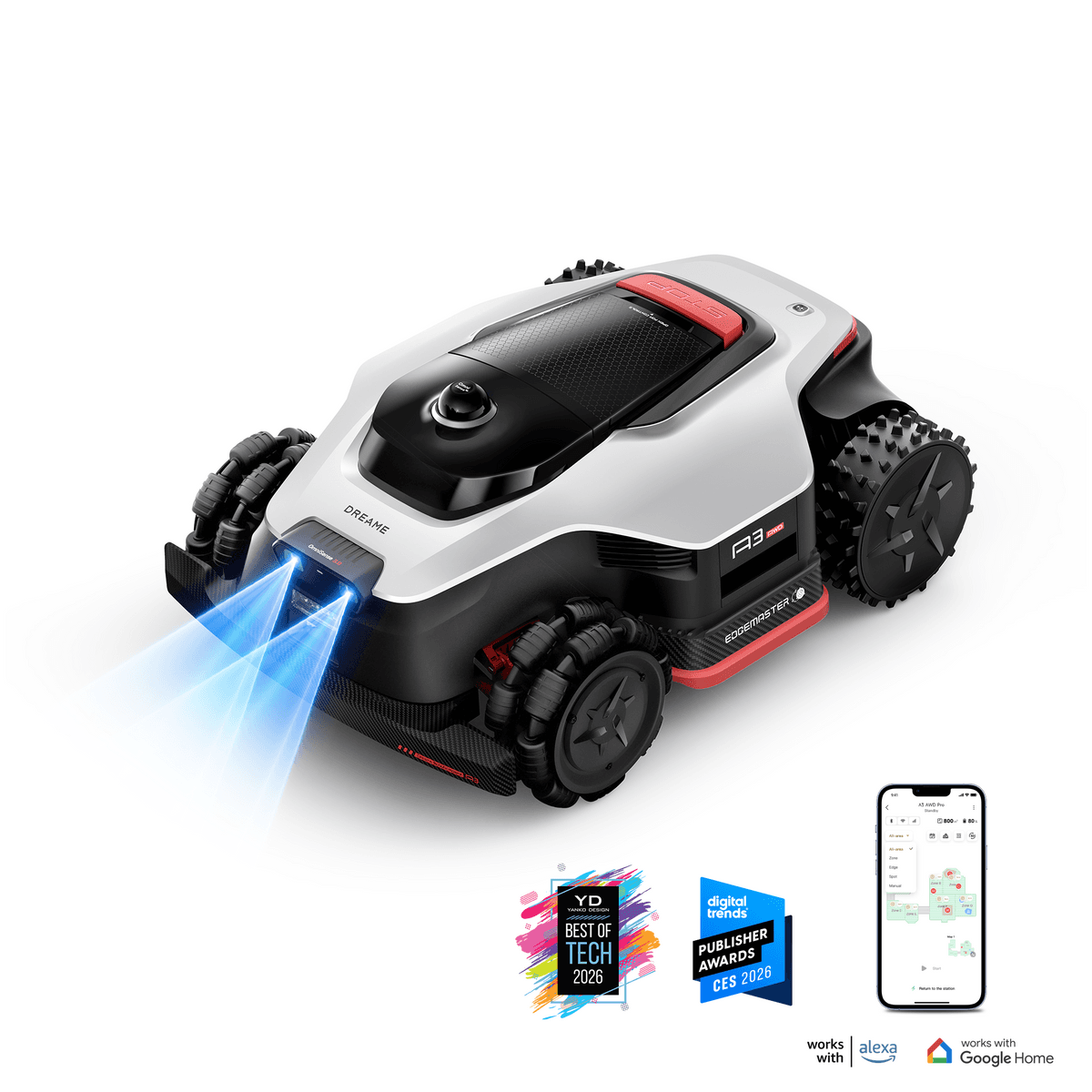
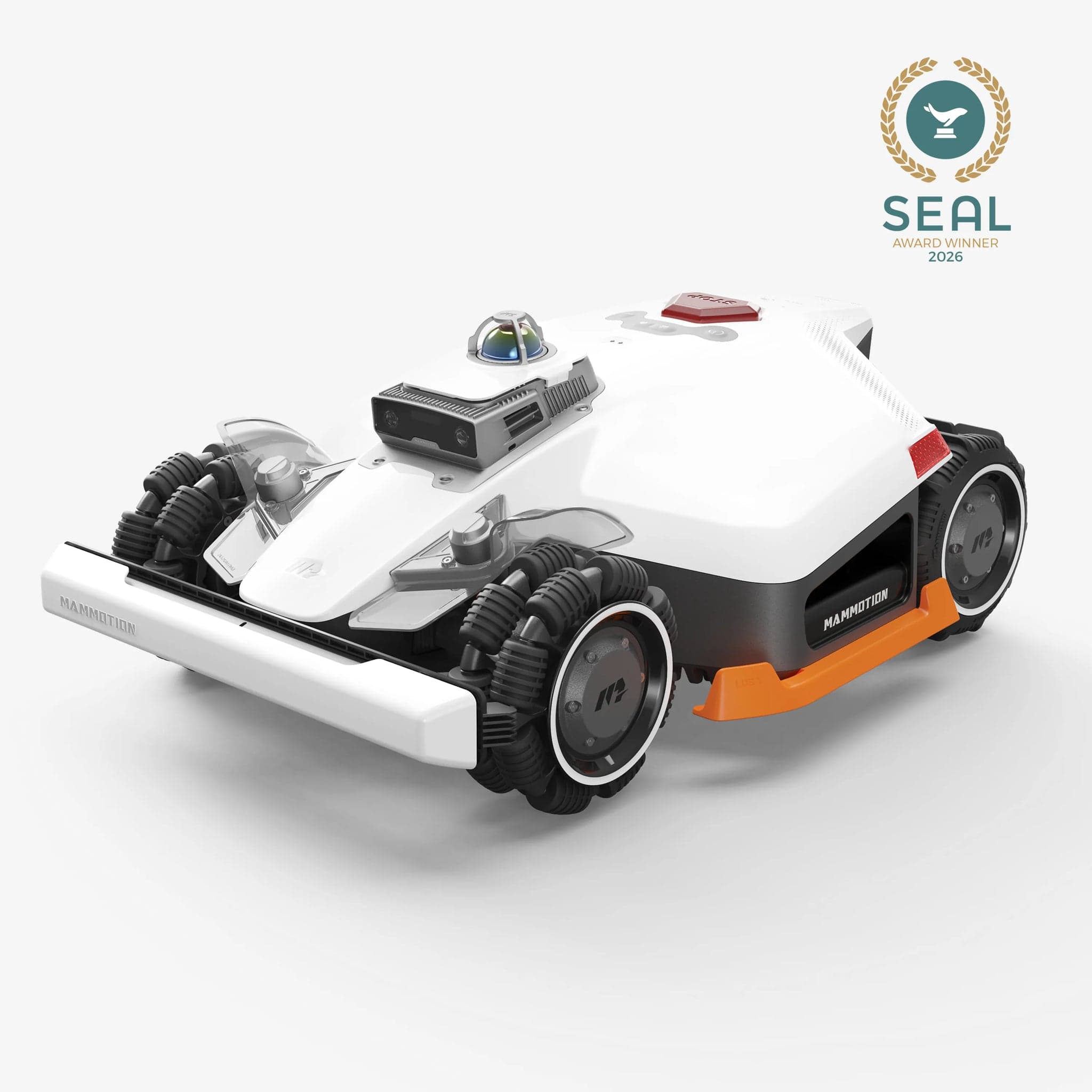
The practical consequence: the largest-coverage machine that still earns our top edge rating is the Mammotion LUBA 3 AWD 5000H (out of stock) at 1.25 acres (MowScout Score 93), though it is out of stock at every US retailer we track as of September 2026; the largest good-edge model you can buy today is the Dreame A3 AWD Pro 3500 at 0.87 acre. Above that, you are choosing coverage and accepting an ok rating — and on a property that size, a monthly trim of the borders is a smaller job proportionally anyway.
The picks
New in the catalog (September 2026): five more models rate good for edges. The WORX Landroid Vision Cloud WR320.1 (Score 71) ships with its Cut-to-Zero offset blade; the LUBA mini 2 AWD (Score 79) adds a dedicated edge disc to an 80% AWD mower; the ECOVACS GOAT O1000 RTK (Score 71) uses the same TruEdge pass as the LiDAR GOATs; and Sunseeker's X3 Plus (Score 71) and X5 AWD (Score 79) use an offset blade and a dedicated edge disc. We have not re-ranked the picks below yet.
Best edges with real capability — ECOVACS GOAT A3000 LiDAR PRO (Score 76). A 13-inch deck across 0.75 acre with LiDAR navigation and the TruEdge boundary pass. The strongest combination of edge behaviour and general capability in the catalog, and it needs no RTK antenna.
Value pick — ECOVACS GOAT O1000 LiDAR PRO (Score 72). The same edge approach on a quarter acre. If your lawn is small and heavily bordered — beds, patio, fence on three sides — this is where edge quality pays for itself fastest.
Largest lawn with good edges — Mammotion LUBA 3 AWD 5000H (out of stock) (Score 93). 1.25 acres, all-wheel drive to an 80% slope, and still rated good on edges. The answer when you refuse to choose between size, slope and borders. Stock note, September 2026: the LUBA 3 AWD 5000H is out of stock at every US retailer we track; until it returns, the Dreame A3 AWD Pro 3500 (0.87 acre, 4WD to 80%, good edges) is the largest good-edge mower you can buy.
Simplest small-lawn pick — eufy E15 (Score 60). Vision navigation on 0.2 acre, no antenna, no wire, and a good edge rating. (Its larger sibling, the E18, is out of stock at every US retailer we track.) Note it is not rated for wet grass — see the wet grass guide if your borders sit in shade.
Half acre — MOVA LiDAX Ultra 2000 (Score 75). Antenna-free LiDAR with 150 mapped zones, and one of four MOVA models that all rate good. Also not wet-grass rated.
What none of them fix, and what does
Whatever you buy, plan on a string trimmer roughly monthly. "Cut to edge" and "zero edge" are marketing descriptions of how close the machine gets, not promises of a finished border.
Three things genuinely reduce the work:
- Run the perimeter or edge mode as a scheduled pass, rather than assuming the normal
mowing pattern covers it.
- Reduce the boundary offset a few inches at a time if the app allows it, so the mower
rides closer to hard borders. Do it incrementally and watch for scuffing.
- Build a mowing strip. A flush row of pavers, brick, or a concrete curb at lawn height
along beds and walls lets the wheel ride on the hard surface so the blade passes over the last of the grass. It is the only permanent fix, it works with any mower, and it is why professionally landscaped lawns look clean regardless of which robot is cutting them.
Soft, curved borders against beds are the hardest case for every machine here; long straight runs against a fence are the easiest. If most of your borders are the latter, a mower rated ok plus a mowing strip will look better than a mower rated good without one.
What "ok" actually costs you
Ratings are only useful if you can translate them into work, so here is the honest translation.
A good-rated machine on a normally-shaped lawn leaves a border most owners tidy about once a month, usually as part of a general edging session they would do anyway. An ok-rated machine leaves enough that you will notice it against hard borders within a fortnight in growing season, and the difference is most visible where the lawn meets something vertical and pale — a white fence, a light patio, a rendered wall — because the contrast draws the eye to the uncut fringe.
Where the two ratings converge is on soft borders. Against a planted bed with no hard edge, every machine here leaves a similar transition, because there is no line for the mower to hug in the first place. If most of your borders are beds rather than walls, the edge rating matters much less than the rest of the spec sheet, and you should buy on area and slope instead.
Where they diverge most is long straight runs against hard vertical borders, which is exactly the case a boundary pass is designed for. A fenced suburban rectangle is the lawn where paying for edge quality returns the most.
Warm-season grasses make edges more visible
There is a Sun Belt wrinkle worth naming, because it changes how often the difference shows.
Bermuda, Zoysia and St. Augustine grow aggressively through the hot months and are usually kept shorter than cool-season lawns. Both work against you at the border. Faster growth means an uncut fringe re-establishes itself quickly after trimming, and a shorter cut height increases the contrast between the mown surface and the taller strip left at the edge — the same half-inch of untouched grass is far more obvious beside a 1-inch cut than beside a 3-inch one.
St. Augustine adds a second problem: it spreads by stolons that run over hard edges onto paths and patios. No robot mower addresses that, at any rating, because the grass is growing somewhere the machine is not allowed to cut. That is a manual job several times a season regardless of what you buy.
The practical upshot for southern lawns is that the mowing strip recommendation below is worth more here than it is further north, and that a good rating buys a genuinely noticeable reduction in visible trimming rather than a marginal one.
How to decide
- Decide whether edges are actually your constraint. If your lawn is open with soft
borders, buy on area and slope instead and trim occasionally.
- If they are, filter to the 12 models rated good — which effectively means starting with
MOVA, eufy, Dreame, ECOVACS and the two Mammotion LUBA 3 machines.
- Check coverage second, because that filter skews small.
- Then check slope and wet grass, both of which remove options quickly.
The yard-fit configurator applies all of these at once against measured area, slope and tree cover, and the pillar guide covers how edge quality sits against the rest of the decision. Pricing moves constantly, so check live deals rather than budgeting from a figure in an article.