Wire-free LiDAR-plus-vision navigation, app height control, 4G/GPS anti-theft, and half-acre capacity put it in a strong value lane.
Last verified 2026-09-13
Strong75/100
Affiliate disclosure: MowScout earns a commission when you buy through our links, including as an Amazon Associate. Recommendations are based on yard fit, verified specs, and score methodology; commission can only break close ties among genuine fits.
MowScout verdict
Buy if your yard matches its strengths.
Buy if
Wire-free LiDAR-plus-vision navigation, app height control, 4G/GPS anti-theft, and half-acre capacity put it in a strong value lane.
Skip if
Rear-wheel drive and the 45% slope claim need the same real-yard caution as other small LiDAR mowers.
Pros
Wire-free LiDAR-plus-vision navigation, app height control, 4G/GPS anti-theft, and half-acre capacity put it in a strong value lane.
Cons
Rear-wheel drive and the 45% slope claim need the same real-yard caution as other small LiDAR mowers.
Fit check
What to verify before buying
MOVA LiDAX Ultra 2000 is a $1,199 mower rated for 0.5 acres, 45% slopes, and 150 mapped zones. MowScout does not yet have a separate source-verified daily coverage figure for this model. Treat those as fit limits, not marketing decoration: mowable grass, wet turns, separate zones, and spring growth should all leave enough headroom for the mower to run without repeated rescues.
Navigation is LiDAR and drive is RWD. This model avoids a separate antenna requirement, which lowers one common setup hurdle, but dock location, mapping quality, and first-week no-go-zone tuning still matter. AI vision obstacle avoidance is useful around toys, furniture, pets, and landscaping clutter, but it should be treated as a risk reducer rather than a safety guarantee.If your hardest constraint is slope or rough turf, compare the terrain guide; if setup simplicity is the priority, compare similar no-wire picks before choosing by price.
Before checkout, confirm the exact SKU, included dock or base hardware, return window, warranty path, and current price at one of the listed retailers: MOVA, Amazon, Best Buy. Robot mower bundles change quickly, so the retailer page should match this review's capacity, model name, and last-verified source trail.
In the current catalog, this model sits in the mid price tier with 8 other verified mowers nearby. Its rough price-per-rated-acre is $2,398, which is useful when comparing against a larger mower that may look expensive upfront but cheaper per acre. Segway Navimow i110N is the closest lower-priced comparison point at $1,099.
The capacity math is pending source verification beyond its 0.5 acres max-area rating. That matters when the lawn is close to the published limit, because a mower that can only cover the whole yard under ideal conditions has less margin after rain delays, fast spring growth, dull blades, or separated zones. If your measured turf is close to 0.5 acres, compare Mammotion LUBA 3 AWD 3000H for more headroom before buying.
The tags attached to this record are half acre, tree cover, value LiDAR, no boundary wire. Use those as a sanity check: if your yard does not match at least two of those tags, the MowScout Score is less important than fit. A high-scoring mower in the wrong category still creates rescue trips, missed strips, and support friction.
Its current MowScout Score is 75, which should be read beside the hard specs rather than treated as a standalone verdict. The strongest reasons to keep this mower on a shortlist are its LiDARnavigation, RWD drive, 45% slope rating, and 150zone support. The biggest reason to remove it is any yard fact that directly conflicts with those numbers.
Cutting fit is also specific: this deck is 7.9 inches wide and adjusts from 1.18 to 3.93 inches. Edge behavior is rated "good", so expect some trim work around fences, walls, beds, curbs, and tight hardscape. That is normal for robot mowers, but it matters more if your lawn has a lot of border length relative to open grass.
Ownership details point to 3 years of warranty coverage, app quality rated 4out of 5, connectivity through wifi, bt, 4g, 60 dB of listed noise, and 31 lb of chassis weight. Those are practical details for storage, night schedules, support expectations, and whether the mower will be easy to lift, clean, or move between areas.
The source trail for this record was last checked on 2026-09-13 and includes MOVA US LiDAX Ultra 2000 product page, MOVA US after-sales policy, MOVA LiDAX Ultra 2000 Amazon listing, Best Buy MOVA LiDAX Ultra 2000 listing. Use those sources to resolve any mismatch between this review, a retailer title, and a bundled accessory listing. If the source page changes the area rating, slope rating, included hardware, or warranty terms, update the shortlist before clicking through. Keep a screenshot of the retailer specs for returns.
These checks are not MowScout lab results. They are manufacturer-claim caveats or third-party measured data we track so readers can separate dry-condition ratings from real-yard expectations.
Slope notation
manufacturer caveat
Rated / claimed
45% published slope
Observed / caveat
About 24 degrees, not 45 degrees
Use the published percent-grade value for filtering, but do not read it as a 45-degree hill rating. RWD traction still needs dry-condition headroom.
The MOVA LiDAX Ultra 2000 is what happens when a robot-vacuum powerhouse points its LiDAR expertise at the lawn and prices it to move. MOVA is Dreame's outdoor sub-brand, and the LiDAX Ultra 2000 is its larger, higher-capacity model: wire-free LiDAR-plus-vision navigation, no boundary wire to bury, no antenna to aim, half-acre coverage, and 4G/GPS anti-theft — at a street price that undercuts the LiDAR competition covering the same ground. On our spec-verified scoring it earns a strong 75/100, and the number tells a clean story: this is one of the better value LiDAR mowers of 2026 for a flat-to-gentle half-acre yard, held back only by a rear-wheel-drive chassis and a slope figure that reads bigger than it climbs.
This is a data-driven review, not a hands-on one. MowScout scores are computed from verified manufacturer and retailer specifications and cross-checked against reality where independent data exists; we have not run this unit ourselves, and we won't pretend otherwise. That caveat matters more than usual here, because MOVA is a newer entrant — a Dreame sub-brand with mature technology but a comparatively short outdoor track record — so where we lean on the brand's own claims (the slope figure and the MSRP-vs-street gap), we flag them as claims below rather than as tested facts.
### MowScout Score: 75/100 — Best value LiDAR for a wire-free half-acre The verdict, in three lines: The LiDAX Ultra 2000 delivers wire-free LiDAR navigation, app-controlled cut height, half-acre capacity, and 4G/GPS anti-theft for well under what most LiDAR half-acre rivals ask — a genuinely strong value lane. It maps and localizes without a perimeter wire or an antenna, so setup is close to plug-and-play. But it's rear-wheel drive, its published 45% slope reads as a ~24° incline in reality, and it isn't rated for wet grass — so match it to a flat-to-gentle, dry, cleanly-bordered lawn and let a heavier AWD mower take the hills. Street price: \$1,199 at MOVA's US store, verified September 13, 2026 — MOVA also lists a higher MSRP, which we treat as a manufacturer claim; verify current pricing on Amazon before buying. FTC disclosure: MowScout earns an affiliate commission if you buy through our links, at no extra cost to you — see our full disclosure. Commissions never change our score or our verdict.→ Check today's MOVA LiDAX Ultra 2000 deal on Amazon
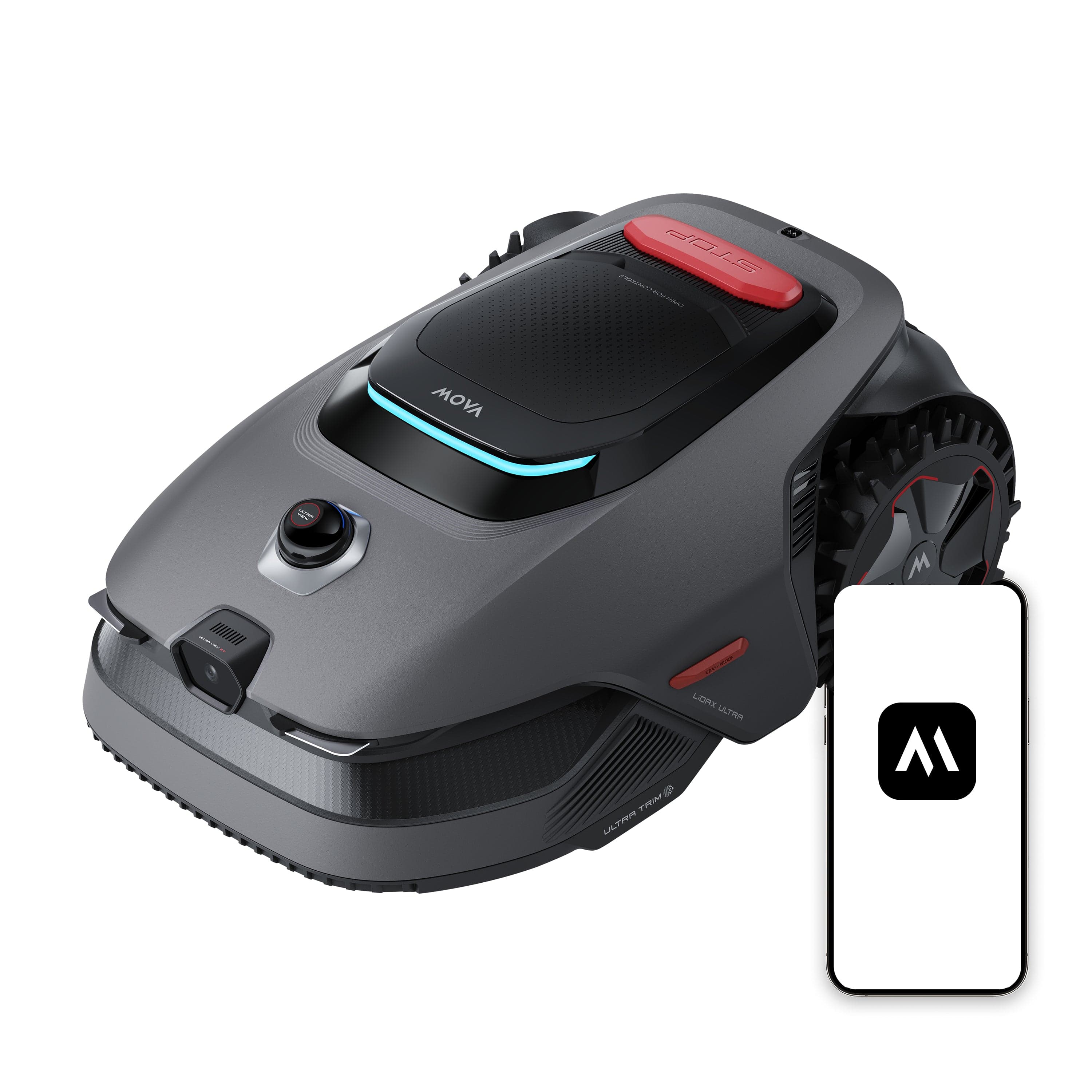
MOVA LiDAX Ultra 2000 robot lawn mower
Image: MowScout does not shoot original hardware photos.
What the LiDAX Ultra 2000 is
The LiDAX Ultra 2000 is a wire-free LiDAR robot mower — the "LiDAX" name is MOVA's shorthand for its LiDAR navigation platform, paired here with an AI-vision layer for obstacle avoidance. In plain terms: an onboard laser scanner builds and holds a map of your yard, cameras help it see and steer around objects, and there is no boundary wire to trench and no RTK antenna to mount. You place the charging base, run a first mapping pass in the app, and it goes to work.
The important context is the badge. MOVA is Dreame's outdoor sub-brand. Dreame is an established robotics manufacturer with deep experience in LiDAR-based home robots, and that heritage shows in the sensor stack — LiDAR mapping is genuinely mature technology, not a first attempt. What Dreame's lineage does not yet buy MOVA is a long outdoor track record: multi-season durability, US parts support, and warranty follow-through are still being written. We treat the platform as technically credible and the brand as promising-but-unproven, and we score accordingly.
Within MOVA's own lineup, the 2000 is the larger sibling of the LiDAX Ultra 1000. Both use the same navigation platform, the same 7.9-inch deck, and the same cut-height range; the 2000 roughly doubles the coverage (about 0.5 acre vs the 1000's ~0.25 acre) and adds a bit of app polish. If you've been reading about the 1000, think of the 2000 as "the same mower, sized for a real half-acre lot."
Reasons to buy / reasons to skip
Reasons to buy
✅ Wire-free LiDAR-plus-vision navigation. LiDAR maps and localizes without a buried perimeter wire or a sky-aimed antenna, and it doesn't depend on a satellite fix that trees can block — a real advantage for shaded or oddly-shaped lots.
✅ Half-acre capacity for value money. Rated to about 0.5 acre of daily coverage across up to 150 mapped zones, at a street price that sits below same-coverage LiDAR rivals.
✅ Wide, app-controlled cut height. A 1.18–3.93-inch range set in the app covers everything from a tight cool-season cut to a tall, shade-friendly warm-season height.
✅ 4G/GPS anti-theft. Wi-Fi, Bluetooth, and 4G with GPS tracking — a complete security package on a machine that lives outside, and one some cheaper rivals omit.
Reasons to skip
❌ Rear-wheel drive, modest real-world climbing. The published 45% slope is about a 24° incline, and RWD on a light ~31 lb chassis needs dry-condition headroom below that. Not a hill mower.
❌ Not rated for wet grass. Schedule around rain and dew; damp turf also costs a RWD mower traction.
❌ Newer brand, unproven long-term. MOVA's Dreame lineage is reassuring, but the outdoor track record, parts pipeline, and warranty follow-through are still short.
❌ A claim worth verifying. The MSRP-vs-street gap is a MOVA framing — confirm the price for your purchase channel.
The weighted scorecard: how the LiDAX Ultra 2000 earns its Score
The MowScout Score is computed from verified specs across seven weighted pillars (see how we score). Here is exactly where the LiDAX Ultra 2000's points come from — and where they leak away.
Pillar
Score
Why it lands here
Navigation reliability
23 / 25
Its headline strength. LiDAR mapping plus an AI-vision obstacle layer is a redundant, wire-free, antenna-free system that maps in variable light and doesn't rely on a satellite fix trees can block. Near the top of the field.
Terrain capability
10 / 20
The weakest pillar and the clearest signal of who it's for. A 45% (about 24°) slope rating on rear-wheel drive is flat-to-gentle only; AWD and 4WD rivals score far higher here.
Coverage & speed
6 / 15
Modest. About 0.5 acre of daily coverage with a matched daily-coverage figure means it keeps up within its envelope, but a narrow 7.9-inch deck means more passes than wider mowers.
Setup & ease
14 / 15
Near-max. No boundary wire, no antenna, base-station-and-map simplicity, and a 4/5 app. The single point off reflects the base station and first mapping run.
Cutting quality & edges
8 / 10
Strong. MowScout-rated good edge cutting and a wide 1.18–3.93-inch app-adjustable height range; the narrow deck keeps it just shy of a perfect score.
Value
9 / 10
Nearly best-in-class. Half-acre LiDAR at its street price is aggressive pricing against LiDAR rivals covering the same ground.
Reliability & support
5 / 5
A 3-year warranty on the main unit (2 on the battery) and multi-retailer availability. MOVA's short US support record is the open question.
Total
75 / 100
A very good value LiDAR mower for a flat-to-gentle half-acre — strong navigation and value, terrain the clear ceiling.
The scorecard reads like a thesis statement: Navigation (23/25) and Value (9/10) are the high pillars; Terrain (10/20) is the low one. That gap is the LiDAX Ultra 2000 — you buy it for excellent wire-free navigation and category-leading price on a half-acre, and you accept that it can't do real hills.
Verified specifications
Spec
MOVA LiDAX Ultra 2000
MowScout Score
75 / 100
Best for
Flat-to-gentle half-acre yards, wire-free LiDAR, value
Max area
0.5 acre
Daily coverage
~0.5 acre
Navigation
LiDAR + AI vision — no wire, no antenna
Base station / antenna
Charging base required; no antenna
Drive
Rear-wheel drive (RWD)
Max slope
45% grade (about 24°) — published; read as percent, not degrees
Cutting width
7.9 in
Cut height
1.18 – 3.93 in (app-adjustable)
Zones
Up to 150 mapped zones
Obstacle avoidance
AI vision
Anti-theft / GPS
Yes / Yes
Connectivity
Wi-Fi, Bluetooth, 4G
Wet-grass mowing
Not rated
Edge cutting
Good (leaves a small border strip)
Noise
~60 dB (listed spec — not a MowScout measurement)
Weight
~31 lb
App quality
4 / 5
Warranty
3 years on the main unit, 2 on the battery (MOVA US after-sales policy)
Retail
MOVA, Amazon, Best Buy
Specs from `data/mowers.json`, `last_verified` 2026-09-13. The slope figure and the MSRP-vs-street gap are manufacturer-published values flagged as claims; the noise figure is a listed spec, not a MowScout measurement.
Strengths: where the LiDAX Ultra 2000 is genuinely good
Navigation is the star. LiDAR builds a real map of your yard and localizes against it, and the AI-vision layer handles obstacles. Because there's no buried wire and no antenna, you skip the two biggest chores of older robot mowers — trenching a perimeter and siting an antenna under open sky. And because LiDAR doesn't depend on a satellite fix, tree cover and rooflines don't strand it the way they can strand a pure-RTK mower. That combination is why it scores 23/25 on navigation and why it's a credible pick for the under-trees and no-boundary-wire shopper.
The value is real and specific. For a half-acre LiDAR mower, the LiDAX Ultra 2000 undercuts LiDAR rivals that cover the same ground — most notably the pricier ECOVACS GOAT A2000 in the same coverage class. That's the crux of its 9/10 value score: you're getting mature navigation and half-acre capacity without paying the usual LiDAR premium.
The cut is flexible and clean. A 1.18–3.93-inch app-adjustable height range is wide enough for tight cool-season lawns and tall, shade-friendly warm-season turf alike, and MowScout rates its edge cutting good — near the top of what any robot mower manages. Up to 150 mapped zones is generous, letting you carve a front, back, and side lawn into separate areas with their own schedules and heights.
Security is complete. Anti-theft with GPS and a Wi-Fi/Bluetooth/4G stack means real-world location tracking and remote alerts on a device that lives outdoors — the right feature set for a four-figure machine, and one cheaper rivals sometimes strip from their base models.
Honest limits and cons
Terrain is the ceiling. This is rear-wheel drive, and the published 45% slope is about a 24° incline, not a 45-degree hill — a distinction our measured-data aggregation flags explicitly. Even at 24°, RWD on a light ~31 lb chassis wants dry-condition headroom; traction falls on anything damp. If your yard has banks worth mentioning, believe the spec and shop a dedicated hill machine instead — see our hills guide.
No wet-grass rating. Our data marks it as not for wet mowing, so build the schedule around rain and morning dew. That's normal for a value LiDAR mower, but worth planning for in the Sun Belt's afternoon-storm season.
Newer brand, unproven longevity. The Dreame lineage is a real plus, but MOVA hasn't yet accumulated the multi-season reliability, parts-availability, and warranty-follow-through history of the old guard. Our 4/5 support score reflects a good warranty tempered by short track record.
A claim to verify. The MSRP-vs-street gap (MOVA lists an MSRP well above its everyday price) is a MOVA framing, not a MowScout-confirmed discount. It isn't a red flag, just a claim, and a good review names it as one. The warranty is no longer in doubt: MOVA's US after-sales policy lists 3 years on the main unit and 2 on the battery.
Who it's for — and who should skip it
Buy it if your lawn is a flat-to-gentle half acre (or smaller), you want wire-free, antenna-free setup, and value is a priority. It's an especially strong pick if you have tree cover that would trouble a pure-RTK mower, since LiDAR maps without a satellite fix. First-time robot-mower buyers who want modern navigation without the boundary-wire chore will find it easy to live with.
Skip it if your yard has real slopes (beyond a genuine gentle grade), you mow a lot in wet conditions, or you need the proven multi-year support of an established brand for a set-and-forget install. For slopes, an AWD mower like the Segway Navimow i210 AWD is the safer buy; for a bigger or steeper property, step up in class entirely. Not sure which camp you're in? Our configurator filters to models that actually fit your slope, size, and tree cover, and the pillar guide explains the navigation trade-offs in plain English.
Setup & navigation: wire-free LiDAR, explained
The LiDAX Ultra 2000's setup is close to the easy end of the category, which is why it scores 14/15. There's no perimeter wire to trench — the single biggest chore of the old generation — and no RTK antenna to mount and aim at open sky. Your hands-on work is essentially: place and power the charging base, connect the mower in the MOVA app, and run the first LiDAR mapping pass, during which the mower drives your yard to build its map. After that, mowing, scheduling, no-go zones, and cut-height changes all live in the app, which earns a 4/5 in our data.
The navigation itself is a two-layer system: LiDAR for mapping and localization, AI vision for obstacle avoidance. LiDAR's advantage over pure vision is that it doesn't need daylight to know where it is, and its advantage over pure RTK is that it doesn't depend on a clear-sky satellite fix — so tree cover, rooflines, and narrow side yards are less likely to strand it. The vision layer that spots toys, hoses, and pets does prefer good light, so the practical guidance is the same as for any camera-assisted mower: mow in daylight, keep the lawn on a regular schedule so it never gets tall enough to confuse the sensors, and clear small objects before a run. For how LiDAR compares to RTK and vision in depth, see RTK vs LiDAR vs vision.
Cutting quality & edges
On flat ground the LiDAX Ultra 2000 cuts well. It runs a 7.9-inch deck with an app-adjustable 1.18–3.93-inch height range — wide enough to keep a tight cool-season lawn or hold a taller canopy on heat-stressed warm-season turf. As a mulching mower it drops fine clippings back into the lawn rather than bagging, which is normal for the category and good for soil.
MowScout rates its edge cutting "good," near the top of what robot mowers achieve — but the physics that limit every robot mower still apply. The blade disc sits inboard of the outer wheel, so a thin strip of grass always remains right at walls, fences, and beds; plan on an occasional string-trimmer pass along hard borders. "Good" is not "zero." The narrow 7.9-inch deck also means more passes per acre than a wider machine — fine within its half-acre envelope, but a reason not to push it toward the top of that range on fast-growing grass.
Coverage, runtime & keeping up
The LiDAX Ultra 2000 is rated for about 0.5 acre of daily coverage across up to 150 mapped zones — double the LiDAX Ultra 1000's roughly quarter-acre and the reason to choose the larger sibling. Because its daily-coverage figure matches its max-area figure, it's built to keep up with its own rated yard rather than falling behind, and 150 zones is generous headroom for splitting a real lot into front, back, and side lawns with independent schedules.
Robot mowers cut a little every day and return to the base to charge, so "keeping up" is about the mow-charge-resume cadence fitting your lawn's growth, not one marathon run. MOVA does not expose a verified US battery-runtime figure in our data, so we won't invent one — treat runtime as "enough to service its rated half-acre on a daily cadence" and size the mower to your lawn rather than to a headline minute count. On noise, our data lists ~60 dB; treat that as a listed spec, not a MowScout measurement, since we don't test hardware. That figure is quiet by mower standards and far below any gas machine.
Value & price
At its street price (dated above; verify current pricing on Amazon, since prices move), the LiDAX Ultra 2000 is one of the better dollars-per-acre stories in LiDAR. That's why value scores 9/10: half-acre LiDAR navigation with 4G/GPS anti-theft, priced under same-coverage LiDAR rivals like the GOAT A2000 and well under premium AWD LiDAR mowers.
Two honest notes on that price. First, the MSRP-vs-street gap is a manufacturer framing — we flag the discount as a MOVA claim rather than a MowScout-verified sale; check the live price before assuming a deal. Second, part of what you're not paying for is a long support track record, so weigh the savings against MOVA's newer-brand status. This model qualifies for our under-\$1,500 and half-acre shortlists, and if you're weighing the whole ownership math, are robot mowers worth it? lays out the multi-year case against gas, oil, and a lawn service.
A transparency note on our end. MOVA sells the LiDAX Ultra 2000 direct and through Amazon and Best Buy; our link for it goes to Amazon, where MowScout earns the standard Associates commission, the same as on every Amazon-linked mower — so there is no MOVA-specific incentive here, and we're recommending it on fit and value, not payout. The 75/100 is computed from verified specs by the same formula applied to every mower on the site, and this review names the RWD terrain ceiling and the claims-to-verify as bluntly as any.
How it compares
vs MOVA LiDAX Ultra 1000 — the smaller sibling. Same wire-free LiDAR-plus-vision platform, same 7.9-inch deck, same 1.18–3.93-inch cut range, same 4G/GPS anti-theft. The 2000 doubles the coverage to about 0.5 acre and adds a touch of app polish, scoring 75 to the 1000's 71 on our card — a gap that is almost entirely coverage and value on a larger lawn. Buy the 1000 for a genuine quarter-acre yard at the lowest price; step up to the 2000 the moment your lawn is closer to a half acre or you want headroom.
vs ECOVACS GOAT A2000 LiDAR PRO — the same-coverage LiDAR rival. The A2000 is the natural cross-shop: another LiDAR mower rated to about half an acre. The difference is price — the A2000 lists meaningfully higher — so the LiDAX Ultra 2000's value case is at its strongest here. If you want an established LiDAR brand with a longer track record and are willing to pay for it, the A2000 earns a look; if dollars-per-acre is the priority, MOVA undercuts it for the same coverage.
vs Segway Navimow i210 AWD — for slopes, close in price. Priced close (the i210 runs a little higher), the i210 answers the LiDAX Ultra 2000's one real weakness with all-wheel drive and a 45% slope rating it can actually use on banks, plus a longer brand track record. The trade-off is coverage — the i210 is a quarter-acre mower to the MOVA's half acre — and it uses NetRTK-plus-vision rather than LiDAR, so it prefers open sky. Choose the i210 when terrain is your constraint and the yard is small; choose the LiDAX Ultra 2000 when the yard is a flat-to-gentle half acre and you'd rather have the coverage and LiDAR's tree tolerance.
vs ECOVACS GOAT O1000 LiDAR PRO — the cheaper LiDAR value pick. If your lawn is a genuine quarter acre, the O1000 delivers LiDAR navigation for less money and less coverage. It's the smarter spend on a small shaded lot; the LiDAX Ultra 2000 justifies its premium only once your yard outgrows the O1000's quarter-acre class.
The verdict, restated
The MOVA LiDAX Ultra 2000 is one of 2026's best value LiDAR mowers for a flat-to-gentle half-acre yard, and its 75/100 is an honest reflection of a deliberate trade: it scores strongly on navigation (23/25) and value (9/10) and lowest on terrain (10/20). Wire-free LiDAR-plus-vision means no boundary wire, no antenna, and easy setup; the cut is flexible and clean-edged; 4G/GPS anti-theft is a genuine plus; and half-acre LiDAR at its price undercuts the field. But it's a rear-wheel-drive, flat-to-gentle, dry-lawn mower from a newer brand — the ~24°-real slope, the no-wet-grass rating, and MOVA's short track record are the cost of that price. Match it to the yard it's built for and it's a standout value. Ask it to climb, mow wet, or prove a decade of reliability today and a different mower will serve you better. Buy it for the easy half-acre, and verify the price and warranty before you check out.
Is the MOVA LiDAX Ultra 2000 a good robot mower, and how does it score? On MowScout's spec-verified scoring the LiDAX Ultra 2000 lands at 75/100 — a strong mid-tier result. It earns most of its points from wire-free LiDAR-plus-vision navigation (23/25), an easy no-antenna setup (14/15), a wide app-adjustable cut-height range, and genuinely aggressive value: a half-acre LiDAR mower priced below LiDAR rivals with the same coverage. Where it gives points back is terrain — it's rear-wheel drive with a slope figure that reads bigger on paper than it climbs in practice. It's a very good value LiDAR mower for a flat-to-gentle half-acre yard, not a hill machine.
What slope can the MOVA LiDAX Ultra 2000 handle — is 45% a 45-degree hill? No, and this is the single most misread spec on the sheet. MOVA publishes a 45% slope rating, but 45% grade is about 24 degrees, not a 45-degree hill. Use the published percent-grade for filtering, but don't picture a steep bank. On top of that the LiDAX Ultra 2000 is rear-wheel drive on a light ~31 lb chassis, so real climbing traction needs dry-condition headroom below that number. For genuine slopes or often-damp banks, an all-wheel-drive mower like the Segway Navimow i210 AWD is the safer tool. See our measured-data notes for how we treat published slope figures.
Can the LiDAX Ultra 2000 mow wet grass or at night? Our data marks the LiDAX Ultra 2000 as not rated for wet-grass mowing, so plan to schedule around rain and morning dew — wet turf also robs a rear-wheel-drive chassis of traction. On night mowing, its primary positioning is LiDAR, which does not need daylight the way a pure-camera mower does, but its obstacle avoidance is AI vision, which works best in good light. Treat it as a dry-daylight mower for best results and keep it on a regular schedule so the lawn never gets tall enough to confuse the sensors.
Who makes MOVA, and is it a reliable brand? MOVA is an outdoor sub-brand of Dreame, the established robotics company known for robot vacuums and, more recently, LiDAR lawn mowers. That lineage is a real engineering advantage — the LiDAR-plus-vision stack is mature technology. The honest caveat is track record: MOVA is a newer entrant with a shorter history of long-term outdoor reliability, parts support, and warranty follow-through than names like Husqvarna or Segway. MOVA's 3-year warranty on the main unit now earns it full marks on our support pillar, but track record remains the open question, and we'll revisit as multi-season owner data accumulates.
Should I buy the LiDAX Ultra 2000 or the smaller LiDAX Ultra 1000? They share the same wire-free LiDAR-plus-vision platform, the same 7.9-inch deck, the same 1.18–3.93-inch cut-height range, and the same 4G/GPS anti-theft. The difference is capacity and polish: the 2000 is rated to about 0.5 acre (double the 1000's ~0.25 acre) and carries a slightly higher app-quality rating. Buy the 1000 if your lawn is genuinely small (quarter-acre-ish) and you want the lowest price; step up to the 2000 if your lawn is closer to a half acre or you want the headroom. The 2000 scores 75 to the 1000's 71 on our card, and the gap is almost entirely coverage and value on a bigger yard.
Does the LiDAX Ultra 2000 need a boundary wire or an antenna? No boundary wire and no separate RTK antenna. It navigates with onboard LiDAR plus AI vision, so it maps and localizes without trenching a perimeter wire around your lawn and without mounting an antenna aimed at open sky. It does need its charging base station placed and powered. That wire-free, antenna-free setup is a big part of why it scores 14/15 on setup and ease — your hands-on effort is mostly placing the base and running the first mapping pass in the app.
Is the LiDAX Ultra 2000 protected against theft, and what's the warranty? Yes on theft deterrence: it includes anti-theft with GPS tracking and a connectivity stack of Wi-Fi, Bluetooth, and 4G. The cellular link is what makes real-world location tracking and remote alerts possible on a machine that lives outdoors — a genuine plus at this price. As always, that's a deterrent and recovery aid, not a guarantee. On warranty, MOVA's US after-sales policy lists 3 years on the main unit and 2 years on the battery. Confirm the exact terms for your purchase channel before you buy.
Alternatives worth a look
Smaller, cheaper, same platform → MOVA LiDAX Ultra 1000. The identical wire-free LiDAR setup sized to ~0.25 acre for less money. The right pick if your lawn is a genuine quarter acre.
Same-coverage LiDAR, established brand → ECOVACS GOAT A2000 LiDAR PRO. Another half-acre LiDAR mower with a longer track record, at a higher price. The LiDAX Ultra 2000 undercuts it on value.
For slopes, close price → Segway Navimow i210 AWD. All-wheel drive and a usable 45% slope rating tackle banks the MOVA's RWD chassis can't. Smaller coverage, but the answer when terrain is your constraint.
Cheaper LiDAR for a small lot → ECOVACS GOAT O1000 LiDAR PRO. LiDAR value for a quarter acre, for less money. The smarter spend below the LiDAX Ultra 2000's half-acre class.
Simplest wire-free vision → eufy E18 (out of stock). Pure-vision, no-antenna simplicity for a flat sub-third-acre yard if you don't need LiDAR's tree tolerance.
Still weighing options? Start with the configurator to filter by your exact slope, size, and tree cover, and read the robot-lawn-mower pillar guide for how RTK, LiDAR, and vision actually differ. If wire-free setup is the whole reason you're here, our no-boundary-wire guide ranks the field.
---
How we know what we know. MowScout is spec-verified and data-driven, not hands-on: this MowScout Score (75/100) is computed from verified manufacturer and retailer specifications by the same formula applied to every mower, and we have not tested this unit ourselves. MOVA is a newer entrant (a Dreame outdoor sub-brand), so we flag the slope figure and the MSRP-vs-street price gap as manufacturer claims rather than tested facts; the ~60 dB noise figure is a listed spec, not a MowScout measurement. Specs `last_verified` 2026-09-13 against MOVA's US product page, its US after-sales policy, the MOVA LiDAX Ultra 2000 Amazon listing and Best Buy specifications. Verify current pricing before buying. This review contains affiliate links — see our disclosure.
Owner reviews
Own this mower? Add field notes.
MowScout separates owner reports from editorial scoring. Submissions are moderated and should include terrain, grass, slope, tree cover, runtime, support, or app details that help another buyer.
Buyer questions
FAQ
Is the MOVA LiDAX Ultra 2000 a good robot mower, and how does it score?
On MowScout's spec-verified scoring the LiDAX Ultra 2000 lands at 75/100 — a strong mid-tier result. It earns most of its points from wire-free LiDAR-plus-vision navigation (23/25), an easy no-antenna setup (14/15), a wide app-adjustable cut-height range, and genuinely aggressive value: a half-acre LiDAR mower priced below LiDAR rivals with the same coverage. Where it gives points back is terrain — it's rear-wheel drive with a slope figure that reads bigger on paper than it climbs in practice. It's a very good value LiDAR mower for a flat-to-gentle half-acre yard, not a hill machine.
What slope can the MOVA LiDAX Ultra 2000 handle — is 45% a 45-degree hill?
No, and this is the single most misread spec on the sheet. MOVA publishes a 45% slope rating, but 45% grade is about 24 degrees, not a 45-degree hill. Use the published percent-grade for filtering, but don't picture a steep bank. On top of that the LiDAX Ultra 2000 is rear-wheel drive on a light ~31 lb chassis, so real climbing traction needs dry-condition headroom below that number. For genuine slopes or often-damp banks, an all-wheel-drive mower like the Segway Navimow i210 AWD is the safer tool. See our measured-data notes in the guide linked below.
Can the LiDAX Ultra 2000 mow wet grass or at night?
Our data marks the LiDAX Ultra 2000 as not rated for wet-grass mowing, so plan to schedule around rain and morning dew — wet turf also robs a rear-wheel-drive chassis of traction. On night mowing, its primary positioning is LiDAR, which does not need daylight the way a pure-camera mower does, but its obstacle avoidance is AI vision, which works best in good light. Treat it as a dry-daylight mower for best results and keep it on a regular schedule so the lawn never gets tall enough to confuse the sensors.
Who makes MOVA, and is it a reliable brand?
MOVA is an outdoor sub-brand of Dreame, the established robotics company known for robot vacuums and, more recently, LiDAR lawn mowers. That lineage is a real engineering advantage — the LiDAR-plus-vision stack is mature technology. The honest caveat is track record: MOVA is a newer entrant with a shorter history of long-term outdoor reliability, parts support, and warranty follow-through than names like Husqvarna or Segway. MOVA's 3-year warranty on the main unit now earns it full marks on our support pillar, but track record remains the open question, and we'll revisit as multi-season owner data accumulates.
Should I buy the LiDAX Ultra 2000 or the smaller LiDAX Ultra 1000?
They share the same wire-free LiDAR-plus-vision platform, the same 7.9-inch deck, the same 1.18–3.93-inch cut-height range, and the same 4G/GPS anti-theft. The difference is capacity and polish: the 2000 is rated to about 0.5 acre (double the 1000's ~0.25 acre) and carries a slightly higher app-quality rating. Buy the 1000 if your lawn is genuinely small (quarter-acre-ish) and you want the lowest price; step up to the 2000 if your lawn is closer to a half acre or you want the headroom. The 2000 scores 75 to the 1000's 71 on our card, and the gap is almost entirely coverage and value on a bigger yard.
Does the LiDAX Ultra 2000 need a boundary wire or an antenna?
No boundary wire and no separate RTK antenna. It navigates with onboard LiDAR plus AI vision, so it maps and localizes without trenching a perimeter wire around your lawn and without mounting an antenna aimed at open sky. It does need its charging base station placed and powered. That wire-free, antenna-free setup is a big part of why it scores 14/15 on setup and ease — your hands-on effort is mostly placing the base and running the first mapping pass in the app.
Is the LiDAX Ultra 2000 protected against theft, and what's the warranty?
Yes on theft deterrence: it includes anti-theft with GPS tracking and a connectivity stack of Wi-Fi, Bluetooth, and 4G. The cellular link is what makes real-world location tracking and remote alerts possible on a machine that lives outdoors — a genuine plus at this price. As always, that's a deterrent and recovery aid, not a guarantee. On warranty, MOVA's US after-sales policy lists 3 years on the main unit and 2 years on the battery. Confirm the exact terms for your purchase channel before you buy.
Is the MOVA LiDAX Ultra 2000 good for slopes?
It is rated for slopes up to 45%, but wet grass, rough terrain, and boundary placement can reduce real-world confidence.
Does the LiDAX Ultra 2000 need boundary wire?
No. This model uses wire-free navigation.
Are these hands-on test results?
This launch review is data-driven and spec-verified. MowScout will label hands-on test results separately when owned testing is complete.