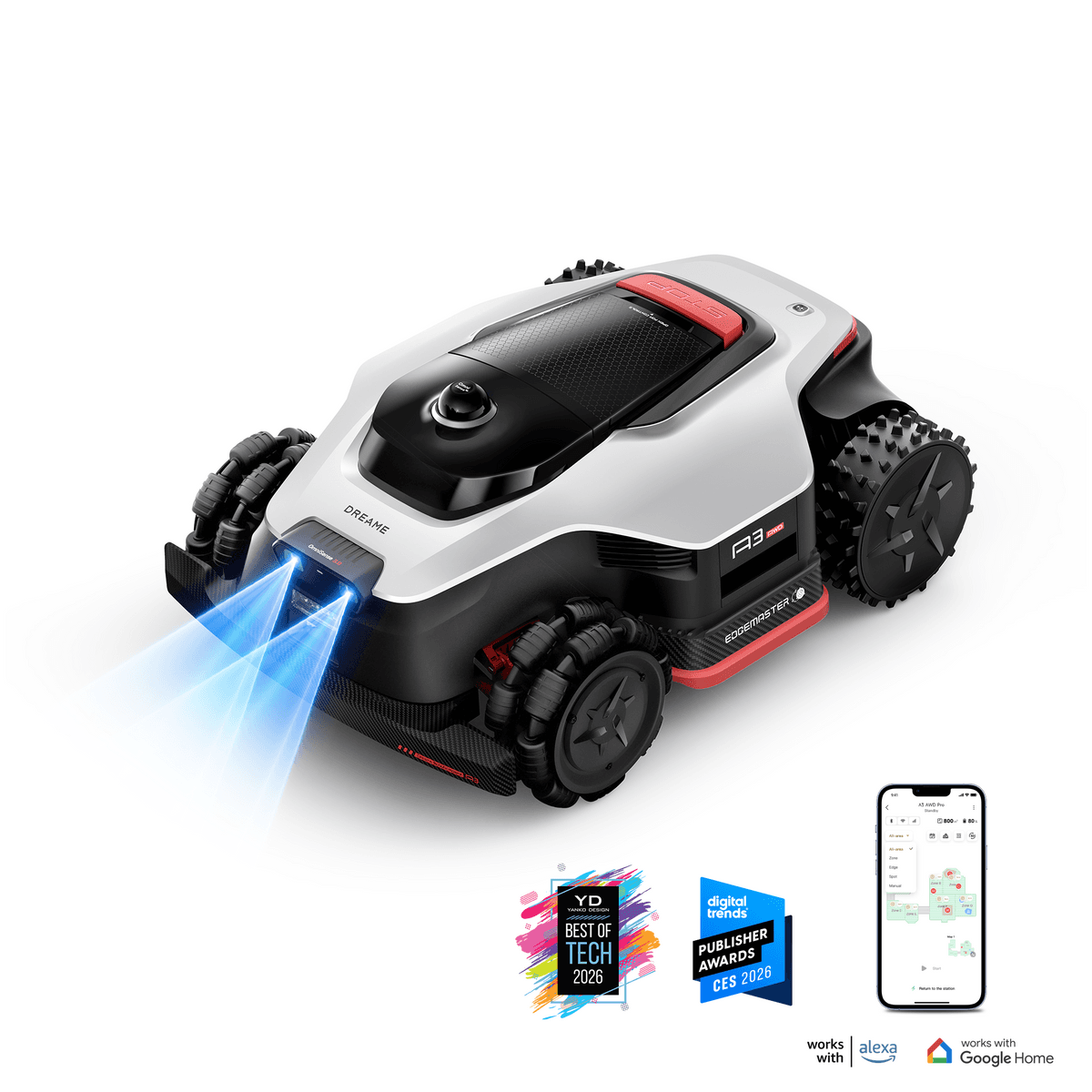
Best Robot Lawn Mower for North Carolina Yards (2026)
Best robot lawn mowers for North Carolina yards in 2026: spec-verified picks for transition-zone fescue, coastal warm-season grass, mountain slopes, and shade.
Affiliate disclosure: MowScout earns a commission when you buy through our links, including as an Amazon Associate. Recommendations are based on yard fit, verified specs, and score methodology; commission can only break close ties among genuine fits.
Quick answer: for a typical North Carolina yard — most likely tall fescue in the Piedmont or mountains, warm-season grass near the coast, with humidity, clay or sand, and often shade or slope — the best robot mower we track is the Dreame A3 AWD Pro 3500, MowScout Score 89. It's the one machine that fits an entire transition-zone state without compromise: it rises to 3.9 inches for tall fescue and drops to 1.2 inches for low-cut Bermuda, Zoysia, and Centipede, it navigates by LiDAR so mountain forest and Piedmont oak shade don't stop it, and it backs that with genuine 4WD rated to 80% grade — the traction that matters on Blue Ridge slopes and slick red clay alike. Its wide 15.8-inch deck clears up to 0.87 acre. It carries a premium list price, though. The close rival is the Mammotion LUBA 3 AWD 3000H (Score 87), and for a big open coastal-plain lot the Segway Navimow X350 (Score 85) covers 1.5 acres. This page is spec-verified and data-driven, not hands-on — we haven't run a unit on your fescue, so every number comes from manufacturer specs, our MowScout Score, and NC State Extension turf guidance, cross-checked against retail listings.
Here's the thing North Carolina buyers get wrong: they copy a Florida list or a Northeast list, but North Carolina is neither. It is the classic transition zone — too cold in the mountains for warm-season grass to thrive year-round, too hot on the coast for cool-season grass to survive the summer — so the "right" answer changes as you drive from Asheville to Wilmington. In the west and across most of the Piedmont, the dominant home lawn is tall fescue, a cool-season grass mowed tall, and there cut height is the first filter. In the coastal plain, lawns run on Bermuda, Zoysia, and Centipede, cut low, and there almost any mower fits on height and the decision shifts to capacity, sun, and soil. Below we explain the transition zone, the "which grass do I even have" problem, the tall-fescue cut-height trap, how to match drivetrain to your region, the picks we'd actually put on an NC yard, and honest notes on humidity, clay, and trees. Verify the current price before you buy, because this category discounts weekly.
Why North Carolina is a transition zone (and why that's the whole problem)
North Carolina sits squarely in the turfgrass transition zone, the band across the middle of the country where it's simultaneously too cold for warm-season grasses to be reliable and too hot for cool-season grasses to be comfortable. No single grass is perfect statewide, so North Carolina grows both — and which one is under your feet depends heavily on where you live.
NC State Extension's Carolina Lawns guidance maps it by region:
The mountains (west): cool-season grasses — tall fescue, Kentucky bluegrass, fine fescue —
perform best and "remain green throughout most of the winter." Asheville, Boone, the whole Blue Ridge: think fescue.
The Piedmont (central): both families thrive, but the everyday home lawn is overwhelmingly
tall fescue. Charlotte, Raleigh, Greensboro, Durham, Winston-Salem — fescue country, with Bermuda and Zoysia present on sunnier, hotter lots.
The coastal plain (east): warm-season grasses dominate — Bermuda, Zoysia, Centipede, and
some St. Augustine near the coast — and they "usually perform better the farther east and south you go." Wilmington, Greenville, Fayetteville, the Outer Banks region.
That single fact reshapes the buying decision. A cool-season fescue lawn wants to be mowed tall (2.5-3.5 inches, kept high in summer), which turns deck height into a hard filter. A warm-season coastal lawn is mowed low (roughly 1-2 inches), where the deck's minimum becomes the filter instead: the LUBA rows stop at 2.2 inches and the X350 and YUKA mini 2 at 2.0, the top of that range. So the honest answer to "what's the best robot mower for North Carolina?" genuinely starts with a question back: which North Carolina are you in, and which grass do you actually have?
Which grass do I even have? The transition-zone identification problem
In a warm-season state like Florida you can safely assume St. Augustine; in a cool-season state up north you can assume fescue or bluegrass. In North Carolina you can't assume either, and a lot of lawns are honestly a mix — fescue creeping into a Bermuda lawn, or Bermuda invading a fescue lawn is common enough that NC State Extension publishes guides on separating them. Before you spend \$1,000-\$3,000 on a mower, pin down your grass, because it sets your cut height.
The single clearest test is winter color:
If your lawn is green in January, it's a cool-season grass — almost certainly tall fescue
in North Carolina. Fescue grows in coarse-bladed bunches (no aggressive runners), stays green through most of the winter, and is mowed tall.
If your lawn turns tan or brown from roughly November through March, it's a warm-season grass —
Bermuda, Zoysia, or Centipede. These spread by above- and below-ground runners (stolons/rhizomes), go dormant and off-color in the cool months, and are mowed low.
Region backs up the color test: green-in-winter mountain and Piedmont lawns are fescue; a brown-in-winter coastal lawn is warm-season. If you're still unsure, your county NC State Extension center can identify a sample. The reason this matters so much for a robot mower: get the grass right and the cut-height filter below either applies to you (fescue) or doesn't (warm-season). Guess wrong and you'll either scalp a fescue lawn or overpay for a tall deck a Bermuda lawn will never use.
Cut height by grass: the tall-fescue 3.5-inch filter
This is the mistake that costs Piedmont and mountain buyers the most, so it gets its own section. NC State Extension recommends mowing tall fescue at 2.5-3.5 inches, and — critically for North Carolina's climate — keeping it above 3 inches, toward the 3.5-inch top, during the hot, humid summer. Taller fescue shades its own crown, roots deeper, and resists the brown patch and gray leaf spot diseases that thrive in NC humidity; a scalped fescue lawn thins out and browns off fast. So for a fescue lawn, deck height is the first filter, exactly the way it is for St. Augustine in Florida.
Line that up against the hardware, and two failure modes appear among popular models in our database:
Can't reach tall fescue's healthy height at all: the
Husqvarna Automower 430X and the budget Navimow i105N/i110N top out at 2.4 inches, below the 2.5-inch floor. Hard fail for a fescue lawn (they're fine for low-cut coastal grasses).
Reach the range but with no headroom: the entire
ECOVACS GOAT LiDAR line tops out at 3.15 inches and the eufy E15/E18 (out of stock) at 3.0 inches. Both land inside the 2.5-3.5 inch window, so they'll technically mow fescue — but they can't rise to the 3.5-inch top that NC summer disease pressure most wants. You're stuck mowing at the low-middle of the range.
The trap is that some of the best LiDAR mowers for shaded fescue lots — the GOAT line especially — are the ones that can't raise the cut to fescue's summer height. They navigate the oaks beautifully and then leave you no headroom for disease-season mowing. If you have a coastal warm-season lawn, flip the filter — Bermuda (0.75-2 in), Zoysia (0.75-2 in), and Centipede (1-2 in) are all cut low, so check the deck's minimum instead: the LUBA rows stop at 2.2 inches and the X350 and YUKA mini 2 at 2.0, while the GOAT, Dreame, and eufy E18 rows reach 1.2 inches or lower. If you have tall fescue, filter for a 3.5-inch-plus deck first. For the grass-height source detail, NC State's per-grass calendars cover tall fescue, Bermuda, and Centipede.
Match the drivetrain to your region: mountains, Piedmont, coast
North Carolina's geography is as varied as its grass, and it maps almost one-to-one onto which drivetrain and navigation you need. Read this by where you live.
The mountains (west) — steep and shaded, so AWD/4WD plus LiDAR. Western NC is Appalachian terrain: real slopes around Asheville and the Blue Ridge, plus dense forest canopy. This is the hardest yard in the state, and it's where drivetrain earns its money. A rear-wheel-drive mower rated to 45-50% grade will strand itself on a mountain bank; you want AWD or 4WD rated to 80% — the Dreame A3 (4WD, 80%), the LUBA 3 and LUBA mini 2 AWD (AWD, 80%). And because forest shade blocks satellite signals, you want LiDAR navigation, not sky-dependent RTK. See best robot mowers for hills.
The Piedmont (central) — rolling clay, oak shade, tall fescue. The middle of the state is gently rolling, planted mostly in fescue, dotted with mature oaks and pines, and sitting on red clay that gets slick and holds water when it's wet — which quietly lowers a mower's effective slope ceiling. Even on a moderate rolling Charlotte or Raleigh yard, AWD buys reliability through a wet spring, and LiDAR or vision handles the suburban tree cover. A tall deck (3.5-inch-plus) covers the fescue.
The coastal plain (east) — flat, sandy, low-cut, often open. Eastern NC is flat, on fast-draining sandy soil, planted in low-cut warm-season grass. Slope is rarely the issue and cut height isn't a filter, so the decision becomes capacity and sun. A big, open, sunny lot is the one place a sky-dependent mower like the Navimow X350 shines — clear sky, lots of area, night mowing. A shaded coastal lot (live oaks, pines) still wants LiDAR. See best robot mowers for large yards.
What we prioritized for North Carolina yards
The MowScout Score is a weighted composite, but for an NC list we applied four filters on top of it, in the order each one is likely to bite for your region:
Cut height, by grass. If you have tall fescue (Piedmont, mountains), a mower must reach **at
least 3.5 inches** to keep the lawn healthy through NC's disease-prone summer — a physical requirement no navigation smarts can fix. If you have coastal warm-season grass (1-2 inches), this filter disappears and you shouldn't overpay for height you'll never use.
Drivetrain matched to terrain. Mountain and clay-Piedmont slopes reward AWD/4WD; flat
coastal lots don't need it. We weight traction heavily for the west and center, lightly for the east.
Navigation matched to shade. Mountain forest and Piedmont oaks demand LiDAR or vision; open
coastal lots can use cheaper sky-dependent RTK/GPS. Getting this wrong strands a mower under trees.
Capacity for the lot. Coastal-plain and estate lots run large, so daily coverage carries more
weight there; a compact Piedmont quarter acre needs far less.
Everything below is grounded in `data/mowers.json` and the MowScout Score, with turf heights sourced to NC State Extension. We have not measured a run on your lawn; where we say "rated," we mean the manufacturer's spec, verified against a retail listing. For the full methodology, see the robot lawn mower buyer's guide.
The best robot mowers for North Carolina lawns, ranked
Five picks that clear the NC bar — the right cut height for your grass, drivetrain matched to your terrain, and navigation matched to your shade.
1. Dreame A3 AWD Pro 3500 — MowScout Score 89
Dreame A3 AWD Pro 3500 robot lawn mower
The best all-around North Carolina mower, because it's the one machine that fits every region of a transition-zone state. It cuts from 1.2 inches (right for low coastal Bermuda, Zoysia, and Centipede) all the way up to 3.9 inches (past the 3.5-inch top of the tall-fescue range), so it's the rare pick you can recommend without first asking which NC grass you grow. It navigates by LiDAR plus binocular vision with no RTK antenna, so mountain forest and Piedmont oak canopy don't degrade it the way they'd wreck a satellite mower. And it backs all that with genuine 4WD rated to 80% grade — the traction that holds on Blue Ridge slopes and on slick, wet red clay — while its wide 15.8-inch dual-disc deck clears up to 0.87 acre quickly. Honest caveats: it's the priciest pick here, it has to justify itself against the more mature LUBA app and support, and it's genuine overkill for a small flat coastal lot. But for a demanding NC property — steep, shaded, fescue, or all three — nothing we track fits better. Read the full review.
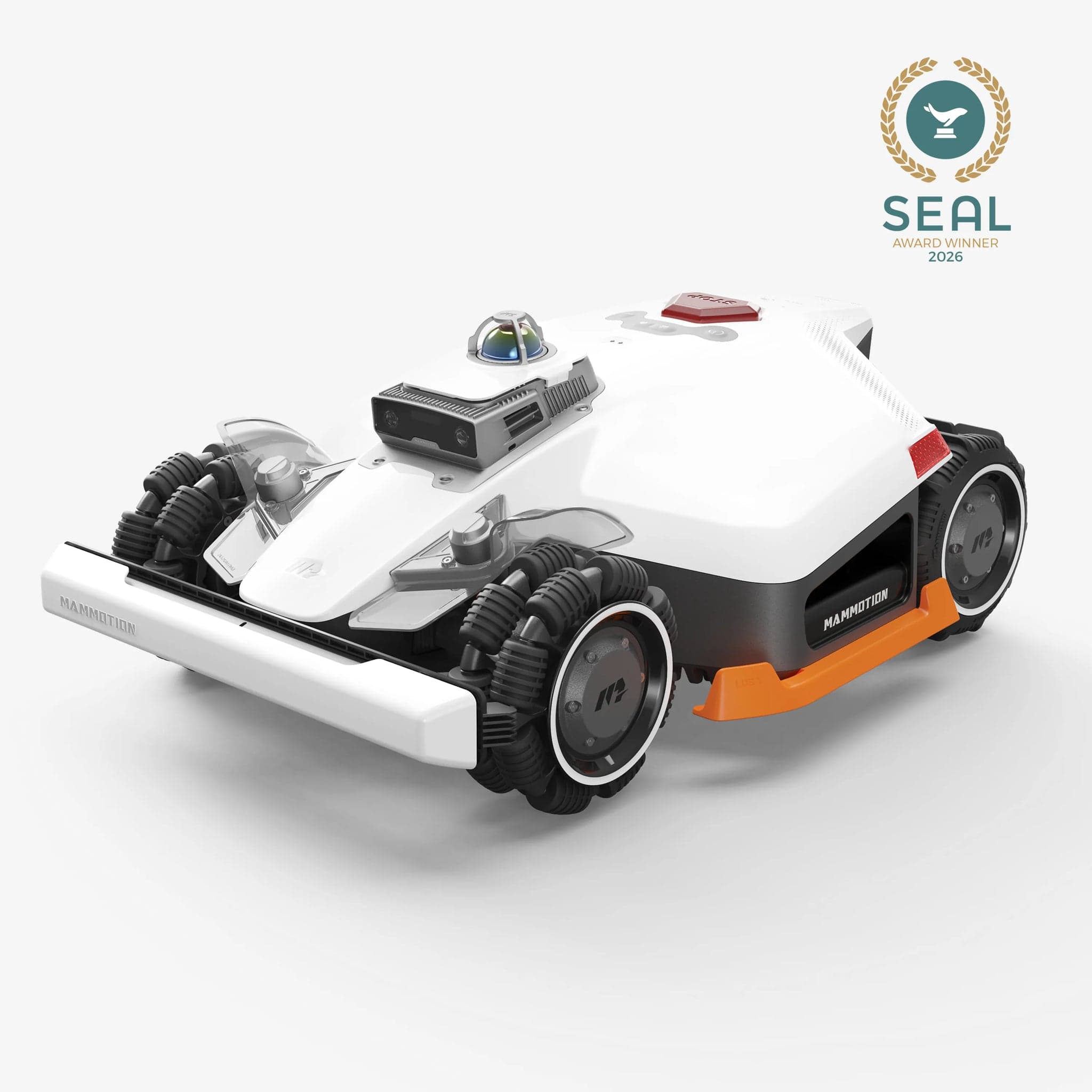
2. Mammotion LUBA 3 AWD 3000H — MowScout Score 87
Mammotion LUBA 3 AWD 3000H robot lawn mower
The pick for a bigger, steeper, partly-shaded Piedmont or mountain lot. It scores second only to the Dreame in this list, cutting from 2.2 inches up to a full 4.0 inches — the top of the fescue range with room to spare, and low enough for coastal grasses. Navigation is tri-fusion — LiDAR plus NetRTK plus AI vision — which makes it meaningfully more canopy-tolerant than a satellite-only mower: when mountain forest or a Piedmont oak weakens the RTK signal, onboard LiDAR and vision fill the gap. Add AWD to 80% grade, 0.75-acre capacity, and 30 mapped zones and it's built for large, multi-area, rolling NC properties with real terrain and clay traction demands. The honest caveat: because its navigation is still NetRTK-led, a genuinely dense, dark mountain canopy is handled more predictably by the LiDAR-first Dreame, and its network-RTK layer still wants some open sky (there's no antenna to install). For a big, partly-shaded Piedmont or foothill lot with slopes or several zones, though, this is the strongest tool here — and if your lot pushes past an acre, the LUBA 3 AWD 5000H (out of stock) stretches the same platform to 1.25 acres. Read the full review.
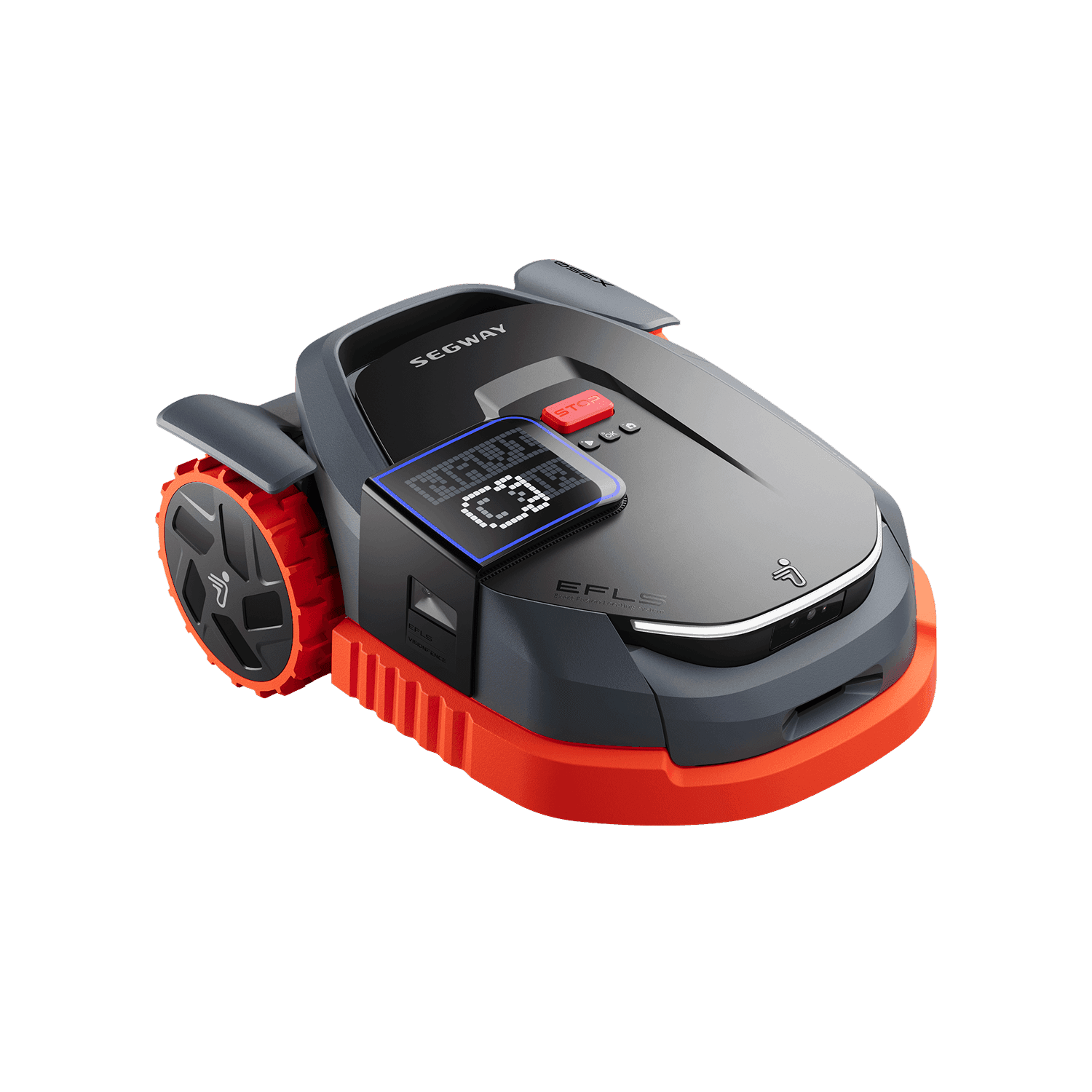
3. Segway Navimow X350 — MowScout Score 85
Segway Navimow X350 robot lawn mower
The large-open-lot coastal-plain pick — think flat, sunny eastern NC yards, new-build subdivisions, and warm-season acreage. It covers up to 1.5 acres, cuts from 2 to a full 4.0 inches (fine for low coastal grasses at the bottom, fescue at the top if you're inland), is 2WD with traction control, runs quietly at about 60 dB, and — the humidity-relevant trick — mows at night, working the lawn while it's cool. For a big, sunny eastern lot that a smaller mower would take days to finish, it's a lot of fast, quiet capacity for the money on sale. The NC caveat is unavoidable, though: like the whole X-series it's sky-dependent and needs open sky, so it's the wrong pick for a wooded mountain or shaded Piedmont lot — the exact yards where the Dreame or a LUBA belongs. Open coastal acreage: excellent. Shady mountain cove: no. A smaller sibling, the Navimow X330, covers 1 acre on the same open-sky formula. Read the full review.
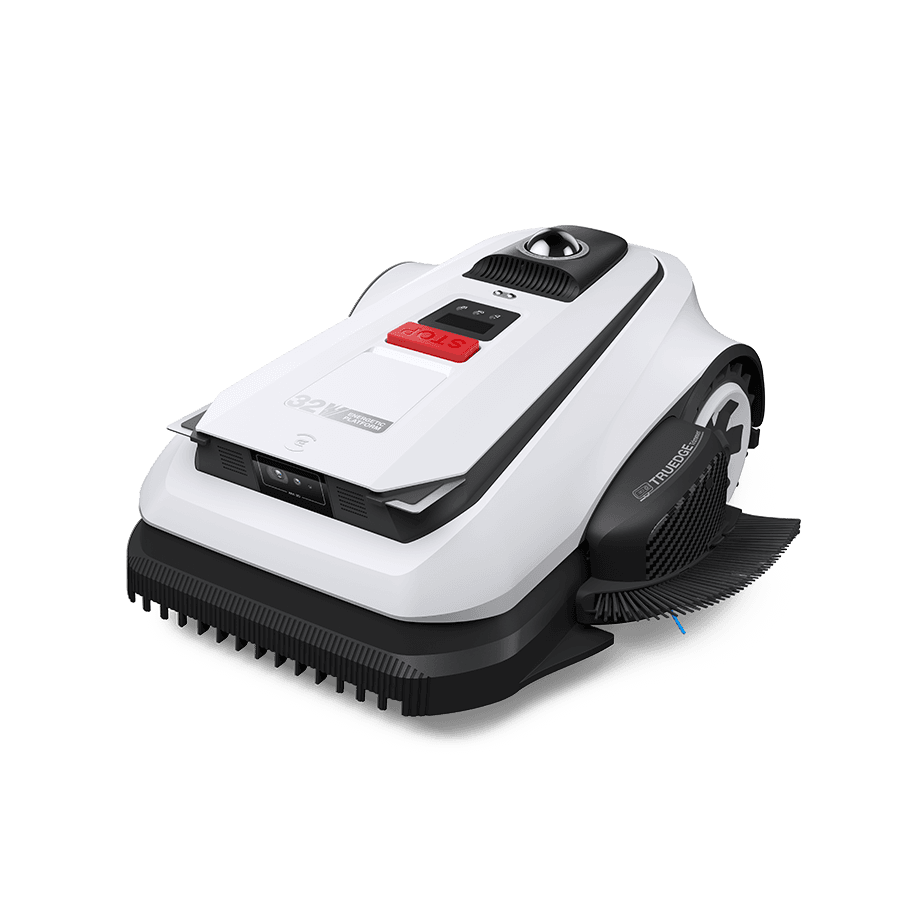
4. ECOVACS GOAT A3000 LiDAR PRO — MowScout Score 76
ECOVACS GOAT A3000 LiDAR PRO robot lawn mower
The shade specialist for a low-cut coastal or Piedmont lawn — with a tall-fescue asterisk you must read. Its dual-LiDAR navigation with no antenna is arguably the best sky-independent mapping in our data, it has a built-in TruEdge trimmer that cuts genuinely clean borders, and it covers up to 0.75 acre. Under a dense stand of coastal live oaks or Piedmont pines, it simply doesn't care about the missing sky. The asterisk: its deck tops out at 3.15 inches — inside the tall-fescue range but with no room to reach the 3.5-inch top that NC summer disease pressure demands. So it's a superb pick if your shaded lawn is coastal Bermuda, Zoysia, or Centipede (cut 1-2 inches, where 3.15 inches is plenty of headroom), and a compromise on tall fescue, where you'll be stuck mowing lower than ideal through brown-patch season. Other caveats: RWD with a 50% slope ceiling rules it out for mountain grades. For a shaded, low-cut NC lawn where edges matter, it's outstanding; for a fescue lot or a mountain slope, buy the Dreame or a LUBA instead. Read the full review.
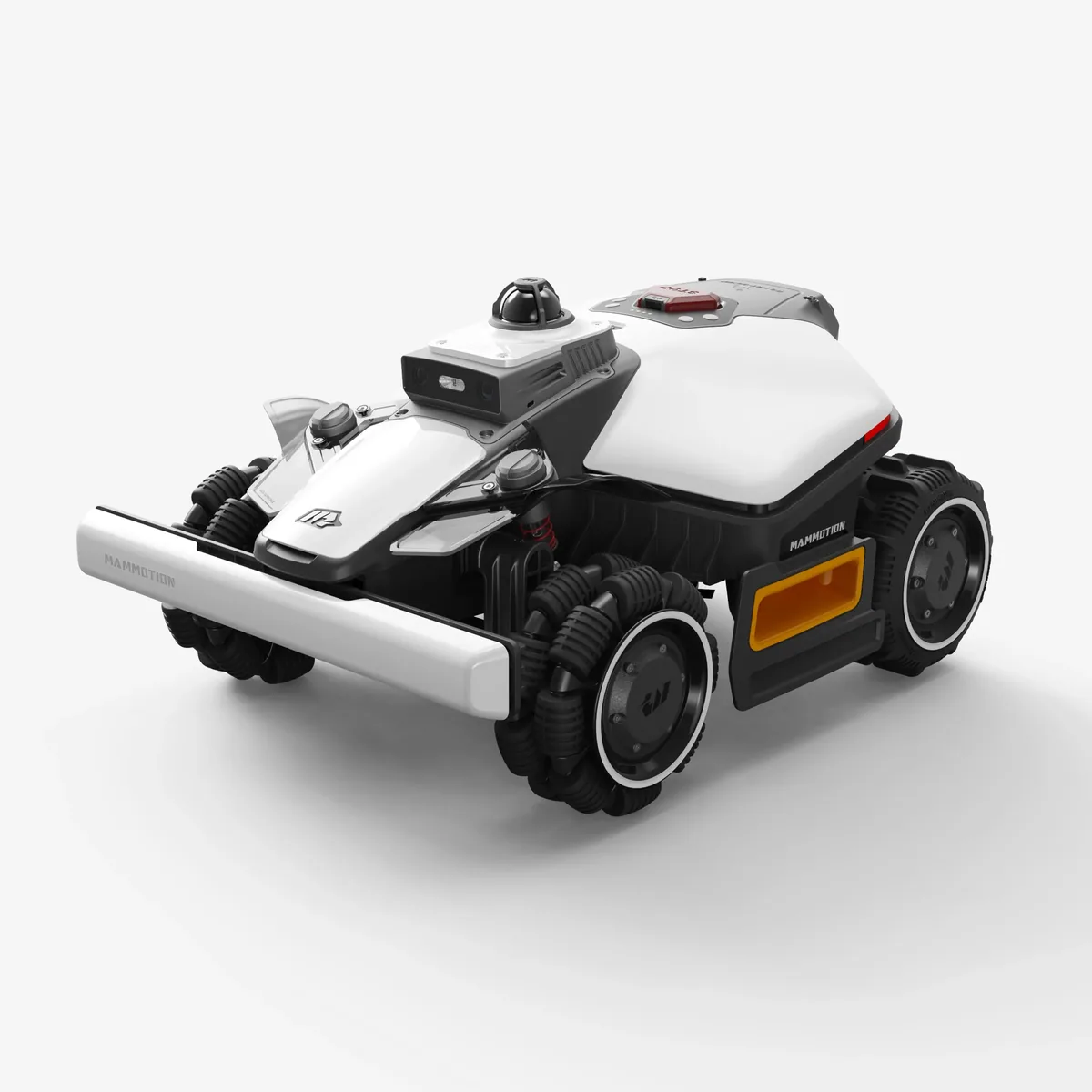
5. Mammotion LUBA mini 2 AWD — MowScout Score 79
Mammotion LUBA mini 2 AWD robot lawn mower
The compact pick that still cuts tall and grips a slope. Plenty of NC lots are a quarter to a third of an acre — a Piedmont subdivision yard, a small mountain lot — and this is the smart way to get the LUBA formula in that size: it cuts from 2.2 up to a full 4.0 inches (covers fescue tall and coastal grass low), navigates with 360° LiDAR plus dual-camera vision, adds true AWD to 80% grade, and covers up to 0.37 acre, roughly half the Dreame. The AWD is the NC story here: on a smaller mountain or clay-Piedmont lawn with a bank or a swale, four-wheel traction keeps it climbing where a two-wheel mower spins on wet clay. Honest caveats: it's priced close to some larger models, so confirm the current price, and at 0.37 acre it has no headroom for a bigger lot. Its LiDAR is the upgrade over the out-of-stock original LUBA mini AWD: heavy mountain canopy that blocks a satellite fix doesn't blind it. For a compact, tall-capable, slope-hardy NC lawn, it's the value answer. Read the full review.
North Carolina picks at a glance
Every figure below is a manufacturer rating verified against a retail listing, paired with the MowScout Score and NC State Extension turf guidance. Read the Max cut column through your grass: for coastal Bermuda, Zoysia, or Centipede (1-2 inches) the deck's minimum matters instead: the LUBA rows stop at 2.2 inches and the X350 and YUKA mini 2 rows at 2.0, so sort the other rows on Slope and Area; for tall fescue (2.5-3.5 inches) you want a deck that reaches 3.5 inches, so the 3.15-inch, 3.0-inch, and 2.4-inch rows are compromises or non-starters.
†Reaches tall fescue's 2.5-3.5 inch range but can't hit the 3.5-inch top for NC's disease-prone summer — fine for low-cut coastal Bermuda, Zoysia, and Centipede (1-2 in). Anything topping out at 2.4 inches (Husqvarna 430X, budget Navimow i-series) falls below fescue's floor entirely. If your lot is sloped, cross-reference best mowers for hills; if it's wooded, see best mowers for tree cover; if it's large, best mowers for large yards.
The three North Carolina yards, matched
North Carolina really has three archetypal yards, and the right mower is different for each. Find yours.
The mountain slope lot (Asheville, Boone, the Blue Ridge). Steep grade, forest shade, tall fescue. Drivetrain and shade tolerance rule here, so the pick is the Dreame A3 AWD Pro 3500 (Score 89) — 4WD to 80% grade, LiDAR that maps the trees, and a 3.9-inch deck for the fescue — with the LUBA 3 AWD 3000H (Score 87) as the multi-zone alternative and the LUBA mini 2 AWD (Score 79) for a smaller steep lot. A sky-dependent Navimow is the wrong tool under mountain canopy.
The flat coastal lot (Wilmington, the coastal plain, the Outer Banks region). Flat, sandy, low-cut warm-season grass, usually open sky. Cut height isn't a filter and slope barely matters, so buy on capacity and sun. A big, open lot: the Segway Navimow X350 (Score 85), 1.5 acres of fast, quiet, night mowing. A shaded coastal lot: the GOAT A3000 LiDAR PRO (Score 76), whose 3.15-inch deck is no limitation at Bermuda or Centipede height.
The Piedmont suburb (Charlotte, Raleigh, Greensboro, Durham). Rolling, red clay, oak and pine shade, tall fescue. You need a tall deck, shade-capable navigation, and enough traction for wet clay, which points to the Dreame A3 AWD Pro 3500 (Score 89) or, on a budget or a smaller lot, the LUBA mini 2 AWD 1500H (Score 79). If your Piedmont lot is unusually large or multi-zone, the LUBA 3 AWD 3000H (Score 87) is the step up.
Humidity, clay soil, and tree cover: the NC climate factors
Beyond grass and grade, three North Carolina realities shape the decision. First, humidity and disease. NC summers are hot and humid, which is exactly the weather that drives brown patch and gray leaf spot on tall fescue — the reason NC State says to mow fescue tall and keep it above 3 inches in summer. A robot mower is genuinely well suited to this: trimming a little every day keeps tall fescue inside the one-third rule (never remove more than a third of the blade at once), which is hard to honor with a weekend mow when fescue is racing in a wet May. Just make sure the deck reaches 3.5 inches.
Second, soil. The Piedmont's famous red clay compacts, holds water, and turns slick when wet, which lowers a mower's real-world traction and effective slope ceiling — so AWD/4WD earns its keep even on the moderate rolling yards common around Charlotte and Raleigh. The coastal plain's sandy soil drains fast and is easier on traction, but it can be loose; either way, remember that nearly every robot mower sits out rain by design (only the Husqvarna Automower iQ models and the Yarbo are rated by their makers to cut wet grass), so give yours capacity to catch up after a passing NC thunderstorm. The camera-only eufy E18/E15 (out of stock), pitched for flat, dry lawns, is a poor match for a humid, rainy state.
Third, tree cover — the biggest navigation question in NC. Mountain forest, Piedmont hardwoods and pines, coastal live oaks: much of the state is shaded, and shade breaks sky-dependent mowers. RTK and GPS mowers need a clear view of the sky, and a dense canopy absorbs and scatters the signal while trunks bounce echoes that push the receiver to a false position; the mower drifts or stalls, and no antenna height fixes it once the canopy is overhead. LiDAR sidesteps the problem by mapping the trees themselves — which is why our top NC picks (the Dreame A3 and the GOAT LiDAR line) lead with LiDAR, and why the sky-dependent Navimow X-series is fenced to open lots only. For the full comparison, read RTK vs LiDAR vs vision and, for wooded lots, best robot mowers for tree cover.
Common mistakes buying a robot mower for a North Carolina lawn
Not identifying your grass first. In a transition zone you can't assume. Confirm fescue vs
warm-season (winter color is the tell) before you shop, because it decides whether cut height is your first filter or a non-issue.
Buying a mower that can't reach tall fescue's height. If you have Piedmont or mountain fescue,
filter for a 3.5-inch-plus deck first. That removes the 2.4-inch Husqvarna 430X and budget Navimow i-series outright, and flags the 3.0-3.15-inch eufy and GOAT lines as no-headroom compromises for NC's disease-prone summer.
Underpowering the drivetrain in the mountains. A rear-wheel-drive mower rated to 45-50% grade
will strand itself on a Blue Ridge slope. West of the Piedmont, filter for AWD/4WD to 80%. See best mowers for hills.
Putting a satellite mower under NC trees. A Navimow X-series or any RTK/GPS-first model reads
great on paper and then drifts under a mountain or oak canopy. In shade, filter for LiDAR or vision first. See best mowers for tree cover.
Ignoring clay traction. Piedmont red clay gets slick when wet. Favor AWD and capacity to spare even on a moderate rolling yard, or the mower will fall behind through a wet NC spring.
Runner-ups: matching the mower to your North Carolina yard
If your NC lawn is flat, coastal, and low-cut — Bermuda, Zoysia, or Centipede on open ground — and you just want maximum capacity, the Navimow X350 (1.5 ac) and X330 (1 ac) are the value acreage answer, no height worries at 1-2 inches. If that coastal lawn is shaded and low-cut, the whole ECOVACS GOAT LiDAR line opens up — the O1000 for a shaded quarter acre, the A2000 for a half acre, and the A3000 for three-quarters — all tree-proof LiDAR and clean edges, all fine at warm-season height. For a small fescue lot on a budget, the YUKA mini 2 (out of stock) (Score 68) reaches 3.5 inches with LiDAR plus vision. And for a large, steep, shaded mountain estate, the LUBA 3 AWD 5000H (out of stock) stretches the tri-fusion AWD platform to 1.25 acres — size it against best mowers for hills and large yards.
The through-line for North Carolina never changes: identify your grass and your region first, then buy on cut height, drivetrain, and shade-navigation. Coastal warm-season buyers have the widest field; fescue buyers must clear the 3.5-inch bar, and mountain buyers must clear the slope bar, before anything else.
Find your match
North Carolina asks more of a robot mower than most states precisely because it isn't one climate — a steep, forested Asheville fescue lot and a flat, sunny Wilmington Bermuda lot want almost opposite machines, and the Piedmont sits in between with clay and oaks. This page ranks for the three archetypal NC yards; yours is more specific than that.
The configurator screens your grass height, tree cover, area, grade, and budget against every model we track, so a fescue buyer doesn't end up with a beautiful LiDAR mower that can't cut tall enough — and a coastal buyer doesn't overpay for a mountain-grade 4WD deck on a flat quarter acre. Keep reading: the pillar on how robot mowers work, the robot lawn mower buyer's guide, the terrain-specific best robot mowers for hills and for tree cover, and RTK vs LiDAR vs vision.
Frequently asked questions
What's the best robot mower for a North Carolina lawn in 2026? The Dreame A3 AWD Pro 3500 (MowScout Score 89) is our top all-around NC pick because it fits every region of a transition-zone state at once: it cuts as high as 3.9 inches for the tall fescue that dominates the Piedmont and mountains and as low as 1.2 inches for the coastal plain's Bermuda, Zoysia, and Centipede, it navigates by LiDAR so mountain forest and oak shade don't stop it, and its 4WD-to-80% grade holds traction on Blue Ridge slopes and slick red clay. The Mammotion LUBA 3 AWD 3000H (Score 87) is the close rival for bigger, steeper lots.
How do I know if I have tall fescue or a warm-season grass in North Carolina? Look at your lawn in January. Cool-season tall fescue stays green through most of the winter and grows in coarse-bladed bunches; warm-season Bermuda, Zoysia, and Centipede turn tan and dormant from roughly November through March and spread by runners. Region backs it up — NC State Extension recommends cool-season fescue for the mountains, either family for the Piedmont, and warm-season grasses for the coastal plain. Many NC lawns are a mix, which is why pinning down cut height matters before you buy.
What height should a robot mower cut tall fescue in North Carolina? NC State Extension recommends 2.5-3.5 inches, kept above 3 inches — toward the 3.5-inch top — during NC's hot, humid summer to reduce brown patch and gray leaf spot. So a fescue lawn needs a deck that reaches at least 3.5 inches: the Husqvarna 430X and budget Navimow i-series (2.4 in) fall short, the GOAT line (3.15 in) and eufy (3.0 in) land inside the range but can't hit the top, and the Dreame A3 (3.9 in), LUBA line and Navimow X-series (4.0 in) clear it.
Which robot mower is best for a steep mountain lot near Asheville? For a steep western NC lot, traction and shade tolerance win, so the Dreame A3 AWD Pro 3500 (Score 89, 4WD to 80%, LiDAR) or the Mammotion LUBA 3 AWD 3000H (Score 87, AWD to 80%, tri-fusion) is the pick — both hold grade where a rear-wheel-drive mower strands, map the mountain canopy with LiDAR, and reach the 3.5-inch-plus height fescue needs. For a smaller steep lot, the LUBA mini 2 AWD 1500H (Score 79) brings the same AWD-to-80% platform in a 0.37-acre body, with LiDAR that maps under the canopy.
Which robot mower is best for a flat coastal North Carolina lot? Eastern NC lots are usually low-cut warm-season turf on flat, sandy, open ground, which opens up the field. For a big, sunny lot, the Segway Navimow X350 (Score 85) covers 1.5 acres, cuts 2-4 inches, runs at about 60 dB, and mows at night. If the coastal lot is shaded by live oaks or pines, the ECOVACS GOAT A3000 LiDAR PRO (Score 76) maps the trees instead of the sky, and at low warm-season cut heights its 3.15-inch deck is no limitation.
Do robot mowers handle North Carolina humidity, clay soil, and tree cover? Yes, with the right specs. NC humidity drives disease pressure on fescue, which is why you mow it tall — a job a robot's daily trim does well within the one-third rule. Piedmont red clay gets slick and holds water, lowering a mower's effective slope ceiling, so we favor AWD/4WD even on moderate rolling yards. And tree cover is the big navigation call: LiDAR mowers like the Dreame A3 and GOAT line map the trees and run fine in shade, while sky-dependent RTK/GPS mowers such as the Navimow X-series should stay on open lots.
MowScout is reader-supported and may earn a commission from links on this page. Our picks are spec-verified and data-driven — based on published manufacturer specifications, verified US pricing, and NC State Extension turf guidance, not hands-on lab testing. Turf mowing heights are sourced to NC State Extension (Carolina Lawns, tall fescue, bermudagrass, and centipedegrass maintenance calendars, and TurfFiles). Always confirm the current price before buying. See our full disclosure.
Related mower reviews
Related pick #1
Dreame A3 AWD Pro 3500
Score89/100
Dreame A3 AWD Pro 3500 belongs in Best Robot Lawn Mower for North Carolina Yards (2026) because it combines LiDAR navigation, 0.87 acres of rated coverage, a 80% slope rating, and 20 mapped zones. AWD/4WD gives it extra traction margin. No separate antenna requirement reduces one setup variable.
Mammotion LUBA 3 AWD 3000H belongs in Best Robot Lawn Mower for North Carolina Yards (2026) because it combines hybrid navigation, 0.75 acres of rated coverage, a 80% slope rating, and 30 mapped zones. AWD/4WD gives it extra traction margin. No separate antenna requirement reduces one setup variable.
Segway Navimow X350 belongs in Best Robot Lawn Mower for North Carolina Yards (2026) because it combines hybrid navigation, 1.5 acres of rated coverage, a 50% slope rating, and 120 mapped zones. RWD makes it a better fit for simpler turf. No separate antenna requirement reduces one setup variable.
ECOVACS GOAT A3000 LiDAR PRO belongs in Best Robot Lawn Mower for North Carolina Yards (2026) because it combines LiDAR navigation, 0.75 acres of rated coverage, a 50% slope rating, and 12 mapped zones. RWD makes it a better fit for simpler turf. No separate antenna requirement reduces one setup variable.
Mammotion LUBA mini 2 AWD 1500H belongs in Best Robot Lawn Mower for North Carolina Yards (2026) because it combines LiDAR navigation, 0.37 acres of rated coverage, a 80% slope rating, and 20 mapped zones. AWD/4WD gives it extra traction margin. No separate antenna requirement reduces one setup variable.
Robot mowers fail when a generic recommendation misses the hard constraint: slope, tree cover, separated zones, dock placement, or budget. Run the configurator before using any deal box.
What's the best robot mower for a North Carolina lawn in 2026?
The Dreame A3 AWD Pro 3500 (MowScout Score 89) is our top all-around North Carolina pick because it fits every region of a transition-zone state at once: it cuts as high as 3.9 inches for the tall fescue that dominates the Piedmont and mountains and as low as 1.2 inches for the Bermuda, Zoysia, and Centipede grass of the coastal plain, it navigates by LiDAR so mountain forest and Piedmont oak shade don't stop it, and its 4WD rated to 80% grade holds traction on Blue Ridge slopes and slick Piedmont clay. The Mammotion LUBA 3 AWD 3000H (Score 87) is the close rival for bigger, steeper, partly-shaded lots.
How do I know if I have tall fescue or a warm-season grass in North Carolina?
Look at your lawn in January. North Carolina is a transition zone, so both grass families are common, and winter color is the clearest tell: cool-season tall fescue stays green through most of the winter and grows in coarse-bladed bunches, while warm-season Bermuda, Zoysia, and Centipede turn tan and dormant from roughly November through March and spread by runners. Region is the other clue — NC State Extension recommends cool-season fescue for the mountains, either family for the Piedmont, and warm-season grasses for the coastal plain. Many NC lawns are actually a mix of both, which is exactly why cut height is the first thing to pin down before you buy.
What height should a robot mower cut tall fescue in North Carolina?
NC State Extension recommends mowing tall fescue at 2.5-3.5 inches, and specifically keeping it above 3 inches — toward the 3.5-inch top — during North Carolina's hot, humid summers to reduce brown patch and gray leaf spot disease. That makes deck height the first filter for a Piedmont or mountain fescue lawn: you want a mower that reaches at least 3.5 inches. The Husqvarna Automower 430X and budget Navimow i105N/i110N top out at 2.4 inches, below the range; the ECOVACS GOAT LiDAR line (3.15 inches) and eufy E15/E18 (3.0 inches) land inside it but can't reach the 3.5-inch top; the Dreame A3 (3.9 in), Mammotion LUBA line and Segway Navimow X-series (4.0 in) clear it with headroom.
Which robot mower is best for a steep mountain lot near Asheville?
For a steep western North Carolina lot — Asheville, the Blue Ridge, anywhere in the Appalachians — traction and shade tolerance matter more than anything, so we favor the Dreame A3 AWD Pro 3500 (Score 89, 4WD to 80% grade, LiDAR) or the Mammotion LUBA 3 AWD 3000H (Score 87, AWD to 80%, tri-fusion navigation). Both hold grade on slopes that strand a rear-wheel-drive mower, both map the dense mountain tree canopy with LiDAR instead of depending on a satellite signal the trees would block, and both reach the 3.5-inch-plus height mountain tall fescue needs. For a smaller steep lot, the LUBA mini 2 AWD 1500H (Score 79) brings the same AWD-to-80% platform in a 0.37-acre body, with LiDAR that maps under the canopy.
Which robot mower is best for a flat coastal North Carolina lot?
For a flat eastern lot — Wilmington, the coastal plain, the Outer Banks region — the grass is usually low-cut warm-season turf (Bermuda, Zoysia, or Centipede) on flat, sandy ground with open sky, which opens up the field. If it's a big, sunny lot, the Segway Navimow X350 (Score 85) covers up to 1.5 acres, cuts 2-4 inches, runs quietly at about 60 dB, and mows at night. If the coastal lot is shaded by live oaks or pines, step to the LiDAR-navigating ECOVACS GOAT A3000 LiDAR PRO (Score 76) instead, since it maps trees rather than the sky — and at low warm-season cut heights its 3.15-inch deck is no limitation.
Do robot mowers handle North Carolina humidity, clay soil, and tree cover?
Yes, with the right specs. NC humidity drives disease pressure on tall fescue, which is why you mow it tall (3.5 inches) — a job a robot's daily light trim does well while honoring the one-third rule. Piedmont red clay gets slick and holds water, which lowers a mower's effective slope ceiling, so we favor AWD/4WD even on moderate rolling yards. And tree cover — mountain forest, Piedmont oaks and pines — is the big navigation question: LiDAR mowers like the Dreame A3 and GOAT line map the trees and run fine in shade, while sky-dependent RTK/GPS mowers such as the Navimow X-series should be kept to open lots. Match the spec to your region and North Carolina is very manageable.