Best Robot Lawn Mowers for Tree Cover & Shaded Yards (2026)
Best robot lawn mowers for tree cover and shaded yards in 2026: spec-verified LiDAR and vision picks that navigate under dense canopy where GPS and RTK fail.
Affiliate disclosure: MowScout earns a commission when you buy through our links, including as an Amazon Associate. Recommendations are based on yard fit, verified specs, and score methodology; commission can only break close ties among genuine fits.
Quick answer: for a wooded lot, buy a LiDAR mower — not an RTK/GPS one — and the most capable pick we track is the Dreame A3 AWD Pro 3500, MowScout Score 89. It navigates by LiDAR plus vision with no sky-facing antenna, so a tree canopy that would blind a satellite mower doesn't faze it, and it adds 4WD to 80% grade for shaded hillsides. It's a premium, steep-yard machine, though. For most wooded yards up to three-quarters of an acre the sweet spot is the MOVA LiDAX Ultra 3000 AWD (Score 87), and the value pick is the ECOVACS GOAT O1000 LiDAR PRO (Score 72). This page is spec-verified and data-driven, not hands-on — we have not run a unit under your trees, so every number here comes from manufacturer specs and our MowScout Score, cross-checked against retail listings.
If you take one thing from this guide, take this: the single most important decision for a shaded yard is the navigation type, and you must pick it first. Get that right and the mower works; get it wrong and no amount of AWD, battery, or app polish will save it. Below we explain exactly why a tree canopy breaks satellite positioning, what we weighted, the five picks we'd actually put under trees, and the honest line between partial shade (where simpler vision mowers are fine) and heavy canopy (where you need LiDAR). Verify the current price before you buy, because this category discounts weekly.
The short answer: our top pick, and who should size down
The Dreame A3 AWD Pro 3500 outscores every other LiDAR-only mower in our database, which is why it leads. But "best under trees" is really about matching the navigation to the canopy, then buying only as much area, slope, and price as your yard actually needs. Most wooded-yard buyers don't have an 80%-grade bank or 0.87 acre, so the Dreame is more mower than they need. The money-smart version of the answer is a size-matched LiDAR mower: the MOVA LiDAX Ultra 3000 AWD for up to three-quarters of an acre, the MOVA LiDAX Ultra 2000 for a half acre, and the GOAT O1000 or MOVA LiDAX Ultra 1000 for a shaded quarter acre. All of them use LiDAR, so they map the trees, beds, and buildings around them and localize against that map — no sky required.
RTK (real-time kinematic) and plain GPS are the most popular wire-free navigation systems, and on a big, open lawn they're brilliant — centimeter-accurate and cheap per acre. Under a canopy they fall apart, and it's worth understanding why, because the failure is physical, not a firmware bug you can patch.
1. Signal blockage. GNSS satellite signals (GPS, Galileo, and the rest) are astonishingly weak by the time they reach your yard — roughly a hundred-millionth of a millionth of a watt. A tree canopy sits directly between the mower and the sky and absorbs and scatters those signals, and wet leaves are far worse than dry ones because water strongly attenuates the frequencies GNSS uses. Under dense cover the receiver simply can't hear enough satellites to hold a solution, so it drops from a locked, centimeter "fix" to a meter-level guess — or nothing.
2. Multipath error. Even the signals that do get through rarely arrive cleanly. They bounce off trunks, branches, wet foliage, and the side of your house, and those reflected copies reach the antenna a hair later than the direct signal. The receiver can't always tell the real signal from its echoes, so it computes a false position that can be off by feet, not inches. Multipath is the reason a mower can look like it has signal and still wander — it's confidently wrong.
3. Loss of the RTK "fix." RTK layers a correction signal on top of GPS to reach centimeter accuracy, but that correction only holds while the receiver keeps continuous, clean lock on the satellites. Every time the canopy interrupts that lock — a passing cloud of leaves, the mower rolling under a low branch — the system suffers a "cycle slip" and can fall back to float or dead-reckoning mode. In practice the mower drifts past its virtual boundary, mows where it shouldn't, or gives up and parks with a positioning error.
And NetRTK doesn't fix it. Network RTK (the Segway Navimow i-series) is clever — it pulls the correction signal over the cellular network so you skip the local antenna — but the mower's own receiver still has to see the satellites through the canopy. NetRTK solves the antenna-setup chore, not the sky-view problem, and it adds a dependency on cell coverage. That's why the Navimow i-series and the sky-dependent X-series (X330, X350) are the wrong tools for a wooded lot, and why we keep them off this list. For more on signal troubleshooting, see our guide on RTK and GPS signal problems.
How LiDAR and vision get around the canopy
The two navigation systems that don't care about the sky solve the problem in completely different ways.
LiDAR spins a laser and measures the distance to everything around the mower — trees, fences, beds, the house — many thousands of times a second, building a live 3D map and locating itself against it (a technique called SLAM). Because it reads the physical world instead of the sky, shade and canopy are irrelevant, and it works in the dark. The trees that blind an RTK mower are, to a LiDAR mower, helpful landmarks. This is why every top pick on this page is LiDAR-led.
Vision uses cameras and AI to recognize grass, edges, obstacles, and pets. It also doesn't need the sky, and it's usually the simplest to set up — no antenna at all. Its weakness is different: cameras need adequate light, so deep shade, dusk, and heavy wet reduce reliability, and vision-first mowers target flatter, simpler yards. That makes vision a good fit for partial or dappled shade and a poorer one for a dense, dark canopy — a distinction we return to below.
What we prioritized for tree cover (and how the Score reflects it)
The MowScout Score is a weighted composite, and for a shaded-yard list the Navigation sub-score carries the ranking. We screened and ranked these picks on three things, in strict order:
Navigation type first. This is a hard filter, not a preference. To make the list at all, a mower has to
navigate by LiDAR, vision, or a LiDAR-led fusion — something that works without a clear sky. Pure RTK, GPS, and NetRTK models are excluded no matter how well they score overall, because their positioning degrades exactly where you need it.
Canopy robustness. Among the sky-independent options, LiDAR outranks vision for heavy cover because it
works in low light and even darkness, while vision needs usable light. We reward genuine LiDAR (and dual- LiDAR) navigation over camera-only systems for the toughest yards.
The rest of the yard's demands. Once navigation is settled, area capacity, slope rating, drivetrain,
and edge quality break the ties. A wooded yard is often also a hilly or irregular one, so we note where a pick's RWD drivetrain or slope ceiling limits it.
Everything below is grounded in `data/mowers.json` and the MowScout Score. We have not measured a run under your canopy; where we say "rated," we mean the manufacturer's spec, verified against a retail listing.
The best robot mowers for tree cover, ranked
New in the catalog (September 2026): two LiDAR mowers that pass this list's sky-independent rule. The Navimow i215 LiDAR (Score 70), Navimow's only LiDAR model, covers 0.37 acre with a 2-to-4-inch cut and 4G tracking. The LUBA mini 2 AWD (Score 79) adds all-wheel drive to 80% with LiDAR plus vision. Both are in the table below, and the ranked list now includes the MOVA LiDAX line.
Five LiDAR-and-vision picks that navigate under canopy, ranked by MowScout Score.
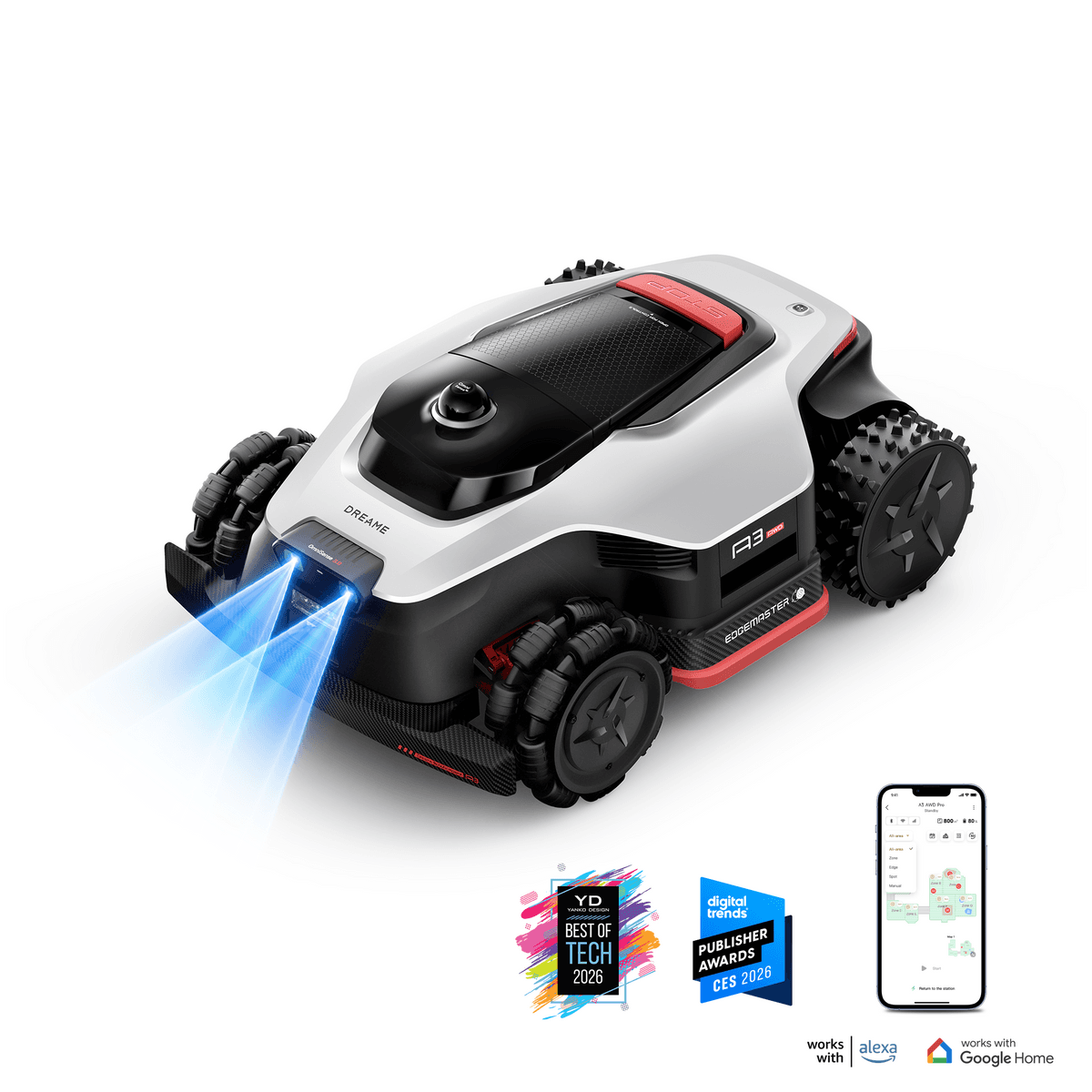
1. Dreame A3 AWD Pro 3500 — MowScout Score 89
Dreame A3 AWD Pro 3500 robot lawn mower
The most capable mower we track for a wooded lot that's also steep. It navigates by LiDAR plus binocular vision with no RTK antenna, so canopy and shade don't degrade it, and it backs that with 4WD rated to 80% grade and a wide 15.8-inch dual-disc deck across up to 0.87 acre. Why it works under trees: LiDAR maps the surroundings directly, so the same trees that would blind a satellite mower become reference points — and unlike vision, it doesn't care that the canopy makes the yard dark. Caveats: it sits at the premium end of this list and has to justify itself against the more mature LUBA app and support, and it's genuinely overkill for a small flat lawn. If your shaded yard has real slopes and you want the best navigation-plus-traction combination available, this is it. Read the full review.
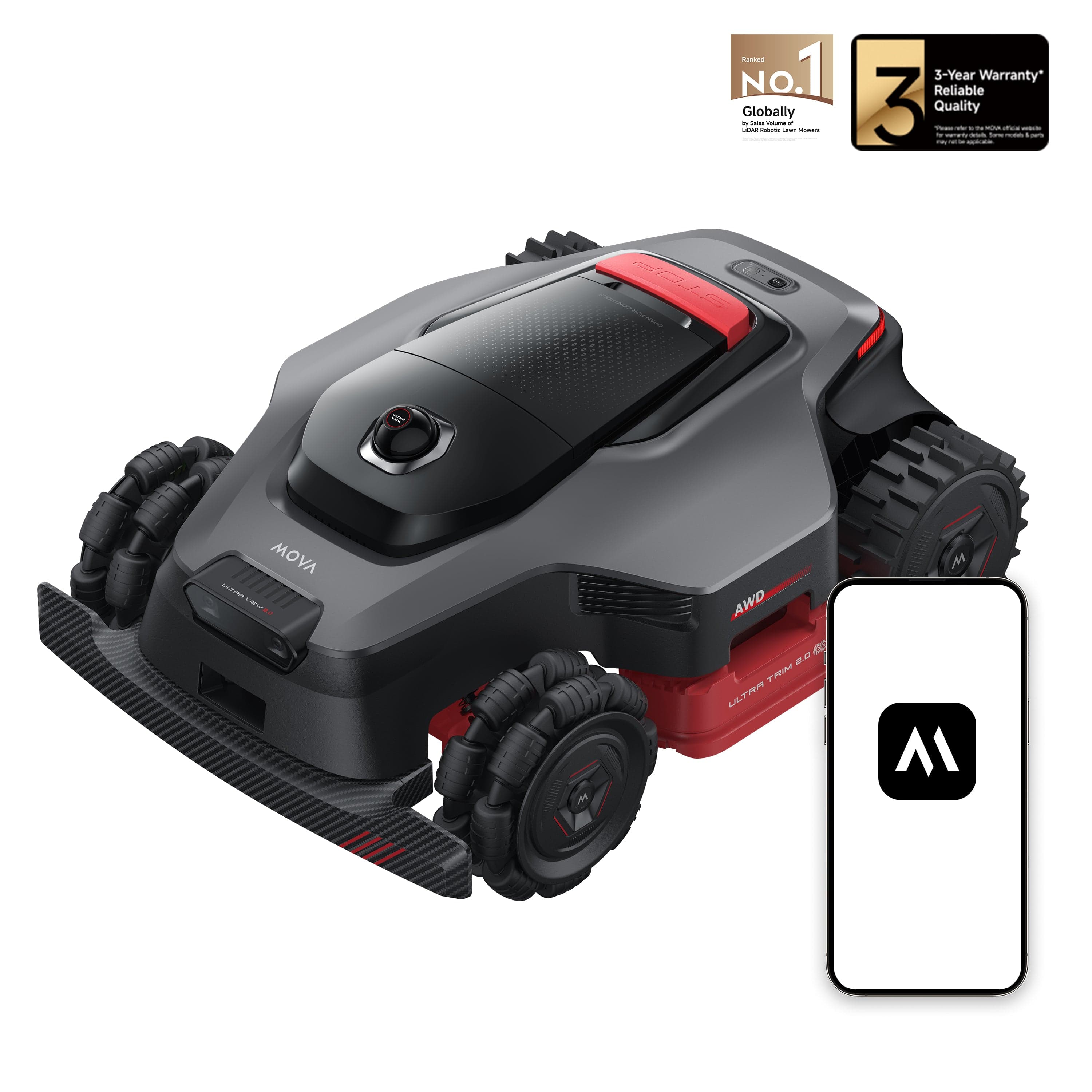
2. MOVA LiDAX Ultra 3000 AWD — MowScout Score 87
MOVA LiDAX Ultra 3000 AWD robot lawn mower
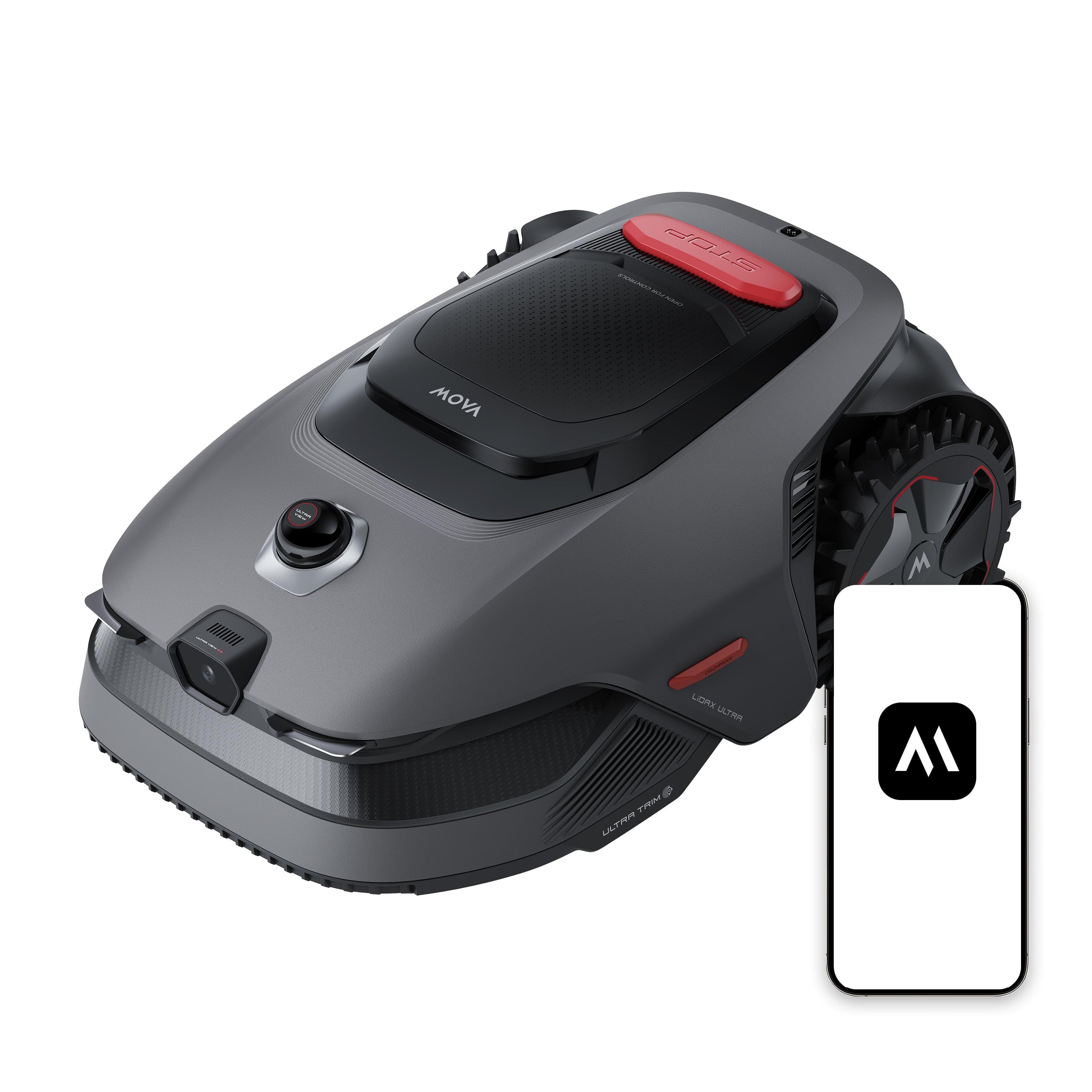
The sweet-spot pick for most wooded yards up to three-quarters of an acre. It navigates by LiDAR plus AI vision with no antenna and no sky requirement, drives all four wheels on an 80% slope rating, cuts good edges, and maps up to 150 zones for the tree rings and beds a shaded lot tends to have, with a 3-year warranty. Why it works under trees: its LiDAR localizes against trunks, beds, and buildings, so canopy and shade are non-issues. It outscores the GOAT A3000 and costs less, which is why it takes this spot. Caveats: MOVA is a newer US entrant, so its support and parts track record is shorter than Mammotion's or Segway's, and it isn't rated for wet grass. Prefer a built-in edge trimmer? The ECOVACS GOAT A3000 LiDAR PRO (Score 76) pairs dual-LiDAR with TruEdge trimming across the same 0.75 acre, on rear-wheel drive rated to 50%. Read the full review.
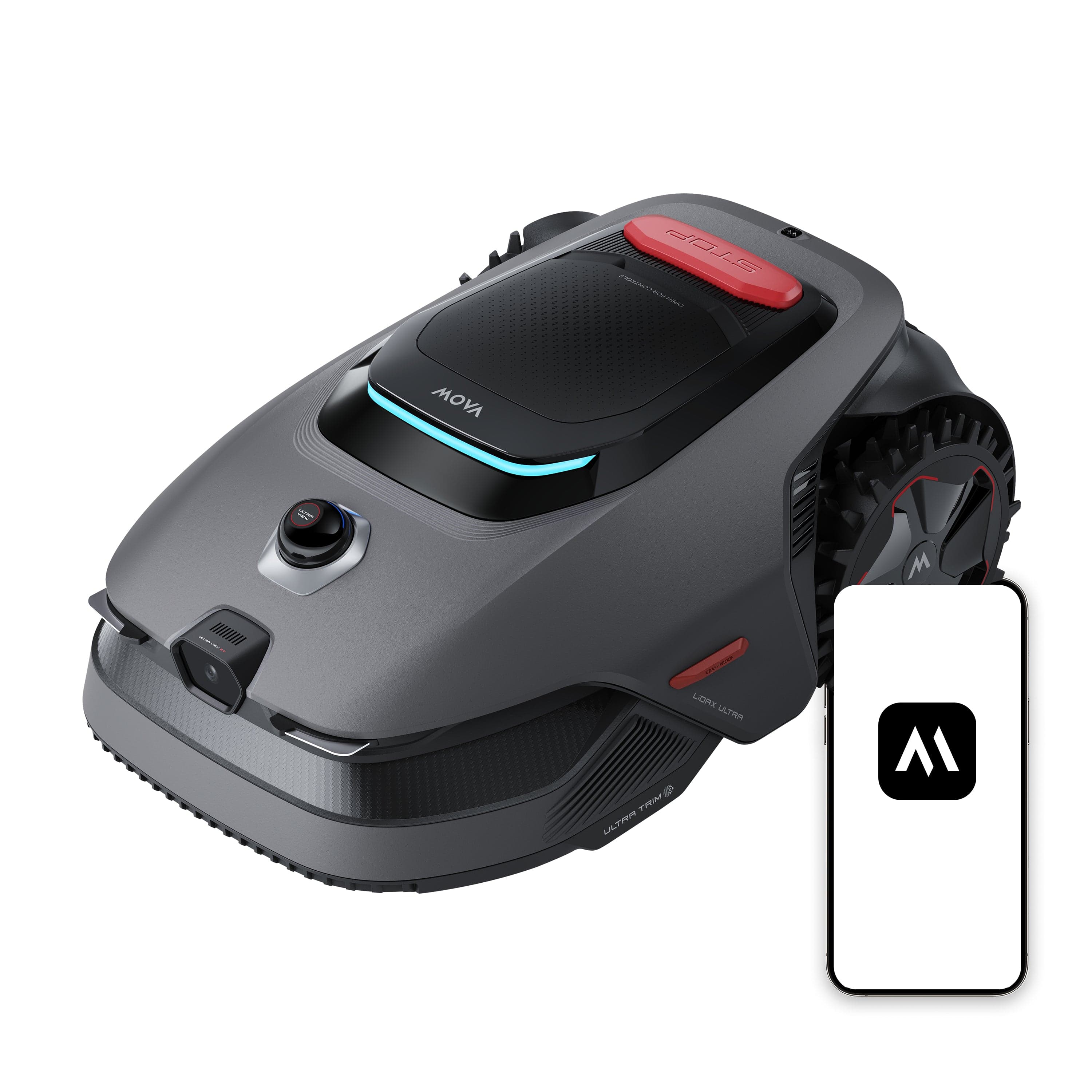
3. MOVA LiDAX Ultra 2000 — MowScout Score 75
MOVA LiDAX Ultra 2000 robot lawn mower
The half-acre value pick. It brings the same LiDAR-plus-vision navigation, good edges, 150 zones, and a 3-year warranty to half an acre for meaningfully less money than the 3000 AWD. Why it works under trees: the same LiDAR-first approach, so shade and canopy are non-issues. It ties the GOAT A2000 on Score and costs less. Caveats: it's RWD with a 45% slope ceiling, so steeper wooded slopes are out; for a steep shaded half acre, the Ultra 2000 AWD (Score 85) adds all-wheel drive to 80%. The ECOVACS GOAT A2000 LiDAR PRO is the TruEdge-trimmer alternative at the same size. Read the full review.
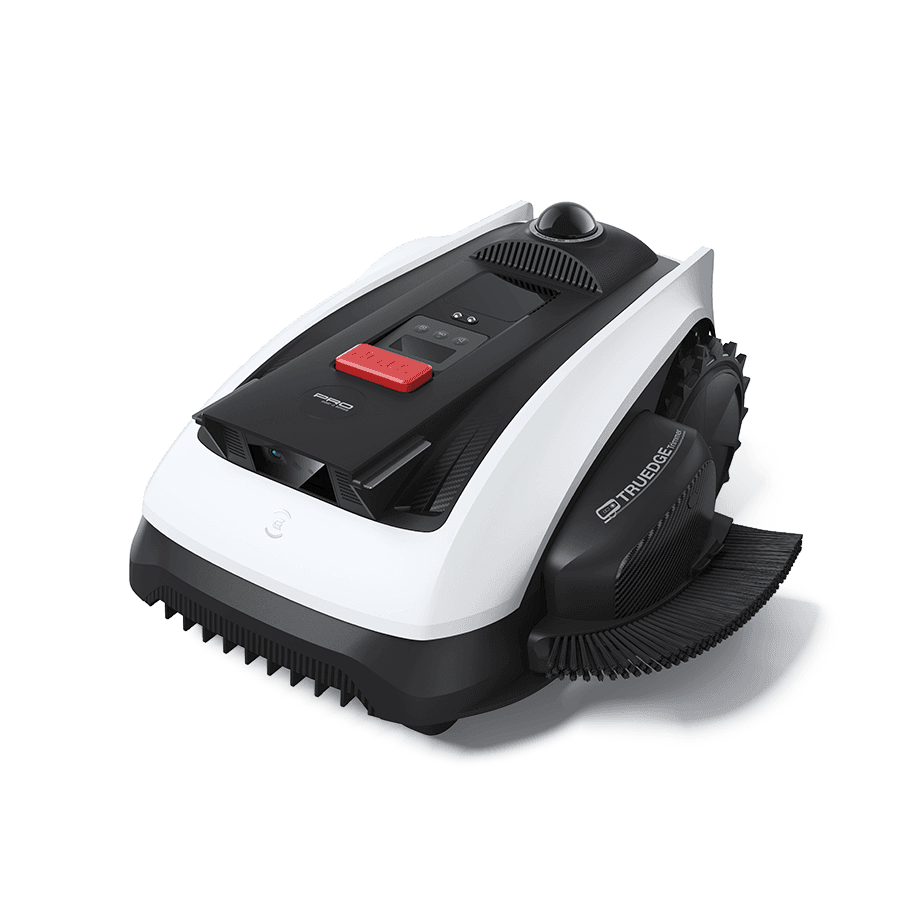
4. ECOVACS GOAT O1000 LiDAR PRO — MowScout Score 72
ECOVACS GOAT O1000 LiDAR PRO robot lawn mower
The value pick for a shaded small yard, and the one we'd point most budget buyers to. It uses LiDAR plus AI vision with no antenna, the edge cutting is genuinely good for the class, and it sells well below its list price — one of the least expensive ways to get true tree-cover navigation. Why it works under trees: LiDAR does the localizing, so partial-to-moderate canopy that would stall an RTK mower is a non-event. Caveats: it's rear-wheel drive with a 45% slope ceiling and covers only a quarter acre, so it's for a flat-to-moderate small lot, and the base model has no 4G. If your shaded yard is compact and you don't want to spend flagship money, this is the value answer. Read the full review.
5. MOVA LiDAX Ultra 1000 — MowScout Score 71
MOVA LiDAX Ultra 1000 robot lawn mower
The budget small-yard LiDAR alternative to the O1000. It pairs LiDAR with AI vision for sky-independent navigation, cuts good edges, maps up to 150 zones, and carries a 3-year warranty. Why it works under trees: its LiDAR maps the surroundings directly, so a quarter acre under partial canopy is well within its comfort zone. Caveats: it's RWD, rated to a quarter acre and 45% grade. Read the full review.
Tree-cover picks at a glance
Every figure below is a manufacturer rating verified against a retail listing, paired with the MowScout Score. Navigation type is the column that matters most here: LiDAR-led rows are the heavy-canopy picks; vision rows are partial-shade options; the tri-fusion LUBA rows are canopy-tolerant hybrids (see the next section).
Notice which models are absent: Navimow's satellite models (the network-RTK i-series and the X-series) are missing on purpose, because satellite positioning is the one thing that fails under a canopy. The exception is the Navimow i215 LiDAR, which navigates by LiDAR and is listed above. If your lot is also steep, cross-reference the best mowers for hills; if you want the full no-wire picture, see best wire-free robot mowers.
LiDAR vs vision under trees: which one you actually need
Both LiDAR and vision ignore the sky, so both beat RTK under a canopy — but they are not interchangeable, and the difference is light.
LiDAR measures distances with a laser, so it is indifferent to how bright or dark the yard is. A dense canopy that turns your lawn into deep shade at noon, or a mower that runs at dawn or after dusk, changes nothing for LiDAR — the map is built from range data, not from an image. That's why LiDAR is the right answer for heavy, continuous canopy, and why all five of our picks use it. It also thrives on the very clutter that defines a wooded lot: trees, beds, and fences are extra landmarks that sharpen its localization.
Vision reads camera images, so it needs enough light to see. In partial, dappled, or edge-of-tree-line shade it's perfectly capable, and it's the simplest system to set up. But push it into a dark canopy, low-light hours, or a heavy wet morning and reliability drops. Eufy is candid about this — the E18 and E15 are pitched as flat, open-yard machines, and the brand notes they aren't ideal for dense grass types. So a vision mower is a smart, simpler choice when your "shade" is really dappled light on a flat lawn, and the wrong choice when the canopy is thick enough to darken the ground.
The practical rule: map how dark your yard actually gets under the trees. If it's dim at midday, buy LiDAR. If it's bright with moving patches of shade, vision will do.
Partial shade vs heavy canopy: matching the mower to the cover
"Tree cover" spans a huge range, and the right spend depends on where your yard lands.
Light or partial shade (a few trees, dappled light, flat lawn). A vision mower like the
eufy E15 (Score 60) is the easiest fit — no antenna, no wire, quick mapping drive — though it costs more than the quarter-acre LiDAR picks. Keep it to flat ground; vision tops out around 32% grade.
Moderate canopy (real shade for parts of the day, some slope or irregular edges). Step up to a LiDAR
Heavy, continuous canopy (dense shade most of the day, larger yard). This is squarely LiDAR territory.
The MOVA LiDAX Ultra 3000 AWD for up to 0.75 acre, even on a slope, or the Dreame A3 AWD Pro for up to 0.87 acre, are the picks that won't flinch when it's dark under the trees.
If you're unsure which bucket you're in, the honest test is whether you'd need a flashlight to read under your trees at midday. If yes, treat it as heavy canopy and buy LiDAR.
The hybrid question: where the Mammotion LUBA tri-fusion fits
The strongest wire-free mowers combine sensors, and the Mammotion LUBA 3 line is the headline example: tri-fusion navigation — LiDAR plus NetRTK plus AI vision. That redundancy makes the LUBA 3 AWD 3000H (Score 87) meaningfully more canopy-tolerant than a pure-RTK mower — when the satellite signal weakens under leaves, the onboard LiDAR and vision fill the gap that a satellite-only system can't. It also brings genuine AWD to 80% grade, which the LiDAR-only GOAT line can't match, so for a partial-to-mixed canopy with real slopes a LUBA 3 is a legitimately strong choice. The compact LUBA mini AWD 1500H (out of stock) is not tri-fusion: it pairs network RTK with vision and has no LiDAR. Its successor, the LUBA mini 2 AWD (Score 79), adds 360° LiDAR and keeps the 80% AWD rating, which makes it the compact Mammotion to consider under trees.
Here's the nuance that keeps them off the top of this specific list, though: the LUBA's navigation is still NetRTK-led, with LiDAR and vision as support. Under a genuinely dense, dark canopy — the kind that darkens the ground at noon — a LiDAR-first mower (the Dreame A3 AWD Pro, the MOVA LiDAX line or the GOAT line) is the more predictable performer, because it never depended on the sky in the first place. So: partial cover plus slopes, a LUBA is excellent; heavy continuous cover, lead with LiDAR. Both beat Navimow's satellite models under trees.
Common mistakes people make buying a mower for a wooded lot
Buying an RTK or NetRTK mower for a shaded yard. This is the number-one, most expensive mistake, and
it's easy to make because RTK mowers are everywhere and often cheaper. A Navimow i-series or any satellite- first model will read great on the spec sheet and then drift, stall, or refuse to run under your canopy. Filter for LiDAR or vision first, before you look at any other spec.
Assuming "wire-free" means "works anywhere." Wire-free only means no buried perimeter wire; it says
nothing about whether the navigation needs the sky. Plenty of wire-free mowers are RTK-based and will fail under trees. See best wire-free robot mowers for the full breakdown.
Confusing partial shade with heavy canopy. Vision mowers are fine in dappled light and struggle in deep
shade. If you buy a vision mower for a dark, continuous canopy, you'll get unreliable runs at exactly the wrong times of day. Match the mower to how dark your yard actually gets.
Forgetting slope on a wooded slope. Wooded lots are often hilly and shaded at once. LiDAR fixes the
navigation, but the GOAT line is RWD (45–50% ceiling). If your canopy sits on a real grade, you need AWD or 4WD — the Dreame A3 AWD Pro, the MOVA LiDAX AWD models or a LUBA — not just LiDAR.
Trusting a clear-sky antenna to "punch through." Mounting an RTK antenna higher helps only until the
canopy is above it too. Under mature trees there is no antenna placement that restores a satellite fix; the physics don't cooperate. Change the navigation type, not the mounting height.
Runner-ups and how to decide
If your wooded lot is steep, the AWD tri-fusion LUBA 3 AWD 3000H (Score 87) and the compact LUBA mini 2 AWD (Score 79) add 80%-grade traction to LiDAR-backed, canopy-tolerant navigation — the better call than a LiDAR-only GOAT when the shade sits on a hill. If your yard is flat and only partly shaded, the vision-based eufy E15 is the simplest setup, though the LiDAR O1000 costs less. And if a built-in edge trimmer is the priority under moderate cover, the GOAT A2000 and A3000 add TruEdge trimming to their dual-LiDAR navigation.
The through-line is always the same: navigation type first, then size, slope, and price. Nail the first decision and every model above will actually mow your shaded yard instead of getting lost in it.
Find your match
Tree cover is only one of the constraints that decide the right robot mower — yard size, slope, zones, obstacles, and budget all interact with it, and a wooded lot usually has more than one of them at once. This page ranks by canopy navigation; your yard is more specific than that.
The configurator screens your exact tree cover, area, grade, and budget against every model we track, so you don't overbuy a 4WD flagship for a gently shaded quarter acre — or, worse, buy a satellite mower that can't see the sky through your trees. Keep reading: the pillar on how robot mower navigation works, the deep dive on RTK vs LiDAR vs vision, and whether a robot mower is worth it in 2026.
MowScout is reader-supported and may earn a commission from links on this page. Our picks are spec-verified and data-driven — based on published manufacturer specifications and verified US pricing, not hands-on lab testing. Always confirm the current price before buying. See our full disclosure.
Quick answer
Segway Navimow X450 is the current top pick.
This guide ranks only mowers that clear the specific filter for best robot mowers for yards under trees. The list is built from verified street prices, rated area, slope rating, navigation type, drive system, zone support, edge behavior, app quality, and the current MowScout Score. The ranking is a starting point, not a universal answer: a mower that looks strong here can still be wrong if your lawn has heavier tree cover, more separated zones, a tighter budget, or terrain that falls outside the assumptions of this use case.
Start with the ranked list, then use the yard-fit configurator to check your actual lawn size, slope, sky view, terrain, obstacles, and spending limit. For the broader buying framework, read the robot lawn mower guide.
These rankings start with models that match the page filter, then sort by current MowScout Score and visible specs. Treat the criteria below as hard filters before price or brand preference.
LiDAR, vision, or hybrid navigation
AI obstacle avoidance
No pure RTK-only recommendation
Ranked picks for this use case
These picks are ranked for best robot mowers for yards under trees, not for every possible yard. Read the notes under each mower before clicking through, because the trade-offs are often more important than the rank number.
Rank #1
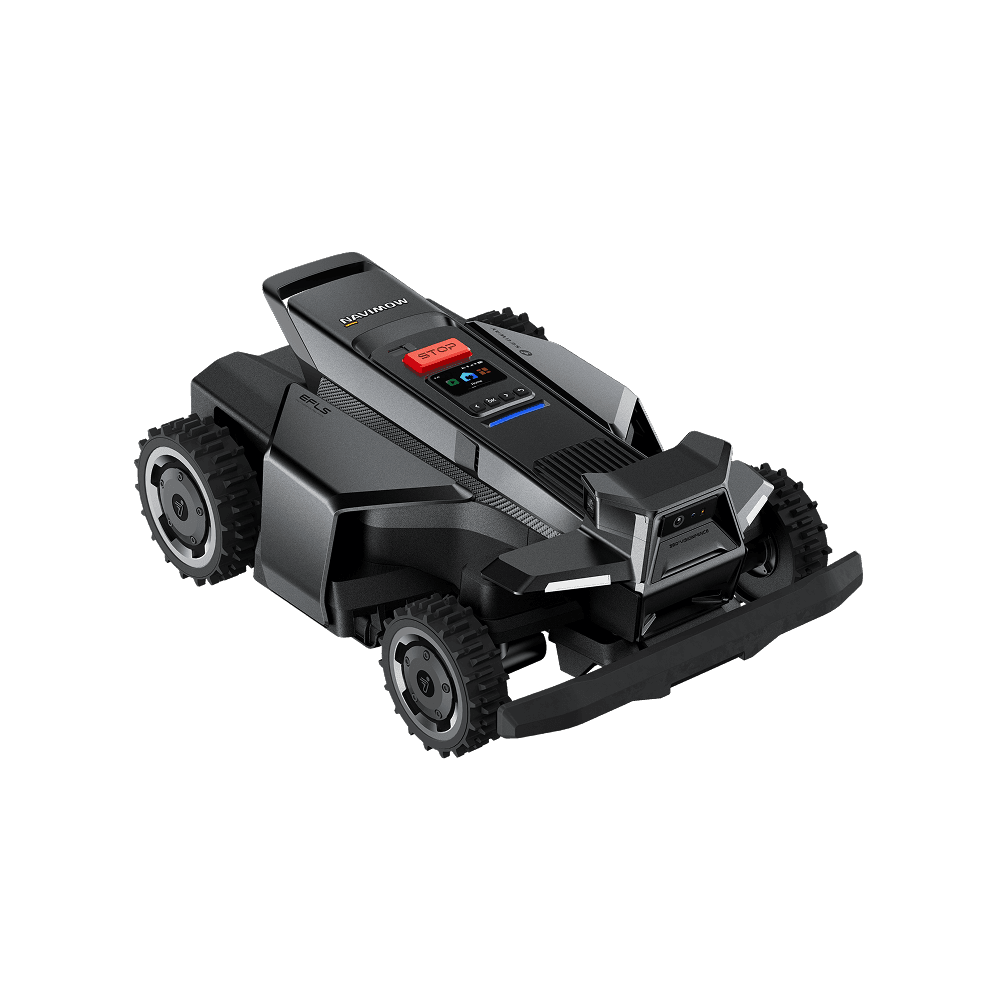
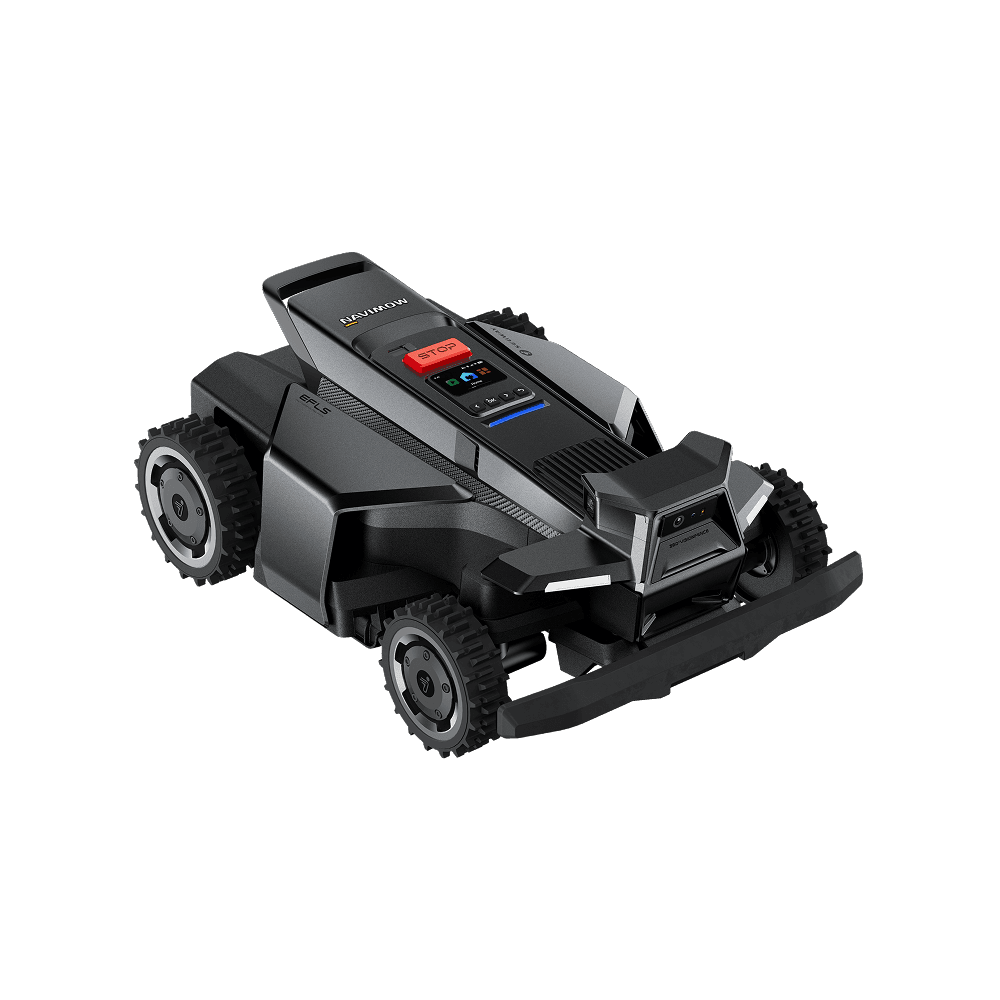
Segway Navimow X450
The largest X4 Navimow adds 1.5-acre capacity to the same antenna-free hybrid navigation, 17-inch deck, 120 zones, and AI vision stack.
Score93/100
Segway Navimow X450 belongs in Best Robot Mowers for Yards Under Trees because it combines hybrid navigation, 1.5 acres of rated coverage, a 84% slope rating, and 120 mapped zones. AWD/4WD gives it extra traction margin. No separate antenna requirement reduces one setup variable.
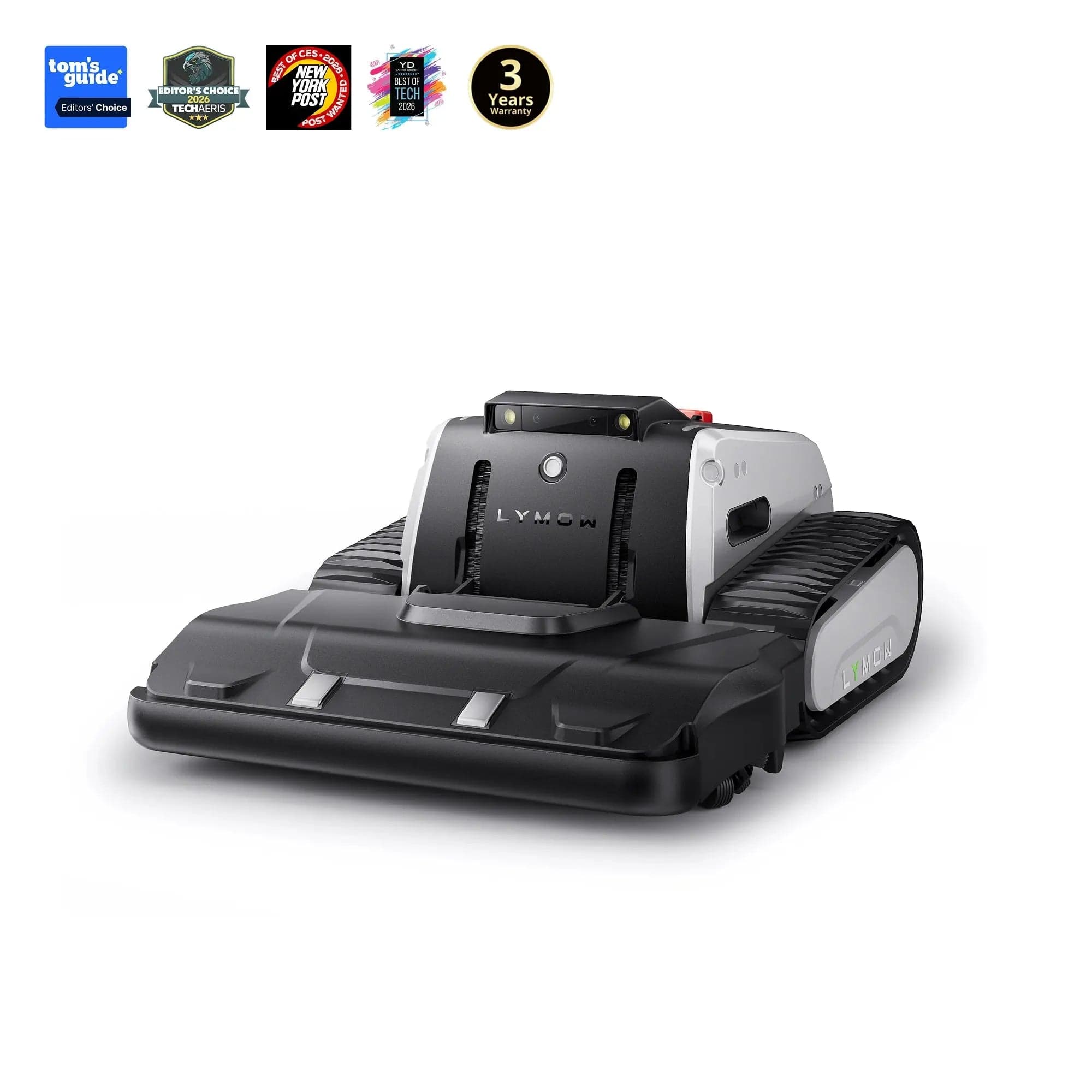
Tracked drive, RTK/VSLAM navigation, 100% claimed slope handling, and 1.73 acres/day coverage make it a unique all-terrain entrant.
Score90/100
Lymow One Plus belongs in Best Robot Mowers for Yards Under Trees because it combines hybrid navigation, 1.73 acres of rated coverage, a 100% slope rating, and 80 mapped zones. RWD makes it a better fit for simpler turf. Plan the antenna or base placement carefully.
A wide 15.8-inch cutting deck, no-RTK LiDAR approach, and 80% slope claim target premium complex yards.
Score89/100
Dreame A3 AWD Pro 3500 belongs in Best Robot Mowers for Yards Under Trees because it combines LiDAR navigation, 0.87 acres of rated coverage, a 80% slope rating, and 20 mapped zones. AWD/4WD gives it extra traction margin. No separate antenna requirement reduces one setup variable.
The X4 platform brings antenna-free hybrid NetRTK plus vision, a 17-inch dual deck, 120 zones, and a one-acre rating for less than the X450.
Score89/100
Segway Navimow X430 belongs in Best Robot Mowers for Yards Under Trees because it combines hybrid navigation, 1 acre of rated coverage, a 84% slope rating, and 120 mapped zones. AWD/4WD gives it extra traction margin. No separate antenna requirement reduces one setup variable.
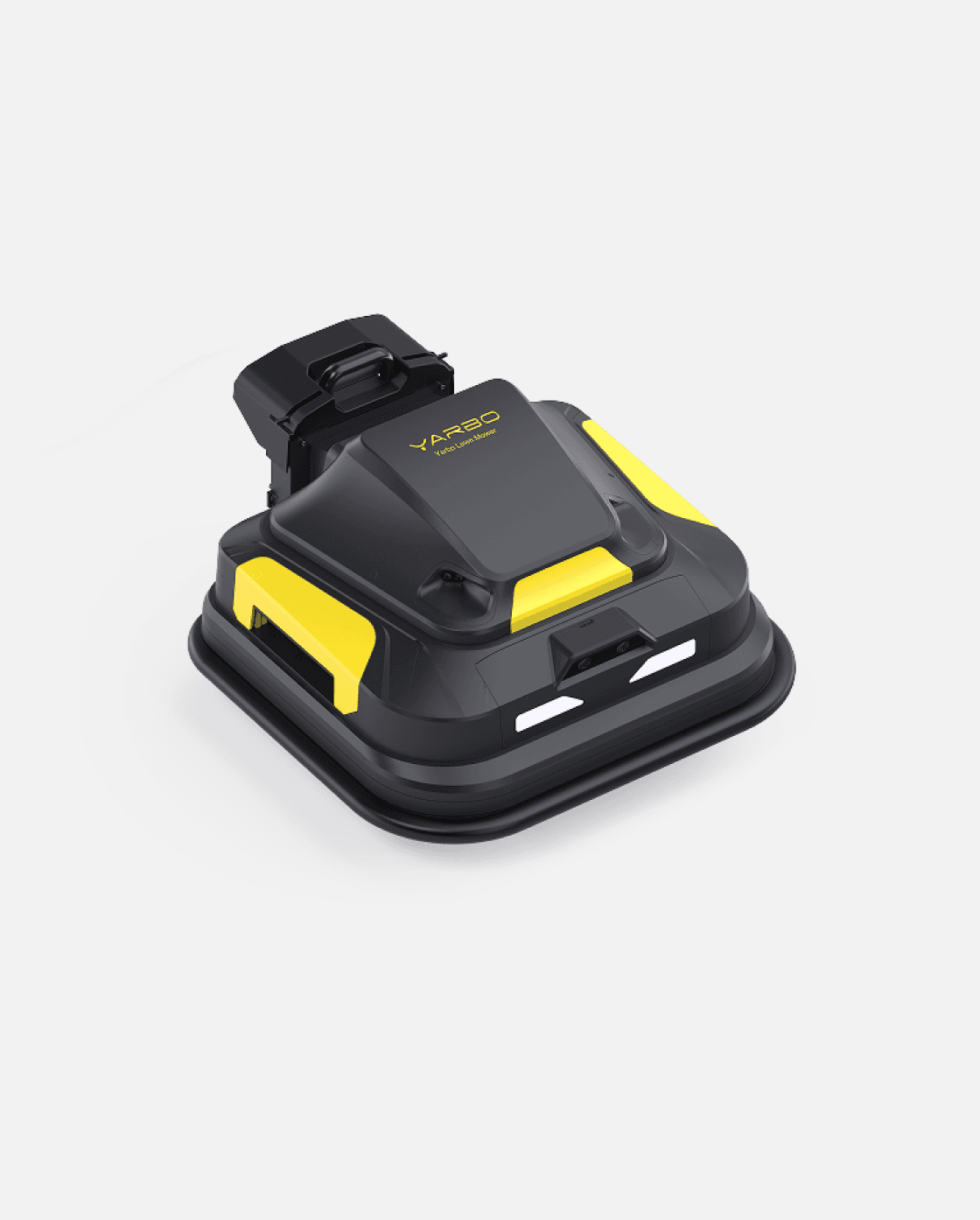
The tracked modular platform fills the missing estate-yard lane with up to 6 acres of coverage, 20-inch cutting width, and 70% slope capability.
Score89/100
Yarbo Lawn Mower Pro belongs in Best Robot Mowers for Yards Under Trees because it combines hybrid navigation, 6 acres of rated coverage, a 70% slope rating, and 99 mapped zones. RWD makes it a better fit for simpler turf. No separate antenna requirement reduces one setup variable.
Use this table to compare the constraints that usually decide whether a robot mower feels effortless or becomes another yard-maintenance chore.
Model
Score
Price
Area
Slope
Navigation
Zones
Segway Navimow X450
93
$2,999
1.5 acres
84%
hybrid
120
Lymow One Plus
90
$3,199
1.73 acres
100%
hybrid
80
Dreame A3 AWD Pro 3500
89
$2,400
0.87 acres
80%
lidar
20
Segway Navimow X430
89
$2,499
1 acre
84%
hybrid
120
Yarbo Lawn Mower Pro
89
$5,999
6 acres
70%
hybrid
99
Fast alternatives
Best price check: Dreame A3 AWD Pro 3500 is the lowest-priced mower currently in this filter at $2,400.
Capacity check: Yarbo Lawn Mower Pro gives the most area headroom here at 6 acres.
Traction check: Lymow One Plus has the highest listed slope rating in this set at 100%.
Where to go next
This page narrows the catalog to one use case. Run the configurator before using a deal box, especially if your lawn is close to the limits shown in the spec table.
Yes — but only the right kind. LiDAR mowers map their physical surroundings without needing a view of the sky, so they run well under tree canopy. Camera-only vision also avoids satellite dependence, but it still needs usable light and clear visual boundaries; under dense, dark canopy, prefer a LiDAR-led mower. Mowers that rely on RTK or GPS satellite positioning do not: dense leaves block and scatter the satellite signal, so those models drift, lose their fix, or refuse to run in shade. For a wooded lot, choose a LiDAR-led mower like the Dreame A3 AWD Pro, the MOVA LiDAX line or the ECOVACS GOAT line, not a pure-RTK model.
Why doesn't RTK or GPS work well under tree cover?
Two reasons: blockage and multipath. Satellite signals are extremely weak by the time they reach the ground, and a tree canopy — especially wet leaves — absorbs and scatters them, so the receiver can't lock onto enough satellites. At the same time, signals bounce off trunks, branches, and your house and arrive a fraction of a second late (multipath), which tricks the receiver into computing a false position. The mower drops from centimeter-accurate positioning to a wandering guess, and either strays past its virtual boundary or parks itself.
What's the best robot mower for a heavily shaded yard?
For a demanding wooded lot, the Dreame A3 AWD Pro 3500 (MowScout Score 89) is the most capable — LiDAR-led navigation with no antenna, 4WD to 80% slopes, and a wide deck for up to 0.87 acre. For most wooded yards up to three-quarters of an acre, the MOVA LiDAX Ultra 3000 AWD (Score 87) is the sweet spot, and the ECOVACS GOAT O1000 LiDAR PRO (Score 72) is the value pick. All three navigate by LiDAR, which is sky-independent.
Is LiDAR or vision better under trees?
LiDAR is the more robust choice for heavy canopy because it works in shade and even in the dark — it measures distances to physical surroundings rather than reading a camera image, so low light doesn't slow it down, and trees become useful reference points. Camera vision is a fine option for partial or dappled shade on flat yards, but its weakness is low light and heavy wet, which a dense continuous canopy can create. Rule of thumb: partial shade, flat yard — vision is fine; heavy, dark canopy — choose LiDAR.
Can a NetRTK mower like the Navimow work under trees?
Not reliably. NetRTK models (the Segway Navimow i-series, except the i215 LiDAR) drop the local antenna by pulling their correction signal over the cellular network, but the mower's own receiver still needs a clear view of the sky to see the satellites — so dense canopy breaks NetRTK for the same reason it breaks classic RTK, and weak cell coverage compounds it. The Navimow X-series (X330, X350) is even more sky-dependent, so keep the whole sky-positioning family out of a shaded yard.
Does the Mammotion LUBA work under trees?
Better than a pure-RTK mower, but it isn't our first heavy-canopy pick. The LUBA 3 AWD line uses tri-fusion navigation — LiDAR plus NetRTK plus AI vision — so when the satellite signal degrades under leaves, its LiDAR and vision provide redundancy that a satellite-only mower lacks. That makes it more canopy-tolerant, and a strong choice for partial or mixed cover with steep slopes. But its navigation is still NetRTK-led, so for a genuinely dense, dark canopy a LiDAR-first mower (the Dreame A3 AWD Pro, the MOVA LiDAX line or the GOAT LiDAR line) is the safer bet.
What's the cheapest robot mower for a shaded yard?
The ECOVACS GOAT O1000 LiDAR PRO (MowScout Score 72) is the value tree-cover pick — real LiDAR navigation with no antenna for a flat-to-moderate quarter acre. The MOVA LiDAX Ultra 1000 (Score 71) is a close second with LiDAR plus vision and a 3-year warranty. Both are rear-wheel drive and small-yard machines. Avoid buying a cheap RTK/NetRTK mower for a wooded lot just because it's inexpensive — it will save money and then fail to navigate.
What is the best robot mower on this best robot mowers for yards under trees list?
Segway Navimow X450 is the current top pick by MowScout Score among models that pass this page's filter.
Should I choose only by this ranking?
No. This page ranks by one use case. The configurator checks your exact size, slope, tree cover, zones, terrain, obstacles, budget, and priority.
Are prices current?
Each mower record includes a last_verified date. Prices and availability should still be checked before purchase.
Why are some popular models missing?
A model can be absent if it does not pass this page's hard filter, lacks verified pricing, or is a better fit for a different yard constraint.