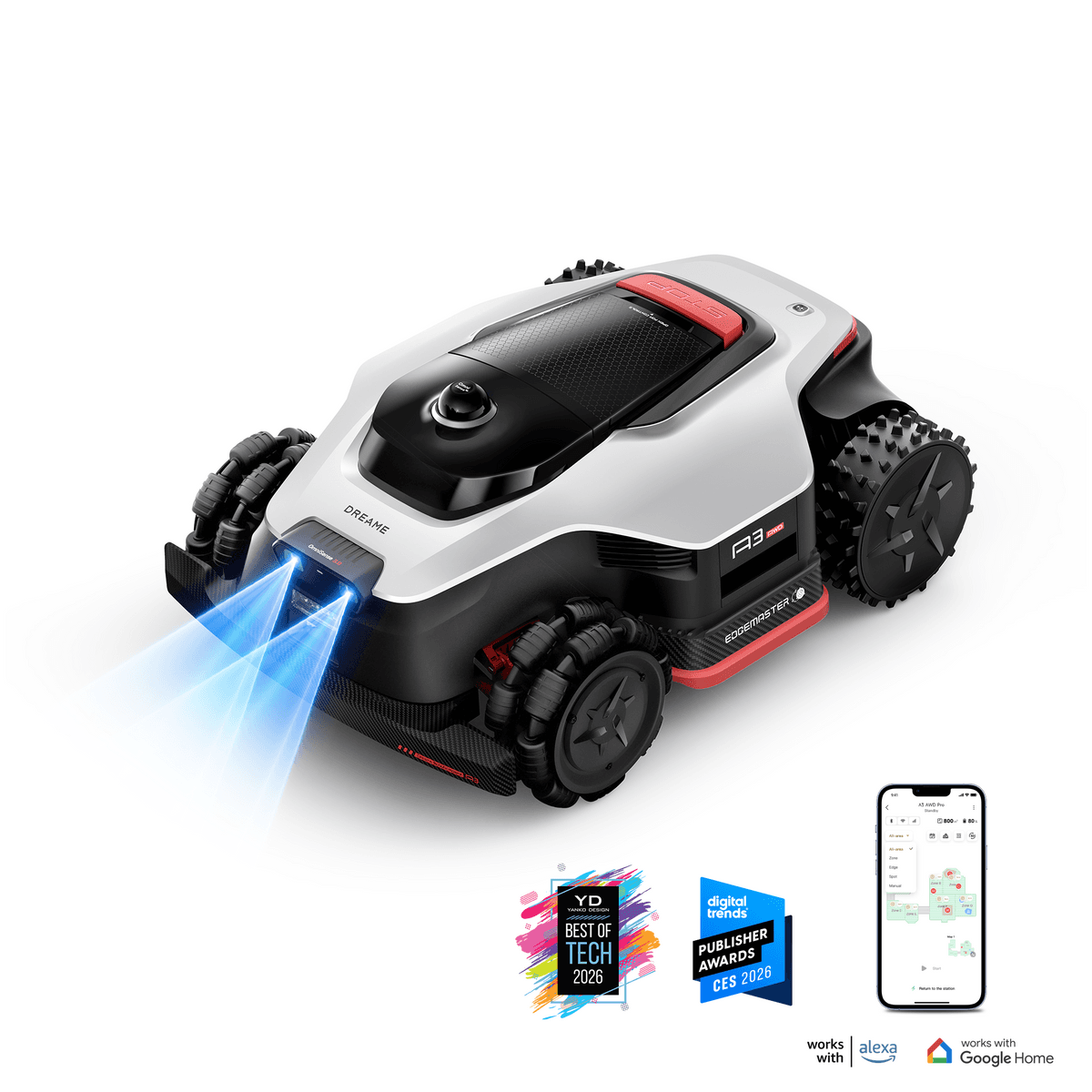
Best robot lawn mowers for Tennessee yards in 2026: spec-verified picks that mow tall fescue tall, grip East TN mountain slopes, and see under tree cover.
Affiliate disclosure: MowScout earns a commission when you buy through our links, including as an Amazon Associate. Recommendations are based on yard fit, verified specs, and score methodology; commission can only break close ties among genuine fits.
Quick answer: for a typical Tennessee yard — tall fescue cut high, heavy tree cover in the east, real slopes in the mountains, and humid, clay-heavy ground — the best robot mower we track is the Dreame A3 AWD Pro 3500, MowScout Score 89. It's the one machine that answers every Tennessee constraint at once: it cuts up to 3.9 inches for the tall fescue that dominates the state, it navigates by LiDAR so the dense East Tennessee canopy doesn't stop it, and it backs that with genuine 4WD rated to 80% grade — the traction that matters on steep Appalachian and Smoky Mountain banks and on slick, humid clay. Its wide 15.8-inch deck clears up to 0.87 acre. It carries a premium list price, though. The close rival is the Mammotion LUBA 3 AWD 3000H (Score 87) for a bigger, multi-zone Nashville lot, and for a flat, open, sunny West Tennessee yard mowed low, the Segway Navimow X450 (Score 93) covers 1.5 acres and cuts down to 0.75 inch. This page is spec-verified and data-driven, not hands-on — we haven't run a unit on your fescue, so every number comes from manufacturer specs, our MowScout Score, and University of Tennessee turf guidance, cross-checked against retail listings.
Here's what Tennessee buyers get wrong: they grab a generic "best robot mower" list, but Tennessee is a transition zone — the hardest turf region in the country, where cool-season and warm-season grasses both grow and neither one is fully at home. Most Tennessee lawns are tall fescue, a cool-season grass mowed tall at 2.5-3.5 inches, and at that height a big slice of the robot category physically can't keep the lawn healthy. The other Tennessee lawn — Bermuda and Zoysia in the warmer Middle and West Tennessee pockets — is cut low at roughly 0.5-1.5 inches, where the deck's minimum becomes the filter (the LUBA rows stop at 2.2 inches, the X350 and YUKA mini 2 at 2.0) and terrain and sun-versus-shade decide the rest. Below we explain why Tennessee is hard on robots, the tall-fescue cut-height trap by name, how East, Middle, and West Tennessee each change the drivetrain you need, the five picks we'd actually put on a Tennessee yard, and honest notes on hills, shade, humidity, and clay. Verify the current price before you buy, because this category discounts weekly.
Why Tennessee lawns are demanding for robot mowers
Tennessee isn't hard on robot mowers for one reason — it's hard for four, and which ones bite depends on where in the state you live and which grass you grow.
1. A transition-zone grass cut tall. Tennessee sits squarely in the turf transition zone, and the default lawn statewide is tall fescue — a bunch-type cool-season grass mowed at 2.5-3.5 inches and kept toward the top of that range through summer heat and shade. That taller cut eliminates a large fraction of robot mowers whose decks stop at 2.4-3.15 inches. It's the single biggest reason a robot that's perfect for a low-cut Southern Bermuda lawn is the wrong buy in Knoxville.
2. Real terrain — especially in the east. Tennessee runs downhill from the Smokies to the Mississippi. East Tennessee — Knoxville, Gatlinburg, the Great Smoky Mountains, the Cumberland Plateau — has genuinely steep Appalachian slopes; Middle Tennessee around Nashville is rolling hills; only West Tennessee near Memphis is reliably flat. Slope is where a robot's drivetrain earns its keep, and a two-wheel-drive mower that reads fine on paper will slip and strand itself on an East Tennessee bank.
3. Heavy tree cover and shade. Tennessee is one of the most heavily forested states in the country, and East Tennessee yards in particular are tucked under dense hardwood canopy. That shade is the enemy of satellite navigation: RTK and GPS mowers need a clear view of the sky, and a thick canopy blocks and scatters the signal. Shade-capable navigation isn't a niche need here — for a wooded mountain lot it's the whole ballgame.
4. Humidity, clay, and rock. Tennessee summers are hot and humid with frequent afternoon thunderstorms, and much of the state sits on heavy clay — rocky, root-laced clay in the east. Turf is wet and slick a large share of the time, which quietly lowers a mower's real-world slope ceiling, so traction matters even on Middle Tennessee's gentle rolls.
Put it together and the Tennessee shortlist depends on your answers: which grass, how steep, how shaded, how wet. The picks below are chosen to cover the common Tennessee combinations.
Tennessee is a transition zone: tall fescue statewide, warm-season pockets
Before any spec sheet, identify your grass, because it sets the single most important filter — and in Tennessee the answer is usually the tall one.
Tall fescue is the workhorse Tennessee lawn. As a cool-season grass with good heat tolerance for its type, it's the most broadly adapted turf across the state and dominates yards from the mountains to the suburbs. University of Tennessee guidance mows it at 2.5-3.5 inches, and you keep it toward the top of that range through the brutal transition-zone summer and under trees — taller turf shades its own crown and roots and rides out heat and drought stress far better. That tall cut is a gift in disguise for buyers: it makes cut height the first filter, and it's exactly where a chunk of the robot category fails.
Bermudagrass and Zoysiagrass are the warm-season alternatives, and they're most at home in the warmer Middle and West Tennessee valleys and full-sun lots. UT guidance mows both low — around 0.5-1.5 inches (home lawns often run a touch higher, 1-2 inches). At that height every wire-free mower in our database reaches the cut, so height drops out of the decision and Bermuda/Zoysia buyers choose on terrain, capacity, and open-sun navigation instead. UT notes the split by region: West Tennessee full-sun sites suit Bermuda, centipede, and Zoysia; Middle Tennessee is mixed, with cool-season grasses often outperforming Bermuda; and East Tennessee, especially at elevation, strongly favors cool-season tall fescue.
The through-line: if you grow tall fescue — most of Tennessee — cut height is your first filter and you want a deck that reaches at least 3.5 inches. If you grow Bermuda or Zoysia in a Middle or West Tennessee sun pocket, almost any mower fits on height, so buy on terrain and navigation. For the low-cut, warm-season deep dive, our large-yards guide covers open Bermuda acreage.
The tall-fescue cut-height trap
This is the mistake that costs Tennessee buyers the most, so it gets its own section. UT turf guidance mows tall fescue at 2.5-3.5 inches, and because it's a cool-season grass fighting a hot, humid Tennessee summer, you keep it near the 3.5-inch top from June through September and in shade. Cutting fescue short in July thins the stand, scorches the crowns, and lets crabgrass and weeds march in. A robot that can't cut tall enough doesn't save you mowing — it slowly kills the lawn.
Now line that up against the hardware. Three failure modes show up among popular models in our database:
Can't reach tall fescue's 2.5-inch floor at all: the
Husqvarna Automower 430X and the budget Navimow i105N/i110N top out at 2.4 inches, and the GOAT GX-600 (out of stock) at 2.36 inches. They cannot mow Tennessee's most common grass at its minimum healthy height. Hard fail for a fescue lawn (they're fine for low-cut Bermuda or Zoysia).
Reach the range but with no summer headroom: the entire
ECOVACS GOAT LiDAR line tops out at 3.15 inches and the eufy E15/E18 (out of stock) at 3.0 inches. Both land inside the 2.5-3.5 inch window, so they'll technically mow fescue — but they can't rise to the 3.5-inch top, which is exactly the height a shaded, heat-stressed Tennessee fescue lawn most wants in August.
That's the trap, and it has a cruel twist in East Tennessee: some of the best LiDAR mowers for wooded lots — the GOAT line especially — are the ones that can't raise the cut to fescue's summer height. They navigate the hardwoods beautifully and then leave you no headroom. eufy is even candid that its E-series is built for flatter lawns and isn't ideal for St. Augustine or dense Zoysia. If you grow Bermuda or Zoysia, ignore all of this — every one of these reaches 0.5-1.5 inches. If you grow tall fescue, filter for a 3.5-inch-plus deck first.
East, Middle, and West Tennessee: match the drivetrain to your terrain
Tennessee's geography does something no single-climate state does: it changes the drivetrain you need as you move across the map.
East Tennessee (Knoxville, Gatlinburg, the Smokies, the Cumberland Plateau) is the hardest yard in the state — steep Appalachian slopes, dense tree cover, rocky clay, and tall fescue all at once. Here you need three things together: a 3.5-inch-plus deck for the fescue, AWD or 4WD for the grade, and LiDAR or vision to see under the canopy. That trio is exactly why the Dreame A3 AWD Pro (4WD to 80%, LiDAR, 3.9 in) and, for a compact lot, the LUBA mini 2 AWD (AWD to 80%, LiDAR plus vision, 4.0 in) fit East Tennessee best. The original LUBA mini AWD (out of stock) shares the 80% AWD rating but navigates by network RTK plus vision, so it needs more open sky. A sky-dependent satellite mower is the wrong tool under those trees. See best mowers for hills and tree cover.
Middle Tennessee (Nashville and the rolling hills) is gentler — rolling suburban lots, a mix of fescue and warm-season grasses, and scattered shade. AWD still earns its keep on the rolls and on wet clay, but you have more latitude. The LUBA 3 AWD 3000H (AWD to 80%, tri-fusion navigation, 4.0 in, 0.75 acre, 30 zones) is the sweet spot for a larger, multi-area Nashville property, with the Dreame a step up for the steepest, most wooded corners.
West Tennessee (Memphis and the flats) flips the script: flatter ground, more full-sun lots, and more warm-season Bermuda and Zoysia cut low. Height becomes a minimum filter instead (the LUBA rows stop at 2.2 inches and the X350 at 2.0), slope pressure eases, and open sky lets satellite navigation work well — which is where a low-cut, open-lot mower like the Navimow X450 (0.75-inch minimum cut, 1.5 acres) belongs.
What we prioritized for Tennessee yards
The MowScout Score is a weighted composite, but for a Tennessee list we applied four filters on top of it, in order of which one bites first for your yard:
Cut height, by grass. If you grow tall fescue (most of Tennessee), a mower must reach **at least
3.5 inches** to keep the lawn healthy through summer and shade — a physical requirement no navigation smarts can fix. If you grow Bermuda or Zoysia (0.5-1.5 inches), this filter disappears and you shouldn't overpay for height you'll never use.
Drivetrain matched to terrain. East Tennessee's Appalachian slopes and Middle Tennessee's rolls,
made slicker by humidity and clay, reward AWD/4WD, which holds the effective traction ceiling up on grade and wet turf alike. Flat West Tennessee relaxes this.
Navigation matched to shade. Heavily wooded East Tennessee lots demand LiDAR or vision; open,
sunny West Tennessee lots let sky-dependent RTK/GPS shine.
Capacity for the lot. Match daily coverage and max area to your yard so the mower actually keeps
up in the racing growth of a Tennessee spring.
Everything below is grounded in `data/mowers.json` and the MowScout Score, with turf heights sourced to University of Tennessee Extension. We have not measured a run on your lawn; where we say "rated," we mean the manufacturer's spec, verified against a retail listing. For the full methodology, see the robot lawn mower buyer's guide.
The best robot mowers for Tennessee lawns, ranked
Five picks that clear the Tennessee bar — the right cut height for your grass, the traction its terrain demands, and navigation matched to sun or shade.
1. Dreame A3 AWD Pro 3500 — MowScout Score 89
Dreame A3 AWD Pro 3500 robot lawn mower
The best all-around Tennessee mower, and the East Tennessee steep-wooded answer. It's the rare machine that satisfies all three hard Tennessee constraints at once. It cuts up to 3.9 inches — past the top of tall fescue's 2.5-3.5 inch range with real summer headroom — and drops to 1.2 inches if your Middle or West Tennessee lawn is low-cut Bermuda or Zoysia. It navigates by LiDAR plus binocular vision with no RTK antenna, so the dense hardwood canopy of Knoxville and the Smokies doesn't degrade it the way it would wreck a satellite mower. And it backs that with genuine 4WD rated to 80% grade — the traction that keeps it moving on steep Appalachian banks and slick clay — while its wide 15.8-inch deck clears up to 0.87 acre. Honest caveats: it's the priciest pick here, it has to justify itself against the more mature LUBA app and support, and it's overkill for a small flat Memphis lawn. But for a demanding Tennessee property — tall fescue, steep, wooded — nothing we track fits better. Read the full review.
2. Mammotion LUBA 3 AWD 3000H — MowScout Score 87
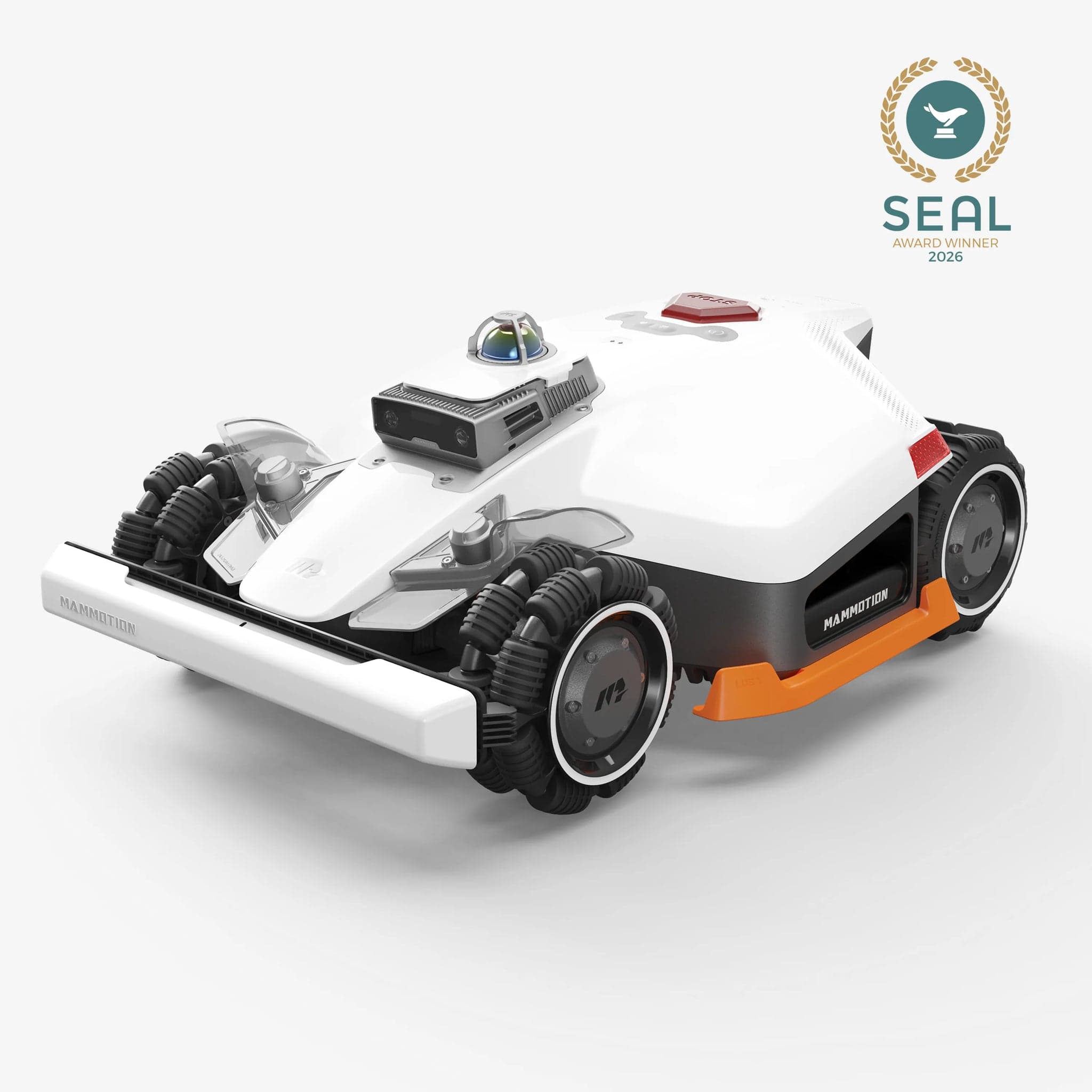
Mammotion LUBA 3 AWD 3000H robot lawn mower
The pick for a bigger, rolling, multi-zone Nashville lot. It scores second only to the Dreame in this list, cutting from 2.2 up to a full 4.0 inches — the top of the fescue range with room to spare, and low enough for warm-season grass. Navigation is tri-fusion — LiDAR plus NetRTK plus AI vision — which makes it meaningfully more canopy-tolerant than a satellite-only mower: when Middle Tennessee's scattered oaks weaken the RTK signal, onboard LiDAR and vision fill the gap. Add AWD to 80% grade, 0.75-acre capacity, and 30 mapped zones and it's built for larger, multi-area Tennessee properties with rolling terrain and several beds to work around. The honest caveat: because its navigation is still NetRTK-led, a genuinely dense, dark East Tennessee canopy is handled more predictably by the LiDAR-first Dreame, and its network-RTK layer still wants some open sky (there's no antenna to install). For a rolling Nashville lawn with slopes or several zones, though, this is the strongest tool here — and if your lot pushes past an acre, the LUBA 3 AWD 5000H (out of stock) stretches the same platform to 1.25 acres. Read the full review.
3. Segway Navimow X350 — MowScout Score 85
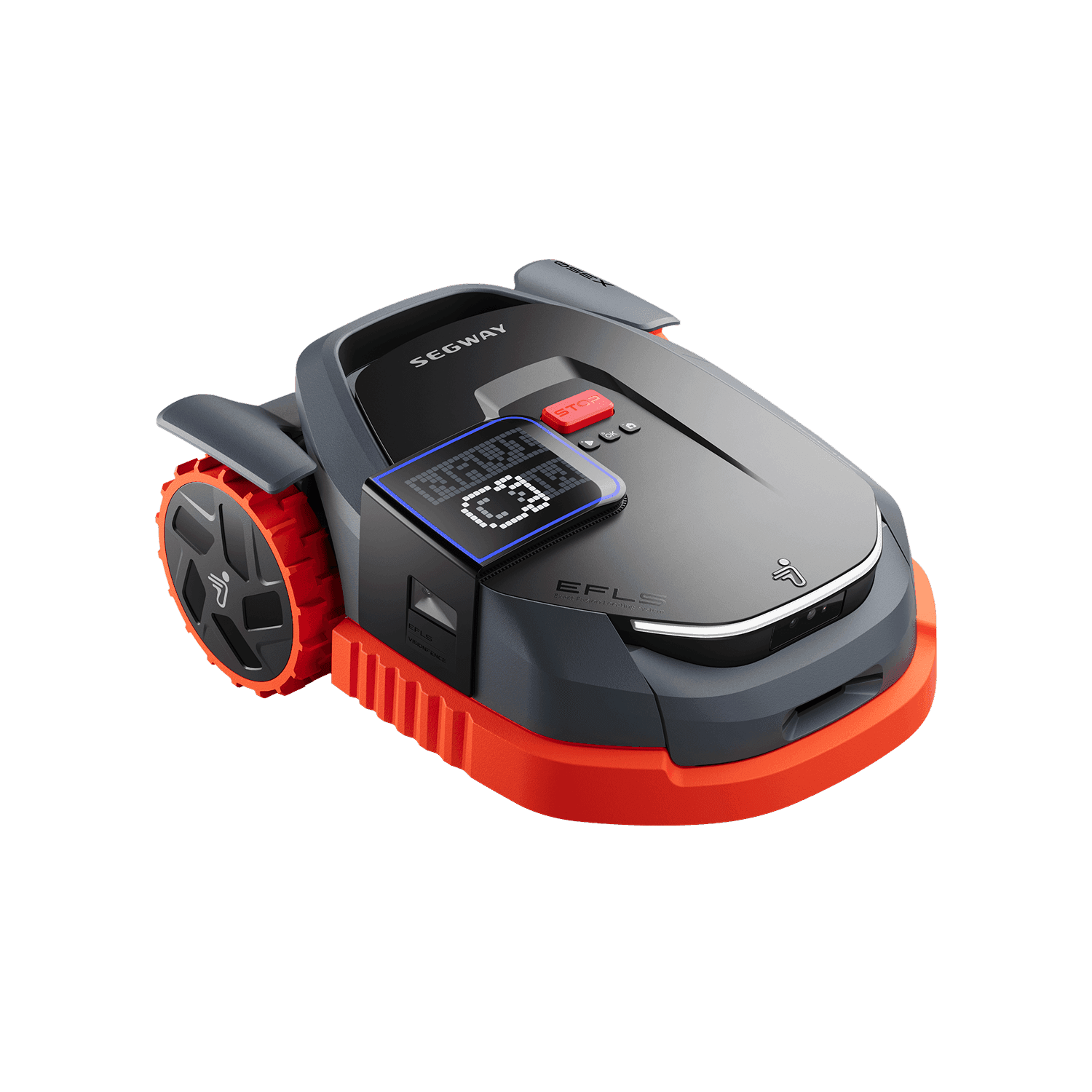
Segway Navimow X350 robot lawn mower
The big, open-lot pick — think sunny new-build subdivisions and bigger open yards mowed at 2 inches or higher. It covers up to 1.5 acres, cuts from 2 to a full 4.0 inches (tall enough for fescue, but above the 0.5-1.5 inches West Tennessee Bermuda and Zoysia want; for those, the low-cut Navimow X450 reaches 0.75 inch), is 2WD with traction control, runs quietly at about 60 dB, and mows at night, so it works the lawn while the machine and the turf are cool instead of baking through a humid Tennessee afternoon. For a big, sunny lot a smaller mower would take days to finish, it's a lot of fast, quiet capacity for the money on sale. The Tennessee caveat is unavoidable, though: like the whole X-series it's sky-dependent and needs open sky, so it's the wrong pick for a wooded East Tennessee lot — the exact yard where the Dreame or a LUBA belongs. Open lot mowed at 2 inches or higher: excellent. Shady mountain cove: no. The Navimow X330 covers 1 acre on the same open-sky formula. Read the full review.
4. Mammotion LUBA mini 2 AWD — MowScout Score 79
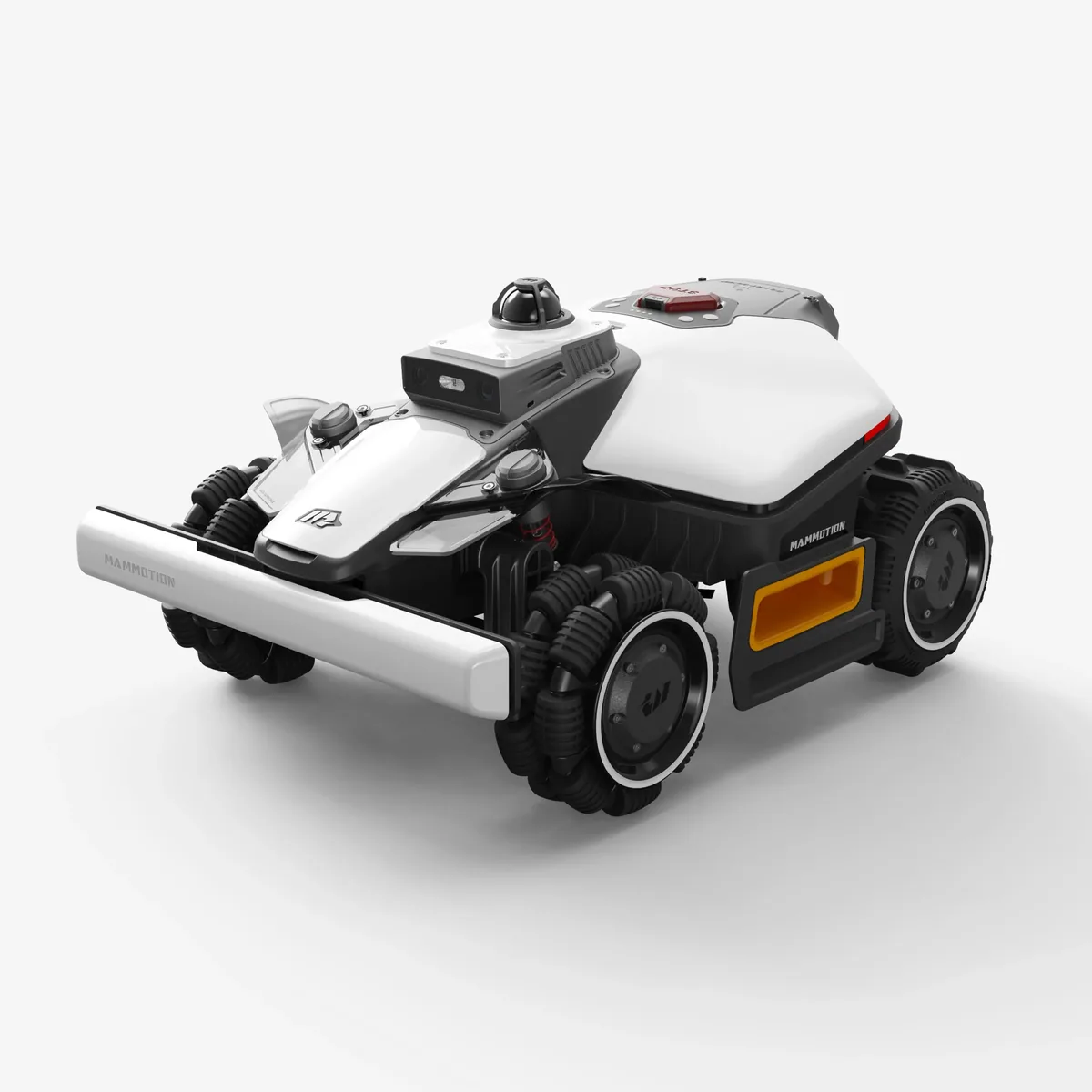
Mammotion LUBA mini 2 AWD robot lawn mower
The compact East Tennessee pick that still cuts tall and climbs. Plenty of Tennessee lots are a quarter to a third of an acre, and this is the smart way to get real slope capability in that size: it cuts from 2.2 up to a full 4.0 inches (covers tall fescue with headroom), navigates with 360° LiDAR plus dual-camera vision, adds true AWD to 80% grade, and covers up to 0.37 acre, roughly half the Dreame. The AWD is the Tennessee story here: on a steep, wooded Knoxville or Chattanooga lot, four-wheel traction keeps it climbing Appalachian banks and crossing slick clay that a two-wheel mower would spin on. Honest caveats: it's priced close to some larger models, so confirm the current price, and at 0.37 acre it has no headroom for a bigger lot. Its LiDAR is the upgrade over the out-of-stock original LUBA mini AWD: the dense canopy on a wooded Knoxville or Chattanooga lot doesn't blind it. For a compact, tall-capable, hill-ready Tennessee lawn, it's the value answer. Read the full review.
5. ECOVACS GOAT A3000 LiDAR PRO — MowScout Score 76
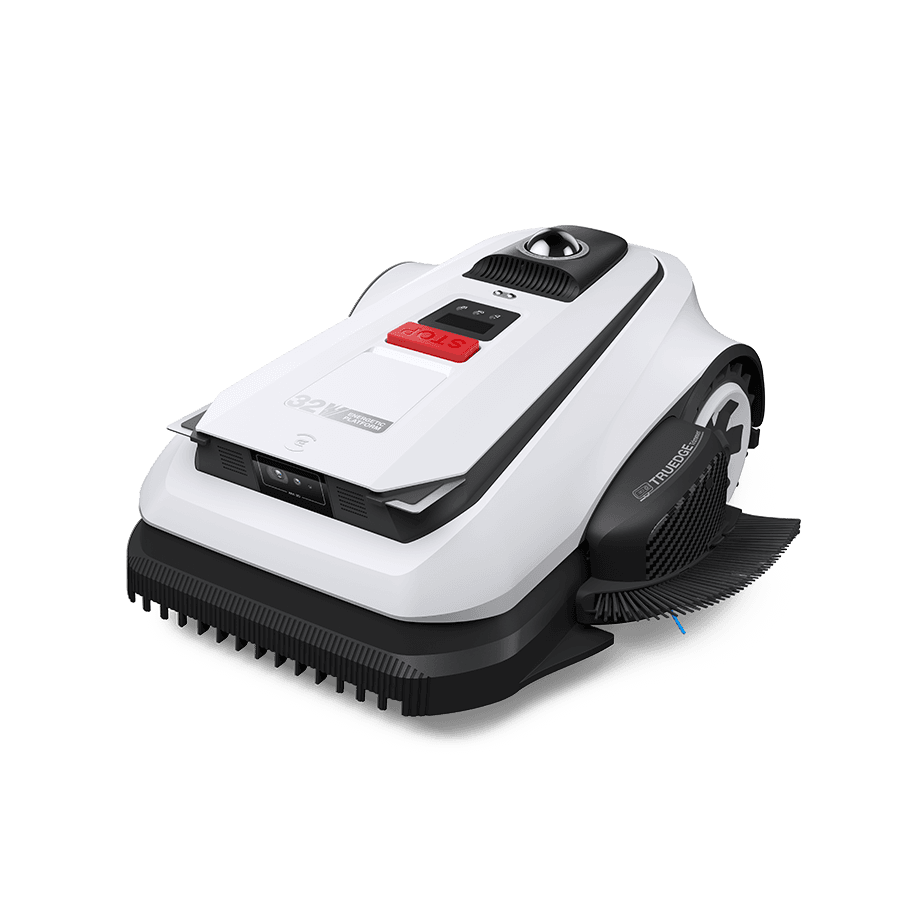
ECOVACS GOAT A3000 LiDAR PRO robot lawn mower
The East Tennessee shade specialist — with a tall-fescue asterisk you must read. Its dual-LiDAR navigation with no antenna is arguably the best sky-independent mapping in our data, it has a built-in TruEdge trimmer that cuts genuinely clean borders, and it covers up to 0.75 acre. Under a dense Tennessee hardwood canopy it simply doesn't care about the missing sky. The asterisk: its deck tops out at 3.15 inches — inside tall fescue's 2.5-3.5 inch range, but with no room to reach the 3.5-inch top that a shaded, heat-stressed Tennessee fescue lawn most wants in summer. So it's a superb pick if your shaded lawn is Bermuda or Zoysia (cut 0.5-1.5 inches, where 3.15 inches is plenty of headroom), and a compromise on standard tall fescue, where you'll be stuck mowing lower than ideal through the worst of the heat. Other caveats: RWD with a 50% slope ceiling limits it on steep East Tennessee banks. For a shaded, low-cut Tennessee lawn where edges matter, it's outstanding; for tall fescue on a slope, buy the Dreame or a LUBA. Read the full review.
Tennessee picks at a glance
Every figure below is a manufacturer rating verified against a retail listing, paired with the MowScout Score and University of Tennessee turf guidance. Read the Max cut column through your grass: for tall fescue (2.5-3.5 inches) you want a deck that reaches 3.5 inches, so the 3.15-inch and 3.0-inch rows are compromises; for Bermuda or Zoysia (0.5-1.5 inches) the deck's minimum matters instead: the LUBA rows stop at 2.2 inches and the X350 and YUKA mini 2 rows at 2.0, so sort the other rows on Drive/slope and Area.
†Reaches tall fescue's 2.5-3.5 inch range but can't hit the 3.5-inch summer top — fine for low-cut Bermuda and Zoysia (0.5-1.5 in). Anything topping out at 2.4 inches (Husqvarna 430X, budget Navimow i-series, GOAT GX-600) falls below tall fescue's floor entirely. Note the eufy E18 is also pitched for flat, dry lawns, a real drawback in humid, storm-prone Tennessee. If your lot is steep, cross-reference best mowers for hills; if it's wooded, see best mowers for tree cover; if it's large and open, see best mowers for large yards.
Shade and hills in East Tennessee: LiDAR and AWD together
East Tennessee is where the state is hardest on a robot, because it stacks two problems that break two different specs at once — and shade-loving conditions and steep ground tend to arrive together in a mountain cove.
Take the shade first. Tennessee is heavily forested, and East Tennessee yards live under dense hardwood canopy. Here's the mechanism: RTK and GPS mowers need a clear view of the sky to lock onto satellites, and a thick canopy absorbs and scatters those faint signals while trunks bounce echoes that trick the receiver into a false position. The mower drifts, stalls, or refuses to run, and no antenna height fixes it once the canopy is overhead. LiDAR sidesteps the whole problem: it spins a laser and maps the trees, beds, and fences around the mower, locating itself against that map thousands of times a second. Shade is irrelevant, and it works after dark. That's why our top Tennessee pick (the Dreame A3 AWD Pro) and the shade-value option (the GOAT LiDAR line) both lead with LiDAR, and why the tri-fusion LUBA 3 is more canopy-tolerant than any satellite-only mower. The sky-dependent Navimow X-series is fenced to open lots only. For the full comparison, read RTK vs LiDAR vs vision and, for wooded lots, best robot mowers for tree cover.
Now the hills. Appalachian and Smoky Mountain lots have grades that punish a two-wheel-drive mower, and East Tennessee's rocky clay gets slick after the region's frequent rain, lowering the effective slope ceiling further. This is where AWD/4WD stops being a luxury: the Dreame A3 (4WD, 80%), the LUBA 3 and LUBA mini 2 AWD (AWD, 80%) hold traction on banks where an RWD machine spins and beaches itself. Pair that with the tall-cut requirement for fescue and the LiDAR requirement for shade, and you can see why one machine — the Dreame — keeps rising to the top for the hardest East Tennessee yards. Size a steep lot against best robot mowers for hills.
Humidity, clay, and rocky soil: the traction and daily-mowing story
Tennessee's climate and soil shape two more decisions beyond height and shade. First, moisture and traction. Humid summers, frequent thunderstorms, and heavy clay soils mean Tennessee turf is wet and slick a large share of the time. Water resistance is table stakes, and a wet-grass rating is rare — of the 37 mowers we track, only the Husqvarna Automower iQ models and the Yarbo carry one, so plan on any of our Tennessee picks waiting out storms. The spec that actually matters is traction: wet grass lowers a mower's real-world slope ceiling, so AWD/4WD buys reliability even on Middle Tennessee's gentle rolls. The clear cautionary example in our data is the eufy E18/E15 (out of stock), which navigates by camera alone and is pitched for flat, open lawns — a poor match for a humid, clay-heavy Tennessee yard on two counts.
Second, clay, rock, and daily light mowing. Tennessee's dense clay compacts easily and holds water, and a heavy riding mower ruts a soggy clay lawn every time you cut it wet. A robot sidesteps that: at 26 to 42 pounds it barely marks the turf, and by trimming a little every day it keeps tall fescue comfortably inside the University of Tennessee one-third rule — never remove more than a third of the blade at once — which is genuinely hard to honor with weekend mowing when fescue is racing in a wet Tennessee spring. In East Tennessee's rocky, root-laced ground, good obstacle avoidance and a machine that won't strand itself on an exposed root matter too, which is another reason we lean toward the AI-vision LiDAR mowers over basic bump-sensor models. If you're weighing the concept overall, start with the pillar on how robot mowers work.
Common mistakes buying a robot mower for a Tennessee lawn
Buying a mower that can't reach fescue height. The single most expensive Tennessee mistake. If you
grow tall fescue, filter for a 3.5-inch-plus deck before anything else — that removes the 2.4-inch Husqvarna 430X and budget Navimow i-series outright and flags the 3.0-3.15-inch eufy and GOAT lines as no-summer-headroom compromises.
Buying for cut height you don't need. The flip side: if you grow Bermuda or Zoysia (0.5-1.5
inches) in a Middle or West Tennessee sun pocket, every mower here reaches it — don't pay a premium for a 4-inch deck you'll never raise. Spend the budget on traction and capacity.
Putting a satellite mower under East Tennessee trees. A Navimow X-series or any RTK/GPS-first
model reads great on paper and then drifts or stalls under a hardwood canopy. In shade, filter for LiDAR or vision first. See best mowers for tree cover.
Underestimating East Tennessee slope. A two-wheel-drive mower can strand itself on an Appalachian
bank, especially on wet clay. On real grade, favor AWD/4WD and cross-check best mowers for hills.
Ignoring rain. In storm-prone Tennessee, nearly every robot mower sits out rain by design, so a mower with no capacity to spare falls behind at exactly the times of year you most want it mowing. Size up and favor AWD.
Runner-ups: matching the mower to your Tennessee yard
If your Tennessee lawn is a flat, open, sunny Bermuda or Zoysia lot in the west, check the minimum cut first: the Navimow X350 and X330 stop at 2.0 inches, above the 0.5-1.5-inch band, so the low-cut Navimow X430 (1 ac) and X450 (1.5 ac), both down to 0.75 inch, are the open-lot answer. If your lawn is a shaded, low-cut Bermuda or Zoysia yard, the whole ECOVACS GOAT LiDAR line opens up — the O1000 for a shaded quarter acre, the A2000 for a half acre, and the A3000 for three-quarters — all with tree-proof LiDAR and clean edges. For tall cut on a budget on a small fescue yard, the YUKA mini 2 (out of stock) (Score 68) reaches 3.5 inches with LiDAR plus vision. And for a large, steep, wooded East Tennessee property, the estate-size LUBA 3 AWD 5000H (out of stock) stretches the tri-fusion AWD platform to 1.25 acres — size it against best mowers for hills and large yards.
The through-line for Tennessee never changes: identify your grass first — usually tall fescue, cut tall — then buy on the traction your terrain demands and navigation matched to your tree cover. Fescue buyers must clear the 3.5-inch bar before anything else; Bermuda and Zoysia buyers have the widest field.
Find your match
Tennessee asks more of a robot mower than most states, and the answer genuinely depends on your specifics — tall fescue or warm-season grass, a Knoxville mountain slope or a flat Memphis lot, dense tree cover or open sun, and how wet your clay stays through a humid summer. This page ranks for the common Tennessee combinations; yours is more specific than that.
The configurator screens your grass height, tree cover, area, grade, and budget against every model we track, so a fescue buyer doesn't end up with a beautiful LiDAR mower that can't cut tall enough — and an East Tennessee buyer doesn't end up with a satellite mower that can't see the sky through the hardwoods or grip the slope. Keep reading: the pillar on how robot mowers work, the robot lawn mower buyer's guide, the best robot mowers for hills, the tree-cover guide, and RTK vs LiDAR vs vision.
Frequently asked questions
What's the best robot mower for a Tennessee lawn in 2026? The Dreame A3 AWD Pro 3500 (MowScout Score 89) is our top all-around Tennessee pick because it answers the three things a Tennessee yard throws at a robot: it cuts up to 3.9 inches for the state's dominant tall fescue, navigates by LiDAR so heavy East Tennessee tree cover doesn't stop it, and drives genuine 4WD rated to 80% grade for Appalachian and Smoky Mountain slopes. The Mammotion LUBA 3 AWD 3000H (Score 87) is the close rival for a bigger, rolling Nashville lot.
What height should a robot mower cut tall fescue in Tennessee? University of Tennessee turf guidance mows tall fescue at 2.5-3.5 inches, kept toward the top — around 3.5 inches — through the hot, humid summer and in shade. That's a real filter: the Husqvarna Automower 430X and budget Navimow i105N/i110N top out at 2.4 inches (below the 2.5-inch floor), the GOAT LiDAR line (3.15 in) and eufy E15/E18 (3.0 in) land in the range but can't reach the 3.5-inch top, and the Dreame A3 (3.9 in), Mammotion LUBA line and Navimow X-series (4.0 in) clear it with headroom.
Which robot mower is best for a steep East Tennessee yard near Knoxville or Gatlinburg? Prioritize traction and sky-independent navigation together. The Dreame A3 AWD Pro 3500 (Score 89) is the pick — 4WD rated to 80% grade for Appalachian banks, LiDAR that maps the trees instead of the sky, and a 3.9-inch cut for tall fescue. For a smaller steep, shaded lot, the Mammotion LUBA mini 2 AWD 1500H (Score 79, LiDAR plus vision and AWD to 80%) is the compact answer. Cross-check best mowers for hills and tree cover.
Do robot mowers work under East Tennessee tree cover? Only with the right navigation. The dense hardwood canopy across East Tennessee and the Cumberland Plateau blocks the satellite signal RTK and GPS mowers depend on. LiDAR and vision mowers map the trees instead of the sky, so the Dreame A3 AWD Pro and the ECOVACS GOAT LiDAR line run fine under canopy, and the tri-fusion LUBA 3 backs its RTK with LiDAR and vision. The sky-dependent Navimow X-series should stay on open, sunny lots like those common in West Tennessee.
What's the best robot mower for a flat West Tennessee lawn near Memphis? West Tennessee lawns are flatter and more often warm-season Bermuda or Zoysia in full sun. Those grasses are cut low — roughly 0.5-1.5 inches — so the deck's minimum height becomes the filter: no robot we track cuts below 0.75 inch, the LUBA rows stop at 2.2 inches, and the X350 stops at 2.0. For a big, sunny lot the Segway Navimow X450 (Score 93) covers up to 1.5 acres, cuts from 0.75 inch, and needs no separate antenna. For a shaded low-cut lawn, a LiDAR ECOVACS GOAT is the better fit.
Do Tennessee's humidity, clay, and rocky soil affect a robot mower? They affect traction most. Humid summers, frequent thunderstorms, and heavy clay mean turf is wet and slick a lot of the time, and wet grass lowers a mower's effective slope ceiling — which is why we favor AWD/4WD even on gently rolling Middle Tennessee yards. East Tennessee's rocky, root-laced ground also rewards good obstacle avoidance. A light robot that trims a little every day is actually kinder to soggy clay lawns than a heavy riding mower that ruts them.
MowScout is reader-supported and may earn a commission from links on this page. Our picks are spec-verified and data-driven — based on published manufacturer specifications, verified US pricing, and University of Tennessee Extension turf guidance, not hands-on lab testing. Turf mowing heights and the transition-zone regional guidance are sourced to the University of Tennessee Extension Master Gardener handbook, Turfgrass Management in Tennessee, and UT Extension turfgrass publications. Always confirm the current price before buying. See our full disclosure.
Related mower reviews
Related pick #1
Dreame A3 AWD Pro 3500
Score89/100
Dreame A3 AWD Pro 3500 belongs in Best Robot Lawn Mower for Tennessee Yards (2026) because it combines LiDAR navigation, 0.87 acres of rated coverage, a 80% slope rating, and 20 mapped zones. AWD/4WD gives it extra traction margin. No separate antenna requirement reduces one setup variable.
Mammotion LUBA 3 AWD 3000H belongs in Best Robot Lawn Mower for Tennessee Yards (2026) because it combines hybrid navigation, 0.75 acres of rated coverage, a 80% slope rating, and 30 mapped zones. AWD/4WD gives it extra traction margin. No separate antenna requirement reduces one setup variable.
Mammotion LUBA mini 2 AWD 1500H belongs in Best Robot Lawn Mower for Tennessee Yards (2026) because it combines LiDAR navigation, 0.37 acres of rated coverage, a 80% slope rating, and 20 mapped zones. AWD/4WD gives it extra traction margin. No separate antenna requirement reduces one setup variable.
Segway Navimow X350 belongs in Best Robot Lawn Mower for Tennessee Yards (2026) because it combines hybrid navigation, 1.5 acres of rated coverage, a 50% slope rating, and 120 mapped zones. RWD makes it a better fit for simpler turf. No separate antenna requirement reduces one setup variable.
ECOVACS GOAT A3000 LiDAR PRO belongs in Best Robot Lawn Mower for Tennessee Yards (2026) because it combines LiDAR navigation, 0.75 acres of rated coverage, a 50% slope rating, and 12 mapped zones. RWD makes it a better fit for simpler turf. No separate antenna requirement reduces one setup variable.
Robot mowers fail when a generic recommendation misses the hard constraint: slope, tree cover, separated zones, dock placement, or budget. Run the configurator before using any deal box.
What's the best robot mower for a Tennessee lawn in 2026?
The Dreame A3 AWD Pro 3500 (MowScout Score 89) is our top all-around Tennessee pick because it answers the three things a Tennessee yard actually throws at a robot: it cuts up to 3.9 inches for the state's dominant tall fescue, it navigates by LiDAR so the heavy tree cover of East Tennessee doesn't stop it, and it drives genuine 4WD rated to 80% grade to hold traction on Appalachian and Smoky Mountain slopes. The Mammotion LUBA 3 AWD 3000H (Score 87) is the close rival for a bigger, multi-zone Nashville property.
What height should a robot mower cut tall fescue in Tennessee?
University of Tennessee turf guidance mows tall fescue at 2.5-3.5 inches, kept toward the top of that range — around 3.5 inches — through the hot, humid transition-zone summer and in shade. That taller cut is a real filter: robots that top out at 2.4 inches (the Husqvarna Automower 430X and budget Navimow i105N/i110N) can't reach tall fescue's 2.5-inch floor at all, and the 3.0-3.15 inch models (eufy E15/E18, the ECOVACS GOAT LiDAR line) land inside the range but can't rise to the 3.5-inch summer top. The Dreame A3 (3.9 in), Mammotion LUBA line (4.0 in), and Segway Navimow X-series (4.0 in) clear it with headroom.
Which robot mower is best for a steep East Tennessee yard near Knoxville or Gatlinburg?
For a steep, wooded East Tennessee lot, prioritize traction and sky-independent navigation together. The Dreame A3 AWD Pro 3500 (Score 89) is the pick: 4WD rated to 80% grade for Appalachian banks, LiDAR that maps the trees instead of the sky, and a 3.9-inch cut for tall fescue. For a smaller steep, shaded lot, the Mammotion LUBA mini 2 AWD 1500H (Score 79, LiDAR plus vision and AWD to 80%) is the compact answer. Cross-check best mowers for hills and for tree cover.
Do robot mowers work under East Tennessee tree cover?
Only with the right navigation. The dense hardwood canopy across East Tennessee and the Cumberland Plateau blocks the satellite signal that RTK and GPS mowers depend on. LiDAR and vision mowers map the trees, beds, and fences around them instead of the sky, so shade doesn't matter — the Dreame A3 AWD Pro and the ECOVACS GOAT LiDAR line run fine under canopy, and the tri-fusion LUBA 3 backs its RTK with LiDAR and vision. The sky-dependent Segway Navimow X-series should be kept to open, sunny lots like those common in West Tennessee.
What's the best robot mower for a flat West Tennessee lawn near Memphis?
West Tennessee lawns are flatter and more often warm-season Bermuda or Zoysia grown in full sun, which changes the math entirely. Those grasses are cut low — roughly 0.5-1.5 inches per UT guidance — so the deck's minimum height becomes the filter: no robot we track cuts below 0.75 inch, the LUBA rows stop at 2.2 inches, and the Navimow X350 stops at 2.0. For a big, sunny lot the Segway Navimow X450 (Score 93) covers up to 1.5 acres, cuts from 0.75 inch, and needs no separate antenna. For a shaded low-cut lawn, a LiDAR ECOVACS GOAT is the better fit.
Do Tennessee's humidity, clay, and rocky soil affect a robot mower?
They affect traction more than anything else. Tennessee's humid summers, frequent thunderstorms, and heavy clay soils mean turf is wet and slick a lot of the time, and wet grass lowers a mower's effective slope ceiling — which is why we favor AWD or 4WD even on gently rolling Middle Tennessee yards. East Tennessee's rocky, root-laced ground also rewards good obstacle avoidance and a machine that won't strand itself. A robot that trims a little every day is actually kinder to soggy clay lawns than a heavy riding mower that ruts them.