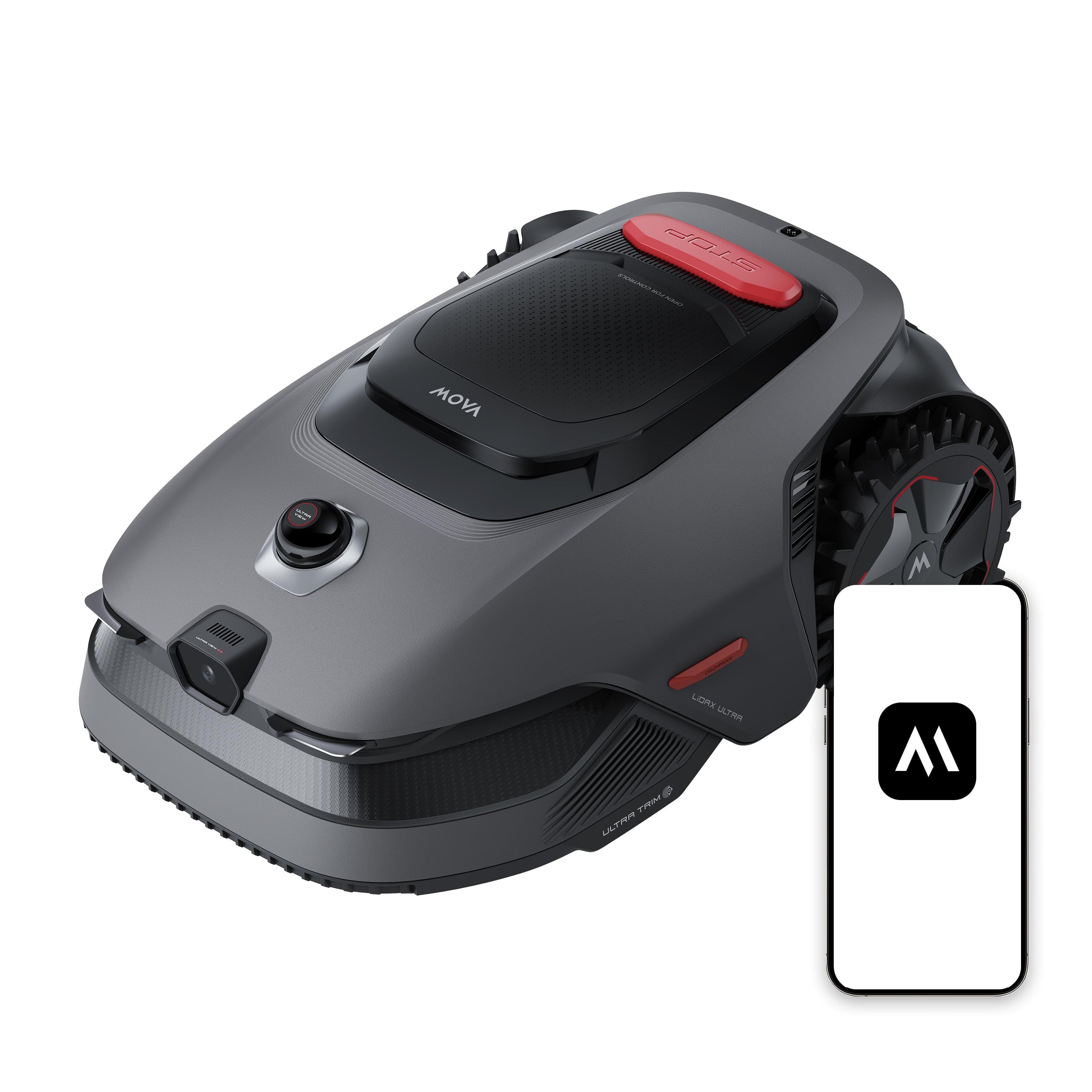
MOVA
LiDAX Ultra 1000
A sub-$1,000-ish LiDAR wire-free option with AI vision, app height control, and compact-yard mapping depth.
Score71/100
$9990.25 acres45% slope
Brand hub
Every MOVA LiDAX Ultra compared: 1000, 2000, 2000 AWD and 3000 AWD. Two of the three AWD-plus-LiDAR machines we track, ranked by MowScout Score.
Check Yard FitBy Brian Williams — Founder, MowScoutUpdated 2026-08-27How we scoreHow we test
MOVA is the newest brand in our catalog with a full lineup, and it has taken an unusual route into the category: four models, all LiDAR, all antenna-free, and two of only three all-wheel-drive LiDAR machines we track anywhere.
That last point is worth stating precisely, because it is the reason MOVA gets considered at all against better-established rivals. Across the 37 models in our database, only four combine all-wheel drive with LiDAR navigation, and two of them are MOVAs — the others are the Dreame A3 AWD Pro 3500 and the Mammotion LUBA mini 2 AWD. If you want a mower that can both hold a steep grade and map a tree-covered lot without a clear-sky antenna, that is a three-machine shortlist, and MOVA is the cheaper way into it.
What follows is the whole lineup, what separates the two families, and the honest case against buying one.
| Model | Score | Area | Slope | Drive | Deck | Zones |
|---|---|---|---|---|---|---|
| LiDAX Ultra 1000 | 71 | 0.25 ac | 45% | RWD | 7.9 in | 150 |
| LiDAX Ultra 2000 | 75 | 0.50 ac | 45% | RWD | 7.9 in | 150 |
| LiDAX Ultra 2000 AWD | 85 | 0.50 ac | 80% | AWD | 15.8 in | 150 |
| LiDAX Ultra 3000 AWD | 87 | 0.75 ac | 80% | AWD | 15.8 in | 150 |
Four things are constant across the whole line, and they are the brand's actual argument:
for their mid or premium tiers and sell vision or RTK below it.
St. Augustine or Bahia.
And two things are constant that count against it: a 2-year warranty on every model, and no multi-year field record in the US.
The model numbers imply a ladder — 1000, 2000, 2000 AWD, 3000 AWD — and that is misleading. There are really two families, and the gap between them is the largest single decision in this lineup.
The standard line (Ultra 1000 and Ultra 2000) is rear-wheel drive, runs a 7.9-inch deck, weighs around 30 pounds, and is rated to a 45% grade. It is a light, tidy machine for flat to moderate lawns, and its job is to bring LiDAR mapping to a price point where the alternative is usually a vision-only mower.
The AWD line (Ultra 2000 AWD and Ultra 3000 AWD) is a different machine wearing the same badge. All-wheel drive, a 15.8-inch dual deck — twice the cutting width — around 52 pounds, and rated to an 80% grade. That is not a trim upgrade; it is a different drivetrain, a different cutting system, and nearly double the mass.
The practical consequence: the Ultra 2000 and the Ultra 2000 AWD cover the same half acre. The step up buys you nothing at all in area. What it buys is traction and speed. On a flat half acre, the standard 2000 is the better purchase by a wide margin, and anyone selling you the AWD for a flat lawn is selling you capability you will never use — the single most common way to overspend in this category, which our 5-year cost guide covers in more detail.
LiDAR at the entry price. The LiDAX Ultra 1000 is tied for the cheapest LiDAR mower we track. LiDAR maps by building a picture of the space rather than relying on satellite position, which is why it copes with tree cover and narrow side passages where RTK machines drift. Getting that on the cheapest machine in a lineup rather than the dearest is unusual.
AWD plus LiDAR, which nobody else offers. Steep-yard mowers are usually RTK or hybrid; LiDAR mowers are usually flat-lawn machines. The Ultra 2000 AWD and 3000 AWD are the only two models in our catalog that do both. For a wooded, sloped lot — the hardest combination to buy for — that is a genuinely short shortlist.
Zone count. 150 zones on every model, against a catalog next-best of 120. Most buyers will never approach that, but a property split into front, back, side strip, orchard and paddock is exactly where cheaper mowers run out of map slots.
Antenna-free install. Five of the 37 models we track require a clear-sky RTK antenna, and several network-RTK models fall back to one where coverage doesn't reach, which can mean a mast or a roof mount. None of the MOVAs need one: they navigate by LiDAR.
Track record. This is the honest weak point and no spec sheet fixes it. MOVA has no multi-year US field history, so questions that only time answers — how the drivetrain wears, how responsive support is in year three, whether parts stay available — have no data behind them yet. Mammotion and Husqvarna both have longer records, and for a risk-averse buyer that is worth real money.
Warranty. Every MOVA carries 2 years. Four models in our catalog carry three and one carries four. Given that a battery pack typically becomes a question in years three to five, a 2-year term means the most expensive foreseeable repair falls outside coverage.
Slope rating is a dry-condition number. The 80% AWD figure is a manufacturer claim measured in good conditions, as they all are. Wet grass on a steep bank is where every robot mower underperforms its rating, and we would treat 80% as a ceiling rather than a working figure.
Work in this order, because area is the constraint people get wrong:
cheapest way into LiDAR mapping we track, and enough machine for a typical small suburban lot.
platform, double the area. The value pick of the line.
if you have the grade; on a flat lawn the standard 2000 does the same job for far less.
The most capable machine in the line and the highest-scoring.
Measure your mowable turf before choosing between the 1000 and the 2000 — lot size overstates mowable grass, often badly, and a mower running at its ceiling every day is the one that ages fastest. Our yard-fit configurator screens the whole catalog against measured area, slope and tree cover, which is a faster route to a shortlist than model numbers.
Against ECOVACS GOAT, the closest comparison in philosophy: both are LiDAR-led and antenna-free, and the GOAT line has the longer track record. The GOAT O1000 and the LiDAX Ultra 1000 sit at the same price with the same quarter-acre rating, which makes brand history and edge behaviour the tiebreak rather than capability.
Against Mammotion, the comparison is the reverse: Mammotion's LUBA line is hybrid-navigation and AWD with a longer US record, at higher prices. If you want a steep-yard machine and the support history matters, that is the trade.
Against Segway Navimow, mostly a navigation-philosophy choice — NetRTK and vision against LiDAR. Navimow's X-series covers more ground per machine; MOVA maps more zones and needs no antenna.
The RTK vs LiDAR vs vision guide is the place to start if that distinction is the part you are unsure about, and our best robot mowers under $1,500 shortlist puts the standard MOVAs against their direct rivals at the same price.
MOVA
A sub-$1,000-ish LiDAR wire-free option with AI vision, app height control, and compact-yard mapping depth.
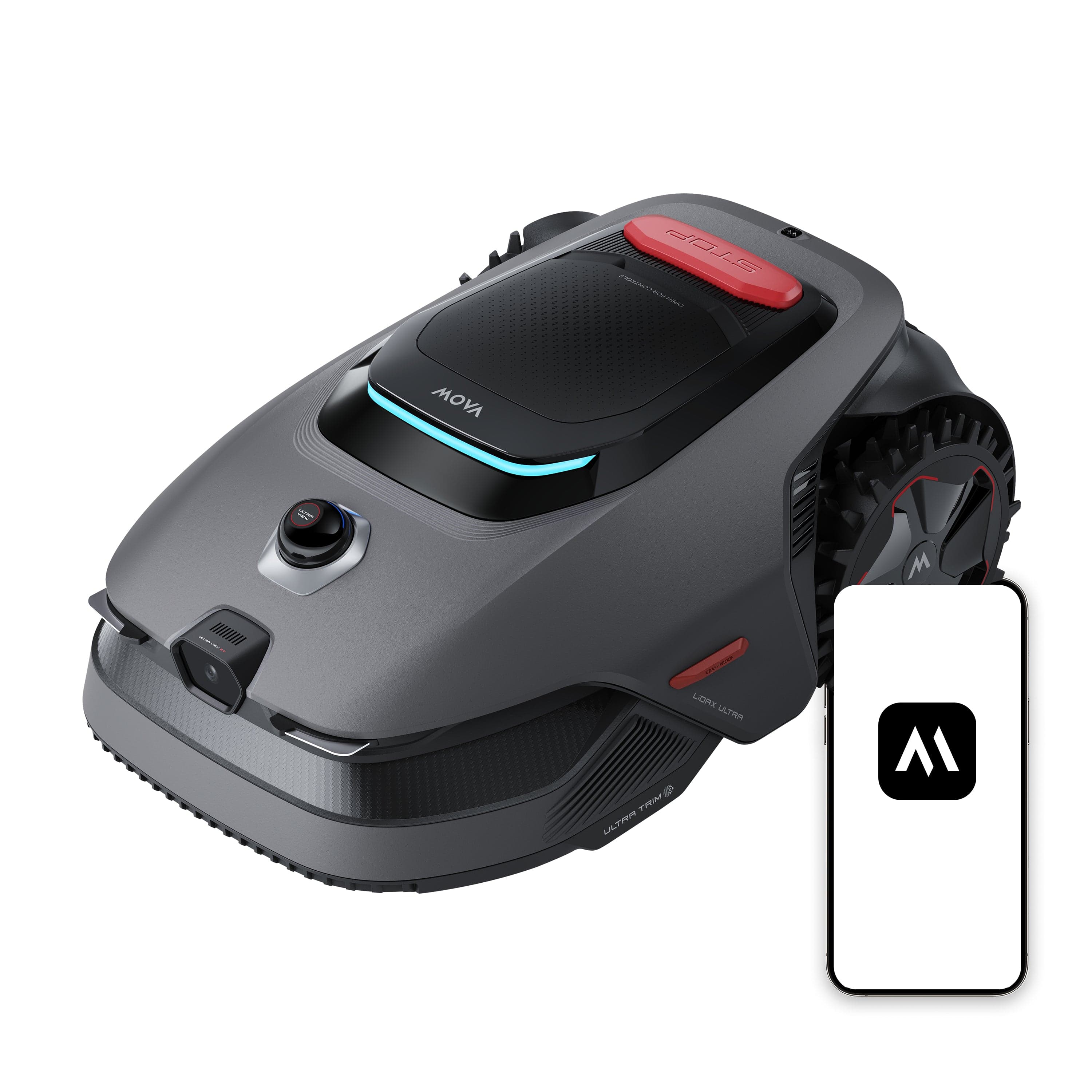
MOVA
Wire-free LiDAR-plus-vision navigation, app height control, 4G/GPS anti-theft, and half-acre capacity put it in a strong value lane.
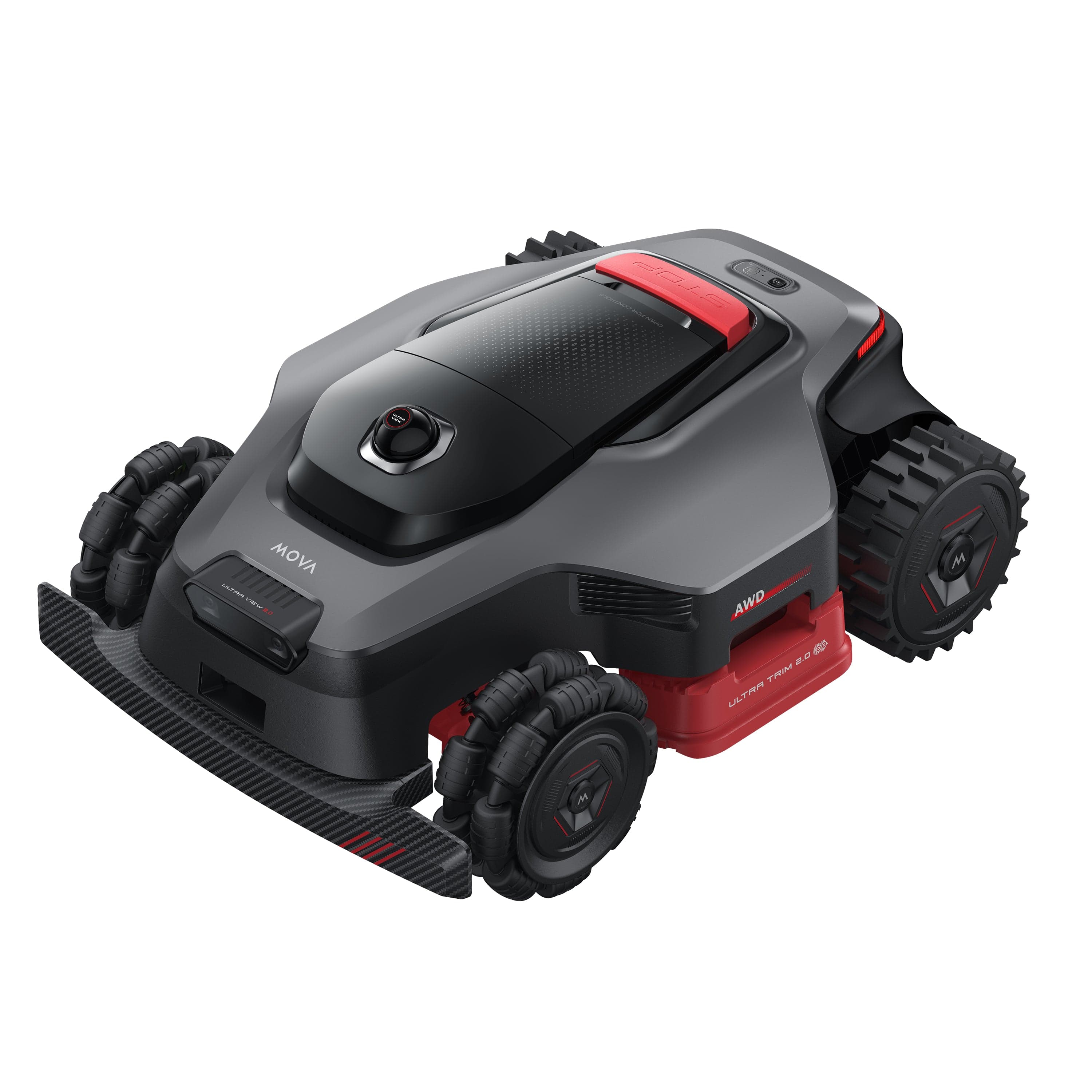
MOVA
AWD with four hub motors, 80% slope rating, UltraView 3.0 LiDAR-plus-dual-vision mapping, and a 15.8-inch dual-disc deck make it the traction upgrade over the standard 2000.
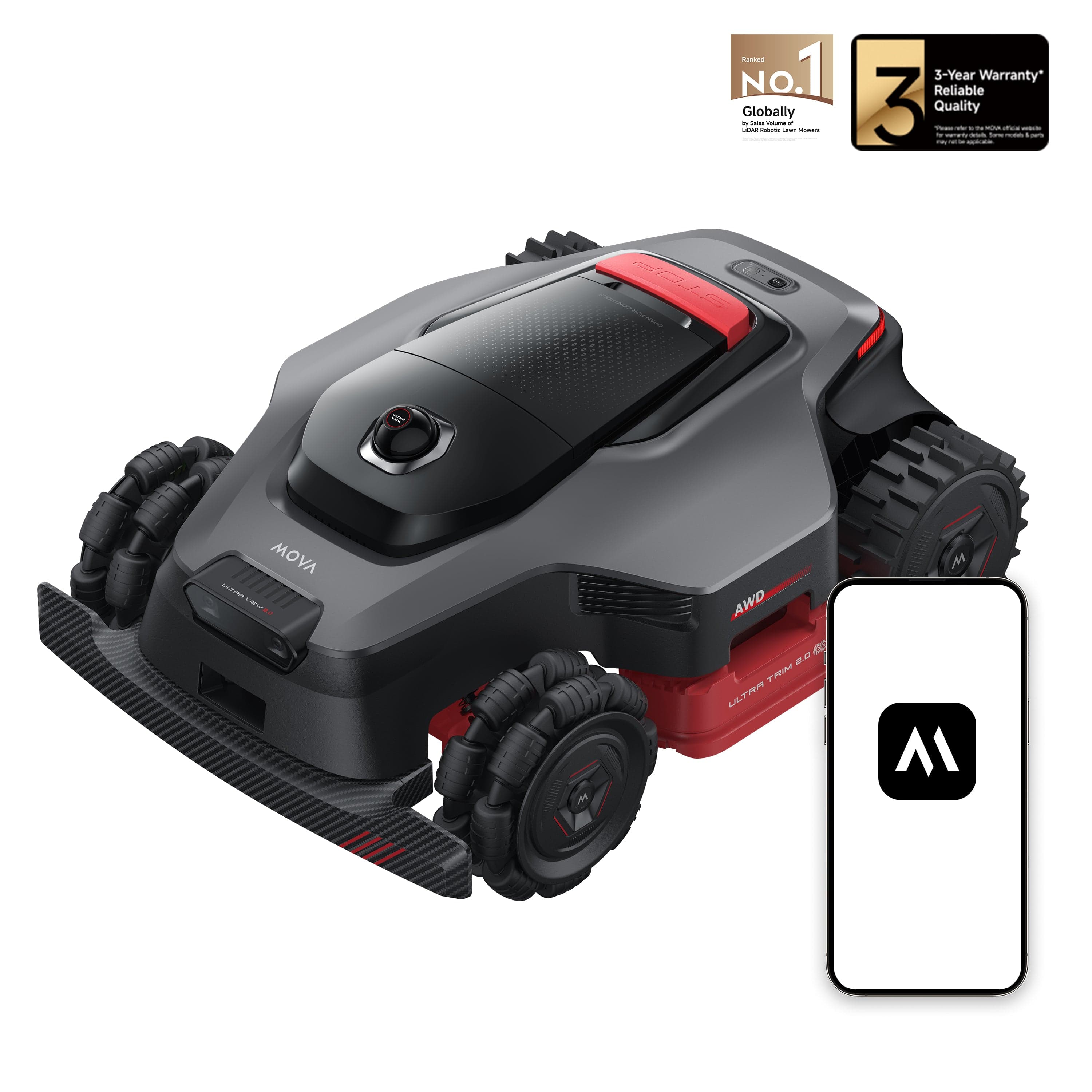
MOVA
The AWD LiDAX flagship adds 0.75-acre mapping, 80% slope headroom, UltraView 3.0 LiDAR-plus-dual-vision mapping, and a wide dual-disc deck without an RTK antenna.
Brand reputation matters only after the mower fits the lawn. Check the exact acreage, slope rating, navigation system, zone support, warranty, current price, and retailer SKU before using any deal box.
Buyer questions
Decide on slope first, then area. If your lawn is flat to moderate, the standard RWD line does the job for far less: the LiDAX Ultra 1000 for a quarter acre, the Ultra 2000 for a half. If any part of your lawn is genuinely steep, only the AWD line will hold it - the Ultra 2000 AWD for a half acre, the Ultra 3000 AWD for three-quarters. The AWD split is a much bigger jump than the model numbers suggest: different drivetrain, a deck twice as wide, and 80% slope against 45%.
They are different machines, not trim levels. The standard Ultra 1000 and 2000 are rear-wheel drive on a 7.9-inch deck at about 30 pounds, rated to a 45% slope. The Ultra 2000 AWD and 3000 AWD are all-wheel drive on a 15.8-inch dual deck at about 52 pounds, rated to 80%. Same LiDAR navigation and the same 150-zone mapping across all four - the money buys traction and cutting width.
It is new, and we say so plainly. MOVA has no multi-year field record in the US, and every model carries a 3-year warranty on the main unit (2 years on the battery), level with Mammotion and Segway Navimow. What the specs do support is a genuinely competitive LiDAR platform at prices below the established brands. If a long support history matters more to you than capability per dollar, that is a real reason to look at Mammotion or Husqvarna instead.
No. All four LiDAX Ultra models navigate with LiDAR and vision, with no clear-sky antenna to mount. That removes the single most awkward install step for tree-covered or oddly shaped lots, and it is the main practical advantage of a LiDAR platform over an RTK one.
150 on every model in the line, which is the highest in our catalog - the next best is 120. If your property is genuinely split into many separate areas, that is a real differentiator rather than a spec-sheet number.
Only if you have slope. The two cover the same half acre, so the extra money buys nothing on a flat lawn. What it does buy is 80% grade capability against 45%, a 15.8-inch dual deck against 7.9 inches, and a machine that finishes faster on open ground. On a flat half acre the standard 2000 is the better buy by a wide margin.