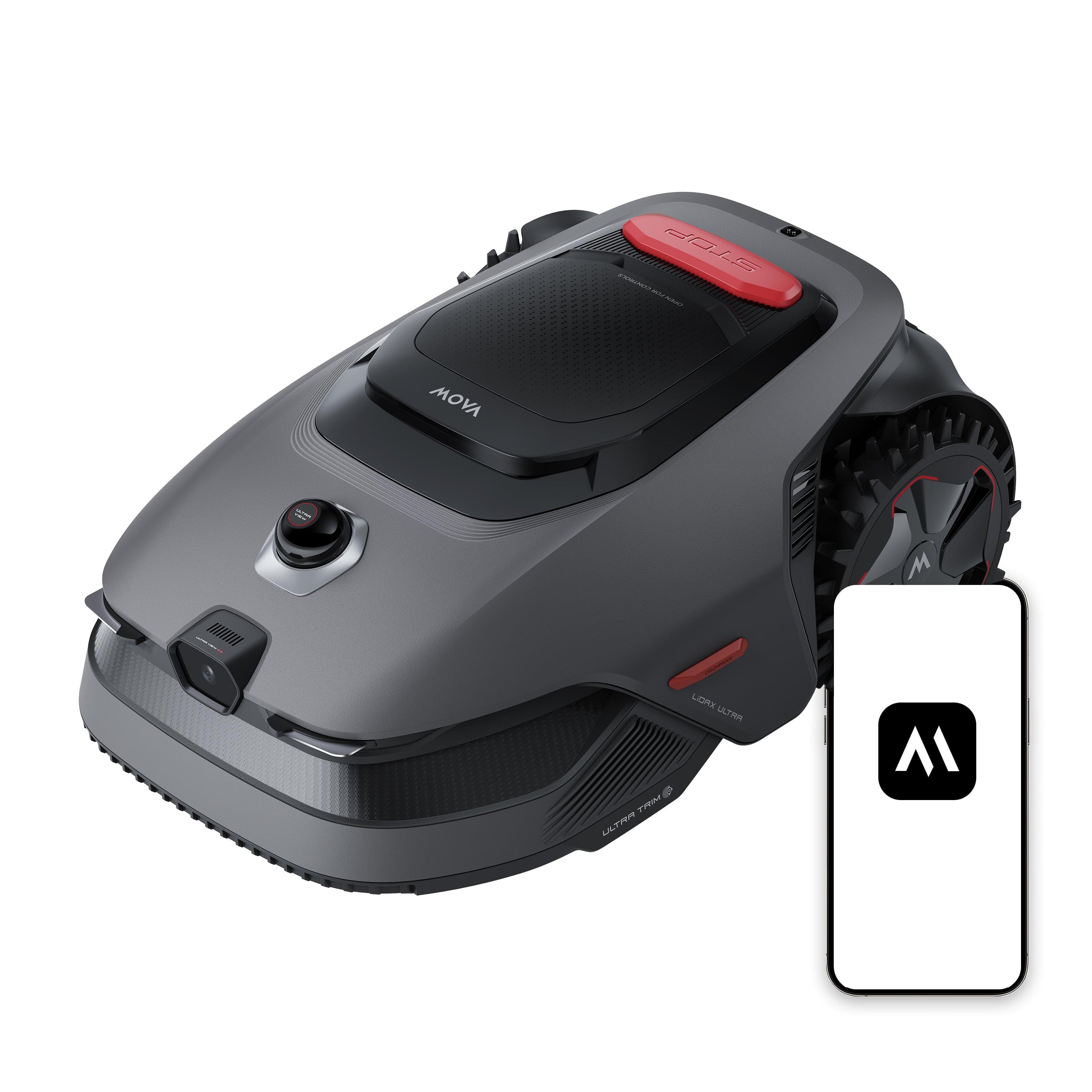
A sub-$1,000-ish LiDAR wire-free option with AI vision, app height control, and compact-yard mapping depth.
Last verified 2026-09-13
Fit check71/100
Affiliate disclosure: MowScout earns a commission when you buy through our links, including as an Amazon Associate. Recommendations are based on yard fit, verified specs, and score methodology; commission can only break close ties among genuine fits.
MowScout verdict
Buy if your yard matches its strengths.
Buy if
A sub-$1,000-ish LiDAR wire-free option with AI vision, app height control, and compact-yard mapping depth.
Skip if
Best treated as a small-yard mower; sandy, rough, or steep lawns may expose the RWD chassis limits.
Pros
A sub-$1,000-ish LiDAR wire-free option with AI vision, app height control, and compact-yard mapping depth.
Cons
Best treated as a small-yard mower; sandy, rough, or steep lawns may expose the RWD chassis limits.
Fit check
What to verify before buying
MOVA LiDAX Ultra 1000 is a $999 mower rated for 0.25 acres, 45% slopes, and 150 mapped zones. MowScout does not yet have a separate source-verified daily coverage figure for this model. Treat those as fit limits, not marketing decoration: mowable grass, wet turns, separate zones, and spring growth should all leave enough headroom for the mower to run without repeated rescues.
Navigation is LiDAR and drive is RWD. This model avoids a separate antenna requirement, which lowers one common setup hurdle, but dock location, mapping quality, and first-week no-go-zone tuning still matter. AI vision obstacle avoidance is useful around toys, furniture, pets, and landscaping clutter, but it should be treated as a risk reducer rather than a safety guarantee.If your hardest constraint is slope or rough turf, compare the terrain guide; if setup simplicity is the priority, compare similar no-wire picks before choosing by price.
Before checkout, confirm the exact SKU, included dock or base hardware, return window, warranty path, and current price at one of the listed retailers: MOVA, Amazon, Best Buy. Robot mower bundles change quickly, so the retailer page should match this review's capacity, model name, and last-verified source trail.
In the current catalog, this model sits in the mid price tier with 8 other verified mowers nearby. Its rough price-per-rated-acre is $3,996, which is useful when comparing against a larger mower that may look expensive upfront but cheaper per acre. Sunseeker X3 Plus is the closest lower-priced comparison point at $900.
The capacity math is pending source verification beyond its 0.25 acres max-area rating. That matters when the lawn is close to the published limit, because a mower that can only cover the whole yard under ideal conditions has less margin after rain delays, fast spring growth, dull blades, or separated zones. If your measured turf is close to 0.25 acres, compare eufy Robot Lawn Mower E18 for more headroom before buying.
The tags attached to this record are small yards, value LiDAR, under $1000, no boundary wire. Use those as a sanity check: if your yard does not match at least two of those tags, the MowScout Score is less important than fit. A high-scoring mower in the wrong category still creates rescue trips, missed strips, and support friction.
Its current MowScout Score is 71, which should be read beside the hard specs rather than treated as a standalone verdict. The strongest reasons to keep this mower on a shortlist are its LiDARnavigation, RWD drive, 45% slope rating, and 150zone support. The biggest reason to remove it is any yard fact that directly conflicts with those numbers.
Cutting fit is also specific: this deck is 7.9 inches wide and adjusts from 1.18 to 3.93 inches. Edge behavior is rated "good", so expect some trim work around fences, walls, beds, curbs, and tight hardscape. That is normal for robot mowers, but it matters more if your lawn has a lot of border length relative to open grass.
Ownership details point to 3 years of warranty coverage, app quality rated 3out of 5, connectivity through wifi, bt, 4g, 60 dB of listed noise, and 30 lb of chassis weight. Those are practical details for storage, night schedules, support expectations, and whether the mower will be easy to lift, clean, or move between areas.
The source trail for this record was last checked on 2026-09-13 and includes MOVA US LiDAX Ultra 1000 product page, MOVA US after-sales policy, MOVA LiDAX Ultra 1000 Amazon listing, Best Buy MOVA LiDAX Ultra 1000 listing, New Atlas MOVA LiDAX Ultra 1000 review/spec summary. Use those sources to resolve any mismatch between this review, a retailer title, and a bundled accessory listing. If the source page changes the area rating, slope rating, included hardware, or warranty terms, update the shortlist before clicking through. Keep a screenshot of the retailer specs for returns.
These checks are not MowScout lab results. They are manufacturer-claim caveats or third-party measured data we track so readers can separate dry-condition ratings from real-yard expectations.
Slope notation
manufacturer caveat
Rated / claimed
45% published slope
Observed / caveat
About 24 degrees, not 45 degrees
Use the published percent-grade value for filtering, but do not read it as a 45-degree hill rating. RWD traction still needs dry-condition headroom.
The MOVA LiDAX Ultra 1000 is the mower for someone who wants real LiDAR navigation on a small lawn without paying LiDAR-flagship money — and without burying a boundary wire or aiming an antenna at the sky. It maps your yard with a laser instead of a perimeter cable or a satellite fix, drops to a genuinely low cut height for warm-season grass, and undercuts most LiDAR mowers on price. On our spec-verified scoring it lands at a strong-but-honest 71/100: a likeable, capable quarter-acre machine whose ceilings are capacity and terrain, not navigation. This is a data-driven review, not a hands-on one. MowScout scores are computed from verified manufacturer and retailer specifications and cross-checked against the professional and owner coverage that exists; we have not run this unit ourselves, and because MOVA is a newer entrant, that independent coverage is still thin. We say so plainly and we treat MOVA's own performance figures as claims.
FTC disclosure: MowScout earns a commission if you buy through our links. It never changes the MowScout Score, which is computed from verified specs the same way for every mower — see our disclosure.
### MowScout Score: 71/100 — Best for small, shaded or tree-lined yards that want LiDAR without the wire The verdict, in three lines: The LiDAX Ultra 1000 delivers the thing shoppers actually want from LiDAR — a wire-free, antenna-free mower that maps in the dark and under tree cover — at a sub-$1,000 street price, and it cuts cleanly with a wide, warm-season-friendly height range. But it's a quarter-acre machine on a narrow deck and rear-wheel drive, with a slope rating that reads bigger on paper than in the yard, a middling app, and a brand that's still building its US track record. Match it to a small, flat-to-rolling, tree-shaded lot and it's a smart buy; ask it to cover ground, climb real hills, or prove years of reliability and a rival will serve you better. Street price: \$999 at MOVA's US store, verified September 13, 2026 — MOVA also lists a higher MSRP; verify current price on Amazon. → Check today's MOVA LiDAX Ultra 1000 deal on Amazon
MOVA LiDAX Ultra 1000 robot lawn mower
Image: MowScout does not shoot original hardware photos and never AI-generates product images.
Reasons to buy / reasons to skip
Reasons to buy
✅ Wire-free LiDAR navigation for under \$1,000. No boundary wire to bury and no RTK antenna to mount or aim — a laser builds the map, which is unusual at this price.
✅ Maps in the dark and under trees. LiDAR doesn't need light or a satellite signal, so shade and canopy that stall camera-only or RTK mowers don't blind it.
✅ Clean cut with a wide, warm-season-friendly range. A 1.18–3.93-inch height span drops low enough for Bermuda and rises high enough for St. Augustine, with MowScout-rated good edges.
✅ Deep zone mapping plus 4G anti-theft. Up to 150 mapped zones, AI-vision obstacle avoidance, GPS tracking, and a cellular link on a machine that lives outdoors.
✅ Dreame sensor pedigree. MOVA is a Dreame sub-brand, so the LiDAR-plus-vision hardware comes from an established robotics stack, not a first attempt.
Reasons to skip
❌ Small capacity. Rated for 0.25 acre on a narrow 7.9-inch deck — a small-lawn spec that means more passes per acre.
❌ Terrain is the weak pillar. Rear-wheel drive and a 45% printed slope (about 24°, not 45°) make this a flat-to-rolling mower, not a hill climber.
❌ No wet-grass mowing. MOVA doesn't rate it for wet or dewy turf, and RWD traction suffers when it's slick.
❌ Middling app and a new-brand track record. App quality scores 3/5, and MOVA's US owner-data and warranty picture are still forming.
The weighted scorecard: how the LiDAX Ultra 1000 earns its Score
The MowScout Score is computed from verified specs across seven weighted pillars (see how we score). Here is exactly where the LiDAX Ultra 1000's points come from — and where they leak away.
Pillar
Score
Why it lands here
Navigation reliability
23 / 25
The headline strength. LiDAR is the most capable positioning tier we score, and pairing it with AI-vision obstacle avoidance earns near-top marks: no wire, no antenna, no satellite signal to lose, and it maps in the dark and under canopy. It isn't a perfect 25 because a single primary sensor still has edge cases (glass, low-contrast drop-offs), but this is a genuinely strong nav package.
Terrain capability
10 / 20
The clearest signal of who this mower is for. The 45% published slope helps, but rear-wheel drive caps the drivetrain points, and the real-world incline is nearer 24° than a 45° wall. Flat-to-rolling, dry lawns only — AWD rivals score far higher here.
Coverage & speed
5 / 15
A quarter-acre capacity across up to 150 zones is a small-lawn spec, and a 7.9-inch deck means more passes and longer runtimes than wider mowers. Fine for its target yard, mid-pack against the field.
Setup & ease
13 / 15
Nearly a top pillar. No wire to trench and no antenna to site under open sky: place the base, connect, map, mow. The points off reflect a base-station requirement and an app we rate 3/5 rather than best-in-class.
Cutting quality & edges
8 / 10
Strong. A good edge rating and a wide 1.18–3.93-inch height range that suits both low-cut Bermuda and tall St. Augustine. It leaves the usual thin border strip, so not a perfect 10.
Value
7 / 10
Solid for a sub-\$1,000 LiDAR mower — you're buying laser navigation at a vision-mower price. It's not a perfect 10 because the quarter-acre cap makes the dollars-per-acre less flattering than the sibling 2000.
Reliability & support
5 / 5
A 3-year warranty on the main unit (2 years on the battery) per MOVA's US after-sales policy, plus two retail channels. MOVA's short US track record is the open question.
Total
71 / 100
A capable, wire-free LiDAR mower for small yards whose terrain and coverage ceilings — not its navigation — set the price of admission.
The scorecard tells the story in one line: Navigation (23/25) is best-in-class and Terrain (10/20) plus Coverage (7/15) are the low pillars. You buy the LiDAX Ultra 1000 for excellent wire-free positioning on a small yard, and you accept that it isn't a big-acreage or hill machine.
What it is: wire-free LiDAR, explained — and the MOVA/Dreame lineage
The LiDAX Ultra 1000 navigates with LiDAR — a spinning laser sensor that builds a live 3D map of your yard — backed by AI vision for obstacle avoidance. Crucially, there is no boundary wire and no RTK antenna. You still place a charging base station, but you don't trench a perimeter cable around the lawn and you don't have to find a patch of open sky to mount an antenna. That combination is the whole pitch: the mower gets LiDAR's map-anywhere capability with the setup simplicity buyers associate with wire-free vision mowers.
Why LiDAR matters here, in plain English: an RTK mower needs a clear satellite fix and stumbles under trees or beside a roofline; a camera-only mower needs light and can't mow at night or in glare. LiDAR needs neither. It "sees" geometry with a laser, so it works in the dark and holds position under a canopy — a real advantage for shaded Sun-Belt lots where southern live oaks and pines defeat GPS-dependent machines. For the deeper trade-offs between the three navigation types, our RTK vs LiDAR vs vision guide lays them out.
A word on the badge. MOVA is a sub-brand of Dreame Technology, the robotics company behind a broad robot-vacuum line and the Dreame A3 robot mower. So the sensor and AI stack here descends from an established platform rather than a startup's first prototype — a legitimate reason to take the LiDAR claims seriously. The honest flip side is that MOVA is new to US lawn care: independent long-term owner data is still thin, third-party coverage (New Atlas has published an early look) is only beginning to accumulate, and we treat MOVA's marketing figures as claims until the field verifies them. That newness is baked into the score, not glossed over.
Verified specifications
Every figure below comes straight from our verified data record for the LiDAX Ultra 1000 — not from testing.
Charging base required; no antenna, no clear-sky siting
Drive
Rear-wheel drive (RWD)
Max slope
45% (published; about 24° — see reality check)
Cutting width
7.9 in
Cut height
1.18 – 3.93 in
Zones
Up to 150 mapped zones
Obstacle avoidance
AI vision
Anti-theft / GPS
Yes / Yes
Connectivity
Wi-Fi, Bluetooth, 4G
Wet-grass mowing
Not rated for wet grass
Edge cutting
Good (leaves a small border strip)
Noise
~60 dB (listed spec — not a MowScout measurement)
Weight
~30 lb
App quality
3 / 5
Warranty
3 years on the main unit, 2 on the battery (MOVA US after-sales policy)
Retail
MOVA, Amazon
Strengths: navigation, cut, and smart features
Navigation is the reason to buy. In a category where sub-\$1,000 usually means either a buried wire or a camera that can't see at night, the LiDAX Ultra 1000 offers laser mapping with no wire and no antenna. On a small, cleanly bordered lot it should map quickly and hold its bearings where GPS-dependent rivals wander — and it can run a schedule after dark or under shade without the light dependence that hobbles vision mowers. That capability is what drives the 23/25 navigation pillar.
The cut is clean and warm-season-ready. The deck adjusts from 1.18 inches — low enough for a proper Bermuda cut — up to 3.93 inches, high enough to keep St. Augustine healthy. That unusually wide range is a real asset for Sun-Belt lawns that need to be either scalped low or kept tall depending on the species. MowScout rates edge cutting good, near the top of the category. As a mulching mower it drops fine clippings back into the canopy rather than bagging, which is normal and good for the turf.
The smart package is complete for the class. You get up to 150 mapped zones — far more than a typical small yard needs, which means front, back, and side lawns can each carry their own schedule and cut height — plus AI-vision obstacle avoidance, anti-theft with GPS tracking, and a connectivity stack of Wi-Fi, Bluetooth, and 4G. The cellular link is what makes real-world theft tracking and remote alerts possible on a machine that lives outdoors, and it's a feature some cheaper rivals omit.
Honest limits: terrain, capacity, wet grass, and a new-brand app
Terrain is the pillar to respect. MOVA publishes a 45% maximum slope, and we use it for filtering — but a 45% grade is roughly a 24-degree incline, not a 45-degree hill, and the mower is rear-wheel drive on a light ~30-lb chassis. Dry, gentle-to-moderate banks are fine; real hills, damp grades, and loose sandy soil are not. This is a flat-to-rolling mower. If your yard climbs, believe the physics, not the marketing number, and shop the hills buying guide or an AWD model instead.
Capacity is genuinely small. The 0.25-acre rating on a 7.9-inch deck is a small-lawn spec. Robot mowers cut a little every day rather than all at once, so "keeping up" is about the mow-charge-resume cadence fitting your lawn — and a narrow deck means more passes per acre. Fine within a quarter acre; don't stretch it toward a third of an acre or a fast-growing summer lawn. If your yard is bigger, the sibling 2000 (0.5 acre) exists precisely for that.
No wet-grass mowing, and a middling app. MOVA does not rate the LiDAX Ultra 1000 for wet or dewy turf, so it needs a dry-weather schedule — and RWD traction falls on anything slick, compounding the slope caution. On software, our data scores the app a 3/5: functional, but not the polished experience of the more mature brands or even MOVA's own 2000. And as covered above, the new-brand track record means less independent reliability data than you'd get from Husqvarna, Segway, or WORX. On noise, the listed figure is about 60 dB — treat that as a manufacturer spec, not a MowScout measurement, since we don't test hardware.
Who it's for — and who should skip it
Buy it if your lawn is up to about a quarter acre, flat-to-rolling, and especially if it's shaded or tree-lined — that's where LiDAR's map-in-the-dark, no-antenna advantage pays off and where RTK mowers struggle. It's a strong pick for a small Sun-Belt lot with Bermuda, Zoysia, or St. Augustine, given the wide cut-height range, and for a buyer who wants wire-free LiDAR without spending flagship money. It also makes sense if you like the MOVA/Dreame platform and might grow into the LiDAX Ultra 2000 later.
Skip it if your yard runs large (look at large-yard picks), has meaningful slopes or rough, sandy terrain, or you often need to mow wet. Skip it, too, if a long, proven track record and top-tier app matter more to you than LiDAR-at-this-price — an established brand will feel safer even if it navigates less cleverly. Not sure which camp you're in? Our configurator narrows the field to models that actually fit your yard, and the pillar guide explains the navigation trade-offs in plain English.
How it compares: the 2000 sibling, the O1000, and the vision crowd
vs MOVA LiDAX Ultra 2000 — the bigger, pricier sibling. Same LiDAR-plus-vision platform, same 7.9-inch deck, same 1.18–3.93-inch height range, same 45% slope rating. The 2000 doubles capacity to 0.5 acre, adds a better app (4/5 vs 3/5) and a third retail channel, for a 75/100. The 1000 gives up half the area and a little polish to save some money and land at 71/100. The rule is simple: at or under a quarter acre, the 1000 is the right buy; near or above a third of an acre, step up to the 2000 rather than run the smaller machine at its ceiling.
vs ECOVACS GOAT O1000 LiDAR Pro — the closest rival. This is the cross-shop that matters. Both are wire-free LiDAR, both RWD, both rated to 0.25 acre and 45% slope, and both earn good edges. The O1000 now matches it on price, runs a wider 8.66-inch deck, and comes from a brand with a longer outdoor-robot history. The MOVA counters with the Dreame sensor pedigree and a clean upgrade path to the 2000. If price and brand track record lead your list, the O1000 is the safer pick; if you prefer the MOVA/Dreame platform, the 1000 is a fair buy — but genuinely compare both.
vs eufy E15 and eufy E18 (out of stock) — the vision alternative. eufy's E-series is pure camera vision: the simplest possible setup and a polished app, but it can't mow in the dark, dislikes glare, and tops out at a 32% slope. The E15 (0.2 acre) and E18 (0.3 acre) win on app maturity and brand history; the MOVA wins on navigation flexibility — shade and darkness don't stop it. If your lot is open and sunny, the eufys are lovely; if it's shaded, LiDAR is the better tool.
vs Segway Navimow i110N — the wire-free RTK option. The i110N (0.25 acre) uses NetRTK and needs adequate sky visibility, and its edge cutting is only ok. Under trees, the MOVA's LiDAR is the more reliable choice; on a wide-open lot with a strong signal, the established Segway brand and support are a genuine draw. It's a navigation-philosophy decision — see the no-boundary-wire ranking for the full field.
Value & price: laser navigation at a vision-mower price
At its street price (dated above; verify current pricing on Amazon, since prices move weekly), the LiDAX Ultra 1000's pitch is LiDAR for the money you'd normally spend on a camera mower. That's why Value scores a solid 7/10: you're buying a more capable navigation tier than the price usually buys. The honest asterisk is capacity — at 0.25 acre, the dollars-per-acre math is less flattering than the 2000's (the 2000 costs a little more for twice the area), so if you can use the bigger machine, it's the better deal per square foot. Within a quarter acre, though, the 1000 is priced right for what it does.
A transparency note: our LiDAX Ultra 1000 link goes to Amazon, where MowScout earns the standard Associates commission — the same program as every other Amazon-linked mower on this site, so there is no MOVA-specific incentive here. Commission plays no part in the score: the 71/100 is computed purely from verified specs. If a rival fits your yard better, we say so above and below.
Over five years, budget for cheap owner-replaceable blades (roughly \$60–\$200 total), trivial electricity (pennies per mow), and the real wildcard — the battery, the largest foreseeable out-of-warranty repair on any robot mower. The 3-year warranty on the main unit (2 years on the battery, per MOVA's US after-sales policy) covers the early window. Even so, the multi-year math still compares favorably to years of gas, oil, and either your weekends or a lawn service — the case we lay out in are robot mowers worth it?.
Setup & navigation experience
Setup should be among the easier ones in the category, and the score (13/15) reflects it. There is no perimeter wire to trench — the single biggest chore of the old generation — and, because LiDAR needs no satellite fix, no antenna to mount and aim at open sky. Your hands-on steps are essentially: place the charging base, connect in the MOVA app, let the mower run its first LiDAR mapping pass, then set zones, cut heights, and a schedule. With up to 150 zones, you can carve a real American lot — front, back, side strips — into separately scheduled areas.
The honest caveats are the app and the mapping run. The app scores 3/5 in our data: capable for scheduling, zones, no-go areas, and height control, but not the finished-feeling experience of the top brands, and as a newer product some early-firmware rough edges wouldn't be a surprise. The first mapping session also takes real (mostly unattended) time before the lawn is fully learned — normal for LiDAR mappers, but plan for it. None of this is a dealbreaker on a small yard; it's the difference between "very good" and "best-in-class" setup.
The verdict, restated
The MOVA LiDAX Ultra 1000 earns its 71/100 honestly: it maxes the pillar buyers care about most — navigation (23/25) — by delivering wire-free, antenna-free LiDAR that maps in the dark and under trees for under \$1,000, and it cuts cleanly across a warm-season-friendly height range. Its ceilings are equally clear: quarter-acre capacity, a narrow deck, rear-wheel drive with a slope number that reads bigger than it drives, no wet mowing, a middling app, and a brand still earning its US stripes. Match it to a small, shaded, flat-to-rolling lot and it's one of the smartest LiDAR buys at the price. Ask it to cover ground, climb, or prove years of reliability, and a rival — the bigger LiDAX Ultra 2000, the similarly priced ECOVACS GOAT O1000, or an established name — will serve you better.
What does the MowScout Score of 71/100 mean for the MOVA LiDAX Ultra 1000? It means the LiDAX Ultra 1000 is a genuinely good small-yard robot mower with one clear headline strength — wire-free LiDAR navigation — and a couple of honest ceilings. On our seven-pillar formula it scores strongly on navigation (23/25, LiDAR plus AI vision) and setup (13/15, no wire and no antenna), cuts cleanly (8/10), and lands solid on value (7/10) for a sub-\$1,000 LiDAR machine. It loses points where the hardware is modest: terrain (10/20, rear-wheel drive with a real-world slope ceiling below the printed 45%) and coverage (5/15, a quarter-acre capacity on a narrow 7.9-inch deck). The Score is computed from verified specs by the same formula we apply to every mower — this is a data-driven review, not a hands-on test.
Should I buy the LiDAX Ultra 1000 or step up to the LiDAX Ultra 2000? It's almost entirely a question of lawn size. The two share the same LiDAR-plus-vision platform, the same 7.9-inch deck, the same 1.18–3.93-inch cut-height range, and the same 45% published slope rating. The 1000 is rated for up to 0.25 acre; the 2000 doubles capacity to 0.5 acre and adds a more polished app (4/5 versus 3/5) and a third retail channel. At or under a quarter acre, the 1000 is the smarter spend (71/100); near or above a third of an acre, the 2000 is worth the extra money (75/100). Below 0.25 acre, don't pay for capacity you can't use.
What slope can the LiDAX Ultra 1000 really handle — is the 45% rating accurate? MOVA publishes a 45% maximum slope, and we use that number for filtering. But read it correctly: 45% grade is about a 24-degree incline, not a 45-degree hill, and the mower is rear-wheel drive on a light ~30-lb chassis. Gentle-to-moderate banks in dry conditions are fine; genuine hills, damp slopes, or loose sandy grades are not. It also isn't rated for wet-grass mowing, and traction falls further on anything slick. If your yard has real grade, treat this as a flat-to-rolling machine and shop an all-wheel-drive model from our hills guide instead.
Does the LiDAX Ultra 1000's LiDAR let it mow under trees and at night? This is LiDAR's real advantage over both RTK and pure vision. Because the mower builds and holds its map from a laser rather than a satellite fix, there's no antenna to site under open sky and no GPS signal to lose under a canopy — the failure mode that strands RTK mowers beside trees or a roofline simply doesn't apply. LiDAR also works in the dark, so shade and low light don't blind it the way they do a camera-only mower. The one catch is unrelated to navigation: MOVA does not rate the LiDAX Ultra 1000 for wet grass, so schedule it for dry conditions and keep it out of heavy morning dew.
Who makes MOVA, and is it a brand I can trust? MOVA is a sub-brand of Dreame Technology, the robotics company behind a large line of robot vacuums and the Dreame A3 robot mower, so the LiDAR-plus-AI-vision hardware traces to a mature sensor stack rather than a first-time effort. The honest caveat is that MOVA itself is a newer entrant in US lawn care: independent long-term owner data is still thin, third-party coverage is only beginning to appear, its app scores a middling 3/5 in our data, and MOVA's US after-sales policy now lists a 3-year term on the main unit (2 years on the battery), though the brand is too new for anyone to know how year-three claims are handled. Treat MOVA's own performance claims as claims until the field catches up.
LiDAX Ultra 1000 vs ECOVACS GOAT O1000 — which sub-\$1,000 LiDAR mower should I get? These are the two closest rivals in the wire-free LiDAR value lane, and they're strikingly matched: both LiDAR, both rear-wheel drive, both rated to 0.25 acre and 45% slope, and both earn a "good" edge mark. The ECOVACS GOAT O1000 LiDAR Pro streets at about the same price while it is on sale (its regular price is higher) and runs a wider 8.66-inch deck, and ECOVACS has a longer track record in outdoor robots. The MOVA counters with the Dreame sensor pedigree and a sibling upgrade path to the 2000. If price and brand history are your priorities, the O1000 is the safe pick; if you like the MOVA/Dreame platform and may want to grow into the 2000, the 1000 is a fair buy. Cross-shop both before deciding.
Does the LiDAX Ultra 1000 cut clean edges, and can it mow wet grass? MowScout rates its edge cutting "good," which is near the top of what any robot mower achieves — but "good" is not "zero." Like every robot mower, the blade disc sits inboard of the outer wheel, so a thin strip of grass always remains right at walls, fences, and beds; plan on an occasional string-trimmer pass along hard borders. On wet grass the answer is a firm no: MOVA does not rate the LiDAX Ultra 1000 for wet-grass mowing, and a rear-wheel-drive chassis loses grip on damp or dewy turf. Keep it on a dry-weather schedule.
Alternatives worth a look
Bigger, same platform → MOVA LiDAX Ultra 2000. The identical LiDAR platform sized to 0.5 acre with a better app, more. The right pick once your lawn outgrows a quarter acre.
The closest rival → ECOVACS GOAT O1000 LiDAR Pro. Matched on LiDAR, area, and slope, and about level on price while the O1000 is on sale, with a wider deck and a longer brand track record. The value-LiDAR benchmark to beat.
For an open, sunny lot → eufy E15. Pure-vision simplicity and a polished app at a higher price; the trade is no night or shade mowing and a 32% slope ceiling.
For a wire-free RTK yard with clear sky → Segway Navimow i110N. An established brand with antenna-free NetRTK, best where satellite signal is strong; the MOVA out-navigates it under trees.
Still weighing options? Start with the configurator to filter by your exact slope, size, and tree cover, and read the robot-lawn-mower pillar guide for how RTK, LiDAR, and vision actually differ. If wire-free setup is the whole reason you're here, our no-boundary-wire guide ranks the field.
---
How we know what we know. MowScout is spec-verified and data-driven, not hands-on: our scores are computed from verified manufacturer and retailer specifications, and we have not tested this unit ourselves. MOVA is a newer entrant, so independent long-term data is still thin; where we reference outside coverage we mean the MOVA LiDAX Ultra 1000 Amazon listing and New Atlas's early look, never our own testing. The ~60 dB noise figure and the 45% slope rating are listed manufacturer specs, not MowScout measurements — and per our data, that 45% grade is closer to 24° in real terms. MOVA's US after-sales policy lists 3 years on the main unit and 2 on the battery. Verify current pricing before buying. This review contains affiliate links; our LiDAX Ultra 1000 link earns the standard Amazon Associates commission, the same as every Amazon-linked mower, so there is no MOVA-specific incentive here — see our disclosure.
Owner reviews
Own this mower? Add field notes.
MowScout separates owner reports from editorial scoring. Submissions are moderated and should include terrain, grass, slope, tree cover, runtime, support, or app details that help another buyer.
Buyer questions
FAQ
What does the MowScout Score mean for the MOVA LiDAX Ultra 1000?
It means the LiDAX Ultra 1000 is a genuinely good small-yard robot mower with one clear headline strength — wire-free LiDAR navigation — and a couple of honest ceilings. On our seven-pillar formula it scores strongly on navigation (23/25, thanks to LiDAR plus AI vision) and setup (13/15, no wire and no antenna), cuts cleanly (8/10), and lands solid on value (7/10) for a sub-$1,000 LiDAR machine. It loses points where the hardware is modest: terrain (10/20, rear-wheel drive with a real-world slope ceiling below the printed 45%) and coverage (5/15, a quarter-acre capacity on a narrow 7.9-inch deck). The Score is computed from verified specs by the same formula we apply to every mower — this is a data-driven review, not a hands-on test.
Should I buy the LiDAX Ultra 1000 or step up to the LiDAX Ultra 2000?
It's almost entirely a question of lawn size. The two share the same LiDAR-plus-vision platform, the same 7.9-inch deck, the same 1.18–3.93-inch cut-height range, and the same 45% published slope rating. The 1000 is rated for up to 0.25 acre; the 2000 doubles capacity to 0.5 acre and adds a more polished app (we rate it 4/5 versus the 1000's 3/5) and a third retail channel. If your lawn is at or under a quarter acre, the 1000 is the smarter spend and scores 71/100. If you're near or above a third of an acre — or want headroom so the mower isn't running at its ceiling — the 2000 is worth the extra money and scores 75/100. Below 0.25 acre, don't pay for capacity you can't use.
What slope can the LiDAX Ultra 1000 really handle — is the 45% rating accurate?
MOVA publishes a 45% maximum slope, and we use that number for filtering. But read it correctly: 45% grade is about a 24-degree incline, not a 45-degree hill, and the LiDAX Ultra 1000 is rear-wheel drive on a light ~30-lb chassis. In plain terms, gentle-to-moderate banks in dry conditions are fine; genuine hills, damp slopes, or loose sandy grades are not. The mower also isn't rated for wet-grass mowing, and traction falls further on anything slick. If your yard has real grade, treat this as a flat-to-rolling machine and shop an all-wheel-drive model from our hills guide instead.
Does the LiDAX Ultra 1000's LiDAR let it mow under trees and at night?
This is LiDAR's real advantage over both RTK and pure vision. Because the mower builds and holds its map from a laser sensor rather than a satellite fix, there's no antenna to site under open sky and no GPS signal to lose under a canopy — the failure mode that strands RTK mowers beside trees or a roofline simply doesn't apply. LiDAR also works in the dark, so shade and low light don't blind it the way they do a camera-only mower. The one catch is unrelated to navigation: MOVA does not rate the LiDAX Ultra 1000 for wet grass, so schedule it for dry conditions and don't send it out into heavy morning dew, even though it could physically 'see' to navigate then.
Who makes MOVA, and is it a brand I can trust?
MOVA is a sub-brand of Dreame Technology, the Chinese robotics company behind a large line of robot vacuums and the Dreame A3 robot mower, so the LiDAR-plus-AI-vision hardware traces to a mature sensor stack rather than a first-time engineering effort. That's the reassuring part. The honest caveat is that MOVA itself is a newer entrant in US lawn care: independent long-term owner data is still thin, third-party coverage is only beginning to appear, its app scores a middling 3/5 in our data, and MOVA's US after-sales policy now lists a 3-year term on the main unit (2 years on the battery), though the brand is too new for anyone to know how year-three claims are handled. Treat MOVA's own performance claims as claims until the field catches up.
LiDAX Ultra 1000 vs ECOVACS GOAT O1000 — which sub-$1,000 LiDAR mower should I get?
These are the two closest rivals in the wire-free LiDAR value lane, and they're strikingly matched: both are LiDAR, both rear-wheel drive, both rated to 0.25 acre and 45% slope, and both earn a 'good' edge-cutting mark. The ECOVACS GOAT O1000 LiDAR Pro streets at about the same price while it is on sale (its regular price is higher) and runs a wider 8.66-inch deck, and ECOVACS has a longer track record in outdoor robots. The MOVA counters with a slightly deeper price-to-map story, the Dreame sensor pedigree, and a sibling upgrade path to the 2000. If price and brand history are your priorities, the O1000 is the safe pick; if you like the MOVA/Dreame platform and may want to grow into the 2000, the 1000 is a fair buy. We'd cross-shop both before deciding.
Does the LiDAX Ultra 1000 cut clean edges, and can it mow wet grass?
MowScout rates its edge cutting 'good,' which is near the top of what any robot mower achieves — but 'good' is not 'zero.' Like every robot mower, the blade disc sits inboard of the outer wheel, so a thin strip of grass always remains right at walls, fences, and beds; plan on an occasional string-trimmer pass along hard borders. On wet grass the answer is a firm no: MOVA does not rate the LiDAX Ultra 1000 for wet-grass mowing, and a rear-wheel-drive chassis loses grip on damp or dewy turf. Keep it on a dry-weather schedule.
Is the MOVA LiDAX Ultra 1000 good for slopes?
It is rated for slopes up to 45%, but wet grass, rough terrain, and boundary placement can reduce real-world confidence.
Does the LiDAX Ultra 1000 need boundary wire?
No. This model uses wire-free navigation.
Are these hands-on test results?
This launch review is data-driven and spec-verified. MowScout will label hands-on test results separately when owned testing is complete.