Affiliate disclosure: MowScout earns a commission when you buy through our links, including as an Amazon Associate. Recommendations are based on yard fit, verified specs, and score methodology; commission can only break close ties among genuine fits.
Quick answer: the best robot lawn mower under $1,000 is the ANTHBOT M9 — MowScout Score 75, and the least expensive wire-free mower we track. It pairs RTK positioning with AI-vision obstacle avoidance, 4G theft tracking and a 3-year warranty on a quarter acre, and it outscores every other pick on this list. It wants open sky, though: for a shaded yard, the ECOVACS GOAT O1000 LiDAR PRO (Score 72) brings LiDAR navigation and genuinely good edges to this budget, on sale. This page is spec-verified and data-driven, not hands-on — we haven't put a unit on your lawn, so every number comes from manufacturer specs and our MowScout Score, cross-checked against retailer listings. Verify the current price before you buy, because this category discounts weekly.
Under $1,000 is where robot mowing stopped being a luxury. Five of our six budget picks are wire-free, and the tech that used to define premium models — LiDAR, AI vision, app-based mapping, anti-theft tracking — now shows up below four figures. What you don't get is drivetrain, capacity, and navigation redundancy. Below we name exactly what you trade away, what we weighted, six picks we'd actually recommend, an at-a-glance comparison table, and an honest read on when the cheap mower is the right call versus when you should spend more. If you want the full navigation explainer first, start with the pillar, Robot lawn mowers — RTK vs LiDAR vs vision.
The short answer: our top pick, and who it fits
If you're shopping under $1,000 with an open lawn, the ANTHBOT M9 is the mower to beat: the highest Score on this list, the lowest price of any wire-free mower we track, 4G tracking and a 3-year warranty. Its one real limit is the sky. RTK positioning needs a clear view overhead, so under trees the ECOVACS GOAT O1000 LiDAR PRO is the mower to beat instead: LiDAR builds a live 3D map of your yard, works under tree cover with no antenna to mount, and cuts edges the data rates "good" (rare at this price). Both are rear-wheel drive, rated to 0.25 acre and 45% grade, so they fit a small, flat-to-moderate yard — not a big lot and not a steep bank.
If your yard is a touch different, the ranking below has a better-fit answer: the MOVA LiDAX Ultra 1000 if you want LiDAR plus 4G theft tracking, the Navimow i206 AWD if a tiny lawn needs all-wheel drive, the Navimow i105N if your lawn is tiny, flat and open, or the WORX Landroid M if the absolute lowest price wins and you'll bury a wire. Three former picks, the YUKA mini 2, the Eufy E15 and the Navimow i110N, have moved above this budget; they're noted after the ranking.
What you give up under $1,000
The budget tier isn't a smaller version of a flagship — it's a different set of compromises. Naming them up front is the honest way to shop, because every model here trades the same four things.
1. Drivetrain — flat and gentle only. Every pick on this page except the tiny i206 AWD is rear-wheel drive (RWD). That caps real-world traction: our budget picks are rated between 30% and 45% grade, and those are dry-condition ceilings that drop further on wet grass. The Navimow i206 AWD drives all four wheels but is still rated to just 45% on a 0.15-acre lawn — hill-climbing all-wheel drive starts higher up the ladder. If your yard has meaningful slopes, this is the spec that rules the budget tier out, and you should read best robot mowers for hills instead.
2. Area — a quarter acre, tops. Capacity is the other hard ceiling. The largest budget pick handles 0.25 acre; the smallest, the Navimow i105N, is rated to just 0.13 acre (about 1/8 acre). Max area is a good-conditions number, not a comfortable daily target — a mower run near its limit, with obstacles and zones, falls behind. Budget mowers are for small lawns, full stop.
3. Navigation tier and edges. Flagships fuse three sensors for redundancy; budget mowers lean on one primary system — LiDAR, vision, or NetRTK — so there's less margin when conditions get tricky. Edges vary, too: the GOAT O1000 and MOVA LiDAX Ultra 1000 cut edges the data rates "good," while the ANTHBOT M9 and the Navimow models are "okay," meaning a slightly wider border strip to trim yourself.
4. On the WORX, a boundary wire. Five of six picks are wire-free, but the cheapest — the WORX Landroid M, the budget floor — still needs a buried or staked perimeter wire around the whole yard and every bed, plus it has only basic obstacle handling. That's the trade for the lowest sticker price in the category.
What we prioritized for a budget robot mower
The MowScout Score is a weighted composite, and for a budget-focused list we let three things drive the ranking, in order:
Navigation quality per dollar. Under $1,000, the biggest differentiator is how the mower finds its
way. LiDAR and vision work without a clear sky; RTK and NetRTK need signal and sky view. We rewarded the systems that fail gracefully — which is why LiDAR-equipped mowers lead for shaded yards.
Edge cutting and setup simplicity. At this price, the practical wins are clean borders (less hand
trimming) and painless setup (no antenna, no wire). We favored models that deliver one or both.
Honest fit to a small yard. Every pick here is a small-lawn tool. We weighted *value within that
envelope* — the right mower for a quarter acre — rather than pretending a budget model can do a flagship's job. Capacity and slope caps are stated plainly, not buried.
Everything below is grounded in `data/mowers.json` and the MowScout Score. We have not measured a cut ourselves; where we say "rated" or "street," we mean the manufacturer's number or the verified retail price.
The best robot mowers under $1,000, ranked
Ranked by MowScout Score, with a note on which yard each one actually fits.
New in the catalog (September 2026): four more wire-free mowers now sit under $1,000: the ANTHBOT M9, the ECOVACS GOAT O1000 RTK, the Sunseeker X3 Plus and the Navimow i206 AWD. All four position by satellite, so they want open sky. The M9 now leads the list below and the i206 AWD ranks #4; the X3 Plus and O1000 RTK are noted after the picks.
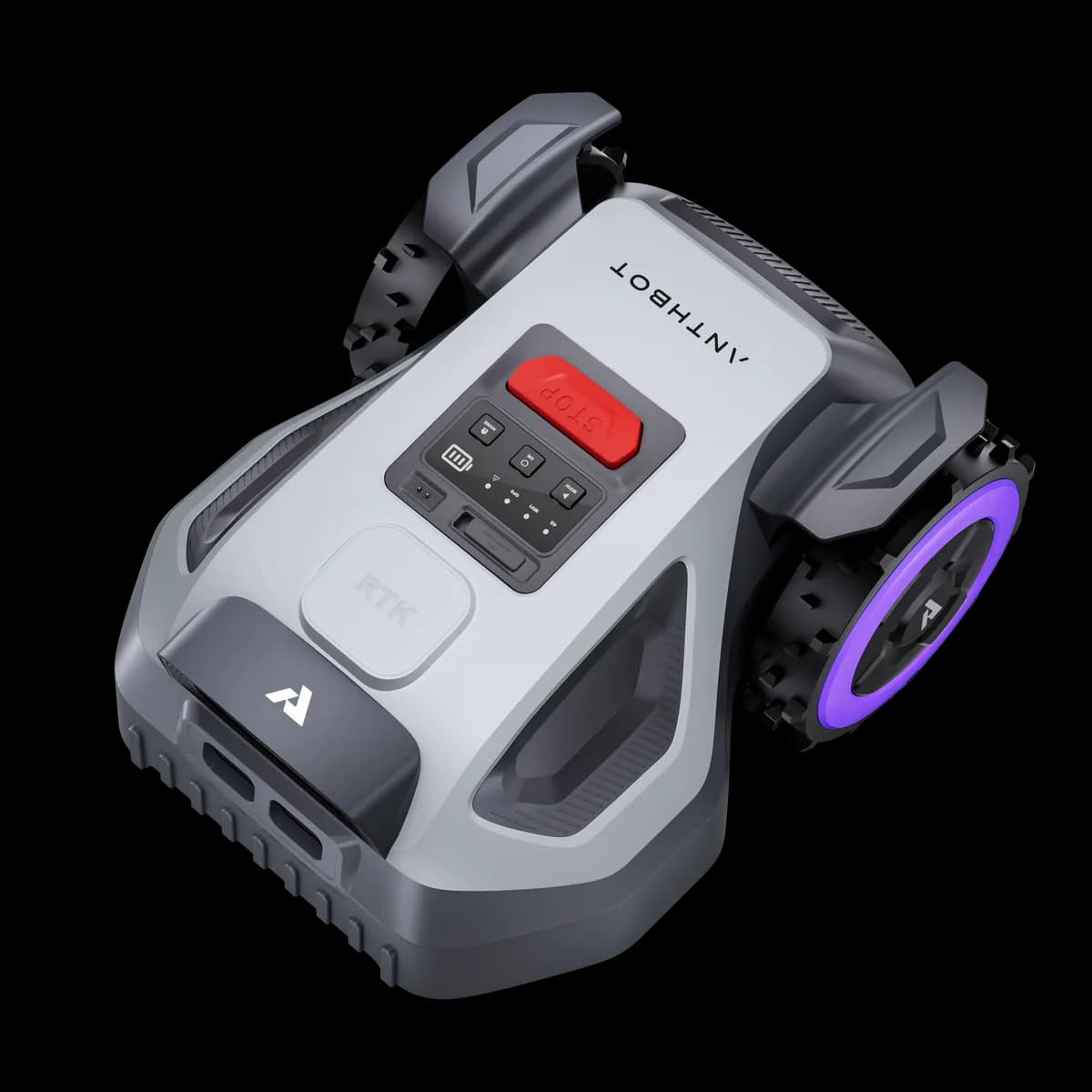
1. Best overall under $1,000 — ANTHBOT M9 — Score 75
ANTHBOT M9 robot lawn mower
Nav: RTK + AI vision, with 4G · Area: 0.25 ac · Slope: 45% · Cut: 1.18–2.76 in · Zones: 20 · Drive: RWD · Wire-free · Edges: ok — check current pricing
The least expensive wire-free mower we track, and it outscores every other pick on this list. The M9 pairs RTK positioning with AI-vision obstacle avoidance, adds 4G for anti-theft tracking, and carries a 3-year warranty on a quarter acre with a 45% slope rating and a cut that drops to 1.18 inches for low Bermuda. Where ANTHBOT's network RTK coverage reaches, it needs no station; elsewhere, you site the RTK reference station that comes in the box. The honest caveats: satellite positioning wants open sky, so under trees the LiDAR O1000 below is the safer buy; its edges are rated "okay"; and ANTHBOT is new to the US, with a short service track record. For an open, small, flat-to-gentle lawn, it's the best value here. Read the full review.
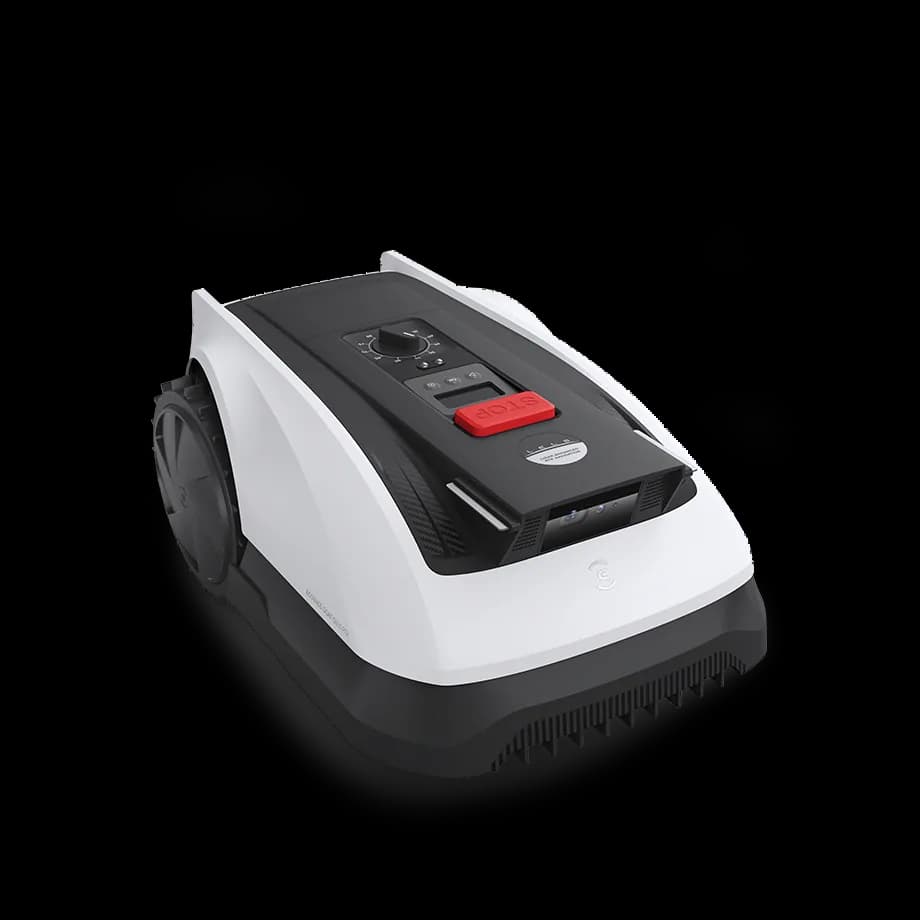
2. Best for shade — ECOVACS GOAT O1000 LiDAR PRO — Score 72
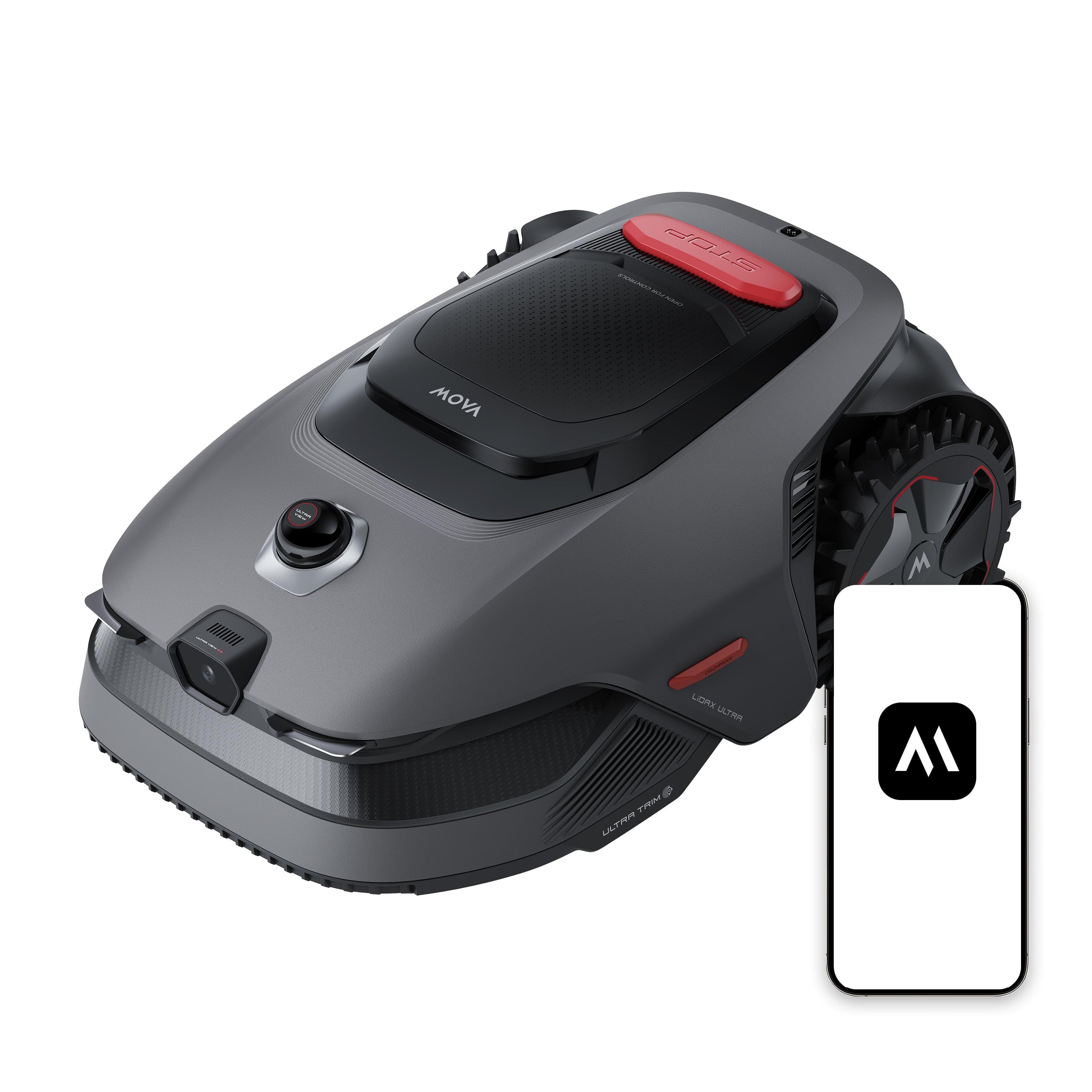
ECOVACS GOAT O1000 LiDAR PRO robot lawn mower
Nav: LiDAR + AI vision (no antenna) · Area: 0.25 ac · Slope: 45% · Cut: 1.18–3.15 in · Zones: 16 · Drive: RWD · Wire-free · Edges: good — check current pricing
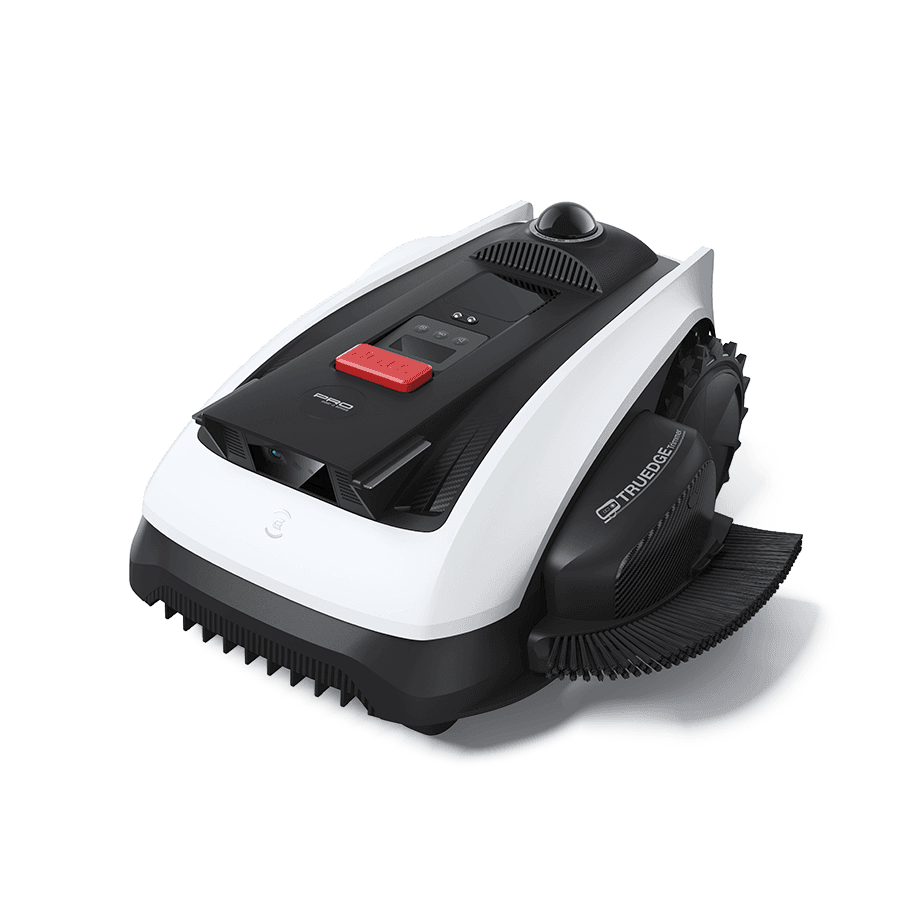
The pick for a shaded small yard. The O1000 pairs LiDAR navigation with genuinely good edge cutting — a combination that normally lives well above this budget, and that only the MOVA LiDAX Ultra 1000 below matches here. LiDAR maps your yard in 3D and doesn't need a clear view of the sky, so it works under tree cover and in shade where the satellite-positioned M9 and Navimow models drift, and it does it with no antenna to mount. Edges are rated "good" (TruEdge-class trimming), so you're left with less to touch up by hand than with the M9. The honest caveats: it's rear-wheel drive, capped at 0.25 acre and 45% grade, and the base configuration skips 4G cellular theft tracking. It also sits under $1,000 only on sale as of September 2026 (ECOVACS's own list price is well above the cap); if the sale ends it moves above this budget and the MOVA LiDAX Ultra 1000 below becomes the LiDAR pick. Read the full review.
Nav: LiDAR + AI vision (no antenna) · Area: 0.25 ac · Slope: 45% · Cut: 1.18–3.93 in · Zones: 150 · Drive: RWD · Wire-free · Edges: good — check current pricing
The closest thing to the O1000 in this budget, and the pick if you want LiDAR plus a cellular link. Like the O1000 it maps with a laser, so it works in shade and under trees with no antenna to mount, and its edges are rated "good." It adds 4G anti-theft tracking, a 3-year warranty and a taller 3.93-inch maximum cut height, which suits St. Augustine kept long. Why it ranks below the O1000: a slightly lower Score, a narrower deck, a brand still building its US track record, and MOVA does not rate it for wet-grass mowing. It is rear-wheel drive, capped at 0.25 acre and 45% grade. Read the full review.
Nav: NetRTK + vision · Area: 0.15 ac · Slope: 45% · Cut: 2.00–3.60 in · Zones: 20 · Drive: AWD · Wire-free · Edges: ok — check current pricing
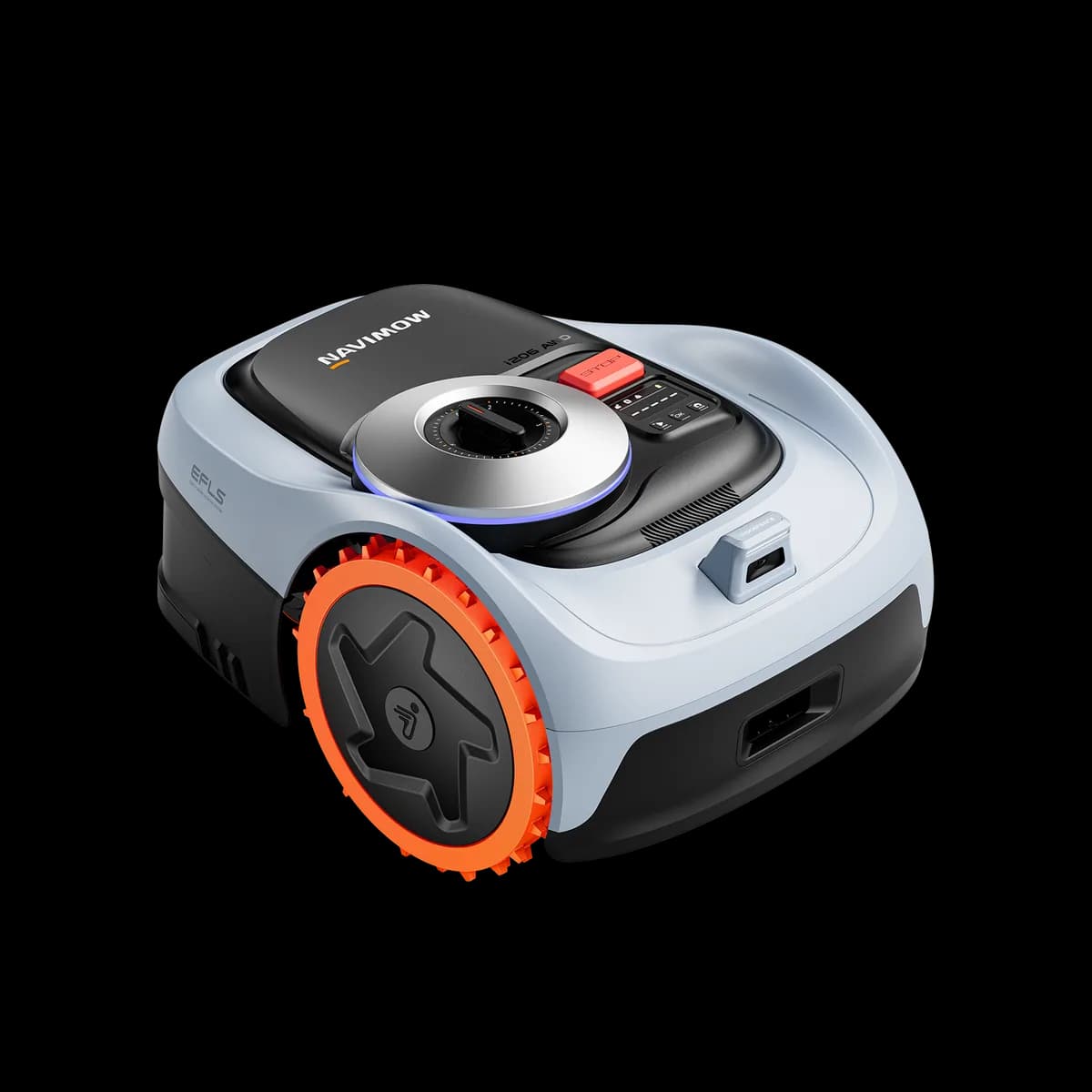
All-wheel drive at this price, on a very small lawn. The i206 AWD drives all four wheels on a 45% slope rating across 0.15 acre, with network RTK plus vision, 4G tracking, and a 3-year warranty. Where Navimow's Network RTK reaches, it needs no antenna; elsewhere, the included antenna needs a clear view of the sky. The caveats: 0.15 acre is small even for this tier, its cut starts at 2.0 inches (too tall for low Bermuda), and satellite positioning makes it a poor tree-cover pick. For a tiny lawn with a damp slope, where traction matters more than capacity, it's the budget AWD answer. Read the full review.
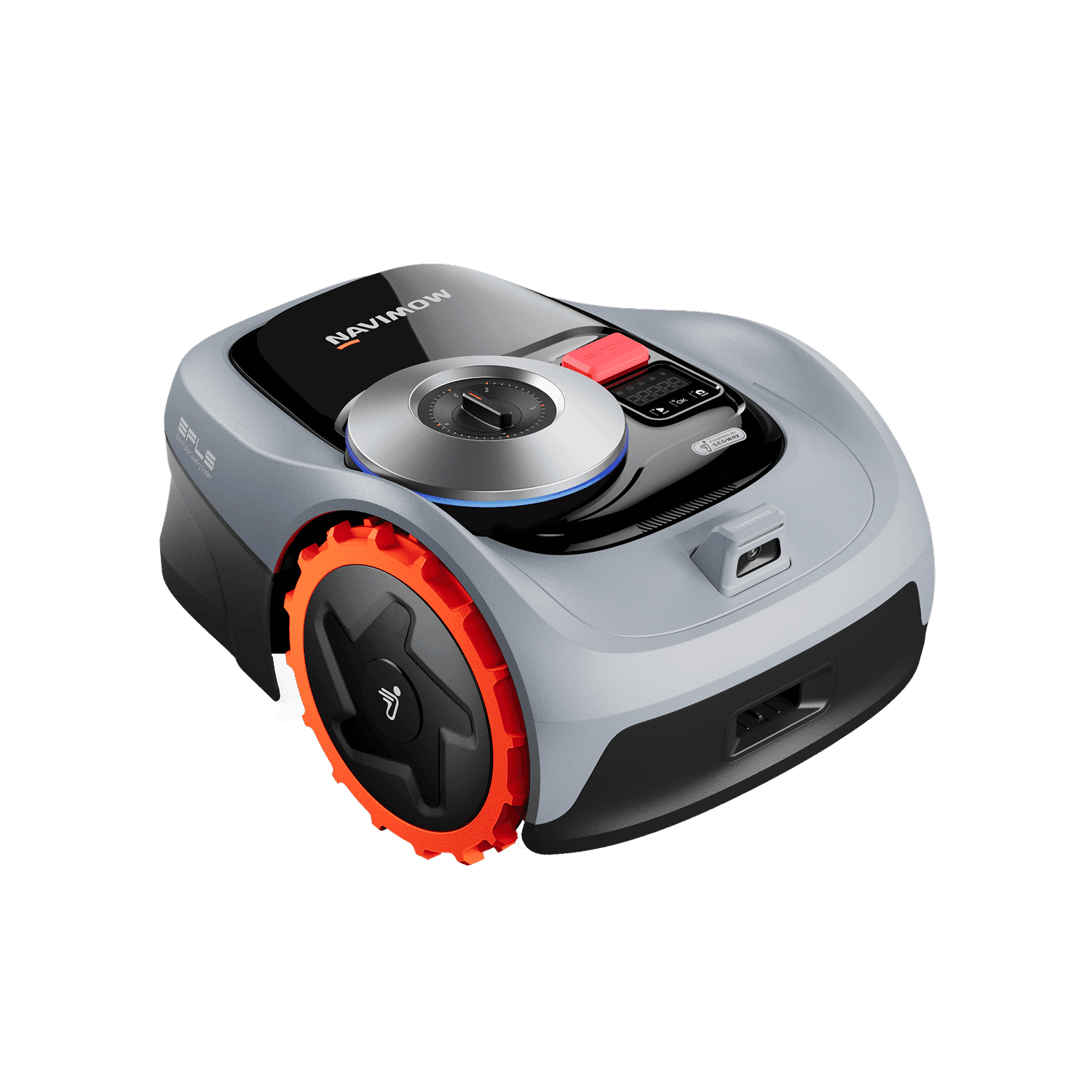
A low-cost wire-free entry point for a tiny lawn. The i105N brings RTK-plus-vision navigation, very quiet operation (~58 dB), and app control to a tiny 0.13-acre (roughly 1/8 acre), flat, open yard. It's the right tool for a genuinely small, simple lawn where you want to skip the wire. Be clear-eyed about the limits, though: that 1/8-acre capacity is the smallest here, it's rated to just 30% grade, it's RWD, and — like the M9 — its satellite positioning wants sky and signal, so it's not a tree-cover pick. If your lawn is small, flat, and open, it's one of the cheapest ways into wire-free mowing. Read the full review.
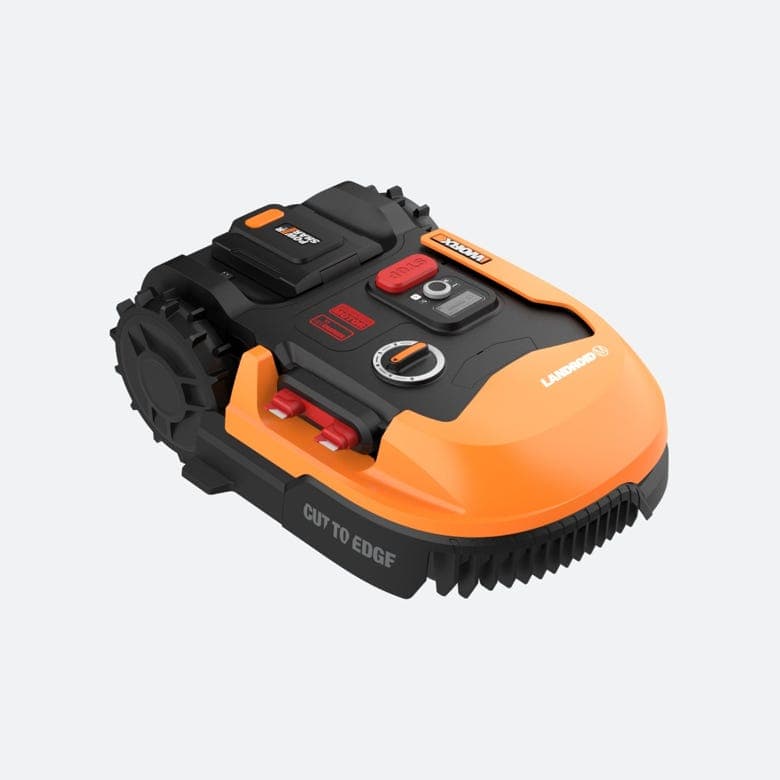
MowScout Score: 55/100 · Nav: boundary wire · Area: 0.25 ac · Slope: 30% · Drive: RWD · Needs a wire — check current pricing
The budget floor, and the one exception to the wire-free story. The Landroid M is the cheapest way into robot mowing for a small yard — a proven platform with modular add-ons and a light, easy-to-handle body. The honest trade is the setup: it needs a buried or staked boundary wire around the entire yard and every bed, and it has only basic obstacle avoidance by default. It's RWD, rated to 30% grade and 0.25 acre, with "okay" edges. Buy it if the rock-bottom price is decisive and you don't mind installing the wire. Otherwise, the wire-free ANTHBOT M9 skips the wire for a little more. For shade, the ECOVACS GOAT O1000 adds LiDAR navigation; check live deals before choosing. Read the full review.
Moved above this budget. Three former picks now sit above $1,000: the eufy E15 (vision, 0.2 acre), priced well above this budget; the Segway Navimow i110N, just above $1,000 at its regular price; and the Mammotion YUKA mini 2, which is also out of stock at every US retailer we track. Also under $1,000 but not ranked here: the Sunseeker X3 Plus (0.3 acre, good edges) and the ECOVACS GOAT O1000 RTK, both of which need an RTK antenna under open sky. For the next tier up, see best robot mowers under $1,500.
Under-$1,000 picks at a glance
Every figure is a manufacturer rating or verified street price, paired with the MowScout Score. Slope numbers are dry-condition ceilings — subtract headroom for wet grass.
⚠ Listed for reference, not as picks. Our latest verification found the YUKA mini 2 above the $1,000 line and out of stock across the US retailers we track, the Eufy E15 priced well above this budget, and (in September 2026) the Navimow i110N at a regular price just above $1,000. Each returns to the list if it comes back inside it.
Prices move constantly in this tier, so we deliberately do not freeze figures here — see current deals for live pricing, and each model page for its verification date. If your budget stretches, best robot mowers under $1,500 covers the next tier up.
Is a cheap robot mower worth it — and when to spend more
For the right yard, absolutely. If your lawn is a small, flat-to-gentle quarter acre with reasonable sky or light tree cover, a budget-tier GOAT O1000 does the same core job as a flagship costing several times more: it keeps your grass cut on a schedule without you touching it. The budget tier has quietly absorbed the features that used to justify premium prices — LiDAR, AI vision, app mapping, anti-theft tracking — so you are no longer paying four figures just to skip a boundary wire. Against the running cost of a gas mower or a lawn service, a sub-$1,000 robot mower on a small lawn is an easy financial case; our guide on whether robot mowers are worth it in 2026 and the cost breakdown go deeper on the math.
You should spend more when your yard demands something the budget tier structurally can't provide, and there are three clear triggers. Slope: anything past ~45% grade requires an AWD machine rated higher, and those start above $1,000 — the MOVA LiDAX Ultra 2000 AWD is the lowest-priced 80% model we track, above the $1,500 tier. Area: past a quarter acre, budget mowers fall behind; a half-acre-plus lawn wants a GOAT A2000/A3000 or a large-lot Navimow. Navigation redundancy: if your yard mixes dense canopy, structures, and open sky, the single-sensor budget models will each hit a blind spot, and a fusion mower earns its premium by covering them. Below those triggers, spending more mostly buys headroom you won't use.
Who should skip the budget tier entirely
Not every yard fits under $1,000, and it's cheaper to know that before you buy than after. Skip the budget picks and size up if any of these describe you:
You have real slopes (past ~45% grade). Every sub-$1,000 mower is rated to 45% at most, and all but the tiny i206 AWD are rear- or two-wheel drive. A hill
will beach an RWD mower that reads fine on paper, especially when the grass is damp. Go straight to best mowers for hills.
Your lawn is bigger than a quarter acre. The ceiling here is 0.25 acre, and that's an ideal-conditions
number. A third of an acre or more needs a mid-tier machine — start with best under $1,500.
You have heavy tree cover and want the most reliable navigation. LiDAR (the O1000, MOVA LiDAX Ultra 1000) handles shade
well for the price, but if your lot is both wooded and large or steep, single-sensor budget nav will struggle; a fusion model is the safer buy. See best under trees.
You want proven multi-season reliability with dealer support. The budget brands are capable but newer;
if a long track record and a service network matter most, that's a premium, wired-platform decision, not a budget one.
Common mistakes buying a budget robot mower
Buying satellite navigation for a shaded yard. The ANTHBOT M9 and Navimow i105N are quiet and cheap, but RTK and NetRTK need sky and
signal. Under a canopy they drift. If you have trees, choose LiDAR (GOAT O1000, MOVA LiDAX Ultra 1000) instead.
Ignoring the RWD slope ceiling. Rated slope is a dry-grass number. An RWD mower rated to 30-45% will
spin out well below that on a wet morning. Measure your steepest section and leave headroom — or size up to AWD.
Undersizing on area. Max area is a ceiling, not a daily target. On a full quarter acre with obstacles
and zones, a 0.25-acre-rated mower falls behind. If your lawn is near a model's limit, treat that model as too small.
Overlooking the WORX wire. The Landroid looks like the obvious budget win until you price the
afternoon of wire installation and the lack of obstacle avoidance. Compare it honestly against a wire-free pick before committing.
Expecting flagship edges. Even the "good" budget edge cutters leave a thin border strip, and the "okay"
ones leave more. Plan on occasional hand-trimming regardless of price.
Frequently asked questions
What's the best robot lawn mower under $1,000 in 2026? The ANTHBOT M9. It outscores every other pick on this list, it's the least expensive wire-free mower we track, and it adds 4G theft tracking plus a 3-year warranty on a quarter acre. It positions by satellite, so it wants open sky. For a shaded yard, the ECOVACS GOAT O1000 LiDAR PRO pairs LiDAR navigation (which works under tree cover with no antenna) with genuinely good edge cutting, and only the MOVA LiDAX Ultra 1000 matches that combination here. The O1000 sits under $1,000 only on sale (ECOVACS's own list price is well above the cap), so verify before buying.
Can you get a wire-free robot mower under $1,000? Yes — only the WORX Landroid M still uses a buried perimeter wire. The ANTHBOT M9 pairs RTK with vision, the ECOVACS GOAT O1000 and the MOVA LiDAX Ultra 1000 use LiDAR plus vision, and the Segway Navimow i105N uses NetRTK plus vision. So dropping the wire no longer costs a premium; the compromises show up in drivetrain, area, and slope instead. Our latest price checks found the YUKA mini 2, the Eufy E15 and the Navimow i110N above the $1,000 line.
What do you give up by staying under $1,000? Three things, mostly. First, drivetrain: every sub-$1,000 model except the tiny Navimow i206 AWD is rear- or two-wheel drive, and all of them are rated to 45% grade at most, so they are flat-to-gentle machines, not hill climbers. Second, capacity: all of them top out at 0.3 acre or less. Third, navigation tier and edges: you get one primary sensor rather than the redundant tri-fusion of flagships, and edges range from good (GOAT O1000, MOVA LiDAX Ultra 1000) to just okay (ANTHBOT M9, Navimow i105N, WORX). The WORX also asks you to install a boundary wire.
Can a budget robot mower handle a sloped yard? Only gentle ones. Every mower under $1,000 except the tiny Navimow i206 AWD is rear- or two-wheel drive, which caps real-world traction. The ECOVACS GOAT O1000, MOVA LiDAX Ultra 1000, ANTHBOT M9 and i206 AWD are rated highest at 45% grade; the Navimow i105N, Sunseeker X3 Plus and WORX Landroid are rated to 30%. Those are dry-condition ceilings — wet grass lowers them further. If your yard has slopes past roughly 45%, you need AWD, which starts above this budget; see our best mowers for hills for those picks.
Is the ECOVACS GOAT O1000 really better than the others here? For shaded yards, yes; on an open lawn, the ANTHBOT M9 outscores it and costs less. It's the standout because it brings LiDAR mapping plus TruEdge-class edge trimming at the top of this budget a combination the satellite-positioned budget rivals, the M9 included, don't offer. LiDAR doesn't need a clear view of the sky, so it works under trees where the Navimow NetRTK models drift, and its edges are cleaner than the Navimow's. The MOVA LiDAX Ultra 1000 (Score 71) is the closest rival: LiDAR too, at about the same price while the O1000 is on sale, with 4G and a taller maximum cut height, but a narrower deck and a shorter US track record. On navigation-plus-edges per dollar, the O1000 leads.
Should I buy the WORX Landroid or a wire-free mower for the same money? Weigh the install honestly. The WORX Landroid M is the cheapest way in, but it requires burying or staking a perimeter wire around the whole yard and every bed, and it has only basic obstacle handling. For a little more, the ANTHBOT M9 skips the wire entirely and adds AI-vision obstacle avoidance; the ECOVACS GOAT O1000 and Navimow i105N cost more again. Buy the WORX if the rock-bottom price is decisive and you don't mind the wire; otherwise a wire-free pick is the better long-term value.
Find your match
Budget is only one of the constraints that decide the right robot mower — yard size, slopes, tree cover, and zones all interact with it. This page ranks the sub-$1,000 field; your yard is more specific than a price cap.
The configurator screens your exact area, grade, tree cover, and budget against every model we track, so you don't under-buy an RWD mower for a hill it can't climb — or overpay for capacity a small lawn will never use. Keep reading: the pillar on how robot mower navigation works, the deep dive on RTK vs LiDAR vs vision, and the best wire-free robot mowers if skipping the boundary wire is your priority.
MowScout is reader-supported and may earn a commission from links on this page. Our picks are spec-verified and data-driven — based on published manufacturer specifications and verified US pricing, not hands-on lab testing. Always confirm the current price before buying. See our full disclosure.
Quick answer
ANTHBOT M9 is the current top pick.
This guide ranks only mowers that clear the specific filter for best robot mowers under $1,000. The list is built from verified street prices, rated area, slope rating, navigation type, drive system, zone support, edge behavior, app quality, and the current MowScout Score. The ranking is a starting point, not a universal answer: a mower that looks strong here can still be wrong if your lawn has heavier tree cover, more separated zones, a tighter budget, or terrain that falls outside the assumptions of this use case.
Start with the ranked list, then use the yard-fit configurator to check your actual lawn size, slope, sky view, terrain, obstacles, and spending limit. For the broader buying framework, read the robot lawn mower guide.
These rankings start with models that match the page filter, then sort by current MowScout Score and visible specs. Treat the criteria below as hard filters before price or brand preference.
Street price near or below $1,000
Honest setup tradeoffs
Enough capacity for small yards
Ranked picks for this use case
These picks are ranked for best robot mowers under $1,000, not for every possible yard. Read the notes under each mower before clicking through, because the trade-offs are often more important than the rank number.
Rank #1
ANTHBOT M9
Full-band RTK with dual-camera vision, built-in 4G tracking and a 3-year warranty at a budget price.
Score75/100
ANTHBOT M9 belongs in Best Robot Mowers Under $1,000 because it combines hybrid navigation, 0.25 acres of rated coverage, a 45% slope rating, and 20 mapped zones. RWD makes it a better fit for simpler turf. No separate antenna requirement reduces one setup variable.
LiDAR navigation, small-yard pricing, and TruEdge-style trimming make it a strong tree-cover value pick.
Score72/100
ECOVACS GOAT O1000 LiDAR PRO belongs in Best Robot Mowers Under $1,000 because it combines LiDAR navigation, 0.25 acres of rated coverage, a 45% slope rating, and 16 mapped zones. RWD makes it a better fit for simpler turf. No separate antenna requirement reduces one setup variable.
A sub-$1,000-ish LiDAR wire-free option with AI vision, app height control, and compact-yard mapping depth.
Score71/100
MOVA LiDAX Ultra 1000 belongs in Best Robot Mowers Under $1,000 because it combines LiDAR navigation, 0.25 acres of rated coverage, a 45% slope rating, and 150 mapped zones. RWD makes it a better fit for simpler turf. No separate antenna requirement reduces one setup variable.
AWD traction and VisionFence AI obstacle avoidance on the i210 AWD's platform, in a smaller 0.15-acre rating with a 3-year warranty.
Score71/100
Segway Navimow i206 AWD belongs in Best Robot Mowers Under $1,000 because it combines hybrid navigation, 0.15 acres of rated coverage, a 45% slope rating, and 20 mapped zones. AWD/4WD gives it extra traction margin. No separate antenna requirement reduces one setup variable.
RTK positioning with 3D time-of-flight obstacle sensing and TruEdge edge trimming for small, open lawns.
Score71/100
ECOVACS GOAT O1000 RTK belongs in Best Robot Mowers Under $1,000 because it combines hybrid navigation, 0.25 acres of rated coverage, a 45% slope rating, and 1 mapped zones. RWD makes it a better fit for simpler turf. Plan the antenna or base placement carefully.
Use this table to compare the constraints that usually decide whether a robot mower feels effortless or becomes another yard-maintenance chore.
Model
Score
Price
Area
Slope
Navigation
Zones
ANTHBOT M9
75
$699
0.25 acres
45%
hybrid
20
ECOVACS GOAT O1000 LiDAR PRO
72
$999
0.25 acres
45%
lidar
16
MOVA LiDAX Ultra 1000
71
$999
0.25 acres
45%
lidar
150
Segway Navimow i206 AWD
71
$999
0.15 acres
45%
hybrid
20
ECOVACS GOAT O1000 RTK
71
$1,000
0.25 acres
45%
hybrid
1
Fast alternatives
Best price check: ANTHBOT M9 is the lowest-priced mower currently in this filter at $699.
Capacity check: ANTHBOT M9 gives the most area headroom here at 0.25 acres.
Traction check: ANTHBOT M9 has the highest listed slope rating in this set at 45%.
Where to go next
This page narrows the catalog to one use case. Run the configurator before using a deal box, especially if your lawn is close to the limits shown in the spec table.
What's the best robot lawn mower under $1,000 in 2026?
The ANTHBOT M9. It outscores every other pick on this list, it's the least expensive wire-free mower we track, and it adds 4G theft tracking plus a 3-year warranty on a quarter acre. It positions by satellite, so it wants open sky. For a shaded yard, the ECOVACS GOAT O1000 LiDAR PRO pairs LiDAR navigation (which works under tree cover with no antenna) with genuinely good edge cutting, and only the MOVA LiDAX Ultra 1000 matches that combination here. The O1000 sits under $1,000 only on sale (ECOVACS's own list price is well above the cap), so verify before buying.
Can you get a wire-free robot mower under $1,000?
Yes — only the WORX Landroid M still uses a buried perimeter wire. The ANTHBOT M9 pairs RTK with vision, the ECOVACS GOAT O1000 and the MOVA LiDAX Ultra 1000 use LiDAR plus vision, and the Segway Navimow i105N uses NetRTK plus vision. So dropping the wire no longer costs a premium; the compromises show up in drivetrain, area, and slope instead. Our latest price checks found the YUKA mini 2, the Eufy E15 and the Navimow i110N above the $1,000 line, so check current pricing before treating any of them as a budget pick.
What do you give up by staying under $1,000?
Three things, mostly. First, drivetrain: every sub-$1,000 model except the tiny Navimow i206 AWD is rear- or two-wheel drive, and all of them are rated to 45% grade at most, so they are flat-to-gentle machines, not hill climbers. Second, capacity: all of them top out at 0.3 acre or less. Third, navigation tier and edges: you get one primary sensor rather than the redundant tri-fusion of flagships, and edges range from good (GOAT O1000, MOVA LiDAX Ultra 1000) to just okay (ANTHBOT M9, Navimow i105N, WORX). The WORX also asks you to install a boundary wire.
Can a budget robot mower handle a sloped yard?
Only gentle ones. Every mower under $1,000 except the tiny Navimow i206 AWD is rear- or two-wheel drive, which caps real-world traction, and none is rated above a 45% grade: the ECOVACS GOAT O1000, MOVA LiDAX Ultra 1000, ANTHBOT M9 and i206 AWD sit at 45%, while the Navimow i105N, Sunseeker X3 Plus and WORX Landroid are rated to 30%. Those are dry-condition ceilings — wet grass lowers them further. If your yard has slopes past roughly 45%, you need an AWD model rated higher, which starts above this budget; see our best mowers for hills for those picks.
Is the ECOVACS GOAT O1000 really better than the others here?
For shaded yards, yes; on an open lawn, the ANTHBOT M9 outscores it and costs less. It's the standout because it brings LiDAR mapping plus TruEdge-class edge trimming at the top of this budget — a combination the satellite-positioned budget rivals, the M9 included, don't offer. LiDAR doesn't need a clear view of the sky, so it works under trees where the Navimow NetRTK models drift, and its edges are cleaner than the Navimow's. The MOVA LiDAX Ultra 1000 (Score 71) is the closest rival: LiDAR too, at about the same price while the O1000 is on sale, with 4G and a taller maximum cut height, but a narrower deck and a shorter US track record. On navigation-plus-edges per dollar, the O1000 leads.
Should I buy the WORX Landroid or a wire-free mower for the same money?
Weigh the install honestly. The WORX Landroid M is the cheapest way in, but it requires burying or staking a perimeter wire around the whole yard and every bed, and it has only basic obstacle handling. For a little more, the ANTHBOT M9 skips the wire entirely and adds AI-vision obstacle avoidance; the ECOVACS GOAT O1000 and Navimow i105N cost more again. Buy the WORX if the rock-bottom price is decisive and you don't mind the wire; otherwise a wire-free pick is the better long-term value.
What is the best robot mower on this best robot mowers under $1,000 list?
ANTHBOT M9 is the current top pick by MowScout Score among models that pass this page's filter.
Should I choose only by this ranking?
No. This page ranks by one use case. The configurator checks your exact size, slope, tree cover, zones, terrain, obstacles, budget, and priority.
Are prices current?
Each mower record includes a last_verified date. Prices and availability should still be checked before purchase.
Why are some popular models missing?
A model can be absent if it does not pass this page's hard filter, lacks verified pricing, or is a better fit for a different yard constraint.