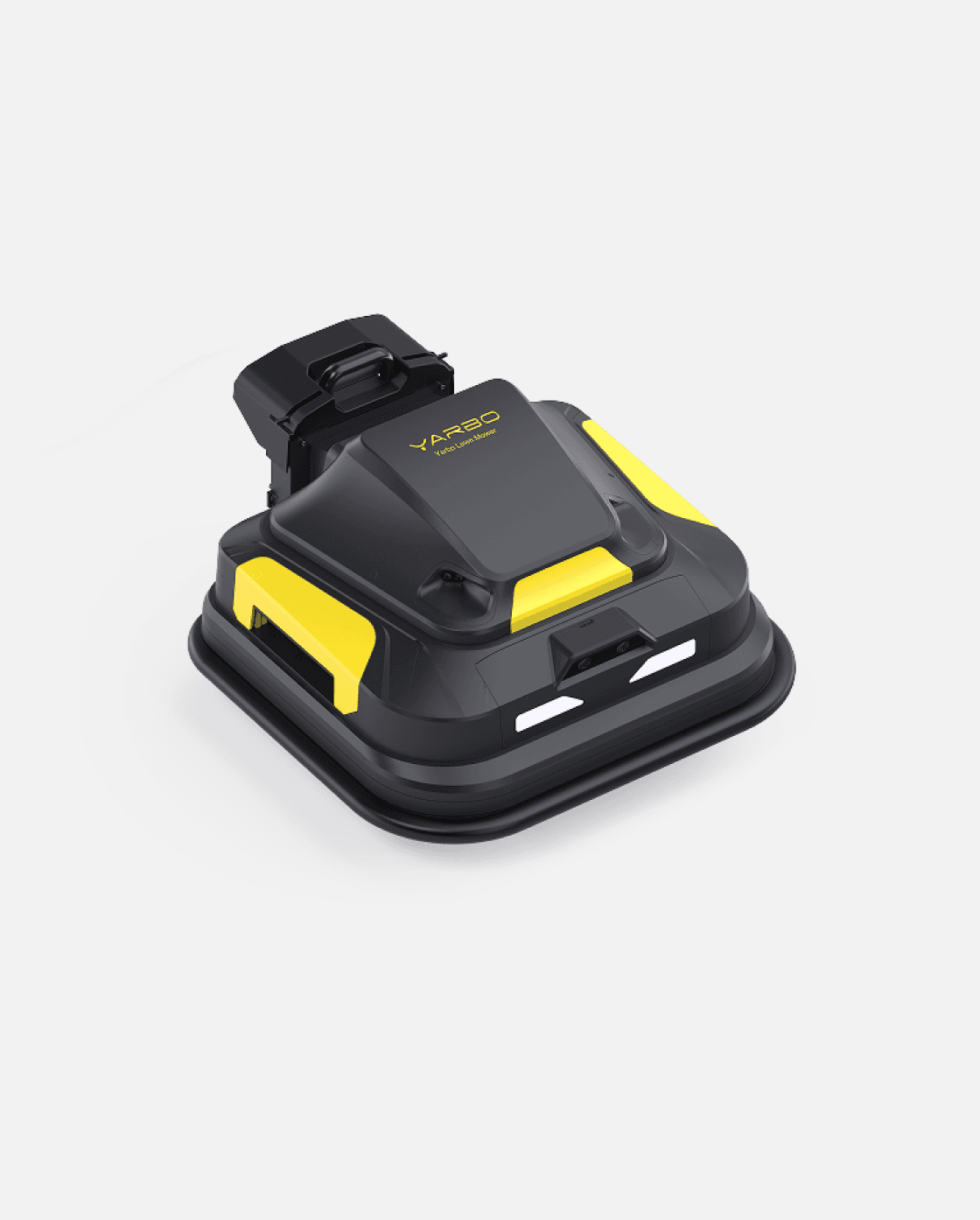
The tracked modular platform fills the missing estate-yard lane with up to 6 acres of coverage, 20-inch cutting width, and 70% slope capability.
Last verified 2026-09-13
Strong89/100
Affiliate disclosure: MowScout earns a commission when you buy through our links, including as an Amazon Associate. Recommendations are based on yard fit, verified specs, and score methodology; commission can only break close ties among genuine fits.
MowScout verdict
Buy if your yard matches its strengths.
Buy if
The tracked modular platform fills the missing estate-yard lane with up to 6 acres of coverage, 20-inch cutting width, and 70% slope capability.
Skip if
High bundle price, heavy hardware, and a complex RTK/data-center setup make it overkill for ordinary suburban lawns.
Pros
The tracked modular platform fills the missing estate-yard lane with up to 6 acres of coverage, 20-inch cutting width, and 70% slope capability.
Cons
High bundle price, heavy hardware, and a complex RTK/data-center setup make it overkill for ordinary suburban lawns.
Fit check
What to verify before buying
Yarbo Lawn Mower Pro is a $5,999 mower rated for 6 acres, 70% slopes, and 99 mapped zones. MowScout has a separate daily coverage figure of 1.7 acres. Treat those as fit limits, not marketing decoration: mowable grass, wet turns, separate zones, and spring growth should all leave enough headroom for the mower to run without repeated rescues.
Navigation is hybrid and drive is TRACKS. This model avoids a separate antenna requirement, which lowers one common setup hurdle, but dock location, mapping quality, and first-week no-go-zone tuning still matter. AI vision obstacle avoidance is useful around toys, furniture, pets, and landscaping clutter, but it should be treated as a risk reducer rather than a safety guarantee.If your hardest constraint is slope or rough turf, compare the terrain guide; if setup simplicity is the priority, compare similar no-wire picks before choosing by price.
Before checkout, confirm the exact SKU, included dock or base hardware, return window, warranty path, and current price at one of the listed retailers: Yarbo, Amazon, Best Buy, Walmart. Robot mower bundles change quickly, so the retailer page should match this review's capacity, model name, and last-verified source trail.
In the current catalog, this model sits in the estate price tier with 4 other verified mowers nearby. Its rough price-per-rated-acre is $1,000, which is useful when comparing against a larger mower that may look expensive upfront but cheaper per acre. Mammotion LUBA 3 AWD 5000H is the closest lower-priced comparison point at $3,299.
The capacity math is 1.7 acres per day against a 6 acres max rating. That matters when the lawn is close to the published limit, because a mower that can only cover the whole yard under ideal conditions has less margin after rain delays, fast spring growth, dull blades, or separated zones. This is already one of the highest-capacity models in the current catalog.
The tags attached to this record are estate yards, large yards, steep slopes, tracked drive. Use those as a sanity check: if your yard does not match at least two of those tags, the MowScout Score is less important than fit. A high-scoring mower in the wrong category still creates rescue trips, missed strips, and support friction.
Its current MowScout Score is 89, which should be read beside the hard specs rather than treated as a standalone verdict. The strongest reasons to keep this mower on a shortlist are its hybridnavigation, TRACKS drive, 70% slope rating, and 99zone support. The biggest reason to remove it is any yard fact that directly conflicts with those numbers.
Cutting fit is also specific: this deck is 20 inches wide and adjusts from 0.8 to 4 inches. Edge behavior is rated "ok", so expect some trim work around fences, walls, beds, curbs, and tight hardscape. That is normal for robot mowers, but it matters more if your lawn has a lot of border length relative to open grass.
Ownership details point to 2 years of warranty coverage, app quality rated 3out of 5, connectivity through wifi, bt, 4g, 60 dB of listed noise, and 95 lb of chassis weight. Those are practical details for storage, night schedules, support expectations, and whether the mower will be easy to lift, clean, or move between areas.
The source trail for this record was last checked on 2026-09-13 and includes Yarbo Lawn Mower Pro product page, Yarbo Lawn Mower Pro product data (SKU), Yarbo product highlights, Yarbo robot lawn mower collection, Yarbo NetRTK overview, Walmart Yarbo Lawn Mower Pro listing, Amazon Yarbo Lawn Mower Pro listing. Use those sources to resolve any mismatch between this review, a retailer title, and a bundled accessory listing. If the source page changes the area rating, slope rating, included hardware, or warranty terms, update the shortlist before clicking through. Keep a screenshot of the retailer specs for returns.
These checks are not MowScout lab results. They are manufacturer-claim caveats or third-party measured data we track so readers can separate dry-condition ratings from real-yard expectations.
Coverage reality
manufacturer caveat
Rated / claimed
6 acres max area
Observed / caveat
1.7 acres/day published for the Y Series
Large estates may mow on a multi-day rotation. The 6-acre maximum is not the same as daily maintained coverage in fast spring growth.
The Yarbo Robot Lawn Mower is, strictly speaking, not a robot lawn mower. It's the mowing configuration of a tracked, RTK/GPS-guided outdoor robotics platform — a single rubber-tracked base that swaps attachments to mow in summer, blow snow in winter, and clear leaves in fall. When you buy "the Yarbo mower" you are buying into a modular system whose mower module is one of several, and whose Pro package is the entry point rather than the whole story. On our spec-verified scoring it lands at a strong 89/100 — one of the highest estate-machine numbers on our board — and that headline deserves an immediate asterisk. The score rewards raw capability: multi-acre coverage, a wide deck, steep-slope tracked traction, and the most capable navigation class we model. What a spec score can't price in is that this is a heavy, expensive, prosumer machine that bridges toward the commercial world, from a young brand, sold as one piece of a pricier ecosystem. This is a data-driven review, not a hands-on one: MowScout scores are computed from verified manufacturer and retailer specifications and cross-checked against primary sources, which we cite. We have not run this unit ourselves, and we won't pretend otherwise.
### MowScout Score: 89/100 — Best for multi-acre estates, hills, and year-round modular use The verdict, in three lines: The Yarbo is one of the most capable estate machines on our board — rubber-track traction to a 70% grade, a wide 20-inch deck, up to a rated six acres, and hybrid RTK-plus-vision navigation — and it's genuinely a platform, not just a mower: the same base does snow and leaves. But it's built for a narrow, well-heeled buyer: at an estate-tier price for the Pro package alone, with a 95-pound tracked base, a Data Center RTK base to site wherever Yarbo's free NetRTK doesn't reach, a middling app, and a young-brand track record, it is dramatic overkill for any ordinary suburban lawn. Match it to a real estate — acreage, slopes, rough ground, or a desire for one year-round outdoor robot — and the score is earned. Ask it to mow a flat quarter-acre and you've massively overspent. Street price:\$5,999 for the Lawn Mower Pro at Yarbo's US store (regular price), estate tier, verified September 13, 2026 — check today's price on Amazon. Disclosure: MowScout earns an affiliate commission if you buy through our links. It never changes the score or the verdict — see our disclosure. Yarbo is sold direct and through major retailers; we route to the best available offer. → Check today's Yarbo deal on Amazon
Yarbo modular robot lawn mower
Image: MowScout does not shoot original hardware photos, and we never AI-generate product images.
Reasons to buy / reasons to skip
Reasons to buy
✅ Real multi-acre capability. A rated 6 acres of coverage and a wide 20-inch deck put it in estate territory that most residential robots can't touch.
✅ Tracked all-wheel traction to 70%. Rubber tracks grip hills, ruts, and rough or damp turf better than tires — the whole reason a tracked platform exists.
✅ It's a year-round platform, not just a mower. The same base swaps to a snow blower and a leaf blower (sold separately), so one machine works across seasons.
✅ Capable hybrid navigation and broad availability. Hybrid RTK/GPS-plus-AI-vision positioning, plus retail presence across Yarbo, Amazon, Best Buy, and Walmart — unusual for a machine this specialized.
Reasons to skip
❌ The price, plainly. The Pro package alone makes it the most expensive machine on our board — and additional modules cost more.
❌ Overkill for normal yards. A 95-pound tracked base and an RTK antenna are far more machine than a flat, cleanly-bordered suburban lawn needs.
❌ Throughput trails the headline. ~1.7 acres/day against a 6-acre map means big estates mow on a multi-day rotation, not a nightly whole-property finish.
❌ Young brand, middling app, 2-year warranty. Yarbo lacks a long field track record, the app scores 3/5, and coverage trails 3-year-warranty rivals.
What it actually is: a modular tracked platform, not a lawn robot
Start here, because it reframes everything below. Yarbo doesn't sell a lawn mower the way eufy or Segway does. It sells a tracked, self-driving outdoor robot base — think of a small, rubber-tracked crawler with an RTK/GPS brain — and then sells attachments that bolt onto it. The one this review scores is the mower module. The same base accepts a snow blower and a leaf/blower module, each purchased separately. That modularity is the product's whole thesis: instead of buying a mower, a snow thrower, and a leaf blower, you buy one autonomous chassis and swap heads with the seasons.
Mechanically, that pushes it out of the "lawn robot" category and toward prosumer outdoor robotics. The tracks (not wheels) are the tell — they exist to move a heavy tool across uneven, sloped, sometimes-soft ground with traction that tires can't match. The trade is weight (~95 lb), a real setup (a docking station, plus the included Data Center RTK base sited under open sky wherever Yarbo's NetRTK doesn't reach), and a price that reads as absurd next to an entry-level vision mower and entirely reasonable next to a dedicated snow-and-mow-and-leaf toolset. If you evaluate the mower module in isolation, you'll conclude it's expensive. Evaluate the platform across three seasons and the math changes. Both readings are legitimate — which one applies depends entirely on whether you'll use more than one module.
This also places the Yarbo squarely on the prosumer-to-commercial bridge. It's too much machine for a normal lawn but a fraction of the cost and complexity of a true dealer-quoted commercial mower. If you searched "commercial robot mower" for your estate, HOA common, or campus green, you probably want a machine like this rather than a $30,000–$60,000 commercial platform — a decision we lay out in full in our commercial and large-estate guide.
The weighted scorecard: how the MowScout Score is built
The MowScout Score is computed from verified specs across seven weighted pillars (see how we score). Here's exactly where the Yarbo's points come from — and where the honest caveats live that a spec score can't capture.
Pillar
Score
Why it lands here
Navigation reliability
25 / 25
Full marks — the most capable class we model. Hybrid RTK/GPS-plus-AI-vision positioning earns the top base, and AI-vision obstacle detection adds the maximum boost. The honest asterisk: "capable on paper" is doing work here. We haven't watched it hold RTK lock under an estate's tree lines ourselves, and hybrid systems still depend on sky view, plus a well-sited Data Center base wherever NetRTK doesn't reach.
Terrain capability
18 / 20
Near the top of the field. A 70% slope rating plus rubber-track traction is genuine hill-and-rough-ground capability; it trails only 80–100%-rated rivals. This is the pillar the Yarbo is built to win.
Coverage & speed
10 / 15
Strong capacity — the 6-acre rating maxes the capacity sub-score — dinged on throughput. At ~1.7 acres/day against a 6-acre map, big estates mow on a multi-day rotation, so speed relative to capacity pulls this pillar down.
Setup & ease
13 / 15
Better than it was: Yarbo's included NetRTK means no RTK antenna to site where coverage reaches, but the hardware is heavy (~95 lb) and the app scores only 3/5. Capable, not casual — plan for a real install.
Cutting quality & edges
9 / 10
High. A wide 20-inch deck and a broad 0.8–4.0-inch height range carry this pillar. Only the "ok"-rated edge cutting keeps it off a perfect 10.
Value
10 / 10
Maxed — but read carefully. On a dollars-per-acre basis (the verified street price above spread over six rated acres) it's efficient, which is what the value formula rewards. In absolute dollars it's the most expensive machine on our board, and that's the number your wallet actually feels. Both things are true.
Reliability & support
4 / 5
A 2-year warranty and four-retailer availability, minus a point because Yarbo is a young brand without the decade-long field record of a Husqvarna.
Total
89 / 100
One of the most capable multi-acre machines on our board on paper — held back in the real world by absolute price, a young-brand track record, and the fact that the mower is one module of a pricier system.
The scorecard tells the real story: Navigation (25/25) and Value-per-acre (10/10) are maxed; Setup (13/15) reflects the heavy, involved install. That gap is the Yarbo — extraordinary capability and acreage efficiency, bought with a heavy, involved install and a sticker only an estate justifies. The score is high because the specs are genuinely strong; the caveats are high because a spec score can't price a brand's youth or a four-figure checkout.
Verified specifications
Spec
Yarbo Lawn Mower Pro
MowScout Score
89 / 100
Best for
Multi-acre estates, hills/rough terrain, year-round modular use
Max area (rated)
6 acres
Daily coverage
~1.7 acres/day
Navigation
Hybrid — RTK/GPS + AI vision
Base station / antenna
Charging base required; the included Data Center RTK base needs open-sky siting only outside NetRTK coverage
Drive
Rubber tracks
Max slope
70%
Cutting width
20 in
Cut height
0.8 – 4.0 in
Zones
Effectively unlimited (99)
Obstacle avoidance
AI vision
Anti-theft / GPS
Yes / Yes
Connectivity
Wi-Fi, Bluetooth, 4G
Edge cutting
Ok (leaves a border strip)
Noise
~60 dB (listed spec — not a MowScout measurement)
Weight
~95 lb
App quality
3 / 5
Warranty
2 years
Retail
Yarbo, Amazon, Best Buy, Walmart
Platform note
Modular — snow blower & leaf blower modules sold separately
Strengths: traction, deck, acreage, and one machine for three seasons
Tracked traction is the headline. Almost every residential robot mower rolls on wheels; the Yarbo runs on rubber tracks, which is a meaningful mechanical difference, not a marketing flourish. Tracks distribute the machine's considerable weight over a larger contact patch and bite into loose, uneven, or damp ground far better than tires. That's why the platform can carry a genuine 70% slope rating and take on the kind of rutted, hilly, off-camber estate turf that stalls a lightweight wheeled mower. If your property has real grade or rough ground, this is the capability you're paying for, and it's rare in the residential catalog.
The deck and coverage match the ambition. A 20-inch cutting width is wide by robot-mower standards — most competitors sit between 8 and 16 inches — so the Yarbo covers more ground per pass, which matters when you're maintaining acres rather than a lawn. Paired with a rated 6-acre capacity and a broad 0.8–4.0-inch cut-height range that suits both closely-kept cool-season turf and taller warm-season grasses, it's genuinely sized for estate work. Effectively unlimited zoning (99) means you can carve a sprawling, irregular property into as many managed areas as it takes.
Navigation is the top class we model. The Yarbo uses hybrid positioning — RTK/GPS for centimeter-grade location plus AI vision for obstacle detection — which is the most capable navigation category on our board and the reason it maxes the navigation pillar. In principle, hybrid systems get the open-sky accuracy of RTK with a vision backstop for obstacles and edges. We flag "in principle" deliberately: hybrid still leans on sky view (and on siting the Data Center base where NetRTK doesn't reach), and we score the architecture, not a test we ran.
And it's a platform, not a single-purpose tool. The strength that no other mower on our board can claim: the same tracked base swaps to a snow blower and a leaf blower. For a buyer who would otherwise own three seasonal machines, one autonomous chassis that mows, throws snow, and clears leaves is a legitimately different value proposition — and the honest core of the Yarbo's case.
Honest limits and cons
The price is the first and biggest. For the Lawn Mower Pro package alone, the Yarbo is the most expensive machine we track, and that's before you add a second or third module. The value pillar reads 10/10 only because it's normalized to dollars-per-acre; in absolute dollars this is a serious outlay, and if you'll only ever mow, you're paying a platform premium for capability a cheaper single-purpose mower could deliver.
It's the wrong tool for a normal yard. A 95-pound tracked base, a Data Center base to mount under open sky wherever NetRTK doesn't reach, and a real setup process are all overkill on a flat, tidy suburban lawn. Small-yard owners get faster, cheaper, easier results from a wire-free vision or LiDAR mower — see our large-yard and 2-acre rankings to gauge whether your property is even in Yarbo territory.
Throughput trails the headline number. The 6-acre figure is a rated maximum, and we treat it as a manufacturer claim. Daily coverage lands near 1.7 acres, so a truly large estate mows on a multi-day rotation rather than finishing every night — normal at this scale, but plan around daily throughput, not the ceiling. We keep an ongoing note on rated-versus-observed figures in our measured-data explainer.
The ecosystem cost is real. The modular design is a strength and a cost: every additional capability (snow, leaves) is another module to buy. Budget the platform honestly across the modules you'll actually use, not just the mower.
And it's a young brand with a middling app and a 2-year warranty. Yarbo doesn't yet have the multi-year field record of an established maker, the app scores only 3/5, and the 2-year warranty trails 3-year rivals. None of these is disqualifying on their own, but stacked on a four-figure machine that lives and works outdoors, they're reasons to buy from a retailer with a clean return window.
Who it's for — and who should skip it
Buy it if your property is a genuine multi-acre estate, HOA common, or campus green; if you have real slopes or rough terrain where tracked traction earns its keep; or if you specifically want one year-round outdoor robot that mows, throws snow, and clears leaves from a single base. For those buyers the 89/100 is honestly earned — there are few residential machines that can do this work at all, and fewer that fold three seasons into one chassis. If steep grade is your defining constraint, cross-check the hills rankings and our AWD picks too.
Skip it if your lawn is under about half an acre, flat-to-gentle, and cleanly bordered — the Yarbo is far more machine (and money) than you need, and you'll use a sliver of its capability. Skip it, too, if you'll only ever mow: the platform premium only pays off across multiple modules or serious acreage. And skip it if a young-brand track record or a 2-year warranty on a four-figure purchase is a dealbreaker for you; an established maker may let you sleep better. Not sure which camp you're in? Our configurator filters by your exact size, slope, and terrain, and the pillar guide explains where a machine like this fits.
How it compares: Lymow One Plus, the estate premium field, and the commercial bridge
vs Lymow One Plus — the other tracked estate platform. This is the closest tracked-platform cross-shop, but the July data correction changed the acreage story. The Lymow undercuts the Yarbo on price, records 1.73 acres of max and daily coverage in our current catalog, claims an extreme 100% slope rating, and carries a longer 3-year warranty. The Yarbo is the true multi-acre machine: a claimed 6-acre map, about 1.7 acres/day of throughput, a modular ecosystem that also handles snow and leaves, and broad retail availability (Yarbo, Amazon, Best Buy, Walmart) against Lymow's direct-only sales. Both are young brands, and both headline slope figures deserve the "claim, not measurement" caveat. Choose Lymow for a high-upside acre-plus tracked residential mower; choose Yarbo for a genuine multi-acre or year-round platform.
vs the estate premium field — Mammotion LUBA 3 5000H (out of stock), Segway Navimow X330, Dreame A3 AWD Pro. These are the wheeled premium mowers a Yarbo shopper will cross-shop, and they all sit well below it on price. The LUBA 3 5000H brings all-wheel drive to an 80% grade, "good"-rated edges, and a 3-year warranty, but tops out near 1.25 acres. The Navimow X330 maps about 1 acre with a 50% 2WD traction-control rating. The Dreame A3 pairs 4WD and an 80% grade with LiDAR navigation and "good" edges, but sits under an acre (~0.87). Every one of them is a strong choice for a 1-acre-ish, hilly-but-not-huge yard — and all are cheaper than the Yarbo. The Yarbo separates from this pack only on acreage, deck width, tracked traction, and the modular platform. If your property is genuinely large or rough, that gap is the point; if it's a big-but-manageable acre, one of these wheeled rivals is the smarter spend. For how their navigation types differ, see RTK vs LiDAR vs vision.
vs going commercial — don't, probably. If you arrived here from a "commercial robot mower" search, the most useful comparison is against a true commercial platform, and the Yarbo usually wins it by default: prosumer estate machines run about \$2,000–\$5,000 at retail, while dealer-quoted commercial units land in the tens of thousands. For a single-digit-acre estate with no grounds crew, the Yarbo (or a wheeled AWD rival) is the honest answer. We spell out that whole decision in the commercial and large-estate guide.
Value and price: read the two numbers separately
The Yarbo forces you to hold two truths at once. On dollars-per-acre, it's efficient — its price spread over six rated acres of capacity, which is why the value pillar reads 10/10 and why, for a large estate, it can genuinely undercut the alternatives (a landscaping contract, a commercial machine, or three separate seasonal tools). On absolute dollars, it's the priciest machine we track, and that's the figure your budget actually confronts at checkout — plus the modular reality that snow and leaf capability are additional purchases.
The reconciliation is simple: the Yarbo is good value for the right buyer and poor value for the wrong one. Own real acreage, or plan to use multiple modules, and the per-acre and per-season math works. Own a normal lawn and want only to mow, and you're paying a steep premium for capability you won't touch. For the full ownership picture across purchase, blades, battery, and years, our worth-it analysis lays out the long-run case: are robot mowers worth it? As with any lithium machine, the battery is the long-term wildcard — an out-of-warranty pack is the biggest single repair risk, and the 2-year warranty covers only the early window.
Setup and navigation: plan for a real install
Be honest with yourself about the install. Unlike the five-minute, wire-free vision mowers at the budget end of the market, the Yarbo is a prosumer setup: you place a base station, then either rely on Yarbo's free NetRTK where its coverage reaches or mount and site the included Data Center RTK base with a clear view of the sky, position the 95-pound tracked base, and map the property. The payoff is centimeter-grade RTK positioning across acres with an AI-vision layer for obstacles — capable navigation that a wire or a single camera can't match on a large, complex estate. But it asks more of you up front than any small-yard robot, which is why the setup pillar (13/15) still trails its best marks. Budget an afternoon, follow Yarbo's Data Center placement guidance for open sky, and treat the 3/5 app as functional rather than polished. On the right property, the capability is worth the effort; on the wrong one, it's friction you didn't need to buy.
The safety and security basics are covered for a machine that lives outdoors: anti-theft with GPS tracking, and Wi-Fi, Bluetooth, and 4G connectivity, where the cellular link enables real-world location tracking and remote alerts on a four-figure asset. Noise is listed at about 60 dB — treat that as a manufacturer spec, not a MowScout measurement, since we don't test hardware.
The verdict, restated
The Yarbo is one of the most capable estate machines on our 2026 board, and its 89/100 reflects genuine, verifiable strength: rubber-track traction to a 70% grade, a wide 20-inch deck, up to a rated six acres, top-class hybrid navigation, and — uniquely — a modular platform whose base also throws snow and clears leaves. But the number is only honest with its asterisks read aloud: this is a heavy, expensive, prosumer machine with a real install, a middling app, a young-brand track record, a 2-year warranty, and a mower that is one module of a pricier system. Match it to a genuine estate — acreage, slopes, rough ground, or a year-round modular need — and it's a standout with little competition. Point it at a flat suburban quarter-acre and you've badly overspent. Buy the platform for the property it was built for, not for a lawn an entry-level robot would handle.
Is the Yarbo a lawn mower, or a whole system? It's a system, and this is the single most important thing to understand before you shop it. Yarbo sells one tracked, RTK/GPS-guided robot base that swaps attachments: the mowing module reviewed here, plus a snow blower and a leaf blower sold separately. So the "Yarbo Robot Lawn Mower" is really the base platform configured to mow. That's a genuine advantage if you want one machine to mow in summer, clear snow in winter, and blow leaves in fall — but it also means the Lawn Mower Pro package is only the entry point to a modular ecosystem, and each additional module is another purchase. Buy it as a platform, not as a cheap lawn robot, or the math will surprise you.
Is the Yarbo's 6-acre coverage rating real? Six acres is Yarbo's rated maximum mapped area, and we treat it as a manufacturer claim, not a MowScout measurement — we score from specs and have not run this unit. The number to plan around is daily coverage: our data lists roughly 1.7 acres per day. On a genuinely large estate that means the Yarbo mows on a multi-day rotation rather than finishing your whole property every night, which is normal for machines at this scale but easy to misread from the headline spec. Size the purchase to daily throughput, not the 6-acre ceiling. Our large-estate guide walks through how to do that math.
What slope and terrain can the Yarbo handle? Yarbo rates the platform to a 70% grade, which is steep, and it drives on rubber tracks rather than wheels. Tracks spread the machine's weight and grip loose, uneven, or damp ground better than tires, which is exactly why a tracked platform exists — hills, ruts, and rough estate turf are its home. The honest caveat is that a 70% slope rating is a capability ceiling, not a promise for every wet bank or off-camber turn. Believe the drivetrain for real hills, but respect that traction still falls on slick grass.
Who should NOT buy the Yarbo? Anyone with an ordinary suburban lawn. If your yard is under about half an acre, flat-to-gentle, and cleanly bordered, the Yarbo is dramatic overkill — you'd pay four-plus thousand dollars, wrangle a 95-pound tracked base and a prosumer install, and use a fraction of its capability. Small-yard buyers are far better served by a wire-free vision or LiDAR mower for a quarter of the price. The Yarbo earns its keep only on multi-acre estates, HOA commons, and rough or hilly ground where tracked traction and acreage actually matter, or where the snow-and-leaf modules turn one purchase into a year-round outdoor robot.
How does the Yarbo compare to the Lymow One Plus? They're the two tracked estate platforms on our board, but they no longer solve the same acreage problem. The Lymow One Plus is cheaper, records 1.73 acres of max and daily coverage in our current catalog, claims an extreme 100% slope rating, and carries a 3-year warranty. The Yarbo costs substantially more and has a shorter 2-year warranty, but its edge is the multi-acre map, the modular ecosystem — the same base does snow and leaves — and broader retail availability (Yarbo, Amazon, Best Buy, Walmart) versus Lymow's direct-only sales. Choose Lymow for an acre-plus tracked residential mower if you accept young-brand risk; choose Yarbo when the property is genuinely multi-acre or the year-round module system matters.
Is Yarbo a proven brand, and is the warranty enough? Yarbo is a newer entrant, so it doesn't yet have the multi-year field track record of a Husqvarna or the volume history of the established residential brands. That costs it a point in our reliability pillar (4/5) despite solid retail availability across Yarbo, Amazon, Best Buy, and Walmart. The warranty is 2 years, which trails the 3-year coverage some rivals (including the Lymow One Plus) offer. On a four-figure modular platform that lives outdoors and works hard, the young-brand track record and the shorter warranty are real considerations — not dealbreakers, but reasons to buy from a retailer with a clean return window and to keep the platform updated.
Does the Yarbo cut a clean edge, or will I still need a trimmer? MowScout rates the Yarbo's edge cutting "ok" — middle of the pack, not best-in-class. Like every robot mower, its blade deck sits inboard of the outer track, so a strip of grass always remains right at walls, fences, and beds, and "ok" means you should expect a slightly wider uncut border than a mower we rate "good" for edges. On a large estate that's rarely a big deal — you're buying it to cut acres, not to manicure a courtyard — but plan on an occasional string-trimmer pass along hard borders. No robot mower fully eliminates edge trimming, and this one doesn't pretend to.
Alternatives worth a look
The other tracked estate platform → Lymow One Plus. Less money, 1.73 acres of catalog max/daily coverage, a 3-year warranty, and a headline 100% slope claim — but direct-only sales, no module ecosystem, and a young support record. The pick if you need a tracked acre-plus residential mower rather than Yarbo's multi-acre platform.
All-wheel drive for a big-but-manageable acre → Mammotion LUBA 3 5000H (out of stock). AWD to 80%, "good" edges, 3-year warranty, ~1.25 acres — cheaper and easier if you don't need tracked traction or 6 acres.
4WD LiDAR premium → Dreame A3 AWD Pro. 4WD to 80% with LiDAR navigation and clean edges under an acre — a strong sub-acre-to-acre alternative.
Antenna-free open-sky acre → Segway Navimow X430. ~1 acre of antenna-free RTK-plus-vision navigation with AWD, for open-sky properties that don't need the Yarbo's scale.
Still weighing it? Start with the configurator to filter by your exact acreage, slope, and terrain, read the large-yard and 2-acre rankings to check whether you're truly in estate territory, and if "commercial robot mower" is what brought you here, our large-estate decision guide will save you a dealer quote.
---
How we know what we know. MowScout is spec-verified and data-driven, not hands-on: our scores are computed from verified manufacturer and retailer specifications, and we have not tested this unit ourselves. The MowScout Score is produced by the same seven-pillar formula applied to every mower on our board. Yarbo is a newer brand, and its performance and coverage figures — including the 6-acre rating and 70% slope — are presented as manufacturer claims, not MowScout measurements; the ~60 dB noise figure is a listed spec. Our data now records the tracked drivetrain directly, and the actual hardware is rubber tracks, disclosed throughout this review. Specs verified against the Yarbo product highlights, the Yarbo robot lawn mower collection, and the Yarbo Amazon listing. Prices as of mid-2026; verify current pricing before buying. This review contains affiliate links — see our disclosure.
Owner reviews
Own this mower? Add field notes.
MowScout separates owner reports from editorial scoring. Submissions are moderated and should include terrain, grass, slope, tree cover, runtime, support, or app details that help another buyer.
Buyer questions
FAQ
Is the Yarbo a lawn mower, or a whole system?
It's a system, and this is the single most important thing to understand before you shop it. Yarbo sells one tracked, RTK/GPS-guided robot base that swaps attachments: the mowing module reviewed here, plus a snow blower and a leaf blower sold separately. So the 'Yarbo Robot Lawn Mower' is really the base platform configured to mow. That's a genuine advantage if you want one machine to mow in summer, clear snow in winter, and blow leaves in fall — but it also means the Lawn Mower Pro package is only the entry point to a modular ecosystem, and each additional module is another purchase. Buy it as a platform, not as a cheap lawn robot, or the math will surprise you.
Is the Yarbo's 6-acre coverage rating real?
Six acres is Yarbo's rated maximum mapped area, and we treat it as a manufacturer claim, not a MowScout measurement — we score from specs and have not run this unit. The number to plan around is daily coverage: our data lists roughly 1.7 acres per day. On a genuinely large estate that means the Yarbo mows on a multi-day rotation rather than finishing your whole property every night, which is normal for machines at this scale but easy to misread from the headline spec. Size the purchase to daily throughput, not the 6-acre ceiling. Our large-estate guide walks through how to do that math.
What slope and terrain can the Yarbo handle?
Yarbo rates the platform to a 70% grade, which is steep, and it drives on rubber tracks rather than wheels. Tracks spread the machine's weight and grip loose, uneven, or damp ground better than tires, which is exactly why a tracked platform exists — hills, ruts, and rough estate turf are its home. The honest caveat is that a 70% slope rating is a capability ceiling, not a promise for every wet bank or off-camber turn. Believe the drivetrain for real hills, but respect that traction still falls on slick grass.
Who should NOT buy the Yarbo?
Anyone with an ordinary suburban lawn. If your yard is under about half an acre, flat-to-gentle, and cleanly bordered, the Yarbo is dramatic overkill — you'd pay four-plus thousand dollars, wrangle a 95-pound tracked base and a prosumer install, and use a fraction of its capability. Small-yard buyers are far better served by a wire-free vision or LiDAR mower for a quarter of the price. The Yarbo earns its keep only on multi-acre estates, HOA commons, and rough or hilly ground where tracked traction and acreage actually matter, or where the snow-and-leaf modules turn one purchase into a year-round outdoor robot.
How does the Yarbo compare to the Lymow One Plus?
They're the two tracked estate platforms on our board, but they no longer solve the same acreage problem. The Lymow One Plus is cheaper, records 1.73 acres of max and daily coverage in our current catalog, claims an extreme 100% slope rating, and carries a 3-year warranty. The Yarbo costs substantially more and has a shorter 2-year warranty, but it remains the true multi-acre platform: a claimed 6-acre map, about 1.7 acres/day of throughput, a modular ecosystem for snow and leaves, and broader retail availability (Yarbo, Amazon, Best Buy, Walmart) versus Lymow's direct-only sales. Choose Lymow for an acre-plus tracked residential mower if you accept young-brand risk; choose Yarbo when the property is genuinely multi-acre or the year-round module system matters.
Is Yarbo a proven brand, and is the warranty enough?
Yarbo is a newer entrant, so it doesn't yet have the multi-year field track record of a Husqvarna or the volume history of the established residential brands. That costs it a point in our reliability pillar (4/5) despite solid retail availability across Yarbo, Amazon, Best Buy, and Walmart. The warranty is 2 years, which trails the 3-year coverage some rivals (including the Lymow One Plus) offer. On a four-figure modular platform that lives outdoors and works hard, the young-brand track record and the shorter warranty are real considerations — not dealbreakers, but reasons to buy from a retailer with a clean return window and to keep the platform updated.
Does the Yarbo cut a clean edge, or will I still need a trimmer?
MowScout rates the Yarbo's edge cutting 'ok' — middle of the pack, not best-in-class. Like every robot mower, its blade deck sits inboard of the outer track, so a strip of grass always remains right at walls, fences, and beds, and 'ok' means you should expect a slightly wider uncut border than a mower we rate 'good' for edges. On a large estate that's rarely a big deal — you're buying it to cut acres, not to manicure a courtyard — but plan on an occasional string-trimmer pass along hard borders. No robot mower fully eliminates edge trimming, and this one doesn't pretend to.
Is the Yarbo Lawn Mower Pro good for slopes?
It is rated for slopes up to 70%, but wet grass, rough terrain, and boundary placement can reduce real-world confidence.
Does the Lawn Mower Pro need boundary wire?
No. This model uses wire-free navigation.
Are these hands-on test results?
This launch review is data-driven and spec-verified. MowScout will label hands-on test results separately when owned testing is complete.