Best Robot Mowers for Rural Yards With No Wi-Fi (2026)
Best robot mowers for rural yards with no Wi-Fi in 2026. Mowing runs onboard — LiDAR and vision map locally, and optional 4G handles theft alerts. Ranked.
Affiliate disclosure: MowScout earns a commission when you buy through our links, including as an Amazon Associate. Recommendations are based on yard fit, verified specs, and score methodology; commission can only break close ties among genuine fits.
Best robot mowers for rural yards with no Wi-Fi (2026)
Quick answer: the best robot mower for a rural, no-Wi-Fi yard is the Dreame A3 AWD Pro 3500 — MowScout Score 89. Its LiDAR system builds and follows a map entirely on the machine, so it needs neither home internet nor a clear-sky satellite fix to navigate up to 0.87 acre on 4WD rated to 80%, and its built-in 4G keeps GPS theft tracking and status alerts running over cellular instead of Wi-Fi. Verify the current price before buying. If that's more than your yard needs, this guide ranks five more picks — from a budget LiDAR mower to a proven boundary-wire workhorse — matched to the reality of an off-grid property.
First, the single most important thing to understand, because most "no Wi-Fi" panic is misplaced: the mowing itself does not need the internet. A robot mower is not a cloud device that stops when the router drops. It stores your map and schedule at the dock and cuts on time regardless of connectivity. What Wi-Fi and 4G actually buy you is remote control — and on a rural lot there's a smart way to get that without home broadband. This is a spec-verified, data-driven guide built from published US specifications and verified pricing, not a hands-on lab test. For the full navigation explainer, start with the pillar, Robot lawn mowers — RTK vs LiDAR vs vision, or jump to the 60-second configurator.
The honest truth: mowing needs no Wi-Fi — here's what does
Let's separate what a robot mower does on its own from what it uses a signal for. Get this right and the whole category stops being confusing.
Runs 100% onboard, no signal required:
Navigation and cutting. LiDAR and vision mowers store the map they built on the machine itself. RTK
mowers use a local base station. Either way, the robot knows where it is and where the boundary is without asking the internet.
The schedule. Once you've set "mow Monday/Wednesday/Friday at 9 a.m.," that lives in the mower's
onboard clock. It leaves the dock, mows, and docks again with the router unplugged.
Obstacle avoidance and rain sensing. The cameras, bump sensors, and rain sensor are all local
hardware. No connection needed.
*Needs a signal (Wi-Fi or 4G):*
App control and monitoring — starting a mow from your phone, watching progress, pausing remotely.
Firmware and map updates — occasional downloads that keep the mower current.
Remote schedule changes — editing times when you're not standing at the dock.
GPS theft alerts — push notifications if the mower leaves a geofence, plus location tracking.
Weather-adaptive scheduling — cloud-linked features that skip mows before rain.
So the honest bottom line: a good robot mower will keep cutting your rural lawn on schedule with zero home Wi-Fi. You give up convenience (remote control) and, on some models, theft alerts — unless you pick a model with 4G, which restores the remote features over cellular. That's the entire game for an off-grid yard, and it's why our picks favor local navigation plus optional 4G.
Setup vs run-time connectivity — where a signal actually matters
The nuance that trips people up: initial setup and daily running have different connectivity needs.
Setup (usually needs Bluetooth or Wi-Fi, once). Nearly every modern mower pairs to your phone over Bluetooth or Wi-Fi at the dock to register the machine, download the current firmware, and let you draw the map. This is a one-time chore — and critically, it does not require home Wi-Fi. If your rural property has no broadband, hold your phone's mobile hotspot next to the dock for the setup session. The mower downloads what it needs, you complete the mapping drive, and from then on it runs on its own. A handful of models will even complete first-time mapping fully over Bluetooth in close range.
Run-time (no signal needed for the core job). After setup, the mower mows on its stored schedule indefinitely with nothing connected. It only reaches for a signal when you ask it to — to check status, change the plan remotely, or receive a theft alert. If you're happy walking to the dock to change settings, you can run a rural mower genuinely offline forever.
This is why the "do I need Wi-Fi?" question has a two-part answer: a little, once, for setup; none, ever, for mowing. And a phone hotspot covers the "once." For a deeper look at the mechanics, see how robot lawn mowers work.
The RTK vs NetRTK signal caveat (this is the rural trap)
Here's the one place a rural buyer can genuinely get burned, and it has nothing to do with home Wi-Fi. It's about how a mower gets its positioning signal. Our full breakdown lives in RTK vs LiDAR vs vision; here's the rural-specific version.
Classic RTK (own base station). A base station on your property receives satellite (GNSS) signals and
sends centimeter-level corrections to the mower over a local radio link. This needs a clear view of the sky — and rural open lots are the best-case scenario for it. It needs no home internet and no cell service for positioning. Open country sky is exactly what RTK wants.
NetRTK (network RTK). Same satellite precision, but the correction data arrives over the **cellular
network instead of a local base station. That's convenient in town — and a real risk in the country. NetRTK needs cellular coverage.** On a dead-zone rural lot, the exact signal it depends on is the one that's missing, and positioning degrades or won't lock.
LiDAR and vision (fully local). These map your yard on the machine using lasers or cameras. They
depend on neither sky nor signal, work under tree cover, and are the most bulletproof choice for a remote property.
The rule for rural buyers: if you have poor cell service, be cautious with NetRTK-only models. The Navimow i105N and i110N navigate with network RTK plus vision and ship no local antenna — excellent on open, well-covered lots, but they lean on a network signal that a dead-zone property may not provide. The i206 AWD and i210 AWD, like the ANTHBOT M9, include a local antenna or reference station for addresses outside network RTK coverage, so on a dead-cell lot they run like classic RTK from a clear-sky mounting spot. The i215 LiDAR maps locally. If your land is a true signal desert with tree cover too, choose onboard LiDAR or vision. If you're troubleshooting an existing satellite mower, our guide on RTK/GPS signal problems and fixes covers the usual culprits.
What we prioritized: local nav + optional 4G
Because "rural with no Wi-Fi" is really two constraints — no home internet and often weak cell — the MowScout picks below weight three things that matter specifically here, tied to our scoring methodology:
Local, signal-independent navigation. LiDAR and vision map on the machine; they don't care about
your router or your cell bars. That's the top filter. Hybrid mowers that include LiDAR/vision (so they're not solely dependent on NetRTK) also qualify.
Optional 4G/LTE. With no home Wi-Fi, a cellular SIM is how you keep the genuinely useful remote
feature — GPS theft tracking — alive on a property where an expensive robot sits outdoors, often out of sight of the house.
Offline-honest reliability. Coverage capacity, slope handling, and a proven ability to run for weeks
untouched, because a rural owner is less likely to be babysitting the app.
We de-prioritized anything that requires a network signal to navigate. That's the whole thesis: on an off-grid lot, the mower should mow no matter what, and connectivity should be a bonus you add over cellular — not a dependency.
The 6 best robot mowers for rural, no-Wi-Fi yards (ranked)
Ranked by fit for an off-grid property — local navigation first, then 4G for tracking, then capability.
New in the catalog (September 2026): two new LiDAR mowers fit an off-grid lot well: the Navimow i215 LiDAR (Score 70) and the LUBA mini 2 AWD (Score 79) both navigate locally with LiDAR plus vision and carry 4G for tracking; both are in the table below. The ANTHBOT M9 (Score 75) and Navimow i206 AWD (Score 71) also have 4G. Where network RTK coverage reaches, they position over the cellular signal; elsewhere, their included antenna or reference station takes over, so either way they want an open-sky lot.
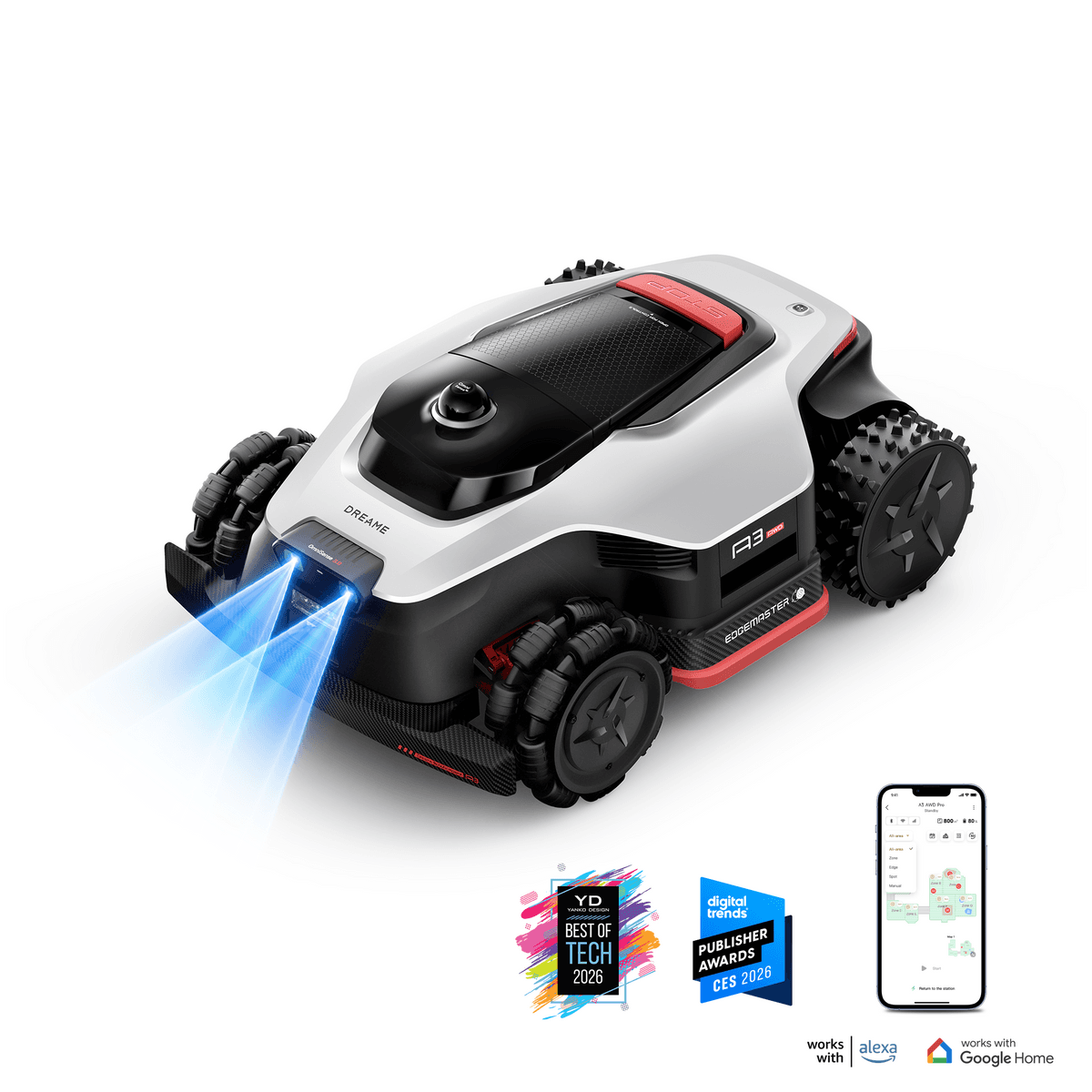
1. Best overall for no Wi-Fi — Dreame A3 AWD Pro 3500
Who it's for: the rural owner who wants local navigation and real capability in one machine. Its LiDAR maps and follows the yard entirely on the mower, so it needs no home internet and no clear-sky satellite fix, and it keeps working under tree cover and beside barns and outbuildings. It adds true 4WD rated to 80% across up to 0.87 acre, good edges, and 4G, so GPS theft tracking and status alerts run over cellular with no Wi-Fi in the picture.
Caveat: it carries a 2-year warranty, and Dreame's US support record is shorter than Mammotion's or Segway's. Full breakdown in the Dreame A3 AWD Pro review. Prefer ECOVACS? The GOAT A3000 LiDAR PRO (score 76) is also fully local with 4G and adds a built-in TruEdge trimmer, but it covers 0.75 acre on rear-wheel drive rated to 50%. On a tighter budget, the GOAT O1000 LiDAR PRO (score 72) uses the same signal-independent LiDAR-plus-vision approach for a shaded quarter acre — just note it has no 4G and no GPS tracking, so on a no-Wi-Fi lot you'd get on-device anti-theft alarms only, not remote alerts.
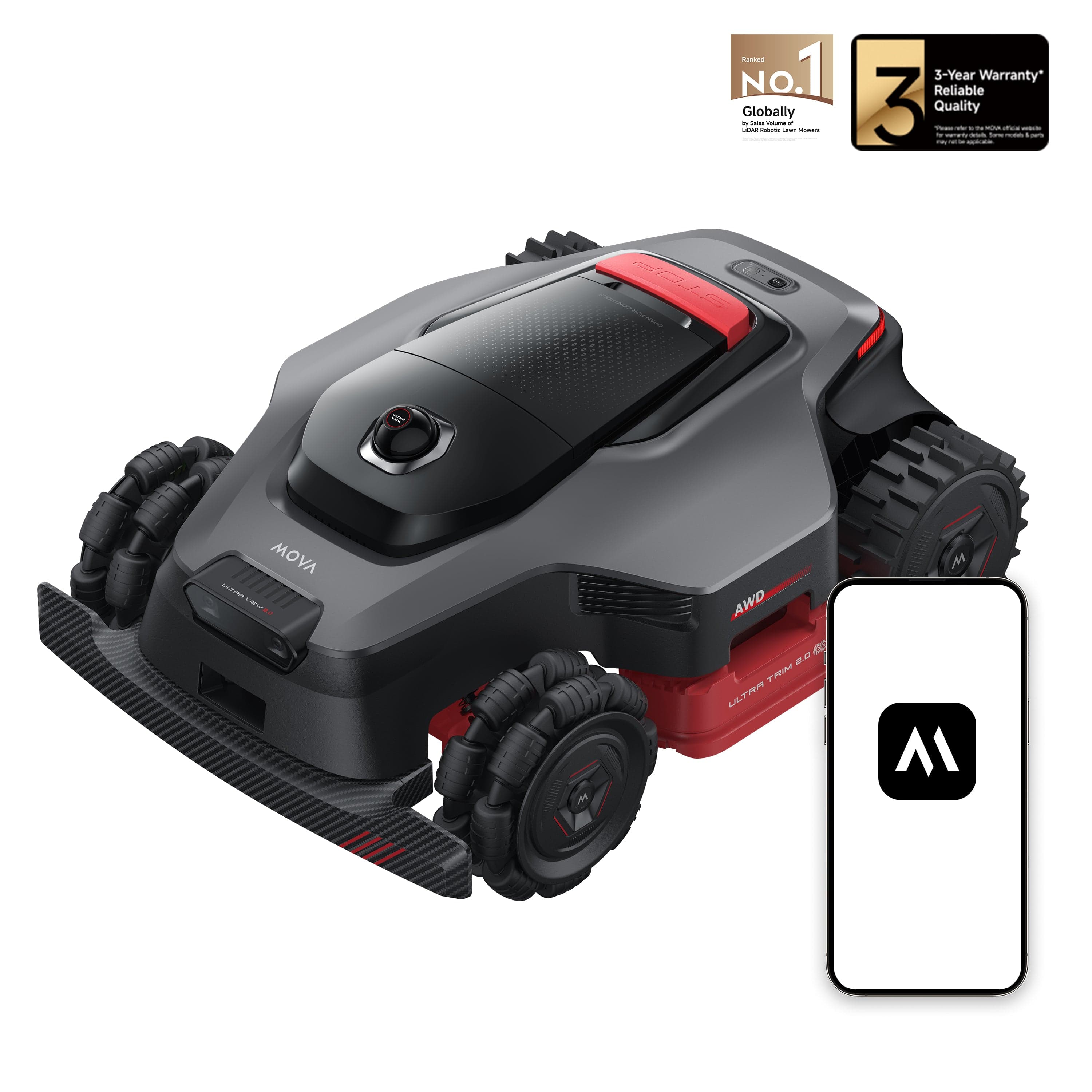
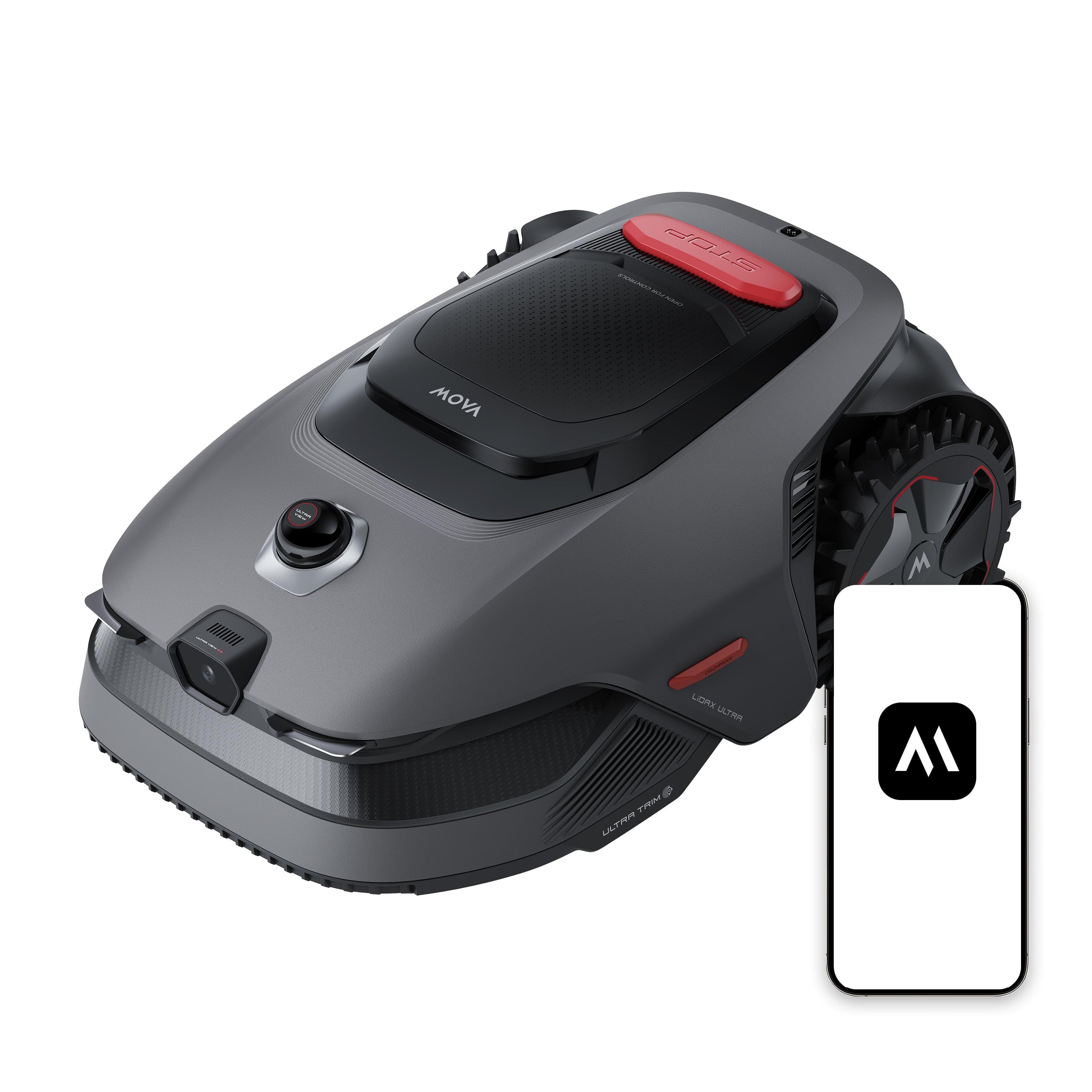
2. Best AWD with fully local navigation — MOVA LiDAX Ultra 3000 AWD
Who it's for: hilly or multi-zone rural lots up to 0.75 acre. It pairs all-wheel drive rated to 80% with LiDAR-plus-vision navigation that runs entirely on the machine, maps up to 150 zones for separate lawns around a house and outbuildings, and carries 4G for theft tracking and a 3-year warranty. It ties the LUBA 3 AWD 3000H below on Score without depending on a network signal, at a lower price.
Caveat: MOVA is a newer US entrant, so its support and parts track record is shorter than Mammotion's or Segway's, and it isn't rated for wet grass. See the MOVA LiDAX Ultra 3000 AWD review. For a half acre, the Ultra 2000 AWD takes the same approach in a smaller size.
3. Best if you also have cell coverage — Mammotion LUBA 3 AWD 3000H
Who it's for: rural properties with open sky and at least some cell coverage. The LUBA 3 brings genuine all-wheel drive to 80% grade, up to 0.75 acre across 30 mapped zones, and 4G for tracking, with Mammotion's more mature app and support behind it. Its primary navigation is onboard LiDAR plus AI vision, which map locally; the NetRTK layer is an accuracy bonus, not a crutch.
Caveat — and it's the honest one for this page: the NetRTK component does want a cellular/network signal to hit its tightest precision. In a genuine dead-cell hollow, you lose that layer — the LiDAR and vision keep it mowing, but you won't get the last increment of RTK accuracy. In a deep signal desert, lean toward the fully local Dreame or MOVA above. See the LUBA 3 AWD 3000H review. Bigger acreage? The LUBA 3 AWD 5000H (1.25 acres) is out of stock at every US retailer we track; see large yards for in-stock options.
4. Best budget local-nav pick — MOVA LiDAX Ultra 1000
Who it's for: the rural owner with a small, shaded-to-open quarter acre who wants signal-independent navigation and 4G tracking at a low price. It pairs LiDAR with AI vision — both fully local, both happy under canopy — cuts good edges, maps up to 150 zones, and carries a 3-year warranty. For a no-Wi-Fi property, the combination of local mapping and a cellular SIM for theft alerts is exactly right at this price.
Caveat: it's rated to a quarter acre and 45% slopes, so it's firmly small-yard territory. Read the MOVA LiDAX Ultra 1000 review. If your rural yard is bigger or steeper, step up to the AWD picks above; if it's tiny and flat, the vision-based eufy below is even simpler.
Who it's for: the off-grid buyer who wants the easiest setup on a flat-to-gentle yard up to 0.2 acre. Pure camera vision means no wire, no antenna, and no satellite dropouts — the mower learns your yard from a quick mapping drive that runs entirely on the machine, which is about as immune to a signal desert as it gets. It also carries 4G, so you still get GPS theft alerts on a property with no home broadband. The app is polished and the edges are clean.
Caveat: vision dislikes steep grades (it tops out around 32%), low light, and heavy wet, and eufy notes it isn't ideal for St. Augustine or dense Zoysia. It's a flat-yard, fair-weather machine — perfect for a simple rural lawn, wrong for rough pasture. Details in the eufy E15 review. Its larger sibling, the eufy E18 (0.3 acre), is out of stock at every US retailer we track.
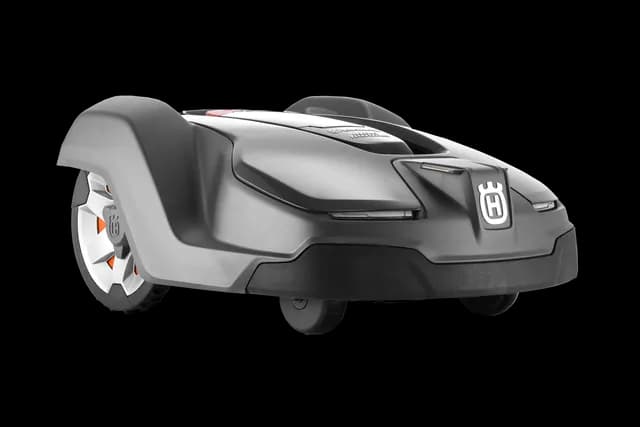
6. Best proven-reliability offline pick — Husqvarna Automower 430X
Who it's for: the rural owner who values a long track record over the latest wire-free tech. A buried boundary wire is, ironically, the most signal-independent boundary system there is — once it's installed, it defines the lawn edge with zero reliance on satellites, cell, or Wi-Fi. The 430X pairs that with a mature onboard schedule, up to 0.8 acre and 45% slopes, and Automower Connect over 4G for GPS theft tracking without home broadband. It's the most boring-reliable way to run a mower on land with no internet.
Caveat: you have to install the wire (a real afternoon of work), obstacle avoidance is basic, and it doesn't solve the no-wire problem newer buyers expect solved. Buy it for the brand trust, dealer network, and offline dependability — not because it's cheap or modern. See the Husqvarna 430X review, and if you're weighing wire vs wire-free, the best wire-free robot mowers guide lays out the trade.
No-Wi-Fi robot mower comparison
Every pick above, then four more local-navigation options: the GOAT A3000 and O1000, the Navimow i215 LiDAR and the LUBA mini 2 AWD. "Nav" notes whether the positioning is local (signal-independent) or needs a signal; "4G?" is what restores remote features and theft alerts without home Wi-Fi.
Read the "Nav" column as your rural risk filter: everything marked local navigates with no signal at all; the LUBA 3's NetRTK layer is a precision bonus that benefits from cell/sky but isn't required for it to mow. The one model here without 4G is the GOAT O1000 — a superb offline mower, but on a no-Wi-Fi lot you'd rely on its on-device anti-theft alarm rather than remote GPS alerts.
Getting a signal to a rural dock (outdoor Wi-Fi and 4G tips)
You don't need connectivity to mow — but if you want app control and theft alerts on an off-grid property, here's how rural owners actually get a signal to the dock without paying for home broadband:
Use a phone hotspot for setup. For the one-time registration, mapping, and firmware download, tether
the dock to your phone's mobile hotspot. It only has to work for that session; the mower runs offline afterward.
Prefer a 4G/LTE mower for permanent remote features. A model with a built-in SIM (every pick here) connects to cellular on its own — no router required. This is the cleanest path to
GPS theft alerts on land with no internet.
Mind the dock's cell reception, not just the house's. Detached and back-of-property docks can sit in
a weaker cell pocket than the house. If theft tracking matters, confirm you have at least one or two bars where the dock will live.
Consider a cellular hotspot or signal booster if you want full Wi-Fi at an outbuilding: a dedicated
LTE hotspot near the dock, or a cellular booster with an outdoor antenna, gives the mower (and you) reliable coverage without wiring broadband to the far corner of the lot.
Position the mower's own antenna for sky, not signal, on RTK models. If you do run a base-station RTK
mower, its precision comes from satellites, so mount the antenna for open sky — that's abundant on most rural lots and needs no internet.
Common mistakes rural buyers make
Assuming no Wi-Fi means no robot mower. The most common myth. The mowing is onboard; a rural lot with
no broadband runs a good mower on schedule indefinitely. Connectivity is optional.
Buying a NetRTK-only mower for a dead-cell property. The rural trap. NetRTK needs the cellular network
for its corrections — pick LiDAR or vision if your coverage is weak. Re-read the signal caveat above.
Skipping 4G, then wanting theft alerts. An expensive robot on remote land is a theft target. If remote
GPS alerts matter, don't buy the one no-4G model and expect them — choose a 4G machine.
Ignoring the drivetrain on acreage. Rural yards trend larger and rougher. Rated slope is a dry-grass
number; RWD mowers (GOAT, eufy) suit flat-to-moderate ground, while genuinely steep or slick terrain wants AWD like the Dreame, the MOVA AWD models or the LUBA 3.
Undersizing for the lot. Max area is a ceiling under good conditions, not a comfortable daily target.
Can a robot mower work without Wi-Fi? Yes. The mowing itself runs entirely onboard — the mower stores your map and schedule at the dock and cuts on time whether or not there's any internet. Wi-Fi (or 4G) is only for app control, firmware updates, remote scheduling, and GPS theft alerts. Pick a model with local navigation (LiDAR or vision) and it will keep mowing on a rural property with no home Wi-Fi at all.
What's the best robot mower for a rural yard with no Wi-Fi? The Dreame A3 AWD Pro 3500 (MowScout Score 89). Its LiDAR system maps and navigates 100% on the machine — no home internet and no clear-sky satellite fix required — it adds 4WD rated to 80% across 0.87 acre, and its built-in 4G keeps GPS theft tracking and status alerts alive over cellular instead of Wi-Fi. Verify the current price before buying.
Do I need Wi-Fi to set up a robot mower? For first-time setup you usually need Bluetooth or Wi-Fi at the dock to pair your phone and download the map and firmware. You don't need home Wi-Fi specifically — a phone mobile hotspot held near the dock works fine for that one-time setup. After it's mapped and updated, the mower runs offline on its own schedule.
Does an RTK robot mower need Wi-Fi or cell service in the country? It depends on the type. Classic RTK uses its own base station and a local radio link to the mower, plus a clear view of the sky for satellites — rural open sky is ideal, and it needs no home internet at all. NetRTK is different: it pulls its correction data over the cellular network, so in a dead-cell rural area it can struggle. Favor onboard LiDAR or vision, or true base-station RTK, over NetRTK-only models.
Which robot mowers should I avoid if I have no Wi-Fi and weak cell service? Network-RTK models with no local fallback, like the Segway Navimow i105N and i110N, lean on a cellular signal for their positioning corrections, and on a rural lot with poor coverage that signal is exactly what's missing. The i206 AWD, i210 AWD and ANTHBOT M9 are different: they include a local antenna or reference station for addresses outside network RTK coverage. For a genuine dead-zone property, a LiDAR or vision mower that maps locally is still the safest bet.
How do I get theft alerts on a mower if there's no Wi-Fi? Choose a model with built-in 4G/LTE. It uses a cellular SIM — separate from your home internet — to send GPS location and anti-theft alerts to the app. The Dreame A3 AWD Pro, the MOVA LiDAX line, the GOAT A3000, the Mammotion LUBA 3, the eufy E15, and the Husqvarna 430X all offer 4G. The budget GOAT O1000 maps locally and mows fine offline, but it has no 4G and no GPS tracking, so you'd get on-device alarms only.
Find your rural, no-Wi-Fi mower
The right off-grid mower comes down to five things about your land: size, slopes, tree cover, cell coverage, and whether you want remote theft alerts. Rather than guess, answer a few quick questions and we'll show the three models that genuinely fit — each with its MowScout Score, navigation type, and current pricing.
MowScout is reader-supported and may earn a commission from links on this page. Our picks are spec-verified and data-driven — based on published manufacturer specifications and verified US pricing, not hands-on lab testing. Always confirm the current price before buying. See our full disclosure.
Related mower reviews
Related pick #1
Dreame A3 AWD Pro 3500
Score89/100
Dreame A3 AWD Pro 3500 belongs in Best Robot Mowers for Rural Yards With No Wi-Fi (2026) because it combines LiDAR navigation, 0.87 acres of rated coverage, a 80% slope rating, and 20 mapped zones. AWD/4WD gives it extra traction margin. No separate antenna requirement reduces one setup variable.
MOVA LiDAX Ultra 3000 AWD belongs in Best Robot Mowers for Rural Yards With No Wi-Fi (2026) because it combines LiDAR navigation, 0.75 acres of rated coverage, a 80% slope rating, and 150 mapped zones. AWD/4WD gives it extra traction margin. No separate antenna requirement reduces one setup variable.
Mammotion LUBA 3 AWD 3000H belongs in Best Robot Mowers for Rural Yards With No Wi-Fi (2026) because it combines hybrid navigation, 0.75 acres of rated coverage, a 80% slope rating, and 30 mapped zones. AWD/4WD gives it extra traction margin. No separate antenna requirement reduces one setup variable.
MOVA LiDAX Ultra 1000 belongs in Best Robot Mowers for Rural Yards With No Wi-Fi (2026) because it combines LiDAR navigation, 0.25 acres of rated coverage, a 45% slope rating, and 150 mapped zones. RWD makes it a better fit for simpler turf. No separate antenna requirement reduces one setup variable.
eufy Robot Lawn Mower E15 belongs in Best Robot Mowers for Rural Yards With No Wi-Fi (2026) because it combines vision navigation, 0.2 acres of rated coverage, a 32% slope rating, and 8 mapped zones. RWD makes it a better fit for simpler turf. No separate antenna requirement reduces one setup variable.
Husqvarna Automower 430X belongs in Best Robot Mowers for Rural Yards With No Wi-Fi (2026) because it combines wire navigation, 0.8 acres of rated coverage, a 45% slope rating, and 5 mapped zones. RWD makes it a better fit for simpler turf. No separate antenna requirement reduces one setup variable.
Robot mowers fail when a generic recommendation misses the hard constraint: slope, tree cover, separated zones, dock placement, or budget. Run the configurator before using any deal box.
Yes. The mowing itself runs entirely onboard — the mower stores your map and schedule at the dock and cuts on time whether or not there's any internet. Wi-Fi (or 4G) is only for app control, firmware updates, remote scheduling, and GPS theft alerts. Pick a model with local navigation (LiDAR or vision) and it will keep mowing on a rural property with no home Wi-Fi at all.
What's the best robot mower for a rural yard with no Wi-Fi?
The Dreame A3 AWD Pro 3500 (MowScout Score 89). Its LiDAR system maps and navigates 100% on the machine — no home internet and no clear-sky satellite fix required — it adds 4WD rated to 80% across 0.87 acre, and its built-in 4G keeps GPS theft tracking and status alerts alive over cellular instead of Wi-Fi. Verify the current price before buying.
Do I need Wi-Fi to set up a robot mower?
For first-time setup you usually need Bluetooth or Wi-Fi at the dock to pair your phone and download the map and firmware. You don't need home Wi-Fi specifically — a phone mobile hotspot held near the dock works fine for that one-time setup. After it's mapped and updated, the mower runs offline on its own schedule.
Does an RTK robot mower need Wi-Fi or cell service in the country?
It depends on the type. Classic RTK uses its own base station and a local radio link to the mower, plus a clear view of the sky for satellites — rural open sky is ideal, and it needs no home internet at all. NetRTK is different: it pulls its correction data over the cellular network, so in a dead-cell rural area it can struggle. Favor onboard LiDAR or vision, or true base-station RTK, over NetRTK-only models.
Which robot mowers should I avoid if I have no Wi-Fi and weak cell service?
Network-RTK models with no local fallback, like the Segway Navimow i105N and i110N, lean on a cellular signal for their positioning corrections, and on a rural lot with poor coverage that signal is exactly what's missing. The i206 AWD, i210 AWD and ANTHBOT M9 are different: they include a local antenna or reference station for addresses outside network RTK coverage. For a genuine dead-zone property, a LiDAR or vision mower that maps locally is still the safest bet.
How do I get theft alerts on a mower if there's no Wi-Fi?
Choose a model with built-in 4G/LTE. It uses a cellular SIM — separate from your home internet — to send GPS location and anti-theft alerts to the app. The Dreame A3 AWD Pro, the MOVA LiDAX line, the GOAT A3000, the Mammotion LUBA 3, the eufy E15, and the Husqvarna 430X all offer 4G. The budget GOAT O1000 maps locally and mows fine offline, but it has no 4G and no GPS tracking, so you'd get on-device alarms only.