Best Robot Mowers for Wet Grass & Rainy Climates (2026)
Only three robot mowers we track are rated by their makers to cut wet grass. For everyone else in a rainy climate, our spec-verified picks for mowers that wait out the rain well: traction, sealing, tunable rain delays and capacity headroom.
Affiliate disclosure: MowScout earns a commission when you buy through our links, including as an Amazon Associate. Recommendations are based on yard fit, verified specs, and score methodology; commission can only break close ties among genuine fits.
Quick answer: only three robot mowers we track are rated by their makers to cut wet grass: the Husqvarna Automower 420 iQ, the Automower 410 iQ and the Yarbo Lawn Mower Pro. Every other maker in our catalog tells owners to mow in dry weather, sends the mower home when it rains, or says nothing either way. So for most people in a rainy climate the useful question is not "which mower cuts wet grass?" but "which mower waits out the rain well and catches up afterwards?" For that, our top pick is the Segway Navimow X450 (MowScout Score 93), or its one-acre sibling, the Navimow X430 (Score 89), for smaller lawns.
This page is spec-verified and data-driven, not hands-on. Every claim below comes from manufacturer specifications, manuals and support pages, and we quote the source where it matters.
Correction, September 2026: this page used to treat most of our catalog as rated for wet grass. We re-checked every model against what its maker actually says, and only three hold up. The page is rebuilt around that.
What makers actually say about wet grass
Read the manuals and support pages and three kinds of statement turn up.
Rated for wet grass or rain. Husqvarna says the 420 iQ "is designed to operate rain or shine", and its
iQ pages say "our mowers operate rain or shine". Yarbo says its Lawn Mower Pro will "cut thick, wet, and overgrown lawns with ease", with mowing in the rain as an option you enable in the app.
Mow dry, and we'll send it home. This is nearly everyone else. Navimow's manuals say "it is recommended to
mow in dry weather". ECOVACS's US support page says "Please try to mow the lawn when it is dry". MOVA's manual warns that "Mowing wet grass can damage your lawn". Mammotion's Rain Protection returns the mower to its station when rain is detected or forecast. eufy, Sunseeker, ANTHBOT, Lymow and WORX all use rain sensors to send the mower home.
Silent. For a few models, the pages we could reach say nothing either way. We don't treat silence as a
rating.
Two kinds of marketing get mistaken for a wet-grass rating. Weatherproofing: an IPX6 body survives rain, and it says nothing about cutting in it. Traction: Mammotion says its all-wheel-drive LUBAs keep "consistent movement—even on wet grass", and MOVA talks up grip on a damp morning. That matters on a slope, but it is a statement about grip, and the same makers' manuals still advise mowing dry.
Why wet grass is the hardest condition for a robot mower
Rain and dew hit a robot mower on four fronts, and only one of them is about waterproofing.
1. Traction falls, and this is the real danger. Wet grass and damp soil are slippery, and a robot mower is a light machine on small wheels. On flat ground that means the occasional slip; on a slope the mower slides, spins or beaches itself. Makers measure slope ratings on dry turf, so a mower rated to 80% can lose grip well below that the moment the hill is wet. Leave 10-20% of headroom below your measured grade for wet conditions.
2. Cut quality drops. Wet grass bends and lies down rather than standing up to meet the blade, so the mower glides over some of it and tears the rest. Torn tips brown and invite disease, the same reason lawn pros tell you to wait for the grass to dry.
3. Clippings clump. Wet clippings stick together and to the deck, leaving clumps on the lawn and packing the underside with a wet mat that has to be cleaned off.
4. Navigation gets harder in the grey. Rainy climates mean overcast skies and low light, which is where pure-vision mowers struggle. LiDAR and multi-sensor systems hold position better when one sensor is compromised by the weather.
If you need a mower rated to cut damp grass
These are the only three models we track whose makers rate them for wet grass or rain.
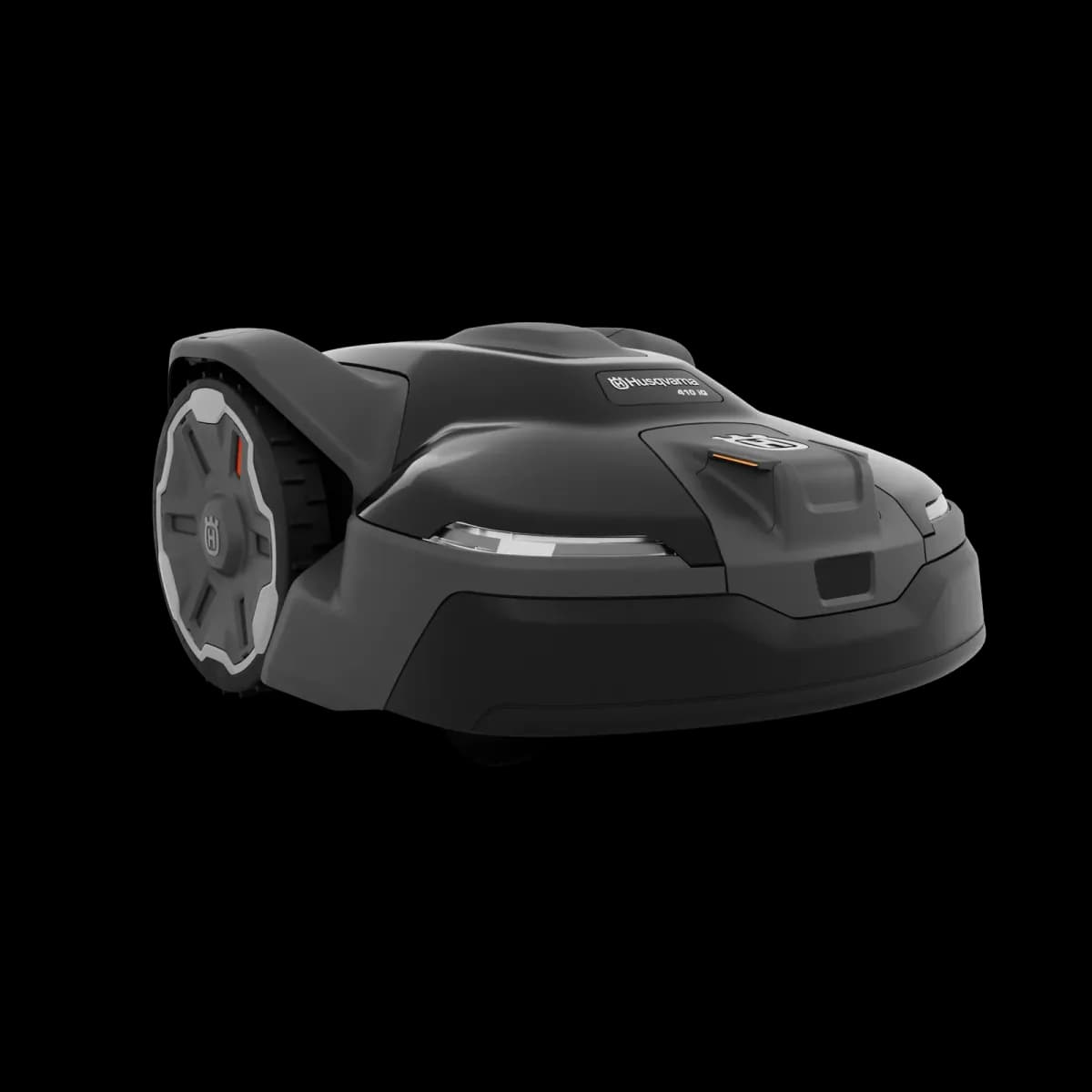
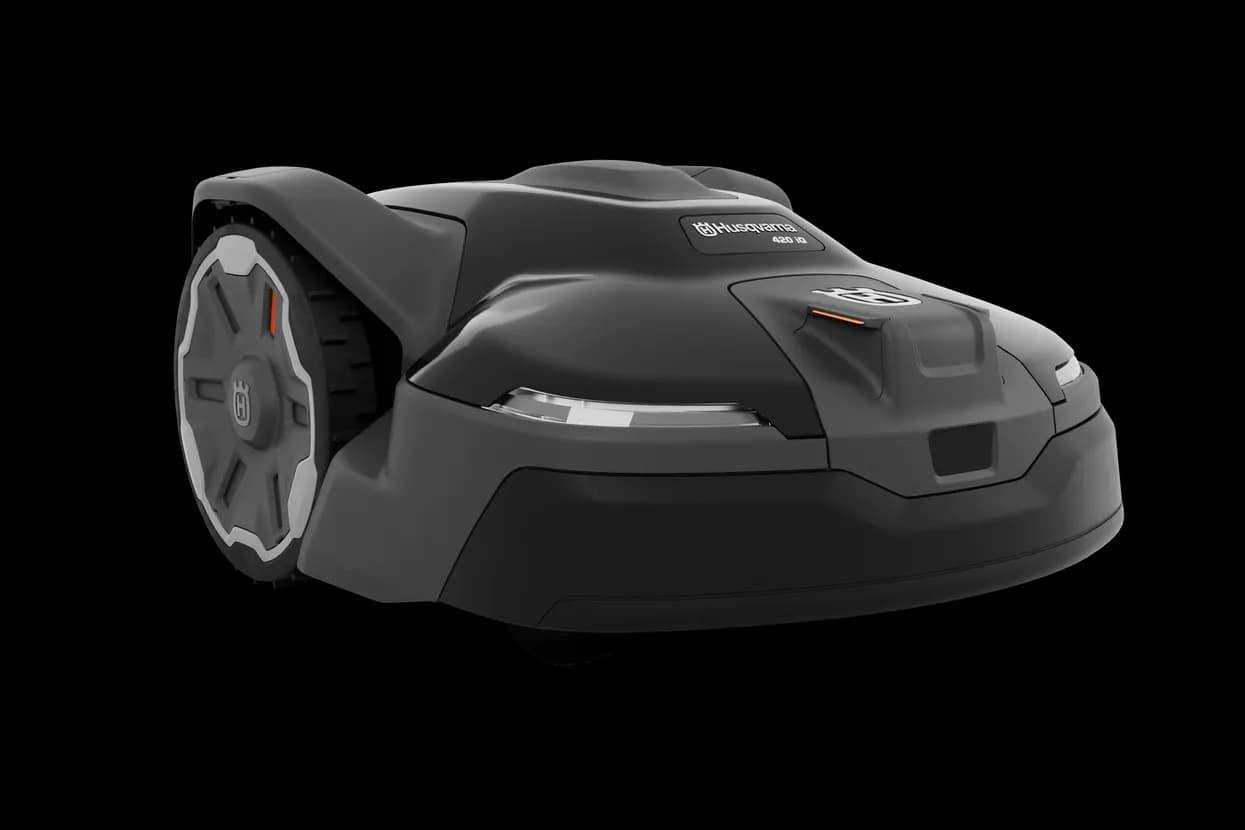
1. Husqvarna Automower 420 iQ — MowScout Score 71
Husqvarna Automower 420 iQ robot lawn mower
The only mainstream wire-free mower whose maker says it is designed to work rain or shine, sized for up to an acre. It navigates with Husqvarna's EPOS satellite system, so there is no boundary wire; it is sealed to IPX5; and it carries a 4-year warranty and Husqvarna's dealer network. The caveats: it is rear-wheel drive with a 45% slope rating, so leave extra headroom on a wet slope; EPOS needs open sky; and its Score reflects mid-tier navigation and terrain, not any weakness in the rain. Read the full review.
2. Husqvarna Automower 410 iQ — MowScout Score 62
Husqvarna Automower 410 iQ robot lawn mower
The same rain-or-shine rating and hardware, sized for half an acre. At current prices the 420 iQ costs about the same, so buy the 410 iQ only if you can find it clearly cheaper. See the 410 iQ.
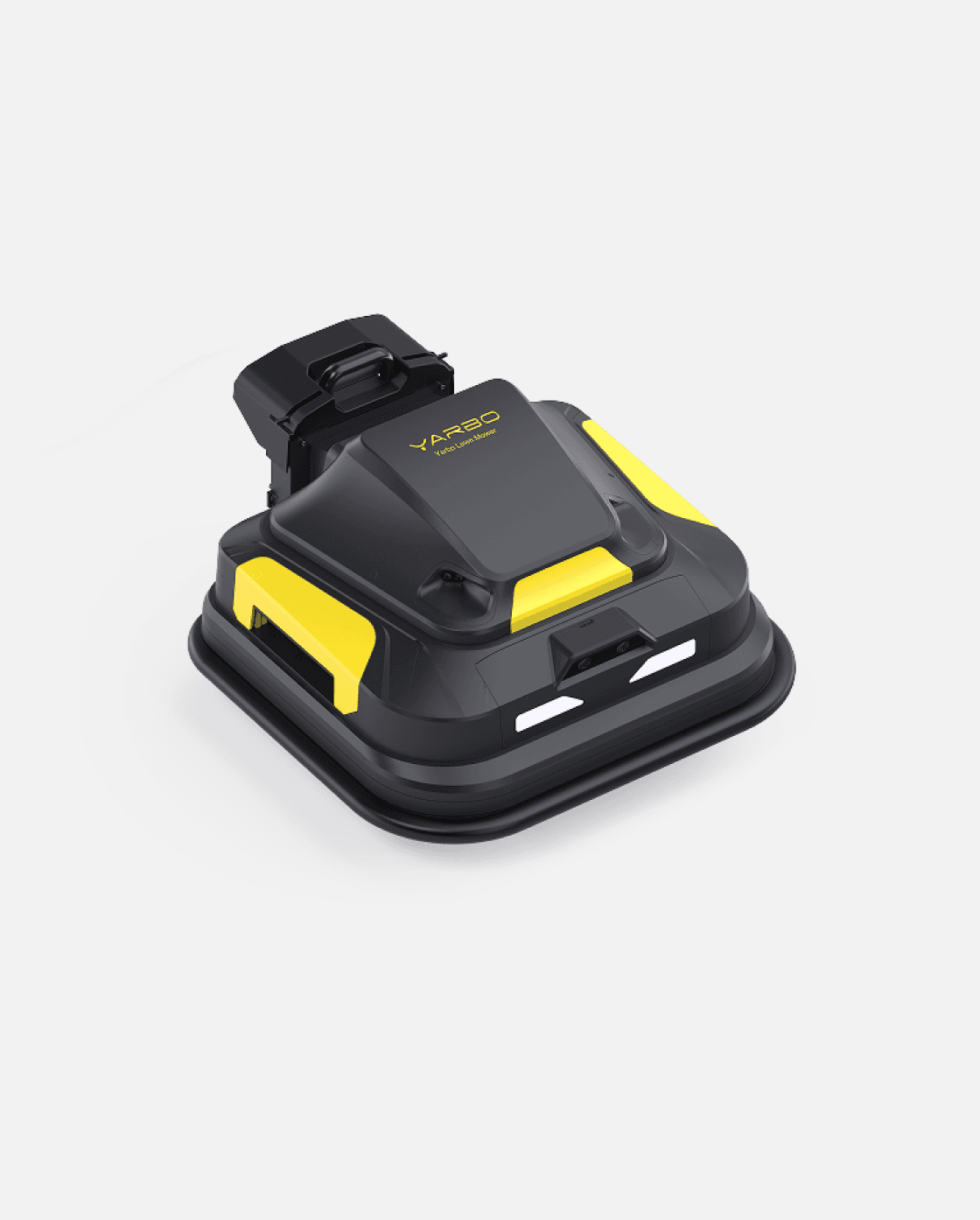
3. Yarbo Lawn Mower Pro — MowScout Score 89
Yarbo Lawn Mower Pro robot lawn mower
For large properties: rated for up to 6 acres, on tracks, to a 70% slope. Yarbo is the one maker that pitches its mower at "wet, thick, and overgrown lawns", and its app lets you enable mowing in the rain and adjust the rain sensor's sensitivity. It is a modular yard robot at a price to match, and far more machine than a suburban lot needs. Read the full review.
For everyone else: choose a mower that waits well
If none of those three fits your yard, you are choosing among mowers built to stop when it rains. That is fine, because robot mowers cut a little every day and never face the soaked, overgrown lawn a weekly gas mower does. What matters is how well a mower waits, and whether it can catch up.
Buy capacity headroom. A mower that sits out rain has to make up the lost time. If storms and dew take a
third of your mowing windows, it needs about 1.5 times the capacity your lawn would otherwise call for (1 ÷ (1 − 1/3)). Our usual advice is a rating about 15% above your measured lawn; in a stormy summer, size up beyond that.
Tune the rain delay. Most mowers wait a set time after rain before going back out. WORX's Landroid
manual sets 180 minutes by default, lets you shorten it or switch it off, and even suggests adjusting it in high-rainfall areas. ECOVACS suggests turning on the rain sensor and setting a delay. Mammotion's Rain Protection offers a Smart mode that uses online weather data and a Sensor mode that uses the mower's own sensor. When mowing windows are tight, the delay setting matters as much as the mower.
Watch for dew false alarms. Sensors cannot always tell dew from rain. A Florida owner reports on
Sunseeker's X3 Plus store page that the sensor reads morning dew as rain, so the mower sometimes misses its schedule. Scheduling the main run after the dew burns off avoids most of it.
All-wheel drive or tracks on any slope. Slope ratings are dry-grass numbers, and on a damp bank
rear-wheel drive slides first.
IPX6-class sealing as a floor. It is the norm: Navimow publishes IP66, and most other mowers we track
publish IPX6. The Husqvarna iQs are IPX5 and the older 430X is IPX4.
Navigation that copes with grey skies. LiDAR and multi-sensor hybrids hold position in overcast, low
light better than pure vision; our robot lawn mowers guide explains how the navigation types differ.
Our picks for rainy climates, ranked
Ranked by fit for a rainy climate (all-wheel drive or tracks, IPX6-class sealing, and documented rain handling), then by MowScout Score. None of these is rated by its maker to cut wet grass. They are the mowers best equipped to wait out wet weather and keep up.
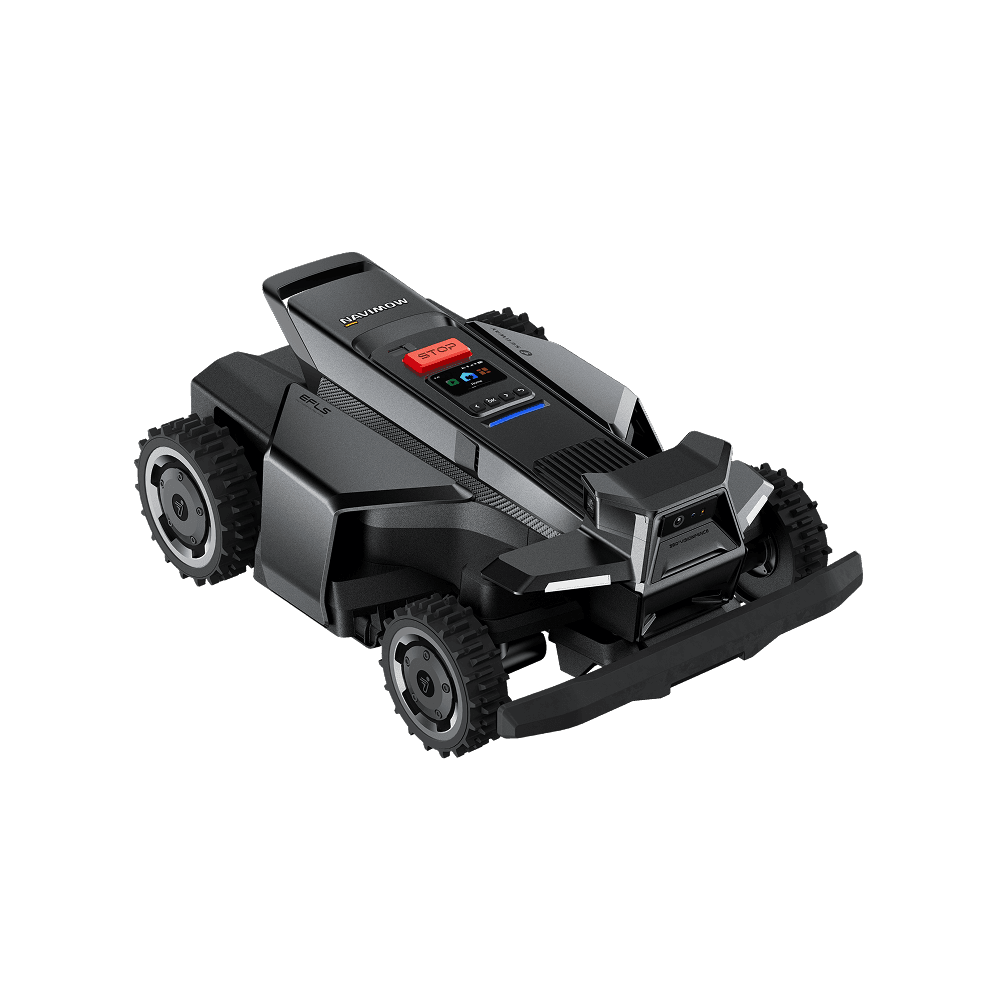
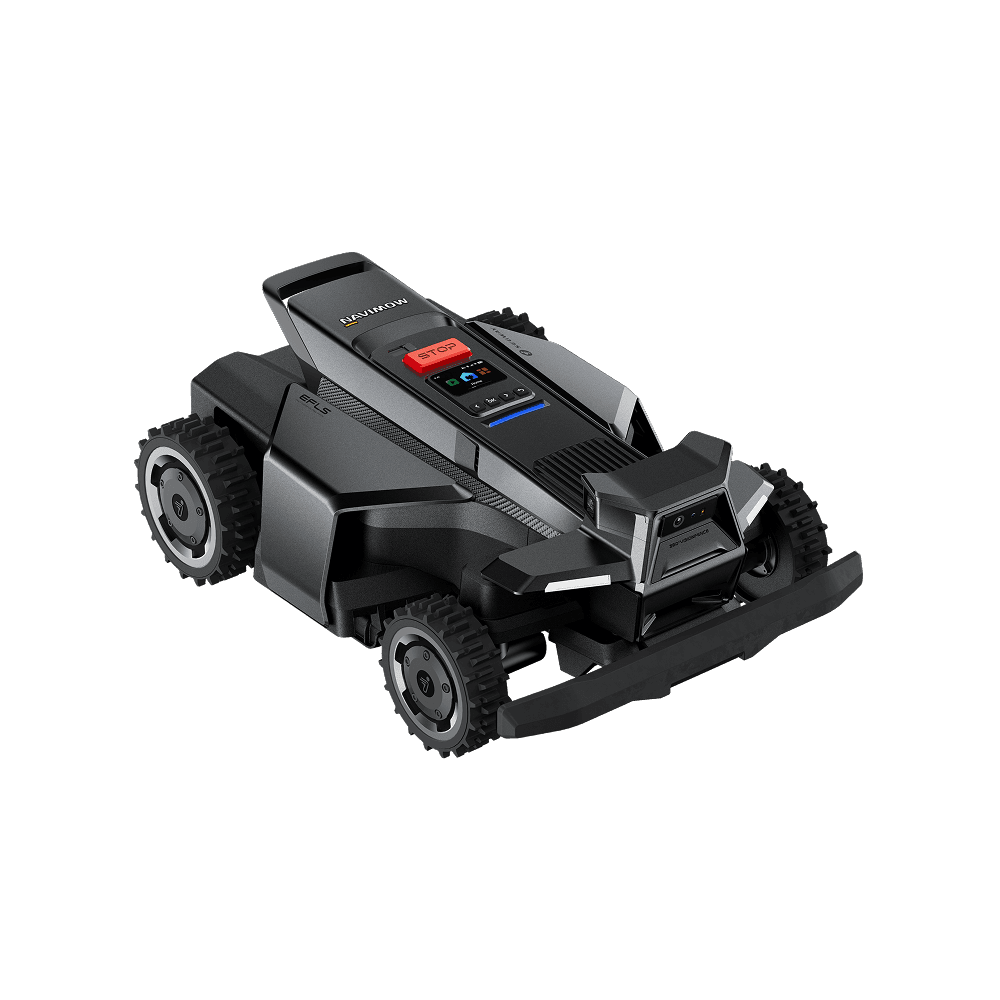
1. Segway Navimow X450 — MowScout Score 93
Segway Navimow X450 robot lawn mower
All-wheel drive with an 84% manufacturer slope rating, up to 1.5 acres of capacity, and IP66 sealing on the mower and charging station. Navimow's X4 manual recommends mowing in dry weather, and the mower heads home when either its rain sensor or the online forecast says it is raining (you can switch off the forecast source if it proves unreliable). Plan on it waiting out storms; its capacity is what lets it catch up afterwards. The pick for a large, sloped lawn in a wet climate. Read the full review.
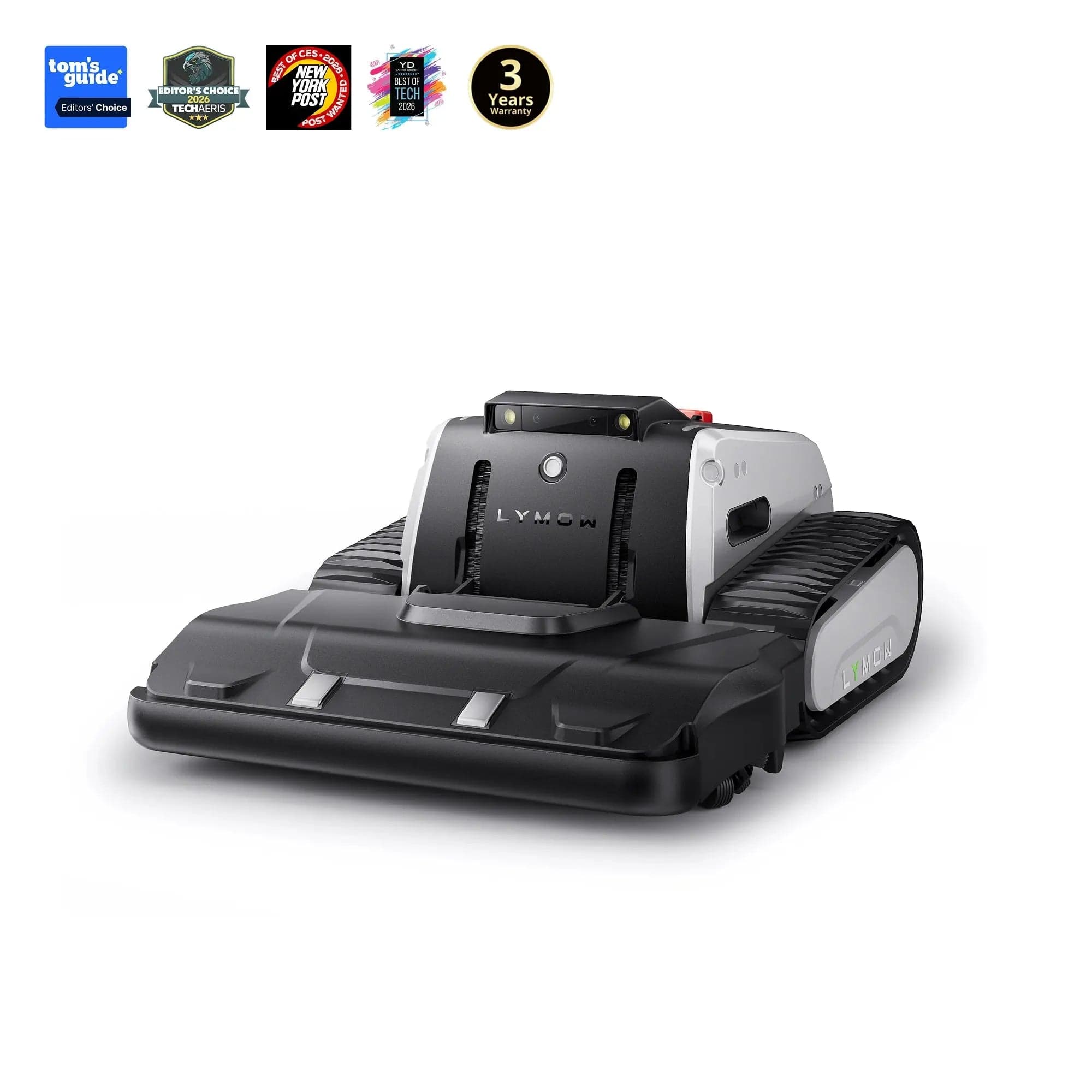
2. Lymow One Plus — MowScout Score 90
Lymow One Plus robot lawn mower
Tracks instead of wheels and the highest slope rating we track, 100%, across up to 1.73 acres. It is sealed to IPX6, and Lymow's support pages say its rain sensor sends it back to the dock when it detects rain. A premium, large machine for a steep property. Read the full review.
3. Segway Navimow X430 — MowScout Score 89
Segway Navimow X430 robot lawn mower
The X450's one-acre sibling: the same all-wheel drive, 84% rating and IP66 sealing. For most rainy-climate lawns under an acre, this is the one to buy. Read the full review.
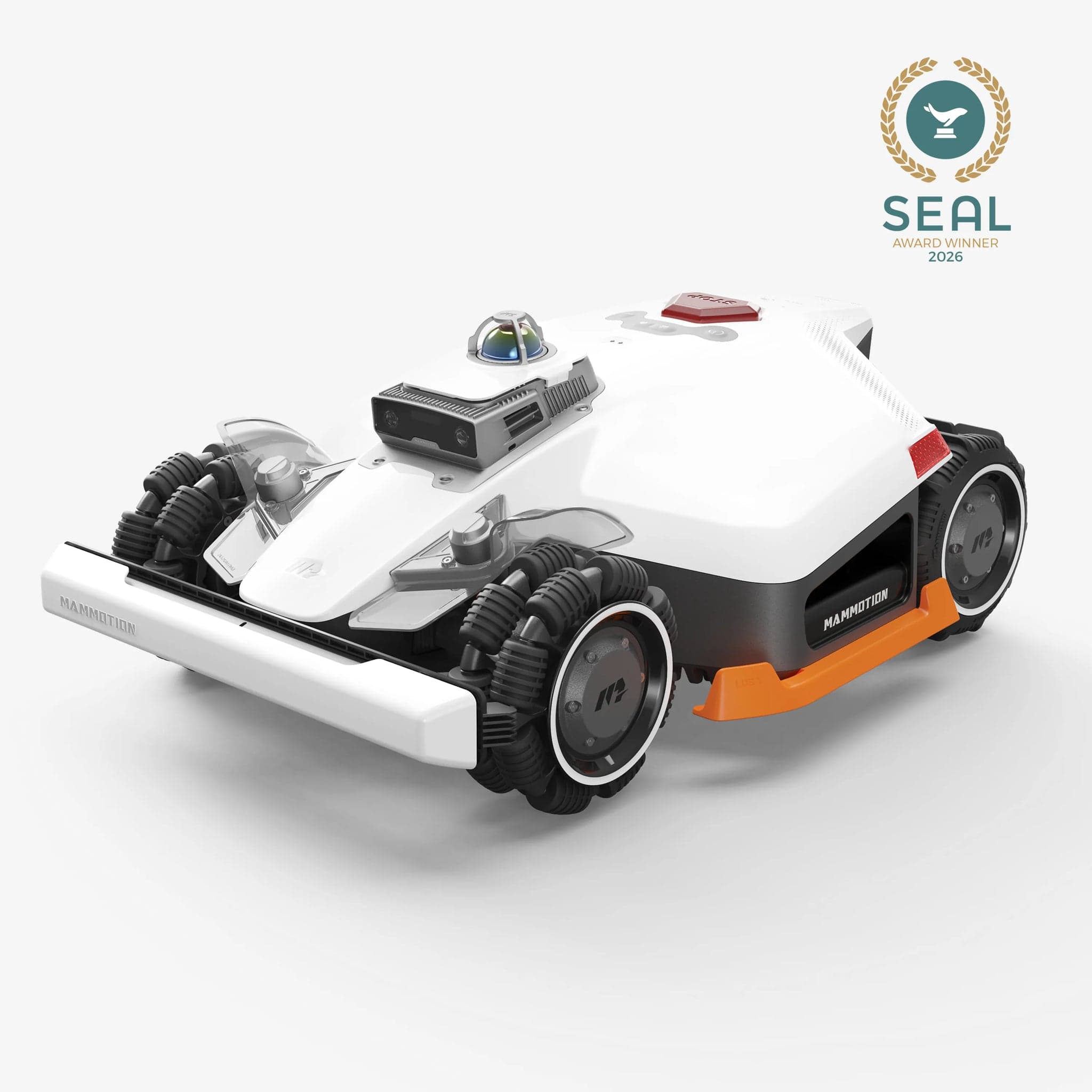
4. Mammotion LUBA 3 AWD 3000H — MowScout Score 87
Mammotion LUBA 3 AWD 3000H robot lawn mower
All-wheel drive to 80% on 0.75 acre, IPX6, and a choice of rain handling: Rain Protection can pause on a weather forecast (Smart mode) or on the mower's own sensor (Sensor mode), and either way it returns the mower to its station. Mammotion markets its traction "even on wet grass", but its LUBA 3 manual still recommends mowing in dry weather. Read the full review.
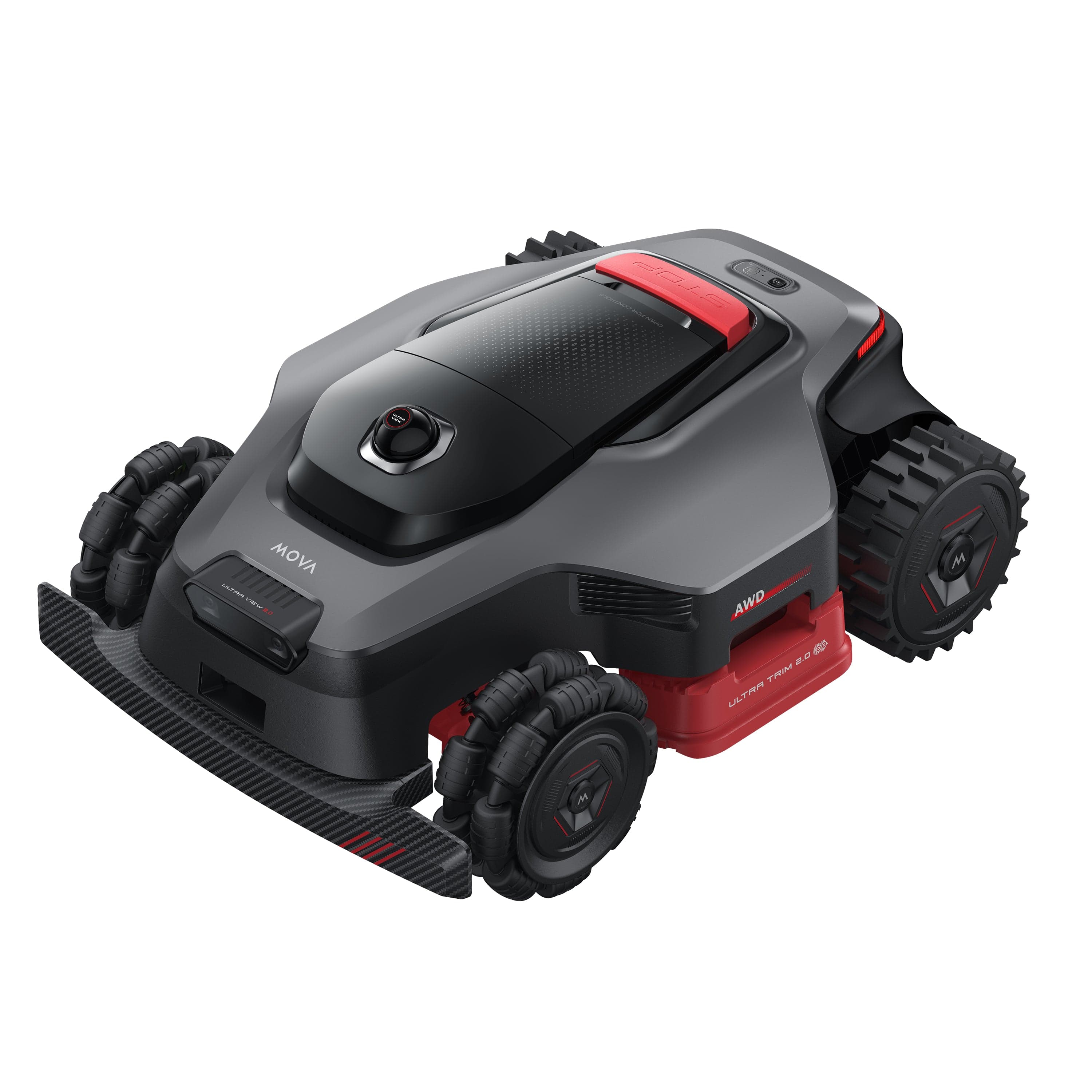
5. MOVA LiDAX Ultra 2000 AWD — MowScout Score 85
MOVA LiDAX Ultra 2000 AWD robot lawn mower
Half an acre on all-wheel drive to 80%, LiDAR navigation that doesn't depend on open sky, and IPX6. MOVA's manual is blunt that "mowing wet grass can damage your lawn" and suggests extending the post-rain protection time so the grass dries first. A strong pick for a smaller, steep or shaded lawn in a wet climate. See the LiDAX Ultra 2000 AWD.
Also consider: the Dreame A3 AWD Pro (Score 89), four-wheel drive to 80% and IPX6, although the Dreame pages we could reach don't describe how it handles rain, so confirm that before buying for a wet climate; and, for small steep lawns, the LUBA mini 2 AWD (Score 79), whose Rain Protection pauses on detected or forecast rain.
Wet-climate specs at a glance
Slope figures are the makers' dry-condition ratings: subtract 10-20% for wet turf. The "maker's position" column is what the manufacturer says about mowing wet grass, which is what our wet-grass data now records.
An IP ("Ingress Protection") rating has two digits: the first is dust resistance, the second is water. When a brand quotes IPX6, the X means dust wasn't formally tested, and the 6 means the body withstands powerful water jets from any direction. An IPX6 or IP66 mower shrugs off heavy rain and a garden-hose rinse, but it is not built for submersion, and you should skip the pressure washer. IPX5, the Husqvarna iQ rating, means water jets at lower pressure; IPX4 means splashing.
The trap is reading a strong IP rating as a wet-grass rating. The seals tell you the electronics will survive the rain. They tell you nothing about grip or cut quality on wet grass, and they don't change what the maker recommends. Use the IP rating as a gate, then decide on traction, rain handling and capacity.
Schedule around the rain, don't muscle through it
The best wet-climate strategy is a mower that mows often, in dry windows, and steps aside for the worst of the weather.
Turn the rain sensor on, and set the post-rain delay to suit your climate. Too long, and the mower loses
whole days in a stormy summer; too short, and it goes out onto soaked turf.
Mow in the driest window. In most climates the lawn dries by early-to-mid afternoon, so schedule the main
run then rather than through dewy mornings. After a light shower, grass often needs a few hours to dry; after a heavy storm, wait longer.
Raise the deck in wet stretches. A slightly higher cut reduces strain and clumping.
Derate the slope and add no-go zones. Keep the mower off the steepest wet sections, and leave 10-20% of
slope headroom for moisture.
Clean the underside more often in a humid season. Wet clippings pack the deck.
The configurator screens your grade, area, tree cover and budget against every model we track, so you don't overbuy a tracked flagship for a flat, drizzly lawn, or under-buy a rear-wheel-drive mower for a wet slope it can't hold.
Related mower reviews
Related pick #1
Husqvarna Automower 420 iQ
Score71/100
Husqvarna Automower 420 iQ belongs in Best Robot Mowers for Wet Grass & Rainy Climates (2026) because it combines RTK navigation, 1 acre of rated coverage, a 45% slope rating, and 20 mapped zones. RWD makes it a better fit for simpler turf. No separate antenna requirement reduces one setup variable.
Segway Navimow X430 belongs in Best Robot Mowers for Wet Grass & Rainy Climates (2026) because it combines hybrid navigation, 1 acre of rated coverage, a 84% slope rating, and 120 mapped zones. AWD/4WD gives it extra traction margin. No separate antenna requirement reduces one setup variable.
Mammotion LUBA 3 AWD 3000H belongs in Best Robot Mowers for Wet Grass & Rainy Climates (2026) because it combines hybrid navigation, 0.75 acres of rated coverage, a 80% slope rating, and 30 mapped zones. AWD/4WD gives it extra traction margin. No separate antenna requirement reduces one setup variable.
Yarbo Lawn Mower Pro belongs in Best Robot Mowers for Wet Grass & Rainy Climates (2026) because it combines hybrid navigation, 6 acres of rated coverage, a 70% slope rating, and 99 mapped zones. RWD makes it a better fit for simpler turf. No separate antenna requirement reduces one setup variable.
Robot mowers fail when a generic recommendation misses the hard constraint: slope, tree cover, separated zones, dock placement, or budget. Run the configurator before using any deal box.
Physically, most can, but almost no maker recommends it. Of the 37 models we track, only three come with a manufacturer statement that they are built to mow wet grass or run in rain: the Husqvarna Automower 420 iQ and 410 iQ ('designed to operate rain or shine') and the Yarbo Lawn Mower Pro ('cut thick, wet, and overgrown lawns'). The other 34 come with manuals that recommend mowing in dry weather, send the mower home when a rain sensor trips, or say nothing either way. Wet grass tears instead of slicing, clippings clump, and wheels lose grip, which is why the makers set it up that way.
Which robot mowers are rated for rain?
Three of the 37 we track: the Husqvarna Automower 420 iQ (MowScout Score 71) and 410 iQ (Score 62), which Husqvarna says operate rain or shine, and the Yarbo Lawn Mower Pro (Score 89), whose rain mowing is an option you switch on in the app. A weatherproof IP rating is not the same thing: nearly every mower we track is sealed to survive rain, but only these three are rated to keep cutting in it.
What should I buy for a rainy climate if most mowers stop in the rain?
Buy a mower that waits well and catches up. Size it with extra capacity, because every wet window it sits out is mowing it has to make up: if rain and dew cost a third of your mowing windows, a mower needs about 1.5 times the capacity your lawn would otherwise call for. Look for a rain delay you can adjust and, ideally, forecast-based pausing. On any slope, choose all-wheel drive or tracks for damp mornings. Our top picks for rainy climates are the Segway Navimow X450 and X430, the Lymow One Plus and the Mammotion LUBA 3 AWD 3000H.
What IP rating should a robot mower have?
IPX6 or IP66 is the norm among the mowers we track, and it means the body withstands powerful water jets, enough for heavy rain and a hose rinse. The Husqvarna iQ models are IPX5 and the older 430X is IPX4. Treat the IP rating as a floor: it protects the electronics, and it says nothing about whether the mower should cut wet grass or keep its grip on a damp slope.
Do I need AWD for a rainy climate?
On a flat lawn, no. On any slope, yes. Slope ratings are measured on dry grass, and a wet slope is where rear-wheel-drive mowers slide. Some makers market all-wheel-drive traction on damp grass, but that is a traction claim, not a rating to mow wet grass. Above roughly 30% grade in a rainy climate, choose all-wheel drive or tracks and leave 10 to 20% of headroom below the rated slope.
Why does my robot mower stay docked on dewy mornings?
Its rain sensor is doing its job, or overdoing it. Sensors cannot always tell dew from rain: one Florida owner reports on Sunseeker's X3 Plus store page that the sensor reads morning dew as rain, so the mower sometimes misses its schedule. The practical fix is to schedule the main run after the dew burns off and to shorten the post-rain delay if your mower allows it. WORX's Landroid manual, for example, sets a 180-minute default delay that you can shorten or switch off.