Affiliate disclosure: MowScout earns a commission when you buy through our links, including as an Amazon Associate. Recommendations are based on yard fit, verified specs, and score methodology; commission can only break close ties among genuine fits.
Quick answer: start with Lymow One Plus if your yard is under about 1.7 acres and terrain is the hard part. Keep Yarbo Lawn Mower Pro in the cart if the property is genuinely estate-sized or you want one modular chassis for more than mowing. This is a spec-verified, data-driven comparison, not a hands-on test. The numbers below come from the MowScout product records, manufacturer or retailer sources captured on each mower review, and the MowScout Score. Prices can move weekly, so verify the retailer page before buying.
These are the only two tracked-drive machines in the MowScout database, which makes this the closest thing the catalog has to an all-terrain showdown. Tracks trade the familiar wheeled look for ground pressure spread across a long contact patch, which is why both brands aim at rough, steep, or oversized yards that wheeled robots struggle with. The deciding rows are score, price, rated area, daily coverage, slope reality, navigation, zones, noise, modularity, warranty, and where you can actually buy and service each one. Use this page with the robot lawn mower buyer guide, then run the yard-fit configurator before using a deal link.
Quick verdict
Buy the Lymow One Plus if you want tracked traction, RTK-plus-vision hybrid navigation, a 1.2 to 4.0 inch cut range, matching 1.73-acre max and daily coverage, and a 3-year warranty. It carries a MowScout Score of 90. The main cautions: a marketing-grade 100% slope claim, third-party noise reports of 73 to 78 dB against the claimed 68 dB, direct-only retail, and a young platform.
Buy the Yarbo Lawn Mower Pro if you want a 6-acre max area rating, a wider 20-inch deck, 99 zones, quieter 60 dB operation, wide retail availability, and a modular body that can swap into non-mowing roles. It carries a MowScout Score of 89. The main cautions: the price, 95-pound hardware, a more complex RTK/data-center setup, a 2-year warranty, and daily coverage of about 1.7 acres despite the 6-acre rating.
In this matchup, set the two MowScout Scores against the current prices on each mower page. The machines answer different questions: Lymow is a terrain-first mower; Yarbo is an acreage-and-platform machine. Fit wins first; price only breaks close calls.
At-a-glance spec table
Spec
Lymow One Plus
Yarbo Lawn Mower Pro
MowScout Score
90
89
Max area
1.73 acres
6 acres
Daily coverage
1.73 acres
1.7 acres
Published max slope
100% (see caution)
70%
Drive
Rubber tracks
Rubber tracks
Navigation
HYBRID (RTK + vision)
HYBRID (RTK)
Zones
80
99
Cut width
16 in
20 in
Cut height
1.2-4.0 in
0.8-4.0 in
Noise
68 dB claimed (73-78 dB reported)
60 dB
Weight
78.5 lb
95 lb
Warranty
3 years
2 years
Retail
Lymow direct
Yarbo, Amazon, Best Buy, Walmart
Product photos and setup context
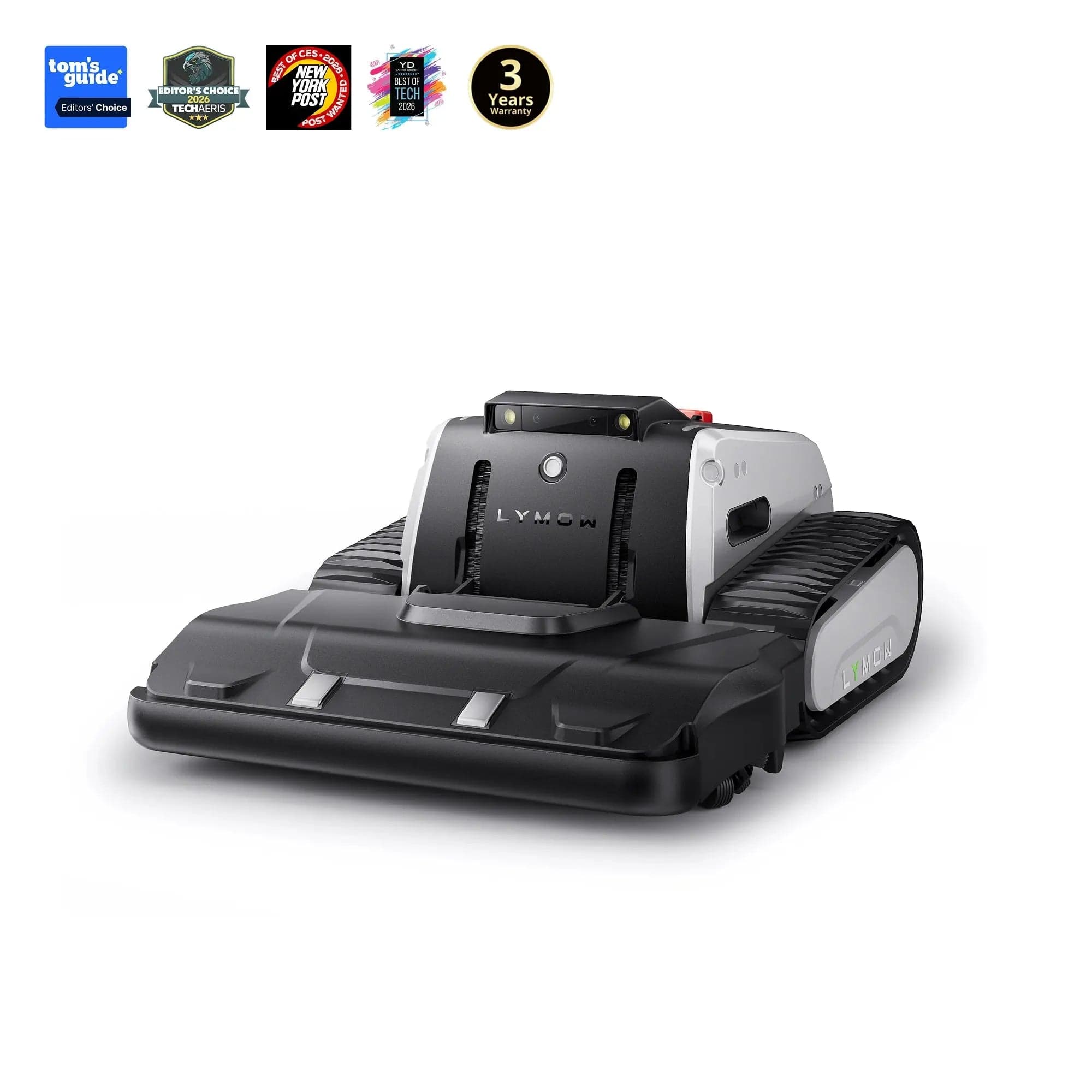
Lymow One Plus robot lawn mower
The Lymow One Plus is the terrain specialist in this comparison. Its data profile is built around tracked drive, RTK-plus-vision hybrid navigation, 80 supported zones, a 16-inch cutting width, and a cut-height range from 1.2 to 4.0 inches. Its first listed pro is: Tracked drive, RTK/VSLAM navigation, 100% claimed slope handling, and 1.73 acres/day coverage make it a unique all-terrain entrant. Its first listed con is: The slope, area, and noise claims need measured-context caveats; it is loud and still a young platform. Read the full review at Lymow One Plus before clicking through to a retailer.
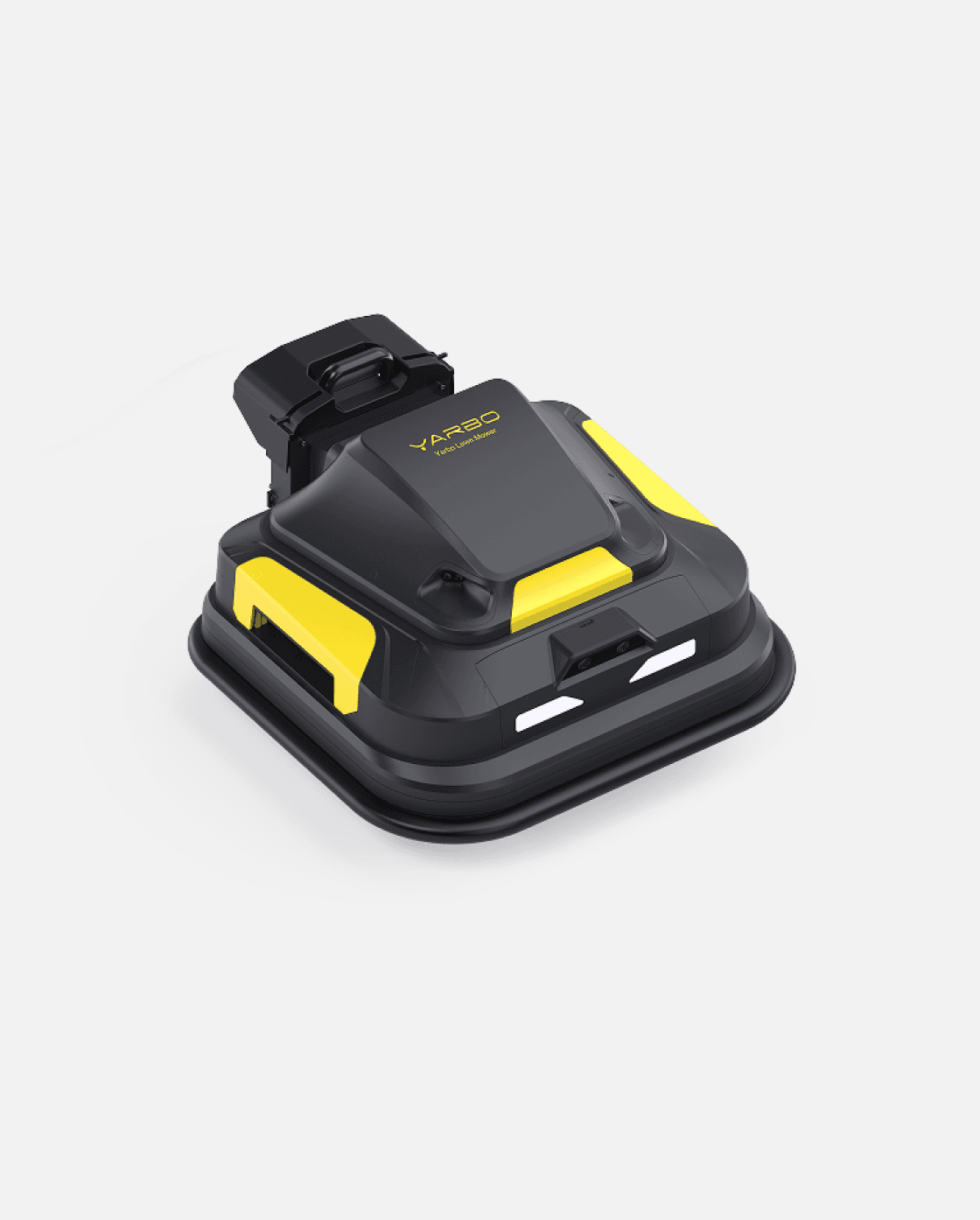
Yarbo robot lawn mower
The Yarbo Lawn Mower Pro is the estate platform in this comparison. Its data profile is built around tracked drive, hybrid navigation, 99 supported zones, a 20-inch cutting width, and a cut-height range from 0.8 to 4.0 inches. Its first listed pro is: The tracked modular platform fills the missing estate-yard lane with up to 6 acres of coverage, 20-inch cutting width, and 70% slope capability. Its first listed con is: High bundle price, heavy hardware, and a complex RTK/data-center setup make it overkill for ordinary suburban lawns. Read the full review at Yarbo Lawn Mower Pro before clicking through to a retailer.
Yard fit: the deciding question
For a tracked-drive matchup, start with the property's hardest condition. If the hardest condition is steep or rough ground under about 1.7 acres, Lymow's terrain-first design and lower price are the natural starting point. If the hardest condition is sheer size, Yarbo is the only machine in the MowScout database rated past 2 acres on a single chassis. If the hardest condition is a complex property layout, Yarbo's 99 zones give it a modest mapping edge over Lymow's 80. If the hardest condition is budget, Lymow costs a little over half as much as Yarbo before either machine's accessories are counted.
There is one distinction that decides more purchases than any slope number: max area is not daily coverage. Lymow's two figures match at 1.73 acres, so what it is rated for is roughly what it can maintain in a day. Yarbo is rated for 6 acres but plans around 1.7 acres per day, which means a big estate mows on a multi-day rotation. In fast spring growth, a rotation means some sections are always a few days shaggy. That is a fine trade on a 4-acre property and a pointless complication on a 1-acre one.
Slope reality: the 100% claim needs context
Lymow publishes a 100% slope figure (a 45-degree grade) and Yarbo publishes 70%. Both ride on rubber tracks, which genuinely do spread ground pressure and resist slip better than most wheels. But MowScout treats the 100% number as a marketing-grade ceiling, not a planning figure: wet grass, soil shear, exposed roots, and turning across a bank all reduce usable slope well below any headline rating. If your slope is the reason you are reading this page, plan around a comfortable margin under the rating — for either machine — and read the terrain notes in each review. No robot mower should be bought to operate at its published maximum every week.
Navigation and setup
Both machines use hybrid navigation with an RTK layer and need a charging base station. Lymow also needs an RTK antenna with a clear sky view; Yarbo's included NetRTK removes the antenna where coverage reaches. Lymow pairs RTK with camera-based VSLAM, which gives it a second reference when satellite geometry is poor. Yarbo's system is built around its own RTK "data center" hardware, which adds capability and adds setup complexity; owners should plan the dock location before the boxes arrive.
Setup is where many robot mower purchases fail. Walk the dock location before buying. Check whether power is available, whether Wi-Fi or cellular coverage reaches the dock, where the antenna can see open sky, whether the mower must cross a driveway or gate, and whether the first mapping route contains narrow passages. Both machines are heavy enough — 78.5 and 95 pounds — that a failed dock location is a real chore to fix. If either mower needs help with satellite reference placement, read the RTK antenna placement guide. If the property has heavy canopy, compare the RTK vs LiDAR vs vision guide.
Terrain, edges, noise, and cut quality
Both machines carry an "ok" edge rating in the MowScout data: tracks do not fix the last strip along walls, fences, and beds, and neither machine has a dedicated edge-trimming head. Yarbo's 20-inch deck covers ground faster per pass; Lymow's 16-inch deck with a mulching-oriented design is the reason its daily coverage still matches its rated area.
Noise deserves a specific callout. Yarbo's 60 dB figure is in quiet-residential territory. Lymow claims 68 dB, but early third-party reports put it at 73 to 78 dB — closer to a conventional electric mower than to the whisper-quiet class. If close neighbors or evening mowing windows matter, that gap is real and it favors Yarbo.
Cost and ownership
Street prices on the Lymow One Plus and the Yarbo mower configuration both move often, so check live deals for today's figures rather than a number written into this page. Add replacement blades, possible garage or dock cover, antenna mounting for Lymow, and — for Yarbo — whatever modules the platform tempts you into. Yarbo's modularity is genuinely unusual: the same body accepts non-mowing attachments, which can amortize the platform price for owners who want one machine for multiple jobs. That math only works if you will actually buy and use the modules. The true five-year cost guide is the better lens when a cheaper model lacks the capability you need.
Warranty and support split the two: Lymow ships with a 3-year warranty but sells direct-only, while Yarbo carries a 2-year warranty with availability through Amazon, Best Buy, and Walmart and a larger owner community. Both are young platforms next to Husqvarna-class incumbents; neither has a decade of parts history.
Commission is not a recommendation signal. Whether a link earns MowScout anything plays no part in the MowScout Score or in this comparison's verdict: the yard-fit rules decide. A mower with the better fit should beat one that earns us more but fails your slope, tree cover, acreage, or zone needs. Our affiliate disclosure lists which links currently earn a commission.
Bottom line
For most buyers reading this page, the safer starting point is Lymow One Plus: it leads on score, costs a little over half as much, carries the longer warranty, and its terrain-first design covers the steep-and-rough use case both machines are bought for. But the honest recommendation is conditional. Choose Yarbo when the property is genuinely past about 1.7 acres, when zone complexity is high, when noise matters, or when the modular platform will actually be used as one. Neither machine is the right answer for an ordinary flat suburban lawn — both are specialists, and cheaper wheeled mowers serve flat yards better.
First-month setup plan
Week one: place the base station (and, for Lymow, the antenna) with open sky, map the perimeter slowly, and set no-go zones around the steepest bank rather than through it. Week two: watch the wet-morning behavior before trusting any slope near its rating, and check track wear points after the first full coverage cycle. Week three: tune zone schedules — multi-day rotation for Yarbo on big properties, daily single-pass for Lymow. Week four: settle the blade-inspection cadence; tracked machines are bought for rough ground, and rough ground is hard on blades.
How MowScout treats affiliate revenue
MowScout may earn a commission when you buy through links on this page, at no extra cost to you. Commission never changes a score, a ranking, or a verdict; both machines here are treated identically to every other mower in the database. Corrections: Brian@mowscout.com.
The winner is based on current MowScout Score and the yard-fit specs that matter for Lymow One Plus vs Yarbo: the two tracked-drive robot mowers compared on slope reality, daily coverage, modularity, noise, and price.. That does not mean every buyer should choose it. A lower-scoring mower can still be the smarter purchase if it fits your lawn size, tree cover, slope, budget, or setup tolerance better. Treat this page as a structured decision guide, then run the configurator before buying.
The score gap is 1 points and the current street-price gap is $2,800. Those two numbers matter together. A small score gap with a large price gap may favor value; a large score gap may justify paying more if the added capability addresses your yard's hardest constraint.
Tracked drive, RTK/VSLAM navigation, 100% claimed slope handling, and 1.73 acres/day coverage make it a unique all-terrain entrant.
Score90/100
It is the higher-scoring mower in this matchup, so buyers should start here when its strengths match the yard. For Lymow One Plus vs Yarbo: the two tracked-drive robot mowers compared on slope reality, daily coverage, modularity, noise, and price., the important specs are 1.73 acres of rated area, 100% slope support, hybrid navigation, TRACKS drive, and 80 supported zones. Because this model depends on antenna or base placement, open sky and a thoughtful dock location matter more than they do on simpler vision or LiDAR-first systems. The practical question is whether those strengths solve your hardest yard constraint or simply add capability you will not use.
The tracked modular platform fills the missing estate-yard lane with up to 6 acres of coverage, 20-inch cutting width, and 70% slope capability.
Score89/100
It trails the comparison winner on the current score, but it can still be the smarter buy for the right lawn. For Lymow One Plus vs Yarbo: the two tracked-drive robot mowers compared on slope reality, daily coverage, modularity, noise, and price., the important specs are 6 acres of rated area, 70% slope support, hybrid navigation, TRACKS drive, and 99 supported zones. Because this model avoids an external antenna, the setup path may be easier for buyers who want fewer install variables. The practical question is whether those strengths solve your hardest yard constraint or simply add capability you will not use.
Specs do not replace yard fit, but they show which compromises are real. Pay special attention to the rows that match the constraint that brought you to this comparison.
Spec
Lymow One Plus
Yarbo Lawn Mower Pro
MowScout Score
90
89
Street price
$3,199
$5,999
Max area
1.73 acres
6 acres
Daily coverage
1.73 acres
1.7 acres
Max slope
100%
70%
Navigation
HYBRID
HYBRID
Drive
TRACKS
TRACKS
Obstacle avoidance
ai vision
ai vision
Cut height
1.2-4 in
0.8-4 in
Cut width
16 in
20 in
Zones
80
99
Warranty
3 years
2 years
Where each mower wins
Lymow One Plus is the higher-scoring choice overall. It should be the first model you evaluate if the extra capability directly addresses your yard's limiting factor.
Yarbo Lawn Mower Pro stays in the conversation when its price, setup path, navigation style, or size class better matches the lawn. A lower score is not an automatic rejection if the use case is narrower than the full MowScout formula.
The cheaper model is Lymow One Plus. The higher-capacity model is Yarbo Lawn Mower Pro. The stronger listed slope rating belongs to Lymow One Plus. Those three checks often decide close comparisons faster than marketing claims.
Navigation and setup
Both models use hybrid navigation, so the decision shifts toward app quality, setup details, coverage, terrain, and support. If your yard has heavy trees, enclosed side yards, or houses close to the boundary, do not buy only from a spec table. Read the robot lawn mower guide and run the configurator with your sky-view setting.
Terrain and cutting
Terrain is where paper winners can change. Lymow One Plus uses TRACKS drive and is rated for 100% slopes; Yarbo Lawn Mower Pro uses TRACKS drive and is rated for 70% slopes. Also compare cut-height range, edge behavior, and whether the mower has enough weight and traction margin for wet turns or rooty turf.
Cost and ownership
Current street prices put Lymow One Plus at $3,199 and Yarbo Lawn Mower Pro at $5,999. The purchase price is only the first line item. Add blades, dock protection, antenna hardware if required, battery risk, and the value of avoided mowing time in the five-year cost calculator.
Next checks
Use the table above to decide which mower fits on paper, then run the configurator with your actual acreage, slope, tree cover, zones, terrain, obstacles, and budget before opening a retailer page.
Which is better, Lymow One Plus or Yarbo Lawn Mower Pro
Lymow One Plus leads this comparison by current MowScout Score, 90 to 89, and costs a little over half as much at current prices. But Yarbo is rated for far more total acreage and is a modular platform, so the better mower depends on whether the yard is under about 1.7 acres or genuinely estate-sized.
Which mower is better for steep slopes
Lymow publishes a 100% slope figure and Yarbo publishes 70%, and both use rubber tracks. Treat the 100% number as a marketing-grade ceiling: wet grass, soil shear, and turning on a bank reduce usable slope well below the headline for any mower.
Which mower is cheaper right now
Lymow One Plus, at a little over half the Yarbo Lawn Mower Pro's price in the current MowScout data. Verify the retailer page before buying because bundles and discounts change often.
Can either mower really handle 2 or more acres
Yarbo is the one rated past 2 acres, up to 6 acres max area, but its planning figure is about 1.7 acres per day, so large estates mow on a multi-day rotation. Lymow's rated max and daily coverage are both about 1.73 acres.
Are these hands-on test results
No. This page is spec-verified and data-driven unless it explicitly says MowScout performed a hands-on test.
What should I verify on the retailer page
Confirm the exact SKU and module bundle, included RTK/base-station hardware, return window, warranty, current price, and whether the listing matches the capacity tier compared here.
Which is better: Lymow One Plus or Yarbo Lawn Mower Pro?
Lymow One Plus leads by current MowScout Score, but the better buy depends on your yard size, slope, tree cover, zones, and budget.
Is there one universal winner?
No. A mower can win this comparison overall but still be the wrong fit for dense trees, steep wet slopes, narrow passages, or a tight budget.
How is the winner chosen?
This page uses current MowScout Scores and key yard-fit specs. The configurator is more specific because it uses your yard inputs.
Should I buy from the deal box immediately?
Use the deal box after confirming fit. Prices and availability can change, so verify the current retailer page before purchase.