Quick answer: for most small yards the best robot mower is the ECOVACS GOAT O1000 LiDAR PRO — the highest-scoring LiDAR mower in our catalog that is genuinely sized for a quarter acre, so it needs no antenna and no clear view of the sky. If your turf is warm-season grass that needs a tall cut, buy the MOVA LiDAX Ultra 1000 instead, for one specific reason we will get to.
This page is spec-verified and data-driven. We do not test hardware, and we say so. Every figure below comes from our tracked catalog; live prices move, so we route those to current deals rather than freezing a number in the text.
The short answer, and who it fits
A small yard is not simply a large yard scaled down. It is a different problem, and the mowers that win here are not the ones with the biggest numbers on the box.
mapping, no antenna, good edge behavior, 45% slope rating, 16 zones, 0.25 acres.
- MOVA LiDAX Ultra 1000 — the warm-season pick, and the widest
cut-height range in the class at 1.18–3.93 inches.
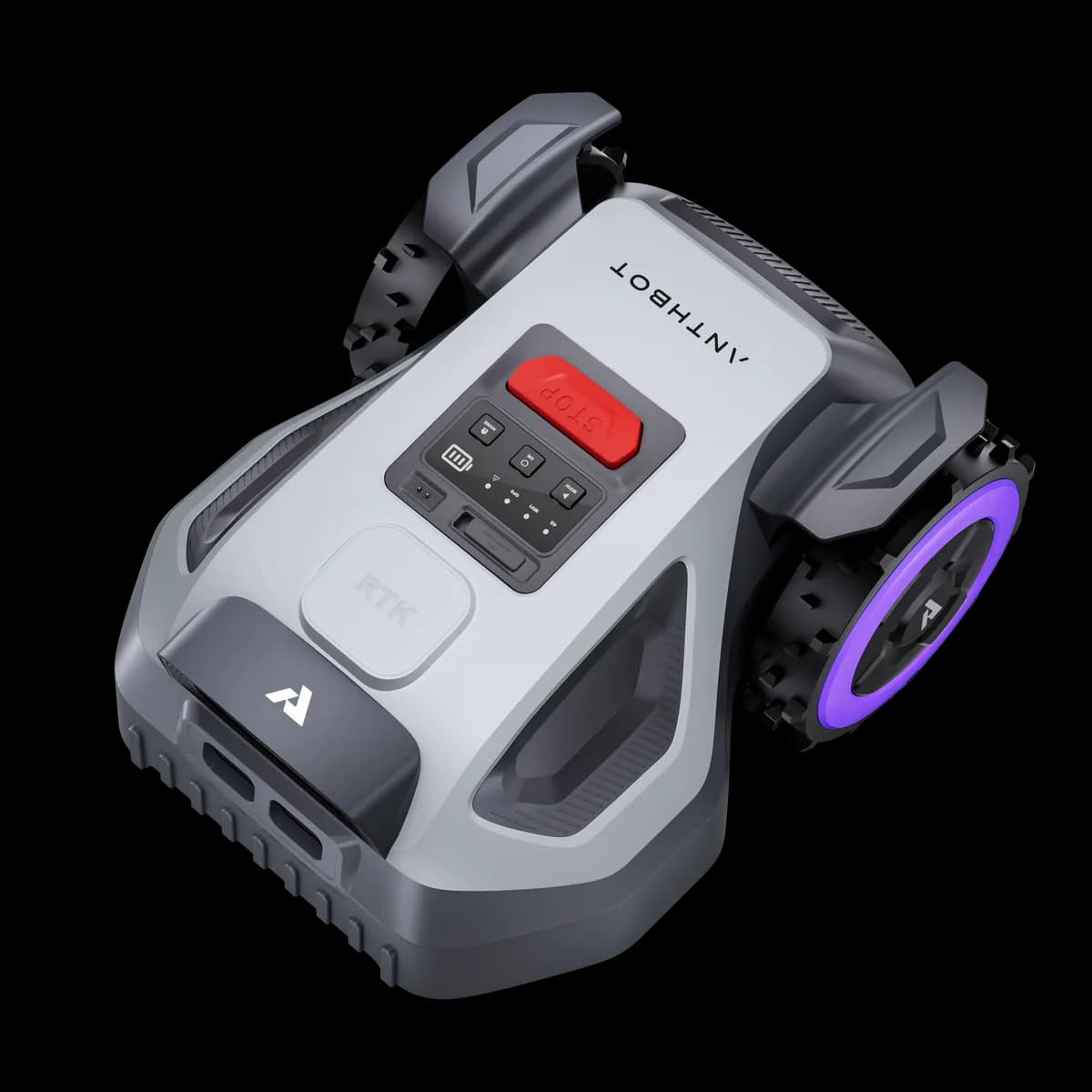
- ANTHBOT M9 — the open-lawn value pick: the top Score on this list, with 4G tracking, for less than the O1000 or the MOVA 1000 — but it wants open sky.
- eufy E15 — the simplest setup, with two real caveats.
- Segway Navimow i110N — a solid cool-season choice that is wrong for
much of the Sun Belt.
Why small yards are their own problem
Large-yard buyers shop for capacity. Small-yard buyers should shop for fit, and small lots impose constraints that big open lawns simply do not.
Small lots are boxed in. A quarter-acre suburban lot usually has a house on one side, a fence on another, and at least one mature shade tree. That geometry is hostile to navigation systems that need to see the sky. It is also why the cheapest wire-free path is not automatically the best one here.
Small lots are rarely one lawn. They are a front lawn and a back lawn, split by a house and connected by a side yard the width of a gate. That makes zone count and passage width load-bearing specs.
Small lots are mostly edge. The ratio of perimeter to area rises as the lawn shrinks, so a mower's edge behavior matters proportionally more. On a half-acre open lawn a weak edge is a minor annoyance; on a 0.12-acre lawn it is most of what you look at.
Small lots do not need much battery. Every machine in this guide can finish a small lawn well inside its rated cycle. Runtime, the headline spec for large-yard shoppers, is close to irrelevant here — which frees your budget to buy navigation and cut range instead.
What we prioritized
Our MowScout Score weights navigation most heavily, and for small yards that weighting is exactly right. On top of the score, we filtered and ranked on four things:
- Navigation that tolerates obstruction. LiDAR and vision systems map without needing satellite
geometry. RTK and NetRTK are excellent on open ground and degrade under canopy and beside tall walls.
- Cut-height ceiling. The most under-discussed spec in the category, and in the Sun Belt the one that
quietly disqualifies the most machines. More below.
- Zone count. A split front-and-back lawn is the normal case, not the exception.
- Right-sizing, not overbuying. We cap this list at 0.3 acres of rated area. Buying past your lawn is
money spent on capability you will never use.
The cut-height trap
This is the section most small-yard guides skip, and it is the one most likely to save you a return.
Robot mowers advertise a cut-height range. What matters is the top of that range against what your grass actually needs:
- St. Augustine (standard cultivars): roughly 3–4 inches
- Bahia: roughly 3–4 inches
- Zoysia: roughly 1–2.5 inches
- Bermuda: roughly 1–2 inches
- Tall fescue: roughly 3–4 inches
Now compare that to the hardware. The Segway Navimow i105N and i110N top out at 2.4 inches. The ECOVACS GOAT GX-600 (out of stock) tops out at 2.36 inches. Those are fine ceilings for Bermuda or Zoysia. They are below a healthy cut height for St. Augustine, Bahia, or fescue — meaning that in much of Florida, coastal Georgia, the Carolinas, and the Gulf Coast, those models cannot maintain the lawn correctly at any setting, no matter how well they navigate.
By contrast the MOVA LiDAX Ultra 1000 reaches 3.93 inches and the WORX Landroid M 3.5 inches. The GOAT O1000 reaches 3.15 inches, which is adequate for the low end of the St. Augustine range and comfortable for everything else.
If you have warm-season turf, apply this filter before you look at anything else.
The best robot mowers for small yards, ranked
New in the catalog (September 2026): the ANTHBOT M9 (Score 75) now edges our top pick on Score, and the GOAT O1000 RTK, Sunseeker X3 Plus, Navimow i206 AWD and Navimow i215 LiDAR are new small-yard options too. It now ranks at #3 below, behind the two LiDAR picks: it and the other RTK newcomers want open sky, so for a shaded small yard the LiDAR picks, and the new i215 LiDAR, still lead.
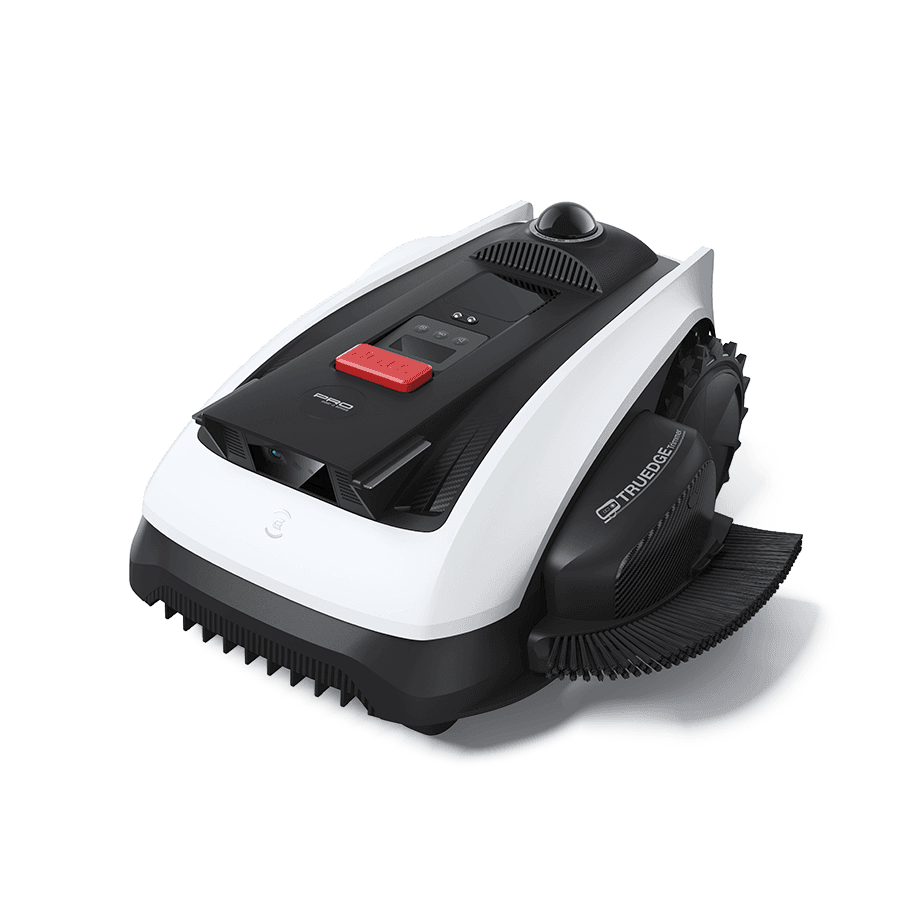
1. ECOVACS GOAT O1000 LiDAR PRO — best overall
The O1000 is the pick for the largest share of small yards because it solves the small-lot geometry problem directly. LiDAR maps the yard by reading the space around it rather than by triangulating position, so a fence line, a house wall, and a shade canopy are not obstacles to setup — they are just scenery. There is no antenna to site, which in a small yard is a genuine practical win, because the good antenna locations are usually the ones you do not want a pole in.
It is rated to 0.25 acres, 45% slope, and 16 zones, with a 8.66-inch deck and a 1.18–3.15 inch cut range. Edge behavior is rated good in our catalog, which matters disproportionately here. It is rear-wheel drive, so it is a flat-to-moderate machine, and it does not offer GPS tracking — the one meaningful omission.
Buy it if your small yard has trees, fences, or walls and you want the least fussy setup. Skip it if your lawn is standard St. Augustine that wants a 3.5-inch-plus cut, or theft tracking is a requirement.
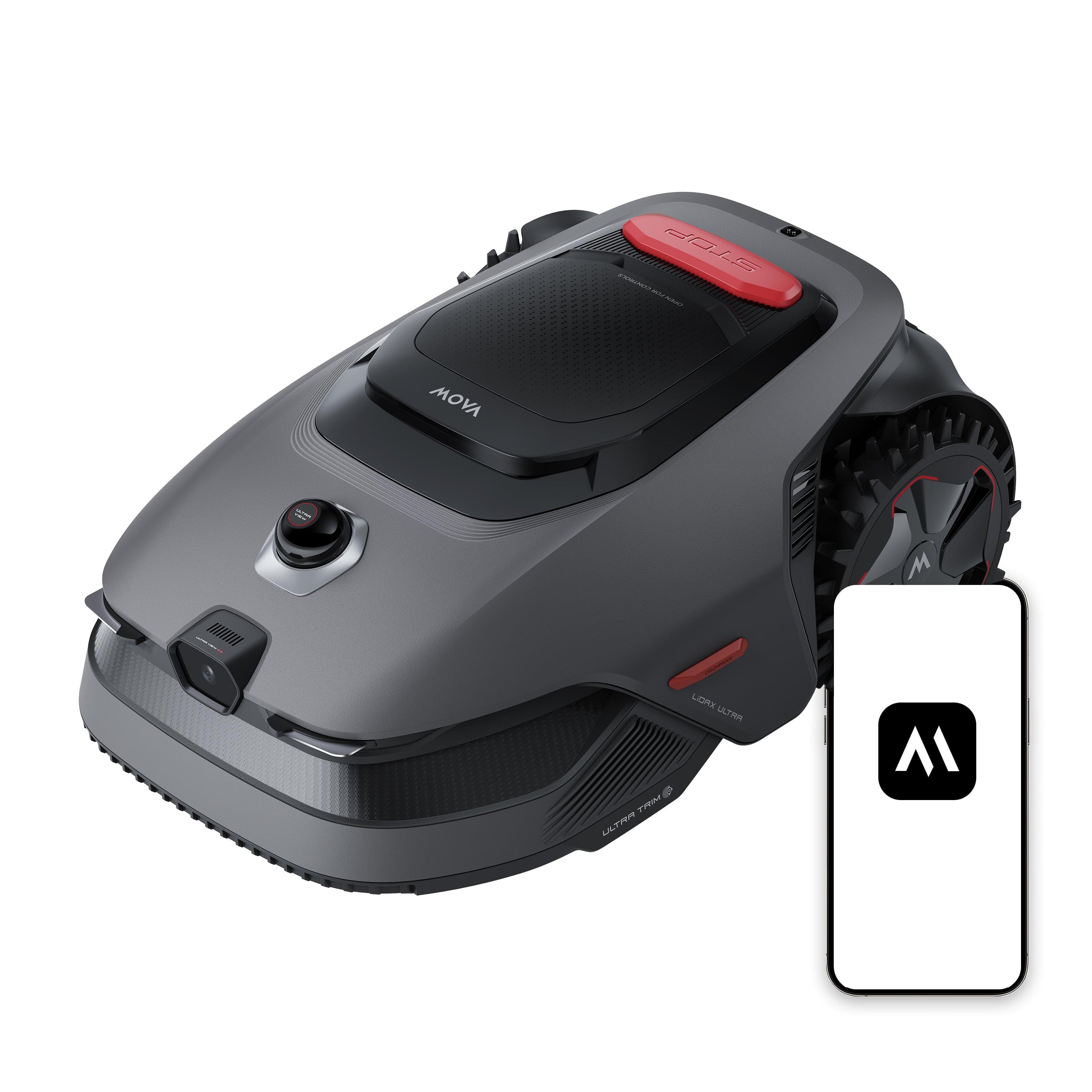
2. MOVA LiDAX Ultra 1000 — best for warm-season turf
Same core advantage as the O1000 — LiDAR navigation, no antenna, good edges, 45% slope, 0.25 acres — plus the widest cut-height range in the class at 1.18 to 3.93 inches and an unusually generous 150 zones. For a Sun Belt lawn on standard St. Augustine or Bahia, that ceiling is the difference between a mower that can maintain your grass and one that cannot.
Two honest caveats. It is not rated for wet grass, which in a summer-storm climate means scheduling around the weather rather than through it. And MOVA is a newer entrant to the US market than ECOVACS or Segway, so the support and parts track record is shorter — weigh that the way you would with any young brand, and check the warranty terms and US service path before committing.
Buy it if you are on tall warm-season grass and want LiDAR simplicity. Skip it if you mow on a fixed schedule through wet weather.
3. ANTHBOT M9 — best value for an open lawn
The top Score on this list, at a lower price than the LiDAR picks above. The M9 pairs full-band RTK — network corrections over its built-in 4G module, so there's no station to install where ANTHBOT's network RTK reaches — with dual-camera vision and a visual-odometry fallback for when a wall or tree blocks the satellites. It is rated to 0.25 acres, 45% slope and 20 zones, with a 1.18–2.76 inch cut, 4G GPS tracking and a 3-year warranty.
The reasons it ranks below the LiDAR pair are the ones this page cares about most. It still wants a reasonable view of the sky, which small boxed-in lots do not always offer; its 2.76-inch ceiling is too short for St. Augustine, Bahia, or fescue; and ANTHBOT is new to the US, with no service track record yet. (The Mammotion YUKA mini 2, our former tidy-lawn pick, is out of stock at every US retailer we track.)
Buy it if your small lawn is open, on Bermuda or Zoysia, and price matters. Skip it if your yard is shaded or boxed in, or your grass wants a tall cut.
4. eufy E15 — simplest setup
Camera-vision navigation, no antenna, good edges, and the gentlest onboarding in the group. The E15 covers 0.2 acres with 8 zones, cuts 1.0–3.0 inches, and is rated to 32% slope. Its bigger sibling, the E18, is out of stock at every US retailer we track.
Two caveats you should weigh honestly. It is not rated for wet grass, and vision systems are the most light-dependent of the navigation families — meaning heavy shade and dawn/dusk scheduling are less forgiving than with LiDAR. And the 3.0-inch ceiling puts standard St. Augustine right at the edge.
Buy it if your lawn is open, sunny, cool-season or Bermuda/Zoysia, and you want the easiest start. Skip it if you are on tall warm-season grass or mow through wet mornings.
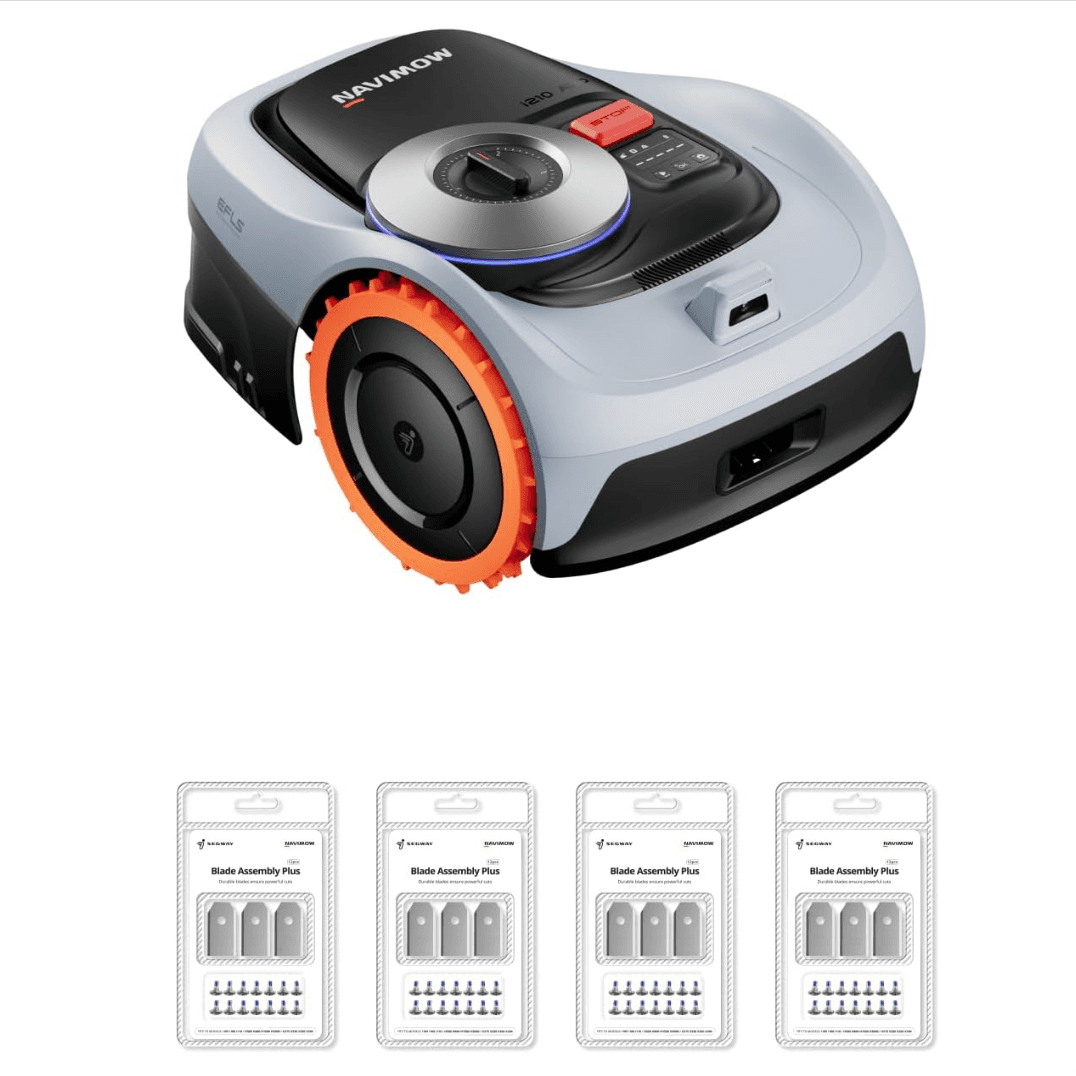
5. Segway Navimow i110N — capable, but check your grass first
NetRTK plus vision, 0.25 acres, 5 zones, 30% slope. The Navimow i-series is a well-built, well-supported line and the i110N is a sensible small-lawn machine — with two constraints that matter here. NetRTK wants a reasonable view of the sky, which small boxed-in lots do not always offer. And the 2.4-inch cut ceiling rules it out for St. Augustine, Bahia, and fescue.
The cheaper i105N covers only 0.13 acres across 3 zones, which is a genuinely tiny, mostly-single-area lawn.
Buy it if you have open sky and Bermuda or Zoysia turf. Skip it if you have canopy, walls, or tall-cut grass.
Worth knowing: the Landroid M, the AWD option, and the out-of-stock GX-600
Stock note, September 2026: the GOAT GX-600 is out of stock at every US retailer we track. Until it returns, choose from the in-stock picks on this page.
The ECOVACS GOAT GX-600 (out of stock) is inexpensive and vision-guided, but it supports one zone and 0.15 acres, so it cannot manage a split front-and-back lawn. Treat it as a single-area machine only. It is also hard to buy: as of September 2026, ECOVACS's US store no longer lists it, and we found no US retailer with new stock.
The WORX Landroid M is the cheapest way in and carries a 3-year warranty once you register it (2 years otherwise) — but it uses a buried boundary wire. In a small yard the wire install is genuinely short, which makes the Landroid a more reasonable proposition here than it is on an acre.
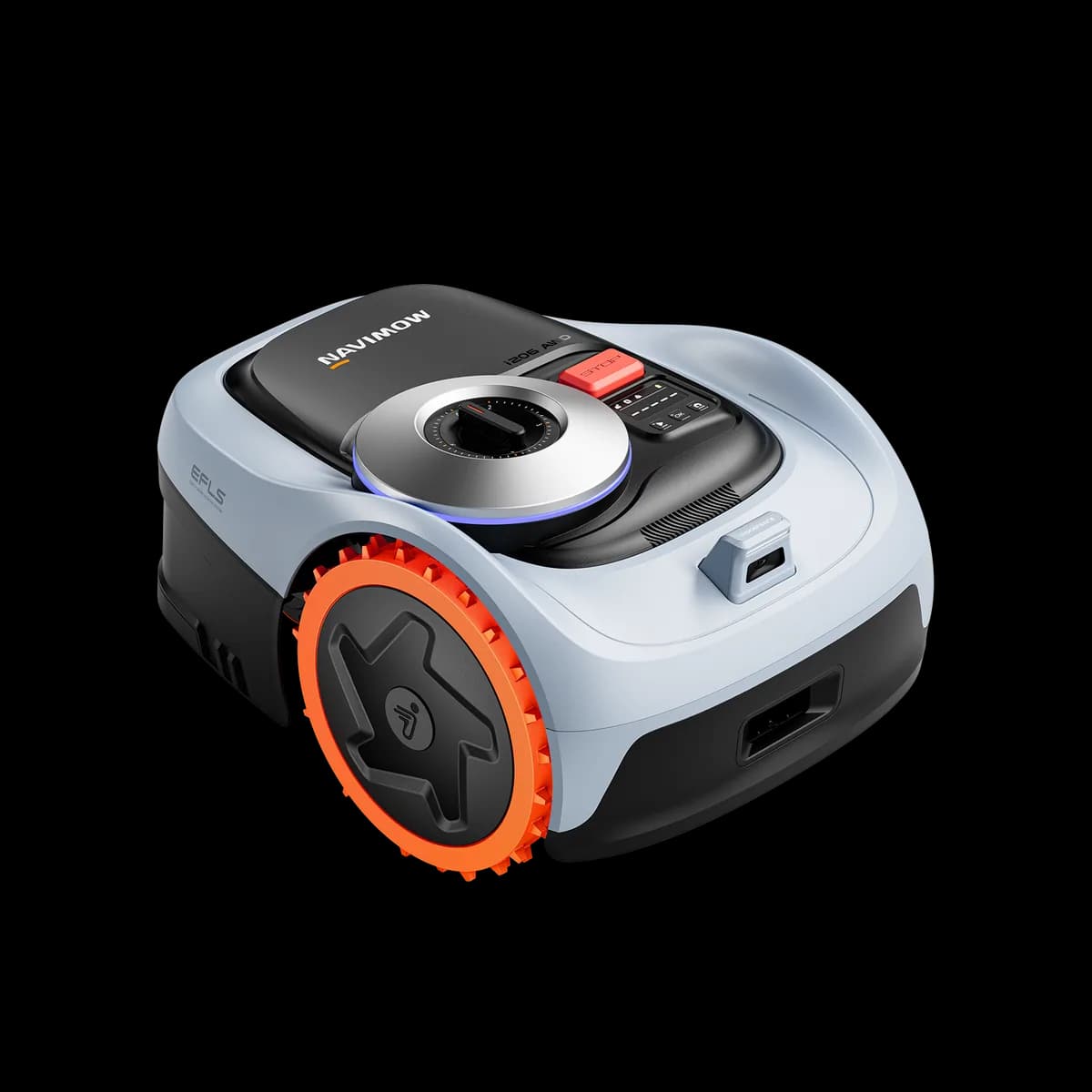
If your small yard is also steep, the Segway Navimow i210 AWD brings all-wheel drive and a 45% rating at 0.25 acres; with its smaller sibling, the i206 AWD (0.15 acre), it is one of only two AWD machines sized for this list. See best robot mowers for hills if grade is your dominant constraint.
Small-yard picks at a glance
Specs are spec-verified from manufacturer sources and carry a verification date on each model page. For live pricing, see current deals.
Common small-yard mistakes
Buying by lot size instead of turf area. A quarter-acre deed is often 0.12 acres of actual grass. Every rating in this guide is turf area. Measure the lawn.
Overbuying capacity. The single most common error. Extra rated acreage costs money and buys nothing on a small lot — and a physically larger machine is harder to route through a narrow gate. Put the money into navigation and cut range.
Ignoring zone count. If your grass is in two disconnected patches, a one-zone machine is not a compromise, it is a non-starter.
Ignoring the cut ceiling. Covered above, and worth repeating: on warm-season turf this eliminates models before any other spec does.
Assuming wire-free means setup-free. It means no trenching. You still map, tune no-go zones around beds, and adjust for the first week or two.
Forgetting the side gate. Measure the narrowest passage the mower must cross between front and back. If it cannot fit, zone count does not matter.
Who should skip this tier
If your lawn is over roughly 0.3 acres of turf, you are shopping the wrong list — start with quarter-acre lawns or move up to the larger-capacity guides. If your dominant problem is grade rather than size, go to best robot mowers for hills. If noise is the constraint because the lawn is close to a neighbor's window, see quiet small-yard picks. And if budget is the hard limit, best robot mowers under $1,000 overlaps this list closely.
Still deciding whether the category makes sense at all? Read are robot mowers worth it in 2026 and what a robot mower actually costs first.
Find your match
Specs get you to a shortlist; your yard picks the winner. Run the fit-my-yard configurator with your real turf area, slope, tree cover, zone split, and budget, and it will rank these models against your actual constraints instead of the average buyer's.
For the full category background, start at the robot lawn mower guide, and if navigation is the part you are still weighing, read RTK vs LiDAR vs vision — in a small, obstructed yard it is the decision that matters most.